How to Add or Remove Sidebar in Microsoft Edge

- 16 steps
- Needs administrator rights
The Microsoft Edge sidebar is a panel on the right side of the browser window. It gives you quick access to tools like Copilot, games, and web apps without opening a new tab.
In Microsoft Edge version 120 and newer you can turn the panel off to get more room for webpages, which helps most on smaller screens. You can turn it back on whenever you want the shortcuts again. This guide covers three ways to do it: the quick button, the Edge settings, and the Windows Registry. The menu steps are written for the current Edge on Windows 11. Edge updates often, so a label may differ slightly on your build.
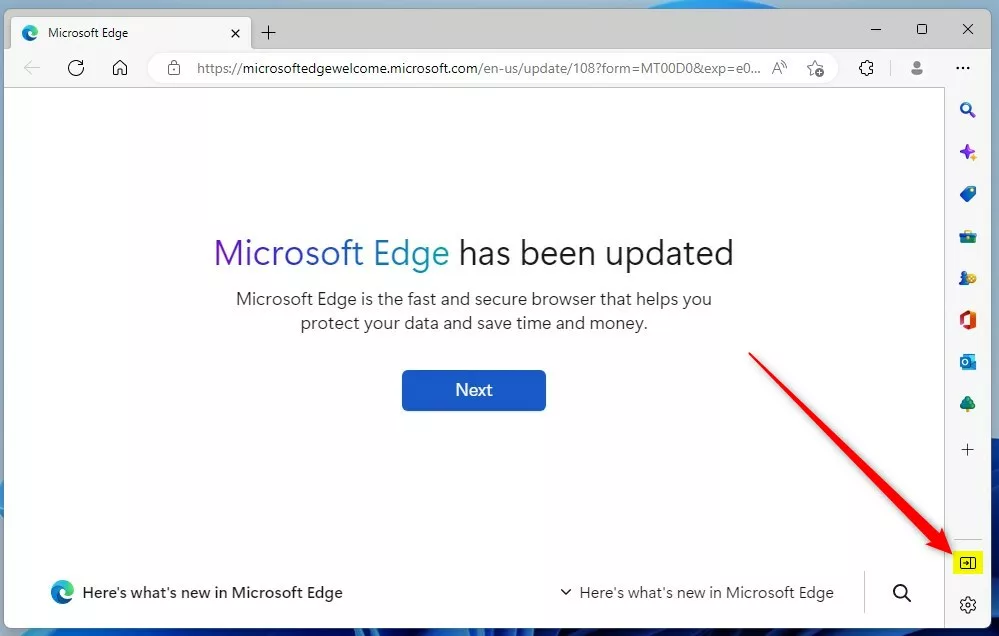
You can show or hide the sidebar in Microsoft Edge using the toggle switch in Settings under Appearance. Alternatively, click the small button at the top of the sidebar itself to quickly hide it.
How to Hide the Sidebar Using the Button
This is the fastest method. If the sidebar is visible, look for the small button at the top of the sidebar and click it. The sidebar should hide right away, and the webpage should expand to fill the space. This only hides the panel for now. It does not change the underlying setting, so the sidebar can come back later. If you want it gone for good, use Method 2 below.
How to Show or Hide the Sidebar in Edge Settings
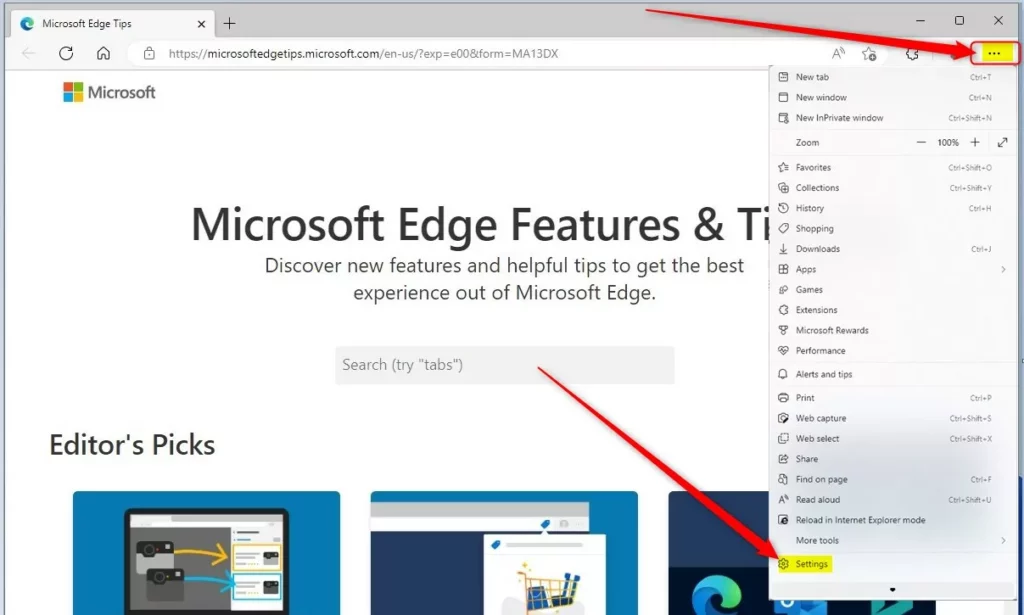
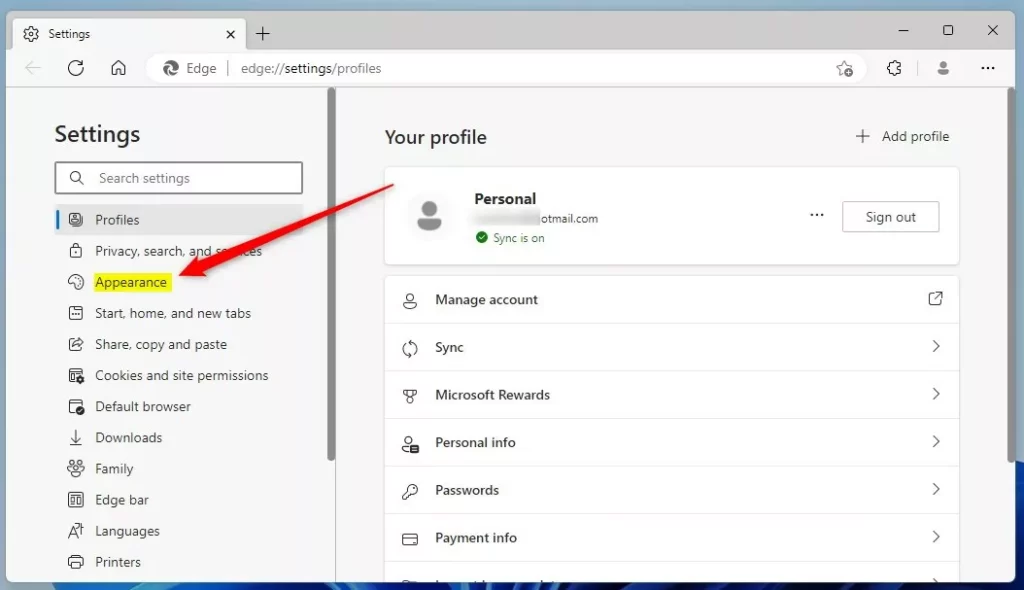
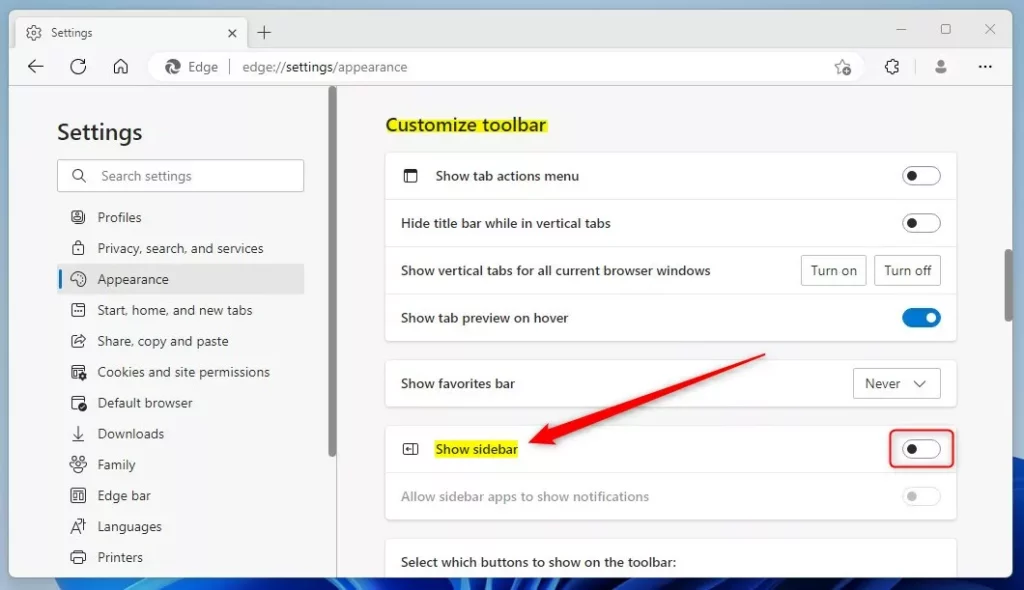
The Edge settings give you a proper on/off switch for the sidebar, and the change stays in place after you close the browser. Open the three-dot menu in the top right corner, select Settings, and click Appearance on the left side. There you will find the toggle that turns the sidebar on or off. It works the same on Windows 11 Home and Pro, and no restart is needed. The steps below walk through it one click at a time.
- Open Microsoft Edge.
- Click the three dots menu button (Settings and more) in the top right corner, or use the keyboard shortcut
Alt + F. A drop-down menu should open. - Select Settings from the menu. The Settings page opens in a new tab.
- On the left side, click Appearance. If you don’t see the list on the left, the window may be too narrow. Widen it or click the menu icon at the top left of the Settings page.
- Scroll down to the Customize toolbar section.
- Find the toggle switch labeled Show sidebar. If you can’t find it on your build, use the search box at the top of Settings and search for “sidebar”. Some Edge versions place the sidebar options under their own Sidebar page.
- Turn the toggle On to display the sidebar. Turn it Off to hide it. The panel should appear or disappear on the right side of the window straight away. To undo the change, flip the toggle back.
How to Show or Hide the Sidebar Using the Registry
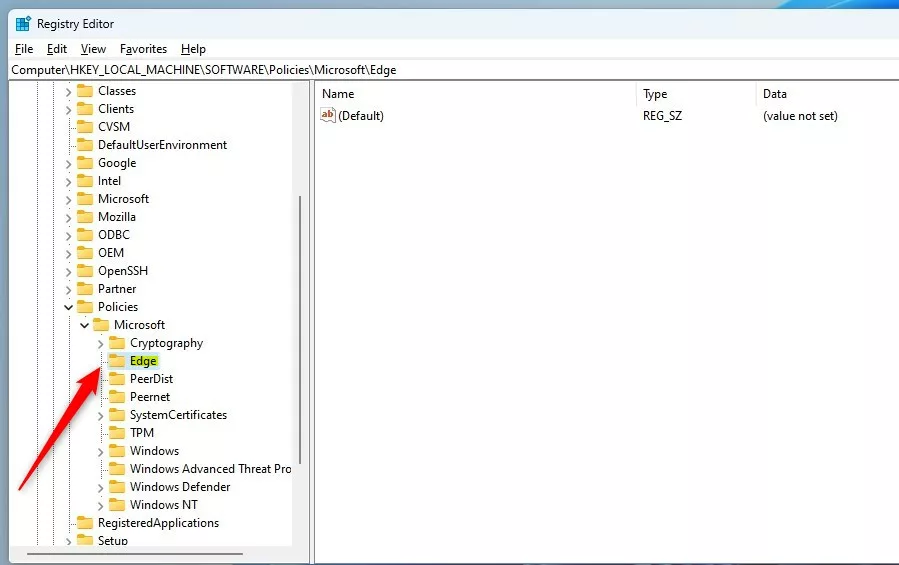
The Windows Registry Editor gives you system-level control over the browser. Open it and go to the Edge policy location in 🗝️HKEY_LOCAL_MACHINE\
Advanced users can bypass the settings menu and configure the sidebar directly in the Windows Registry. A wrong edit can cause problems, so back up the registry or create a restore point first. Be aware that Edge treats a value set here as a policy. The matching option in Edge Settings may then be greyed out, and Edge may show a “managed by your organization” notice. That is expected.
- Open the Windows Registry on your computer and approve the User Account Control prompt if it appears.
- Navigate to this location:
HKEY_LOCAL_MACHINE\SOFTWARE\Policies\Microsoft\Edge - If you don’t see an Edge folder, right-click on the Microsoft folder and create a new subfolder called Edge. The new Edge key should appear under Microsoft. Select it before you continue.
- Right-click in the empty space on the right side of the Edge folder.
- Select New and then DWORD (32-bit) Value. A new entry appears in the right pane with its name highlighted for editing.
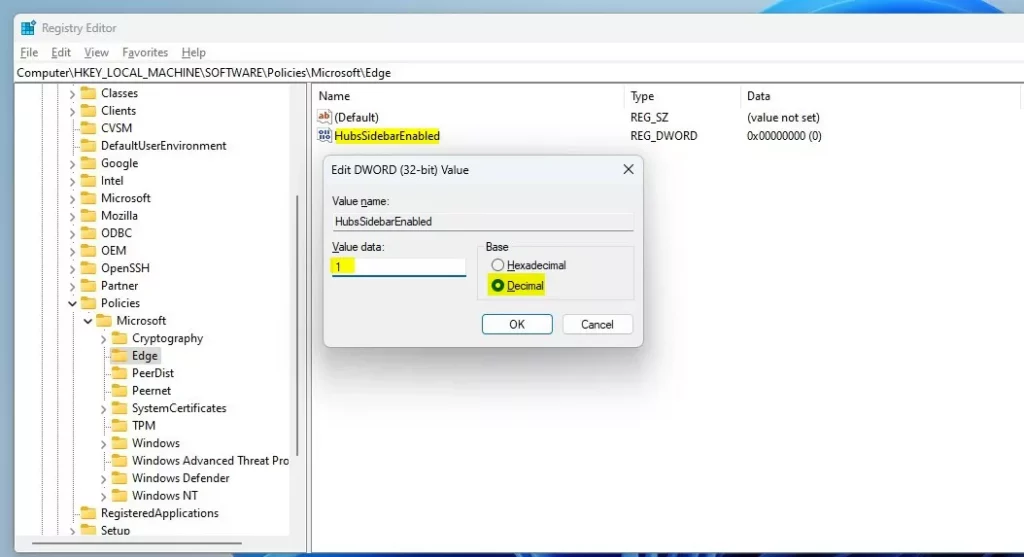
- Name the new value
HubsSidebarEnabled. Type the name exactly, then press Enter. - Double-click the new value to open it. The Edit DWORD (32-bit) Value window should appear.
- In the Value data field, enter
1to show the sidebar. Enter0to hide it. - Click OK to save. The value now shows your number in the Data column. To undo the change, delete the value, or set it back to the number that shows the sidebar.
Changes take effect immediately, though a browser restart may occasionally be required. If the sidebar doesn’t change after you edit the registry, close every Edge window and open Edge again. Check that Edge is not still running in the background, then test once more.
Summary
Controlling the Microsoft Edge sidebar is simple. You can click the on-screen button for a quick fix, change the preference in the main Edge Settings menu, or enforce the rule through the Windows Registry Editor for every user on the computer. Here is how the three methods compare:
- Quick buttonClick the button on the sidebar to hide it instantly. This is the easiest way, but it only hides the panel for now.
- SettingsUse Edge Settings and toggle the sidebar on or off under Appearance. The choice is saved and applies to your own profile.
- RegistryAdvanced users can edit the Windows Registry to control the sidebar setting for all users on the PC. Use it when you need a setting that users can't easily change.
Choose whichever method fits the way you work. Whichever you pick, you keep full control over the sidebar and can reverse the change at any time.
Have a question about this guide?
Answered by AI from this guide. Good questions may be added to this page — please don't include personal details.
Did this guide fix your problem?

About the Author
Richard
Tech Writer, IT Professional
Richard is a writer at Geek Rewind who turns complex IT tasks into clear, step-by-step guides. He draws on years of hands-on experience in system administration and enterprise IT operations, focusing on Windows, Linux and WordPress: the problems people actually run into, and the fixes that work. His server and WordPress guides come from systems he runs himself. Richard builds and maintains the platform behind Geek Rewind, from its Ubuntu servers and Nginx configuration to its custom WordPress plugins. Many new tutorials start with readers' questions, and he's always glad to answer them in the comments.
[…] First, open the Microsoft Edge browser. […]
[…] First, open the Microsoft Edge browser. […]
[…] First, open the Microsoft Edge browser. […]
[…] First, open the Microsoft Edge browser. […]
[…] First, open the Microsoft Edge browser. […]
[…] First, open the Microsoft Edge browser. […]
[…] First, open the Microsoft Edge browser. […]
[…] First, open the Microsoft Edge browser. […]
[…] First, open the Microsoft Edge browser. […]
[…] can hide the sidebar on the Microsoft Edge browser, but doing so wouldn’t conceal the Bing Chat or […]
[…] First, open the Microsoft Edge browser. […]
[…] First, open the Microsoft Edge browser. […]
[…] First, open the Microsoft Edge browser. […]
[…] First, open the Microsoft Edge browser. […]
[…] First, open the Microsoft Edge browser. […]
[…] First, open the Microsoft Edge browser. […]
[…] First, open the Microsoft Edge browser. […]
[…] First, open the Microsoft Edge browser. […]
[…] First, open the Microsoft Edge browser. […]
[…] First, open the Microsoft Edge browser. […]
[…] First, open the Microsoft Edge browser. […]
[…] First, open the Microsoft Edge browser. […]
[…] First, open the Microsoft Edge browser. […]
[…] First, open the Microsoft Edge browser. […]
[…] First, open the Microsoft Edge browser. […]
[…] First, open the Microsoft Edge browser. […]
[…] you use Copilot in Edge, you can automatically open it in the sidebar to show you relevant web experiences alongside your web […]
[…] First, open the Microsoft Edge browser. […]
[…] First, open the Microsoft Edge browser. […]
[…] First, open the Microsoft Edge browser. […]
[…] First, open the Microsoft Edge browser. […]
[…] First, open the Microsoft Edge browser. […]
[…] First, open the Microsoft Edge browser. […]
[…] First, open the Microsoft Edge browser. […]
[…] First, open the Microsoft Edge browser. […]
[…] First, open the Microsoft Edge browser. […]
[…] First, open the Microsoft Edge browser. […]
[…] Open the Microsoft Edge browser. […]
[…] can change the default text size for all websites in the Edge settings. First, open the Microsoft Edge browser. Click the three horizontal dots in the top right corner and select […]
[…] Open the Microsoft Edge browser. […]
[…] Open the Microsoft Edge browser. […]