How to Enable or Disable Ask Where to Save Downloads in Microsoft Edge


Making Microsoft Edge ask where to save each file keeps random downloads from piling up in your Downloads folder. With the prompt on, Edge shows a save window every time you download something.
With it off, every file goes straight to your default 📁C:\
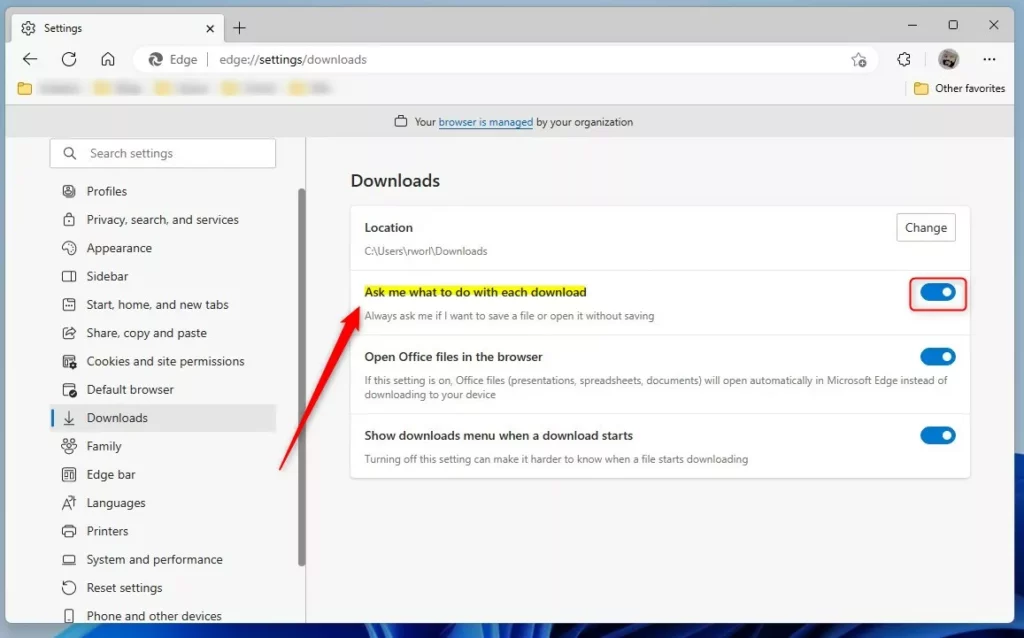
To enable or disable asking where to save downloads in Microsoft Edge, go to Settings Downloads and toggle “Ask me what to do with each download” on or off. This setting controls whether Edge prompts you for a save location or downloads automatically.
Why Enable Download Prompts?
With the prompt enabled, Edge no longer saves files automatically. It stops and asks first. Depending on the file type, you can pick a save location or open the file directly in the browser instead of writing it to disk. This is handy for PDFs and other files you only need to look at once.
How to Turn On Download Prompts in Microsoft Edge
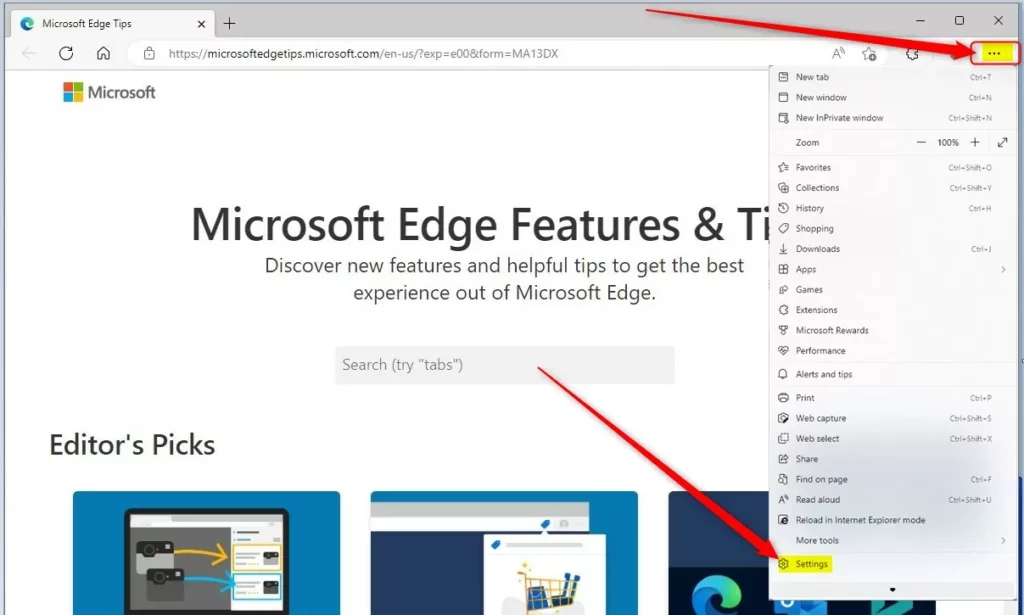
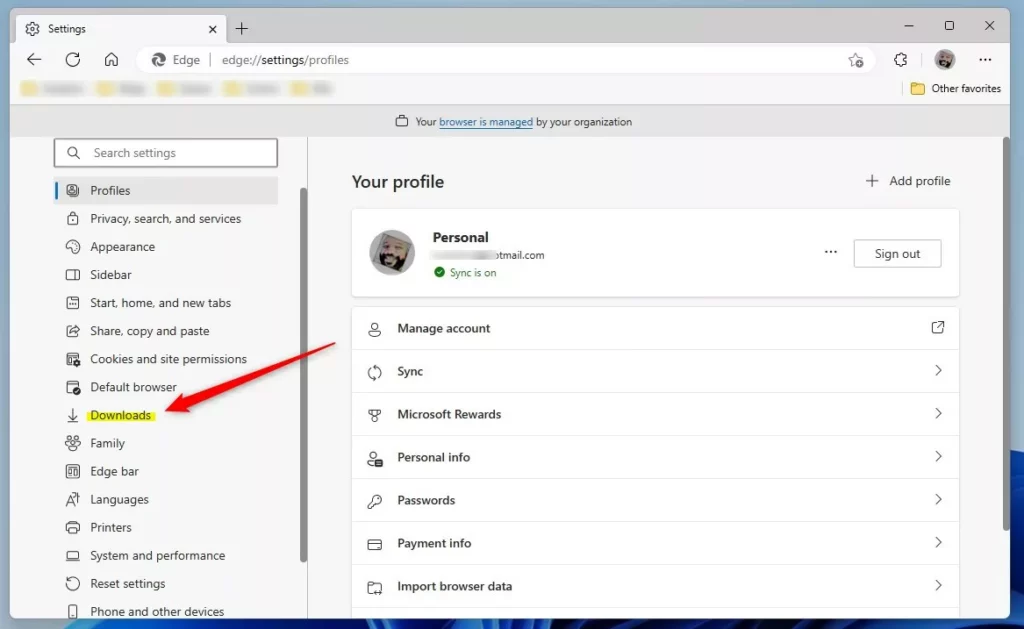
This is the quickest method and works on both Windows 11 Home and Pro. You open Settings and more (the three horizontal dots), select Settings, click Downloads on the left menu, and turn the switch for Ask me what to do with each download on or off. The change applies immediately. You don’t need to restart Edge or Windows.
- Open the Microsoft Edge browser. A normal window is fine; the setting applies to all Edge windows for your user account.
- Click the Settings and more button. This is the 3 horizontal dots on the top right corner. Then select Settings. The path is Settings and more > Settings. A new Settings tab opens with a list of categories on the left.
- Click Downloads on the left menu. If you don’t see the left menu, the window may be too narrow. Widen it, or click the three-line menu icon at the top left of the Settings page. The download options now appear on the right.
- Look for the option that says “Ask me what to do with each download”. Toggle the button On or Off. On some Edge versions the wording is slightly different, for example a switch to ask where to save each file before downloading . If you see a similar option, that is the one to use. If the switch is greyed out or the page says Edge is managed by your organization, a policy is controlling it. That includes a registry value you set earlier using the method below.
What Happens?
When the toggle is off, Edge stops asking what to do with incoming files and sends everything straight to disk, into your default download folder. To undo this later, go back to Settings Downloads and switch it on again.
When the toggle is on, Edge shows a prompt before each download starts. You can then save the file locally or open it directly in the browser window. Test it by downloading any small file. You should see the prompt before anything lands in your Downloads folder.
Alternative Method: Using Windows Registry
If you prefer a system-level setup, you can control the same behavior through the Windows Registry. Open Registry Editor, go to HKEY_LOCAL_MACHINE\SOFTWARE\Policies\Microsoft\Edge, and create a new DWORD value named PromptForDownload to control the prompt behavior. This method needs an administrator account. Because it sets a policy, Edge will treat the setting as managed, and the switch in the Settings page may become greyed out. It works the same on Windows 11 Home and Pro.
- ⚠️ Admin Privileges Required — Open the Windows Registry and navigate to the folder path below. Click Yes if User Account Control asks for permission. Before changing anything, you can back up the registry with File Export
HKEY_LOCAL_MACHINE\SOFTWARE\Policies\Microsoft\Edge - If you don't see the Edge folder, right-click on the Microsoft parent key. Then create a new subkey folder called Edge. Right-click Microsoft, choose New, then Key, and type the name exactly as shown. The new key should now appear under Microsoft. Click it to select it. The Policies path usually has no Edge key on a PC where no Edge policy has been set before.
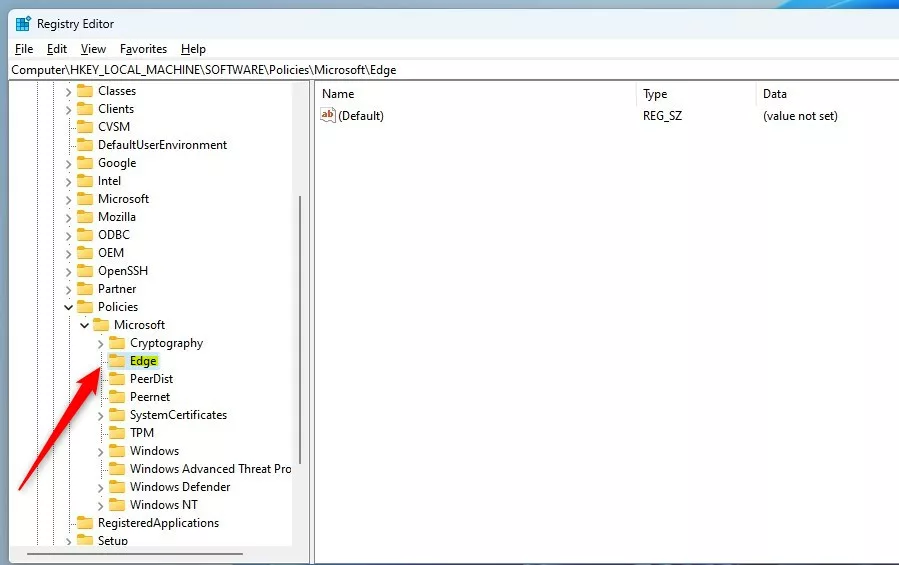
With the Edge key selected, you can create the value that controls the prompt. Names in the registry must be typed exactly, so check the spelling before you move on.
- Right-click in the empty space on the right side of the Edge folder. Select New DWORD (32-bit) Value. Type the name
PromptForDownloadLocation. Press Enter. The new value should now appear in the list on the right. Use the 32-bit DWORD type even on a 64-bit version of Windows. - Double-click the new value named
PromptForDownloadLocation. Enter the Value data, then click OK:- Enter 1 to have Edge ask before downloading files
- Enter 0 to disable the prompt and download automatically
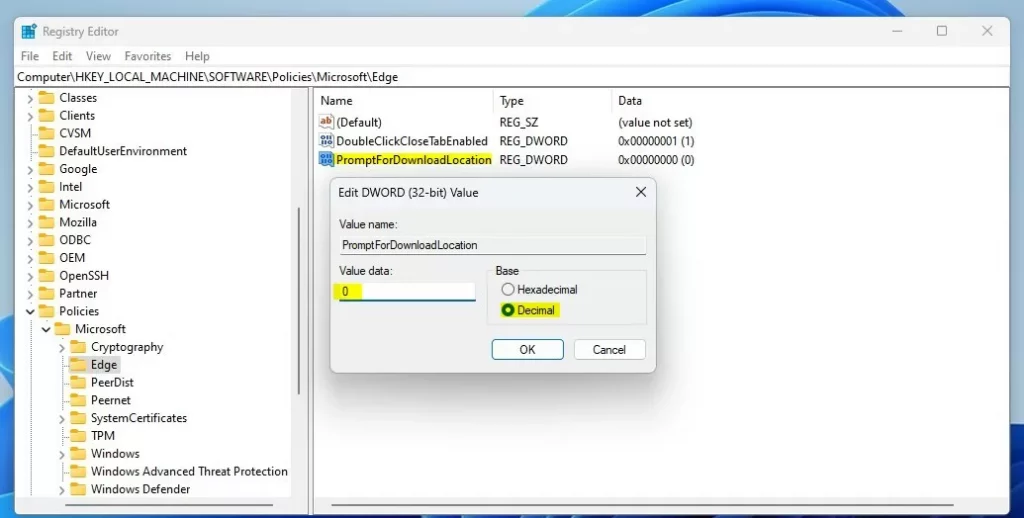
⚠️ Restart the computer to apply the registry modifications. Close Registry Editor first. If the behavior doesn't change after the restart, recheck that the value name is spelled correctly and that it is a DWORD (32-bit) value inside the Edge key. To undo the change, set the value data to the opposite number, or delete the value and restart again so Edge goes back to using its own setting.
Summary
Managing Microsoft Edge download prompts is straightforward. Use the built-in browser settings for a quick fix, or the Windows Registry when you want system-level control. Both methods let you decide whether Edge asks about each download or saves it automatically.
- Use the Settings menu for a quick toggle that takes effect right away
- Use the Windows Registry for more advanced control, with an administrator account and a restart
Rebooting the computer ensures the registry modifications take effect. The Settings method needs no restart.
If you only want to change the setting for your own account, stick with the Settings page. Use the registry only when you need the setting applied across the whole PC.
Have a question about this guide?
Answered by AI from this guide. Good questions may be added to this page — please don't include personal details.
Did this guide fix your problem?

About the Author
Richard
Tech Writer, IT Professional
Richard is a writer at Geek Rewind who turns complex IT tasks into clear, step-by-step guides. He draws on years of hands-on experience in system administration and enterprise IT operations, focusing on Windows, Linux and WordPress: the problems people actually run into, and the fixes that work. His server and WordPress guides come from systems he runs himself. Richard builds and maintains the platform behind Geek Rewind, from its Ubuntu servers and Nginx configuration to its custom WordPress plugins. Many new tutorials start with readers' questions, and he's always glad to answer them in the comments.
Goal = disable the prompts to save and download.
When using the browser settings and the regEdit instructions here neither leave me withe expected outcome/goal. What could be blocking this?? It still prompts both save and download.