How to Open and Edit Windows 11 Registry


The Registry Editor is a built-in database tool in Windows 11 that stores low-level settings for your operating system and installed apps, such as configuration paths like HKEY_CURRENT_USER\Control Panel\Desktop. It works on both Windows 11 Home and Pro. Opening it lets you fix stubborn PC problems, turn on hidden features, or change how your system works.
Because incorrect changes can break your computer, back up the Registry before you edit any keys or values. In Registry Editor, click File Export, choose a save location, set Export range to All, and save the .reg file. If a change goes wrong, you can use File Import to load that file back. You can also right-click a single key and choose Export to save just that branch.
Open Registry Editor by searching for it in the Start menu . Navigate to the desired key using the folder structure or the address bar. Double-click a value to edit it, or select it and press Del to remove it.
How to open the Registry Editor
The quickest way to open Registry Editor is the Windows search bar . Click the Start button , type the name of the app, and pick the main program from the search results. The steps below walk through it.
- Click the Start menu on the taskbar . The Start menu opens with a search box at the top.
- Type Registry Editor in the search bar. The app should appear at the top of the results as the best match.
- Click the Registry Editor app from the results. If a User Account Control prompt appears, click Yes. If you are signed in with a standard account, Windows asks for an administrator password first.
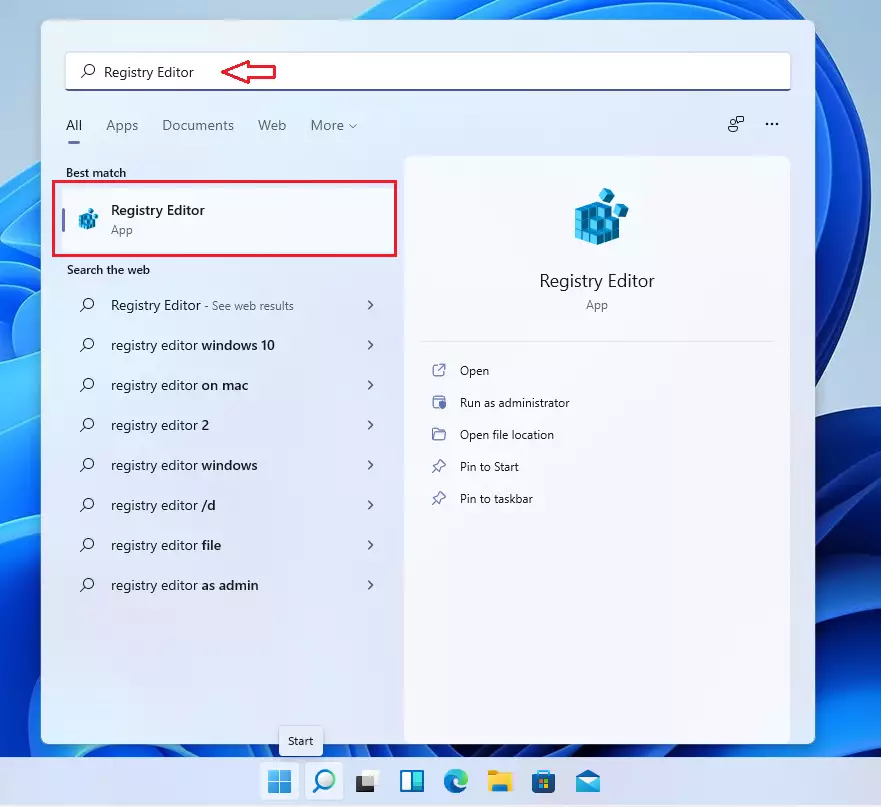
If Registry Editor does not open, the most common cause is a locked-down work or school PC where an administrator has blocked the tool. In that case, you need to ask your IT department.
The editor window will open. It will look like a set of folders on the left side of your screen. Each folder is called a key. The right side shows the values stored inside whichever key you select.
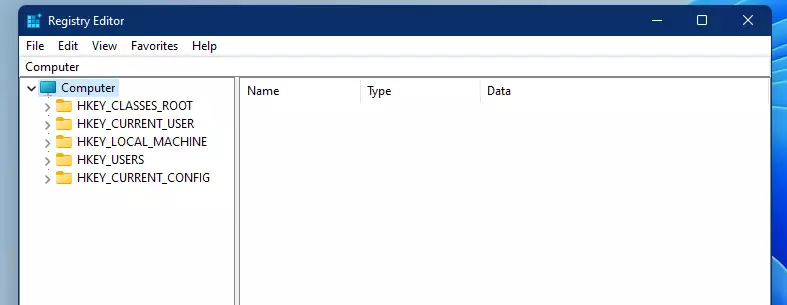
At the top of the left pane you will see five main branches: 🗝️HKEY_CLASSES_ROOT, 🗝️HKEY_CURRENT_USER, 🗝️HKEY_LOCAL_MACHINE, 🗝️HKEY_USERS and 🗝️HKEY_CURRENT_CONFIG. Settings that apply only to your account are mostly under 🗝️HKEY_CURRENT_USER. Settings that apply to every user on the PC are mostly under 🗝️HKEY_LOCAL_MACHINE.
How to browse the registry
Browsing the Windows 11 registry means clicking through a folder-like structure to find a specific setting. You can expand keys by hand on the left side of the window. You can also paste a direct address into the path bar at the top to jump straight to the key you need. The path bar saves a lot of clicking when a guide gives you a full path.
To try it, copy the registry path HKEY_CURRENT_USER\Software\Microsoft\Windows\CurrentVersion\Run and paste it into the navigation bar of the Registry Editor. Then press Enter. The left pane expands to that key and selects it. This path holds startup program settings for your account, so it is a safe place to practice looking around without changing anything.
Computer\HKEY_LOCAL_MACHINE\SOFTWARE\Microsoft\Windows NT\CurrentVersion\SoftwareProtectionPlatform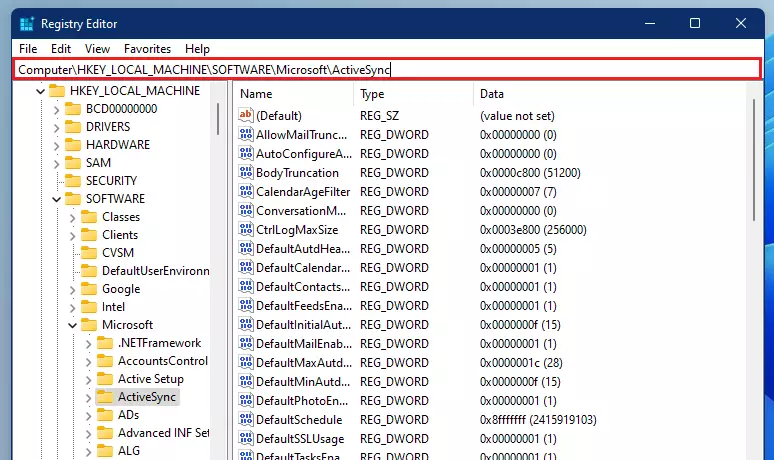
The right pane now lists the values in that key. Each row shows a Name, a Type and the Data. If the key is empty, you will only see a (Default) entry. If the path is not found, check it for typos, because the editor only jumps to keys that exist.
Registry folders contain lists of values. These values represent actual computer settings. Changing these settings can alter how Windows 11 works. For example, a specific value might control whether a certain feature is turned on or off. Many on/off settings are stored as a number, where 1 often means on and 0 means off. Always write down the original data before you change it, so you can put it back.
How to edit or delete a value
If you are not signed in as an administrator, Windows may refuse the change or ask you to approve it. Some keys, especially under HKEY_LOCAL_MACHINE, are protected and cannot be edited even by an administrator.
- To edit: Double-click the name of the setting you want to change. A box will pop up where you can type your new value in the Value data field. Click OK to save it. The new data should now show in the right pane.
- To delete: Click the item name once to highlight it, then press the DELETE key on your keyboard. Windows asks you to confirm the deletion. Only click Yes if you are sure, since deleting cannot be undone unless you have an exported backup.
Summary
Editing the Windows 11 registry lets you change system settings to fix problems or customize your PC, but back up your registry first, because mistakes can cause serious issues. Registry changes take effect right away in most cases, though some settings only apply after you sign out or restart your PC. If something goes wrong, import your saved backup file and restart.
Have a question about this guide?
Answered by AI from this guide. Good questions may be added to this page — please don't include personal details.
Did this guide fix your problem?

About the Author
Richard
Tech Writer, IT Professional
Richard is a writer at Geek Rewind who turns complex IT tasks into clear, step-by-step guides. He draws on years of hands-on experience in system administration and enterprise IT operations, focusing on Windows, Linux and WordPress: the problems people actually run into, and the fixes that work. His server and WordPress guides come from systems he runs himself. Richard builds and maintains the platform behind Geek Rewind, from its Ubuntu servers and Nginx configuration to its custom WordPress plugins. Many new tutorials start with readers' questions, and he's always glad to answer them in the comments.
No comments yet — be the first to share your thoughts!