How to Enable Secure DNS in Microsoft Edge


- 18 steps
- Needs administrator rights
- Includes a restart or sign-out
Secure DNS in Microsoft Edge encrypts your web traffic to hide the websites you visit from your internet provider. Standard internet requests travel in plain text that anyone can read, but this feature routes your connection through a secure service like Cloudflare or Google.
Strictly speaking, secure DNS encrypts the lookups, the step where your browser asks “what is the address of this site?” Your provider can still see the IP addresses you connect to, so this is a privacy improvement, not full anonymity.
Because Edge comes built into Windows 11 and Windows 10, you do not need to install extra software to protect your web history. Pick a trusted provider from the settings menu to block snoops from seeing your online activity.
Open Microsoft Edge, go to Settings Privacy, search, and services, then toggle “Use secure DNS” on or off under the Security section. You can then select a preferred DNS provider.
Choose secure DNS in the Microsoft Edge browser.
Secure DNS settings in Microsoft Edge let you route your web traffic through a custom provider instead of your internet service provider for better privacy. Custom secure DNS providers offer better privacy, and Edge gives you full control over them. The steps below work the same way on Windows 11 and Windows 10, and on both Home and Pro editions.
Here’s how to configure the feature in the browser.
- Open Microsoft Edge.
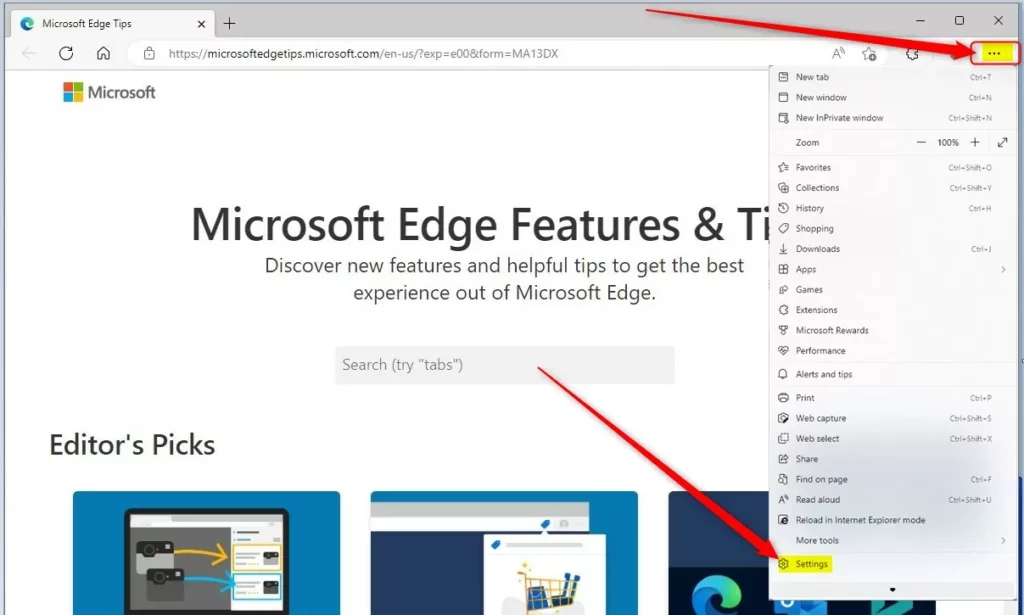
- Click the 3 horizontal dots button for Settings and more (Alt+F) in the top right corner. A menu drops down.
- Select Settings. The Settings page opens in a new tab.
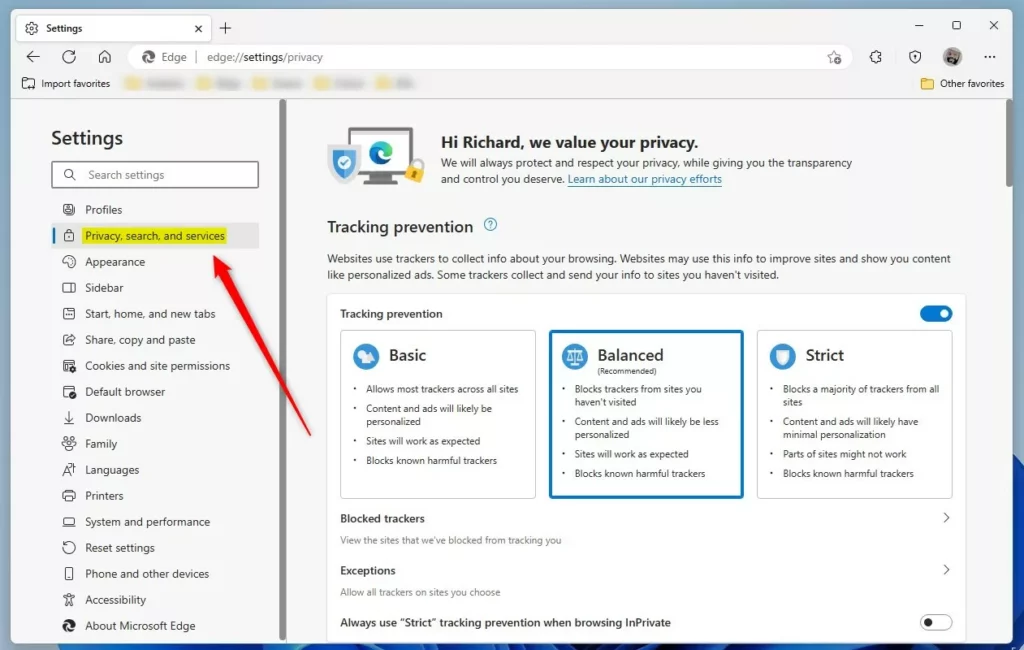
- Select Privacy, search, and services from the left-hand menu. The privacy options appear in the main pane.
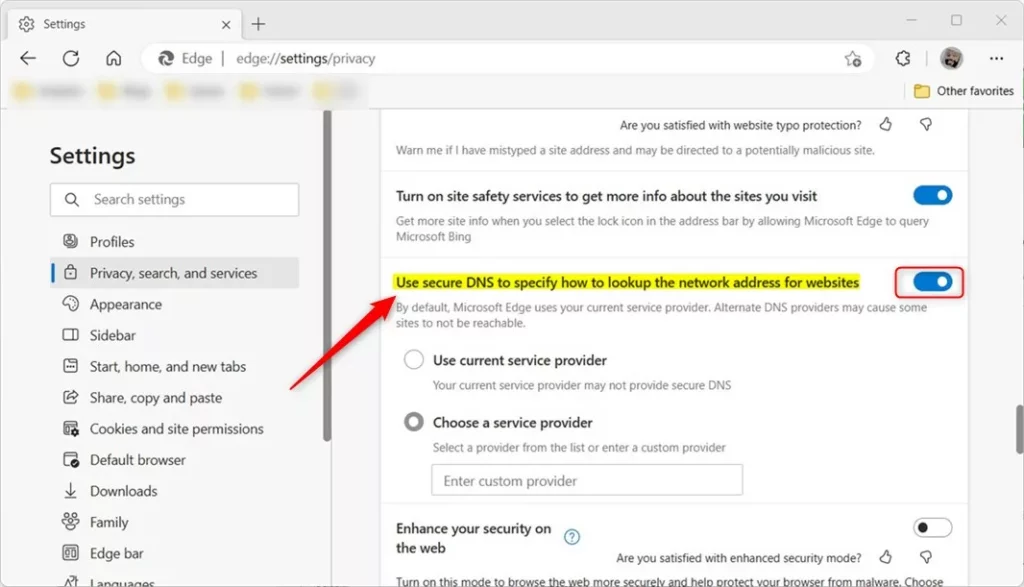
- In the Settings -> Privacy, search, and services pane, scroll down to the Security section.
- Find the tile that reads “Use secure DNS to specify how to lookup the network address for websites“.
- Toggle the switch to On to enable it, or Off to disable it. When it is on, the provider choices appear under the tile.
If the switch is greyed out or the page says the setting is managed by your organization, a policy is controlling it. That is common on work or school PCs. It can also be left over from the registry method described later in this article. Remove the policy to get control back.
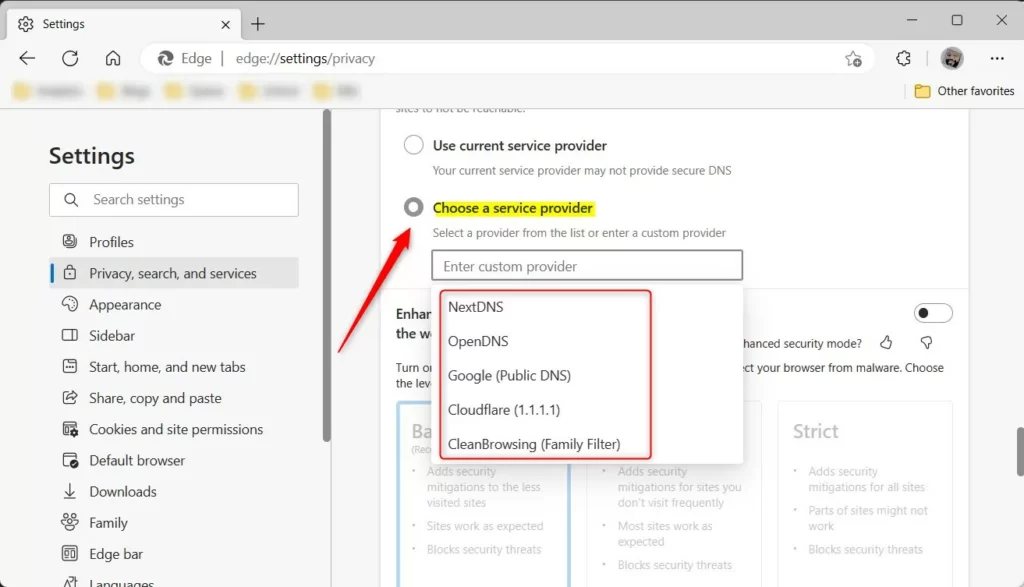
Activating this setting requires picking a DNS provider from the available list:
- Use the current service provider
- Choose a service provider:
- NextDNS
- OpenDNS
- Google (Public DNS)
- Cloudflare
- CleanBrowsing (Family Filter)
Use the current service provider only if your internet provider’s DNS supports encryption. Otherwise Edge falls back to standard lookups. To get encrypted lookups for sure, choose a provider from the second list. Cloudflare and Google are the usual picks for general use. CleanBrowsing (Family Filter) also blocks adult content, so only choose it if you want that filtering.
No restart is needed for this method. Changes apply to new lookups right away. To undo, switch the toggle back to Off.
Enable or disable the use of secure DNS in Edge via the Windows Registry Editor
Registry Editor lets you turn secure DNS on or off in Microsoft Edge using system-level policies. This method is useful if you manage settings across multiple computers or want to lock the configuration in place. It works on both Home and Pro, and you need an administrator account. Back up the registry or create a restore point first, since a wrong edit can cause problems.
- Open the Windows Registry Editor.
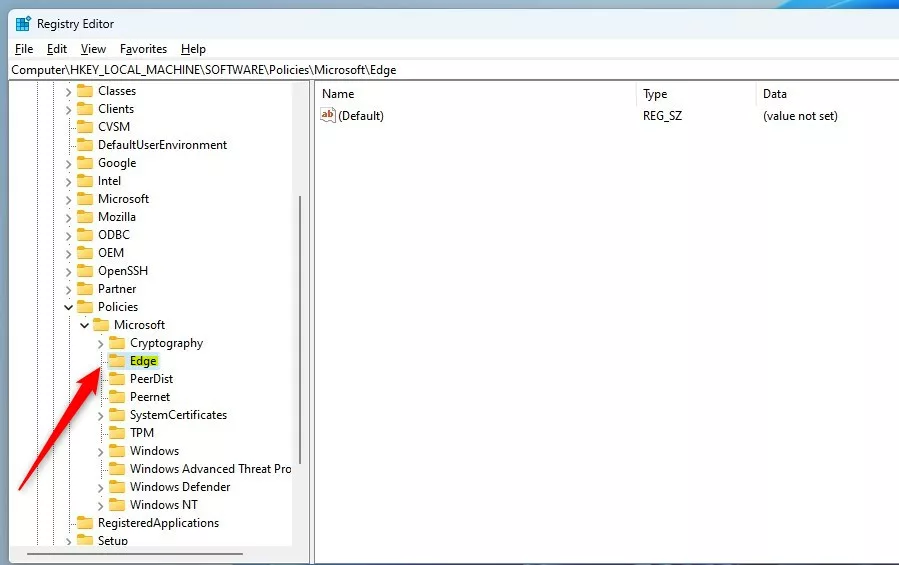
- Navigate to the registry folder path shown below: 🗝️HKEY_LOCAL_MACHINE\
SOFTWARE\ . This is where you create or change the necessary values.Policies\ Microsoft\ Edge
HKEY_LOCAL_MACHINE\SOFTWARE\Policies\Microsoft\Edge
If the Edge folder key isn’t there, which is normal on a PC with no Edge policies set, create it:
- Right-click the parent Microsoft key.
- Select New Key.
- Name the new subkey Edge.
- Right-click inside the Edge folder key’s right pane.
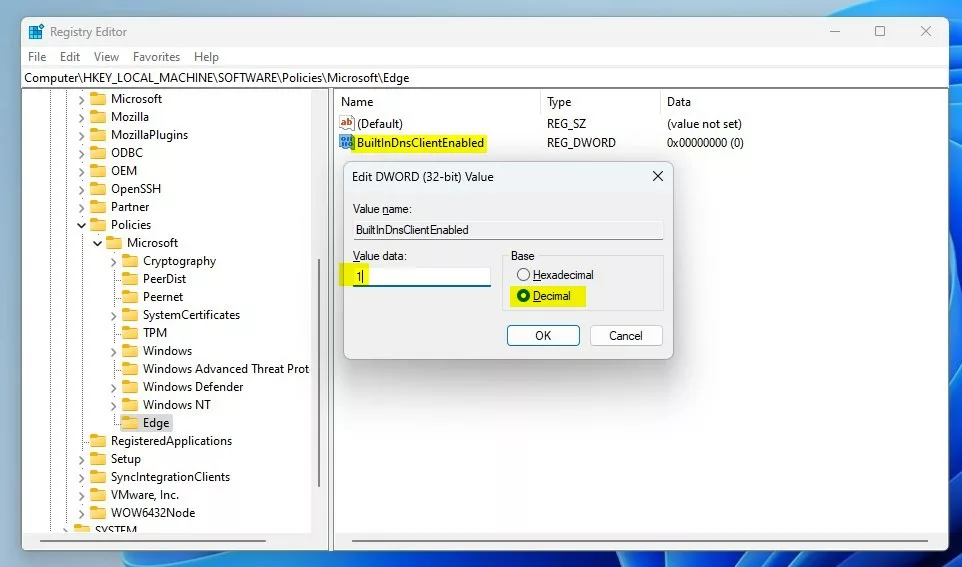
- Select New DWORD (32-bit) Value.
- Name the new item DnsOverHttpsMode. It appears in the right pane with a value of 0.
- Double-click the new value to open it.
- Enter 1 in the Value data box to enable secure DNS in Microsoft Edge, or enter 0 to disable it.
- Click OK.
Restart the computer to apply the registry modifications. To undo the change later, set the value to 0 or delete the value you created, then restart again.
Once configured, Edge routes traffic through the chosen compatible provider. If the provider is not supported, the browser falls back to standard unencrypted resolution. Selecting a provider directs all browser DNS queries through that specific network infrastructure.
Edge’s setting only covers the browser. For system-wide protection, also configure DNS over HTTPS (DoH) in Windows 11.
All set!
Conclusion:
- The article provides comprehensive guidance on enabling or disabling secure DNS in the Microsoft Edge browser.
- Users can choose from a list of trusted secure DNS providers, including NextDNS, OpenDNS, Google Public DNS, Cloudflare, and others, to enhance their browsing security.
- It also offers an alternative method, using the Windows Registry Editor, to turn on or off secure DNS in Microsoft Edge.
- Users are reminded to restart their computers for the changes to take effect.
- Additionally, it suggests enabling DNS over HTTPS (DoH) as an alternative option for enhancing browsing security in Windows 11.
Have a question about this guide?
Answered by AI from this guide. Good questions may be added to this page — please don't include personal details.
Did this guide fix your problem?

About the Author
Richard
Tech Writer, IT Professional
Richard is a writer at Geek Rewind who turns complex IT tasks into clear, step-by-step guides. He draws on years of hands-on experience in system administration and enterprise IT operations, focusing on Windows, Linux and WordPress: the problems people actually run into, and the fixes that work. His server and WordPress guides come from systems he runs himself. Richard builds and maintains the platform behind Geek Rewind, from its Ubuntu servers and Nginx configuration to its custom WordPress plugins. Many new tutorials start with readers' questions, and he's always glad to answer them in the comments.
No comments yet — be the first to share your thoughts!