How to Change Font Size in Microsoft Edge


Changing the font size in Microsoft Edge lets you enlarge the text on web pages without also enlarging pictures and buttons. You can set a default font size in the browser’s appearance settings. You can also pick a specific zoom level, such as 110% or 125%, to make a page easier to read. Zoom scales the whole page, while the font settings scale mostly the text, so choose the one that fits your problem.
To change the font size in Microsoft Edge, open Settings and more (the three dots), select Settings, then choose Appearance and set Font size under Fonts. Drag the Minimum font size slider right to stop small text. For one page only, use the Zoom row in the same menu.
Using the Zoom Feature
Edge remembers the zoom level for each site, so a page you zoomed will usually open at that level next time.
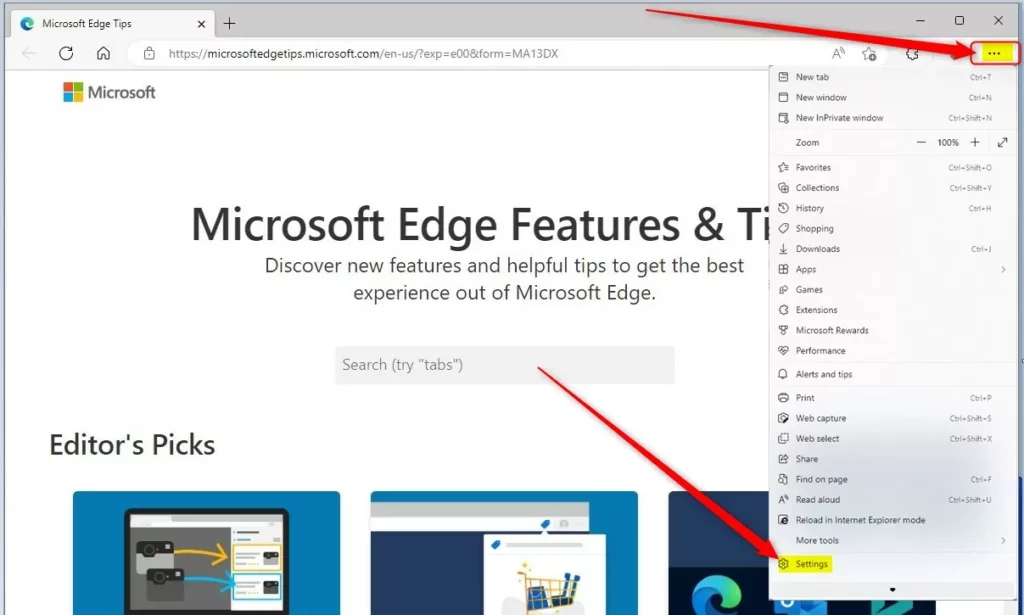
- Click the Settings and more button (the three dots) in the top-right corner of the Edge window.
- Find the Zoom row in the menu.
- Click the + button to enlarge the page, or the − button to shrink it. The percentage between the buttons updates with each click, and the page changes size right away.
- Keep clicking until the text is comfortable. Steps such as 110% and 125% are good starting points.
To undo it, click the percentage back down to 100% on the same row. This only affects the site you are on. Other sites keep their own zoom levels.
Change the text size in Microsoft Edge
To change the text size for every site you visit, use the browser’s appearance settings instead. Open the three dots menu, go to Settings , and select Appearance. Start here:
- Click the Settings and more button (the three dots) in the top-right corner.
- Click Settings. A Settings tab opens with a list of categories in the left sidebar.
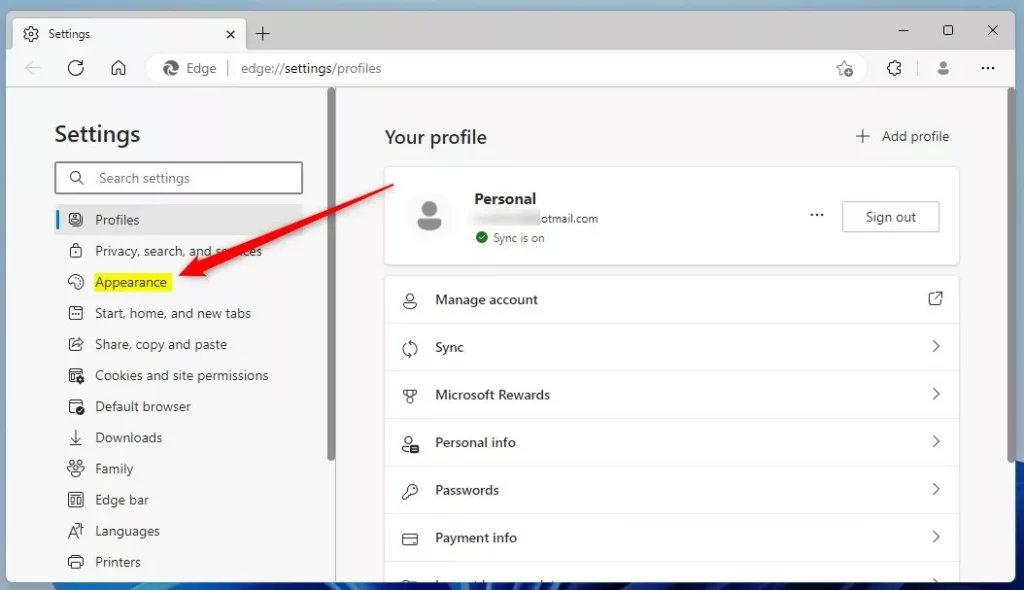
- Click Appearance in the left sidebar. The page on the right switches to the look and feel options, such as theme, zoom and fonts.
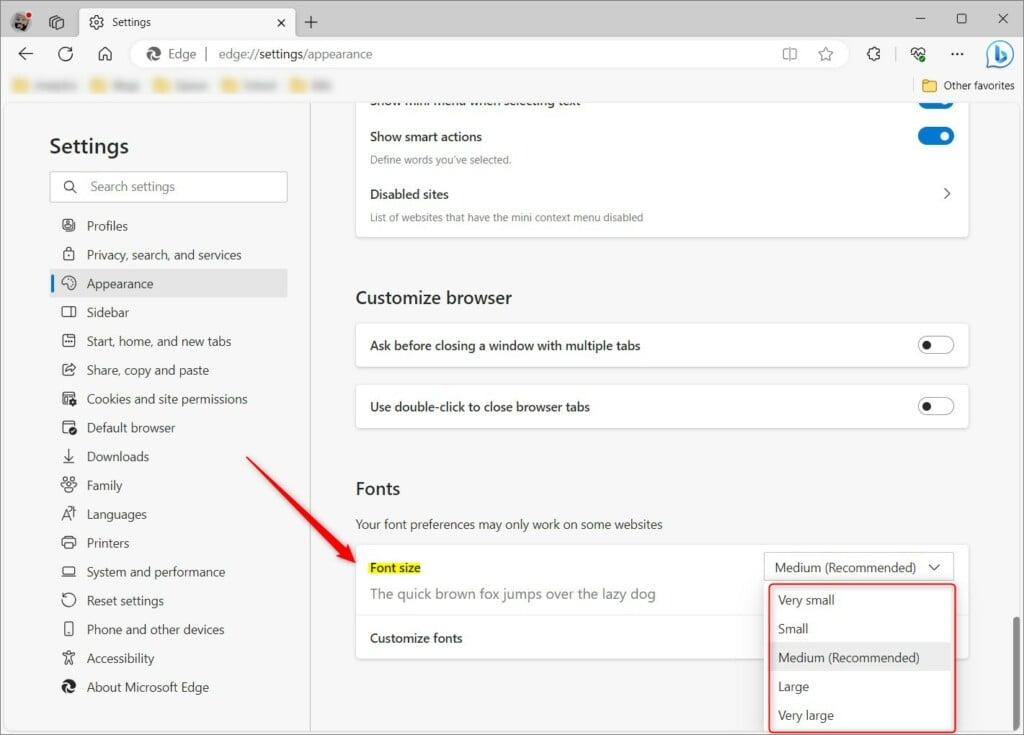
- Scroll down to the Fonts section.
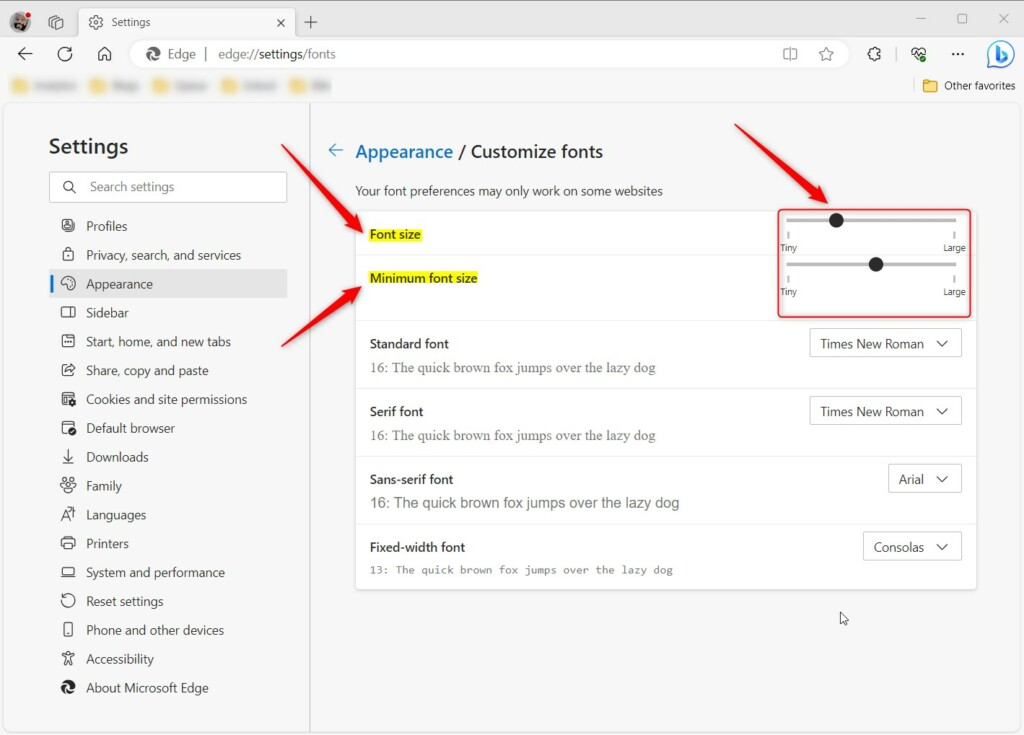
- Make the text larger. Depending on your Edge version, the Font size control is either a drop-down list or a slider. Choose a larger size, or drag the slider to the right. If you see a Minimum font size slider, drag it to the right as well. That stops small text from rendering below the size you set.
The change applies to nearly every website you visit, and any open pages should pick it up right away. A few sites set their text size in a fixed way and may ignore it. For those sites, use the zoom method above. To undo the change, set the controls back to Medium (Recommended), or drag the sliders back to their default positions.
Customize Font in the Microsoft Edge browser
You can go beyond basic sizing and change the actual font style used on web pages. Edge lets you pick separate typefaces for standard text, serif text and fixed-width text, so pages match your reading preferences.
- Open Settings Appearance
- In the Fonts section, click Customize fonts. A page with more font options opens.
- Pick a typeface for each category you want to change. The size sliders are also available here.
They do not change the font in the Edge menus and toolbars. Sites that force their own fonts may not follow your choices. If you pick something you dislike, set each option back to its default in the same menu.
These adjustments help tailor your browsing experience to match your eyesight.
Reference:
Conclusion:
Default font and text sizes in Microsoft Edge take only a few menu clicks to adjust. Use zoom for a quick fix on one page, and the Appearance settings when you want the change everywhere. Tailoring these settings makes reading more comfortable. Drop questions or extra details into the comments section below.
Have a question about this guide?
Answered by AI from this guide. Good questions may be added to this page — please don't include personal details.
Did this guide fix your problem?

About the Author
Richard
Tech Writer, IT Professional
Richard is a writer at Geek Rewind who turns complex IT tasks into clear, step-by-step guides. He draws on years of hands-on experience in system administration and enterprise IT operations, focusing on Windows, Linux and WordPress: the problems people actually run into, and the fixes that work. His server and WordPress guides come from systems he runs himself. Richard builds and maintains the platform behind Geek Rewind, from its Ubuntu servers and Nginx configuration to its custom WordPress plugins. Many new tutorials start with readers' questions, and he's always glad to answer them in the comments.
No comments yet — be the first to share your thoughts!