Enable or Disable Mica Effect in Microsoft Edge


The Mica effect in Microsoft Edge adds a frosted glass look. It blends your browser tabs and address bar with your desktop wallpaper. Microsoft turns this style on by default in Edge version 122.0.2349.0 and newer, so the browser looks like the rest of Windows 11.
You can turn the effect on or off. If you prefer a plain, solid-color title bar, switch it off. Whether you see Mica depends on your hardware and your Windows setup. The effect is a Windows 11 feature, so the option may not appear on older Windows versions. The setting is the same on Home and Pro editions.
To enable or disable the Mica effect in Microsoft Edge, open Settings from the three dots (…) menu, select Appearance, and flip “Show Windows 11 visual effects in browser” to On or Off. Then close and reopen Edge. The option needs Edge 122.0.2349.0 or newer on Windows 11.
Enable or disable the Mica effect in Microsoft Edge
The setting lives in Edge’s own Settings page, under the appearance options. In short, you open the Settings menu, go to Appearance, and flip the switch for Windows 11 visual effects. Then you restart the browser to apply the change. The steps below walk through each part.
- Open Microsoft Edge.
- Click the three dots (…) in the top-right corner. This opens the Settings and more menu.
- Select Settings from the list. A Settings page opens in a new tab.

- On the Settings page, click Appearance in the left-hand menu. If you don’t see the menu, the window may be too narrow. Widen it, or click the menu icon at the top left of the page.
The right side of the page should now show the appearance options, such as theme and toolbar settings.

- On the right side, under Customize appearance, find the “Show Windows 11 visual effects in browser” option.
- Flip the switch to the ‘On’ position to enable Mica, or to ‘Off’ to disable it.
First, make sure Edge is up to date, because the setting only exists in recent versions (122.0.2349.0 and newer). Second, make sure you are on Windows 11. To undo the change later, come back here and flip the switch the other way.
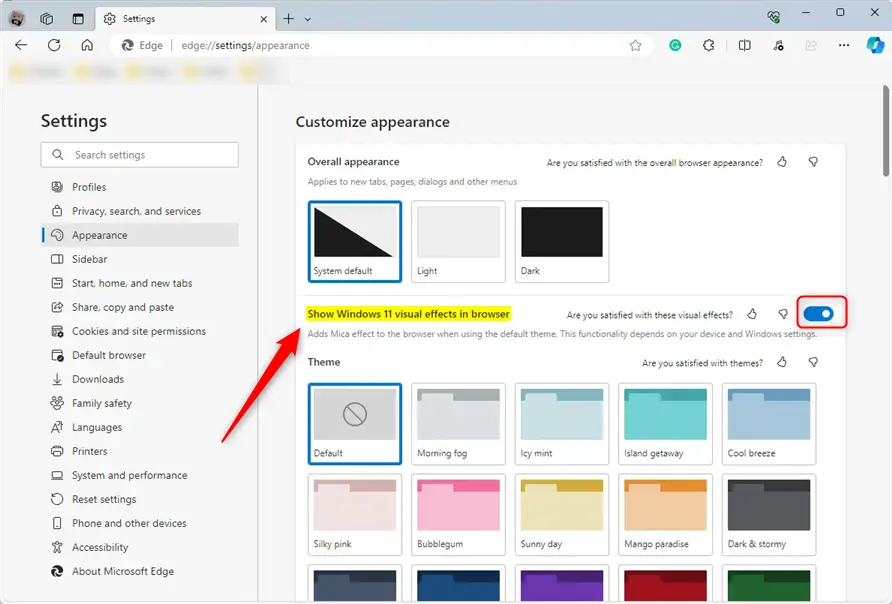
- Close Edge completely and open it again, so the changes take effect. Make sure no Edge windows are left open, or the old look may stay.
When the browser reopens, the title bar and tabs should either show your wallpaper colors faintly (Mica on) or a solid color (Mica off).
In Windows 11, these are under Settings Personalization Colors, where the Transparency effects switch needs to be on. Power-saving modes can also turn off visual effects. If Edge looks different after you change a setting, restart it once more.
Conclusion:
- Enabled or disabled the Mica effect in Microsoft Edge based on personal preference
- Implemented the changes using the Settings menu in the browser
- Successfully restarted the browser for the changes to take effect
Have a question about this guide?
Answered by AI from this guide. Good questions may be added to this page — please don't include personal details.
Did this guide fix your problem?

About the Author
Richard
Tech Writer, IT Professional
Richard is a writer at Geek Rewind who turns complex IT tasks into clear, step-by-step guides. He draws on years of hands-on experience in system administration and enterprise IT operations, focusing on Windows, Linux and WordPress: the problems people actually run into, and the fixes that work. His server and WordPress guides come from systems he runs himself. Richard builds and maintains the platform behind Geek Rewind, from its Ubuntu servers and Nginx configuration to its custom WordPress plugins. Many new tutorials start with readers' questions, and he's always glad to answer them in the comments.
No comments yet — be the first to share your thoughts!