How to Choose App Icons for Windows 11 Taskbar

Taskbar icon selection in Windows 11 lets you pick which app shortcuts sit on the bottom bar of your screen for quick access. This setup keeps up to 20 or more of your most-used programs just one click away, so you stop digging through the Start menu.
Cleaning up this area clears visual mess and speeds up how you open your daily tools. You can pin any program by right-clicking its icon and choosing Pin to taskbar . When your habits change, right-click the icon and choose Unpin from taskbar. Neither action needs a restart, and both are easy to reverse.
Open Settings Personalization Taskbar, then flip the switch next to any built-in item such as Task view, Widgets or Search to Off. Its icon disappears from the taskbar immediately, and no restart is needed. To hide a pinned app instead, right-click its taskbar icon and choose Unpin from taskbar.
How to Open Your Settings
Opening Settings is the first step to change your Windows 11 Taskbar icons. The steps are the same on Home and Pro.
- Press the Win+I to open the Settings app. You should see the Settings window with a list of categories on the left.
- Click Personalization in the left menu.
- Select Taskbar on the right side of the screen. You should now see all the icon controls and display options.
Right-click an empty spot on the taskbar and choose Taskbar settings. It opens the same page.
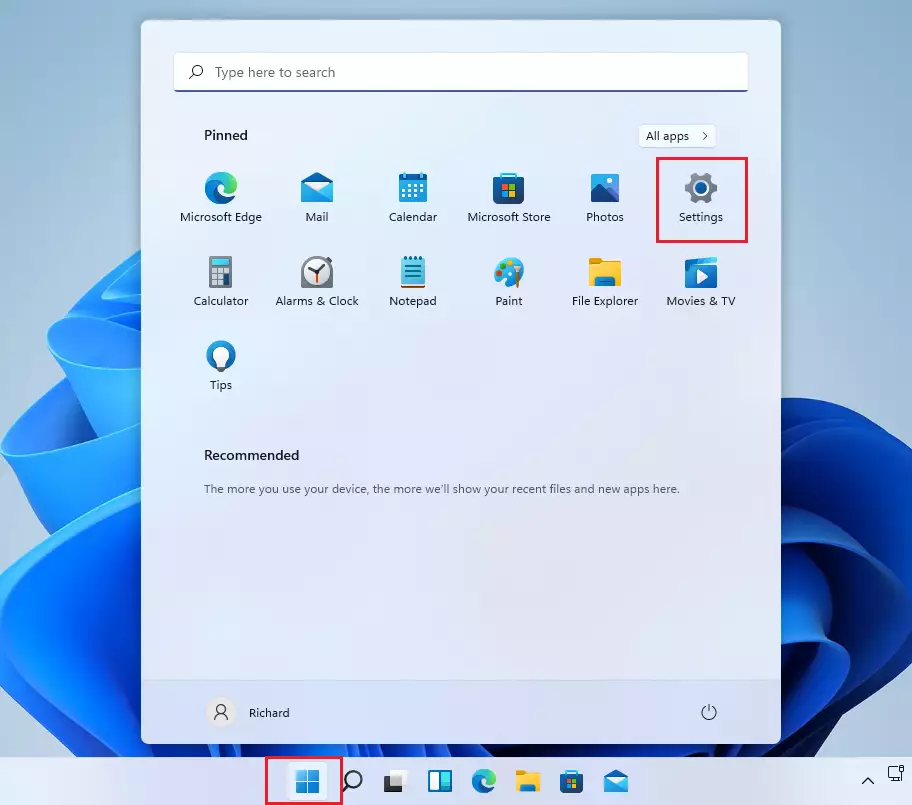
In the Settings window, click Personalization on the left, then select Taskbar on the right. If you don’t see Personalization, scroll the left menu. It sits below Bluetooth & devices, Network & internet and a few other entries.
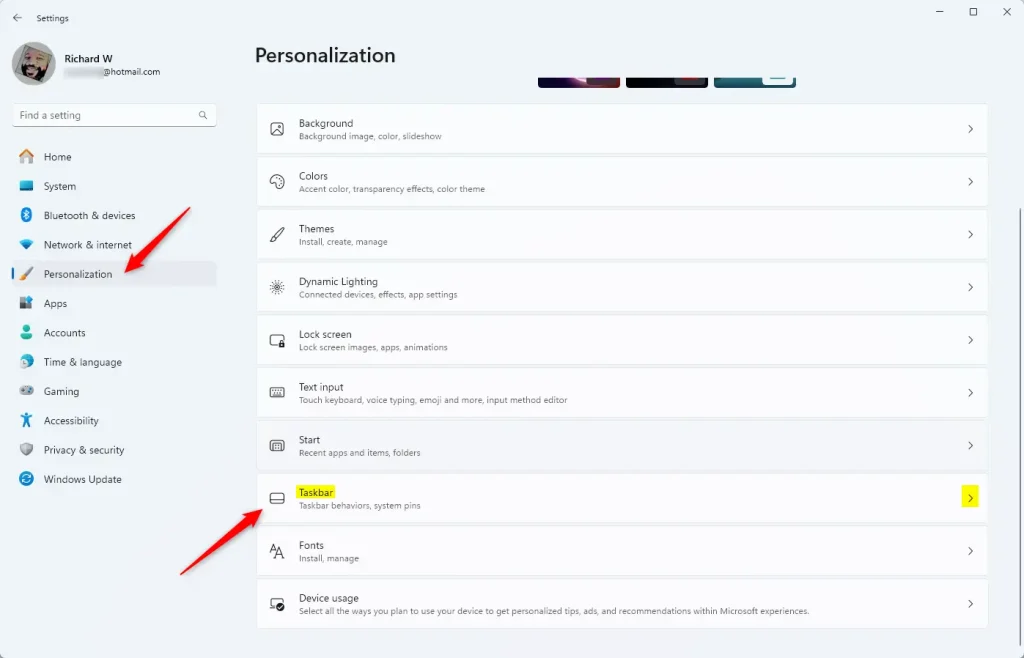
Inside the Taskbar menu, you will see three main areas that control icons:
- Taskbar items: the built-in buttons such as Search, Task view and Widgets
- System tray icons: extras such as the pen menu, touch keyboard and virtual touchpad
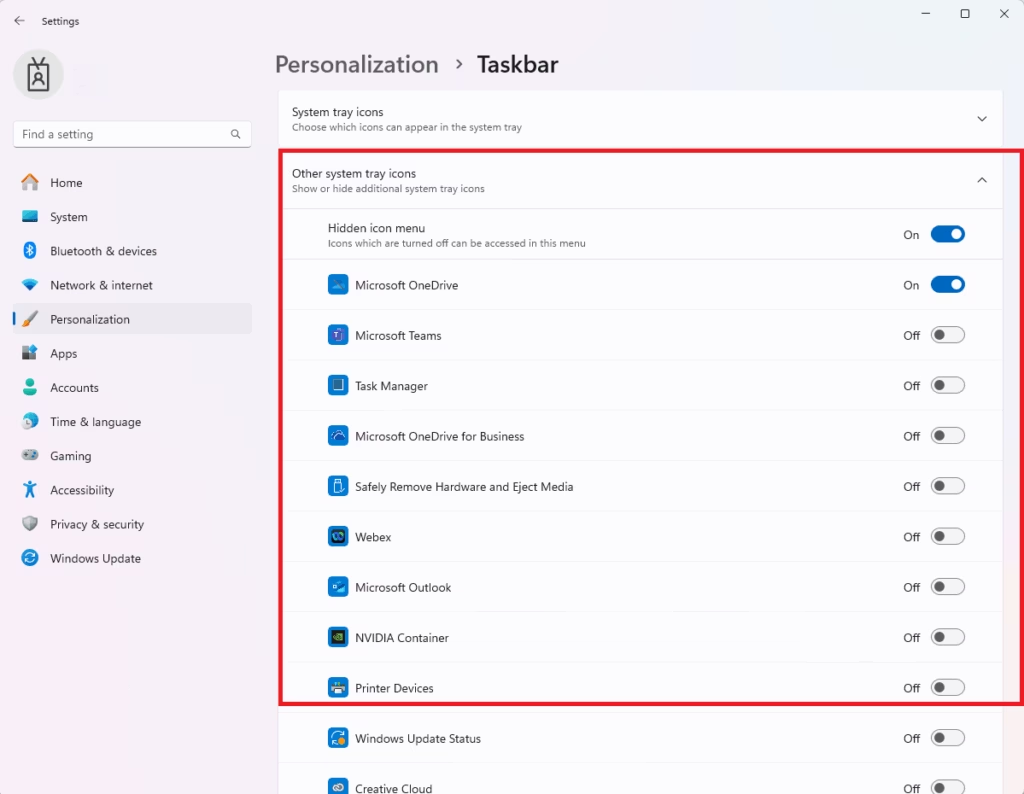
- Other system tray icons: background apps that show in the bottom right corner
Click each section header to expand it and see your choices. Some items only appear on certain devices. For example, the pen menu and touch keyboard options depend on your hardware and build. Below these areas there is also a Taskbar behaviors section, which covers alignment and similar options. This guide does not change it.
Show or Hide Buttons
Managing Windows 11 Taskbar icons lets you remove clutter by hiding default buttons you do not use.
- Open Settings Personalization Taskbar
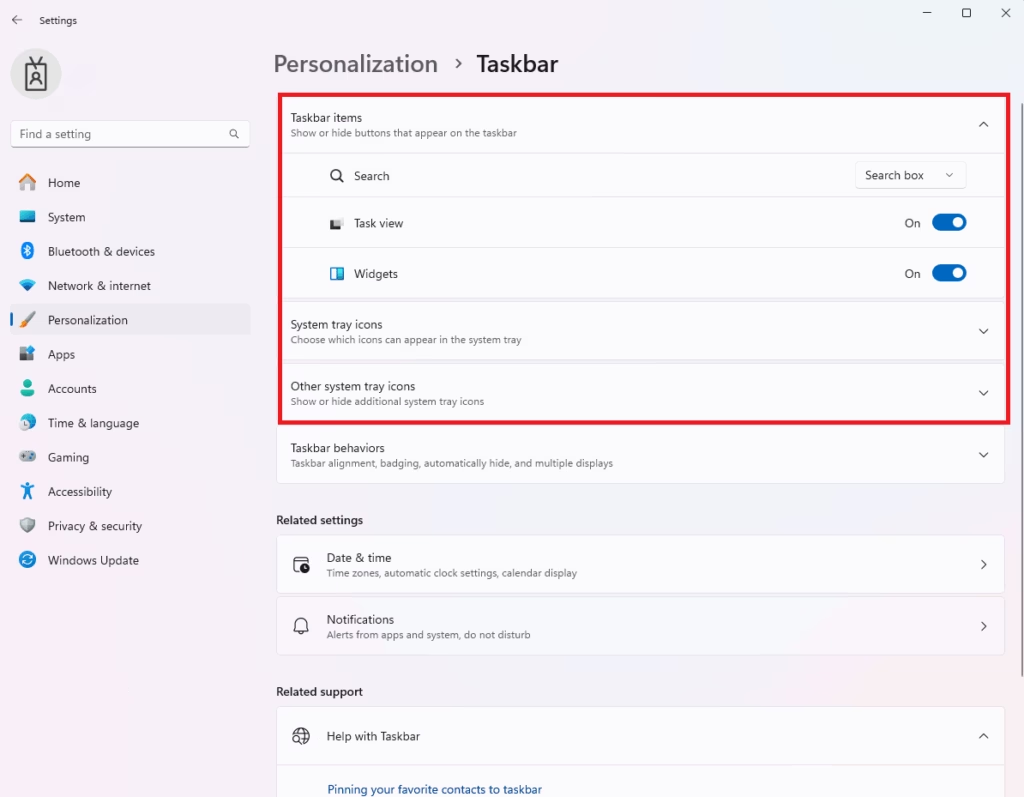
- Find the Taskbar items list. It holds system items like Task view, Widgets and Search. The exact list depends on your Windows 11 version.
- Flip the switch next to any item to Off. Its icon disappears from the taskbar right away.
To bring a button back, flip its switch to On. No restart is needed.
To hide a button on the Windows 11 taskbar, find the switch next to its name and flip it to Off. This removes the icon from your visible taskbar and declutters your workspace.
Apps you pinned yourself don't have a switch here. To remove one, right-click its icon on the taskbar and choose Unpin from taskbar.
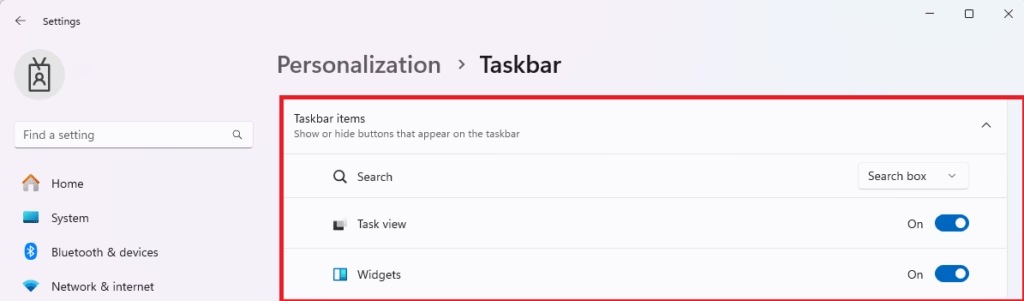
You can adjust these buttons to keep your bar simple. Turn off what you never click and leave on what you use daily. You can change your mind at any time by coming back to this page.

Managing the System Tray
Managing your system tray (the small corner area for background apps) keeps your Windows 11 Taskbar icons neat and tidy.
- Open Settings Personalization Taskbar
- Scroll down to the System tray icons and Other system tray icons sections, and expand them if they are collapsed. Each entry shows an app name with a toggle.
- Turn off the toggle for any background app you want to hide from the bottom right corner.
A turned-off app keeps running. Its icon moves out of the corner, and you can still reach it from the hidden icon drawer covered further down.
To stop an icon from showing in the corner, flip its switch to Off in the system tray settings section. To show it again, flip the switch back to On.
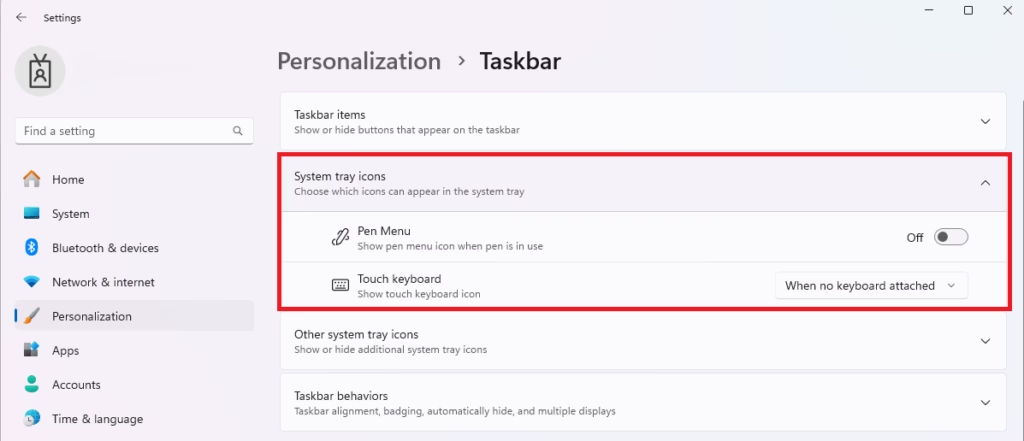
Hiding icons you don't use will keep your corner area tidy. Leave on the ones you need to see at a glance, such as battery, network or a backup tool.

Using the Overflow Area
The overflow area is a hidden drawer that stores extra Windows 11 Taskbar icons when your screen runs out of space or when you have turned them off in Settings.
- Look at the right side of your taskbar, next to the clock and system icons.
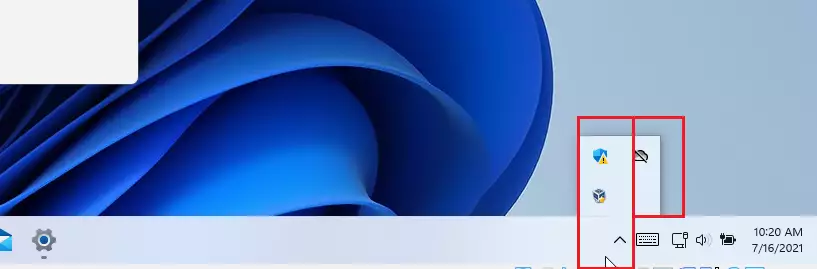
- Click the small up-arrow icon. A small panel opens with the hidden icons.
- Click an icon in the panel to use that app, without opening the full Settings menu.
If you don't see the arrow, nothing is currently hidden. The arrow may also be missing on builds where the hidden icon menu is switched off in the taskbar settings.
The Windows 11 taskbar's hidden icon drawer appears when you click the small up-arrow icon. This drawer shows all extra app icons that do not fit on the main taskbar or that you chose to hide.
Click that arrow to access your hidden icons whenever you need them. You can also drag an icon from the drawer onto the taskbar corner to show it again, or drag one from the corner into the drawer to hide it.
Summary
Customizing your Windows 11 Taskbar icons helps you find your favorite apps faster and keeps your desktop clean. Press Windows + I to open Settings, go to Personalization, and select Taskbar to change what appears on your screen. You can show or hide system items and background apps to fit your daily routine, and pin or unpin your own apps with a right-click.
Hiding unneeded icons makes your taskbar less cluttered, letting important apps stand out. Every change here is reversible, so try a setup for a few days and adjust it.
- Open System Settings with Windows key + I.
- Go to Personalization and then Taskbar to see your options.
- Use the toggle switches to show or hide your buttons and icons. Flip a switch back to On to undo it.
- A tidy taskbar prevents you from missing notifications and improves your daily workflow.
Have a question about this guide?
Answered by AI from this guide. Good questions may be added to this page — please don't include personal details.
Did this guide fix your problem?

About the Author
Richard
Tech Writer, IT Professional
Richard is a writer at Geek Rewind who turns complex IT tasks into clear, step-by-step guides. He draws on years of hands-on experience in system administration and enterprise IT operations, focusing on Windows, Linux and WordPress: the problems people actually run into, and the fixes that work. His server and WordPress guides come from systems he runs himself. Richard builds and maintains the platform behind Geek Rewind, from its Ubuntu servers and Nginx configuration to its custom WordPress plugins. Many new tutorials start with readers' questions, and he's always glad to answer them in the comments.
[…] pane. You can access the Settings page by clicking the OneDrive icon on the Taskbar (Taskbar overflow) and selecting the gear -> Settings on the context […]
[…] pane. You can access the Settings page by clicking the OneDrive icon on the Taskbar (Taskbar overflow) and selecting the gear -> Settings on the context […]
[…] user prints in Windows, a printer icon is usually displayed in the Windows notification area or the taskbar corner overflow […]
[…] pane. You can access the Settings page by clicking the OneDrive icon on the Taskbar (Taskbar overflow) and selecting the gear -> Settings on the context […]
[…] click the Phone Link background app icon on the Taskbar (Taskbar overflow) to […]
[…] You can also quickly access the OneDrive icon from the Taskbar overflow. […]
[…] When the “Minimize to system tray” option is selected, the Signal app will start and launch in the Taskbar app overflow pane. […]
[…] When the “Launch minimized” option is selected, the Telegram app will start and launch in the Taskbar app overflow pane. […]
[…] the Google Drive icon in the Taskbar overflow and select Settings -> Offline files to see all offline […]
[…] pane. You can access the Settings page by clicking the OneDrive icon on the Taskbar (Taskbar overflow) and selecting the gear -> Settings on the context […]
[…] pane. You can access the Settings page by clicking the OneDrive icon on the Taskbar (Taskbar overflow) and selecting the gear -> Settings on the context […]
[…] click the Phone Link background app icon on the Taskbar (Taskbar overflow) to […]
[…] settings pane. You can access the Settings page by clicking the OneDrive icon on the Taskbar (Taskbar overflow) and selecting the gear -> Settings on the context […]
[…] can also open the OneDrive app icon on the taskbar notification area (Taskbar overflow). When the app opens, click Get started if this is the first time you see Personal […]
[…] You can also quickly access the OneDrive icon from the Taskbar overflow. […]
[…] You can also quickly access the OneDrive icon from the Taskbar overflow. […]
[…] You can also quickly access the OneDrive icon from the Taskbar overflow. […]
[…] might need to click the Show hidden icons arrow next to the notification area to see the OneDrive icon. If the icon doesn’t […]
[…] might need to click the Show hidden icons arrow next to the notification area to see the OneDrive icon. If the icon […]
[…] settings pane. You can access the Settings page by clicking the OneDrive icon on the Taskbar (Taskbar overflow) and selecting the gear -> Settings on the context […]
[…] settings pane. You can access the Settings page by clicking the OneDrive icon on the Taskbar (Taskbar overflow) and selecting the gear -> Settings on the context […]
[…] settings pane. You can access the Settings page by clicking the OneDrive icon on the Taskbar (Taskbar overflow) and selecting the gear -> Settings on the context […]
[…] You can also quickly access the OneDrive icon from the Taskbar overflow. […]
[…] You can also quickly access the OneDrive icon from the Taskbar overflow. […]
[…] you turn on Bluetooth on Windows, a notification icon will show on the taskbar or corner overflow by default. If Bluetooth is turned off or disabled, you will not see its icon on the taskbar or […]
[…] do that, click the OneDrive icon on the Taskbar (Taskbar overflow) to open the menu. Then click the Lock Personal Vault button to lock your […]
[…] quickest way to open and use the touch keyboard is from the Taskbar corner icon’s […]
[…] click the Phone Link background app icon on the Taskbar (Taskbar overflow) to […]
[…] First, click on the Start menu -> All apps -> and select Phone Link. Alternatively, click the Phone Link background app on the Taskbar (Taskbar overflow). […]
[…] article explains how to hide (remove) or unhide (add) the Copilot button on the Taskbar in Windows […]
[…] click the Phone Link background app icon on the Taskbar (Taskbar overflow) to […]
[…] Other default icons added to the Taskbar in Windows 11 can not be removed easily by right-clicking and unpinning. You will have to use the Windows Settings app to hide these icons. […]
[…] might need to click the Show hidden icons arrow next to the notification area to see the OneDrive icon. If the icon doesn’t […]
[…] Open the Phone Link app on your computer. You can find it in your Start menu under All apps, or by clicking the icon in your Taskbar (Taskbar overflow). […]
[…] Look at the bottom right of your screen on the Taskbar. Click the little up-arrow icon. Then, click the OneDrive cloud icon. Taskbar or Taskbar overflow menu. […]
[…] To control your speeds, first set up OneDrive in Windows 11. If you have files you do not want to download, open the OneDrive app. You can find it in the Start menu or at C:Program FilesMicrosoft OneDriveOneDrive.exe. You can also click the OneDrive icon in the Taskbar overflow. […]