How to Control Phone Link App Startup in Windows 11

Phone Link is a built-in Windows 11 tool that connects your Android phone to your PC so you can view texts, photos, and calls right on your screen. The app can start automatically every time you sign in, which uses memory and background resources. That matters most on older or low-memory PCs, and if you rarely use the app.
You can stop Phone Link from opening at startup with a few quick settings in Windows 11 version 23H2 or later. There are three places to do it: the app itself, Windows Settings , and Task Manager . They work on both Home and Pro editions, and none of them needs a restart. The change takes effect the next time you sign in. Turning off the startup setting does not uninstall Phone Link or unpair your phone. You can still open the app by hand whenever you want.
Manage Phone Link startup through its settings, Windows Settings , or Task Manager . To disable, open Phone Link, go to Settings General, and toggle off “Start Phone Link when I sign in to Windows.” Alternatively, navigate to Settings Apps Startup and turn off the toggle for Phone Link.
Option 1Use Phone Link App Settings
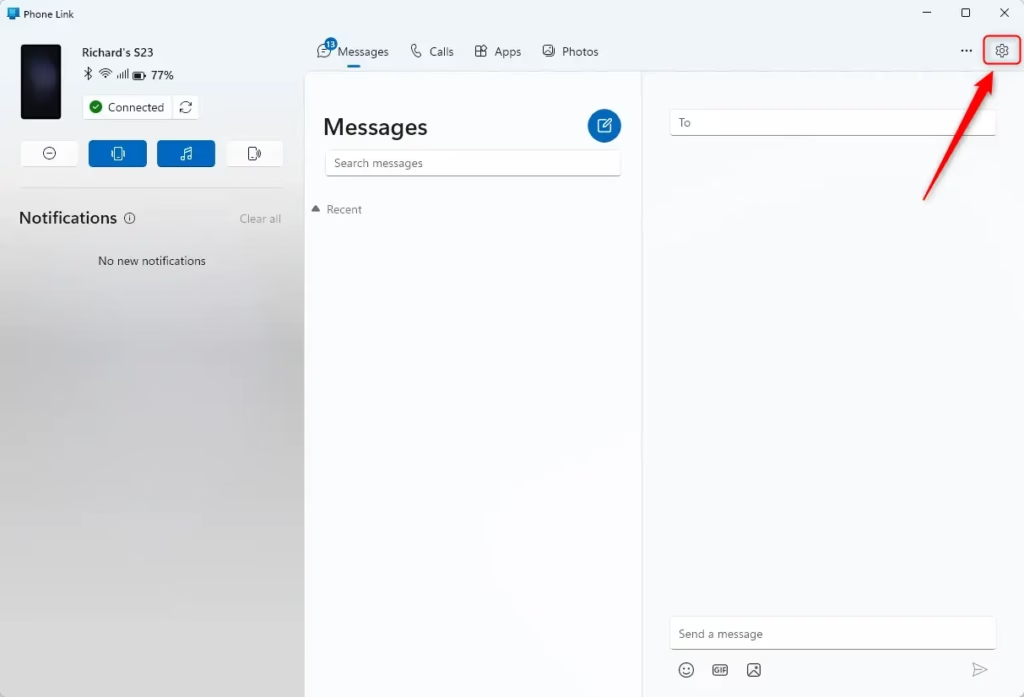
You can manage startup from inside the app, without opening the Windows system preferences. Open Phone Link, click the gear icon, and switch off the option that launches the app when you sign in. This is the easiest method, but it is also the one with the lowest priority. The other two methods can override it.
- Open the Phone Link app. Type “Phone Link” in the Windows search bar and select the app. The Phone Link window should open. If you haven’t paired a phone yet, you may see a setup screen. You can still reach Settings from there.
- Click the gear icon. Look for the gear symbol, usually in the top right or bottom left corner of the window. Click it to open the settings panel.
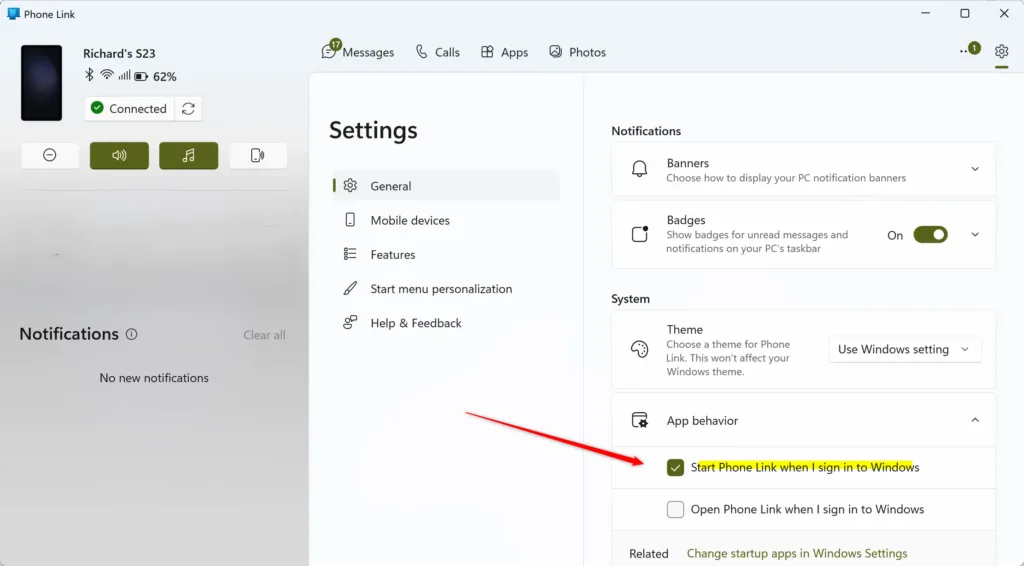
- Go to the General section. In the settings menu, click General. The options for the app’s overall behavior should appear.
- Find App behavior. Under General, look for the section named App behavior.
- Choose your setting. Find the option that reads something like “Start Phone Link when I sign in to Windows.”
- Turn the switch on (or check the box) if you want Phone Link to start automatically when you sign in.
- Turn the switch off (or uncheck the box) if you don’t want it to start automatically. The original guidance lists off as the default, but many PCs have it on. Check it rather than assume.
To undo the change, come back to this same screen and flip the switch the other way.
Think of it as the primary switch for Phone Link’s startup behavior, but not the final word. If the option is greyed out or won’t change, the app has been disabled in Windows Settings or Task Manager . Fix it there first.
Option 2Use Windows Settings
Windows Settings lets you control Phone Link startup from the Apps section in Windows 11. Open Settings, go to the apps category, and open the startup list. From there you can turn off any program that slows down your PC when it boots, not only Phone Link.
- Open Windows Settings. Press
Windows key + Itogether, or click the Start button and choose the Settings cogwheel. The Settings window should open. - Go to Apps. In the Settings window, click Apps in the list on the left.
- Find the Startup settings. On the right side, click Startup. The full path is Settings Apps Startup You should now see a list of every app that can start with Windows, each with an On/Off toggle.
- Find and change Phone Link. Scroll down to find Phone Link. On some systems it is called Link to Windows. Use the toggle switch next to it.
- Set it to Off to stop it from starting automatically.
- Set it to On to let it start automatically.
If you can't find Phone Link in the list, you may have to sort or scroll further. The list can be long. You can also use the search box at the top of the Startup page, if your build has one.
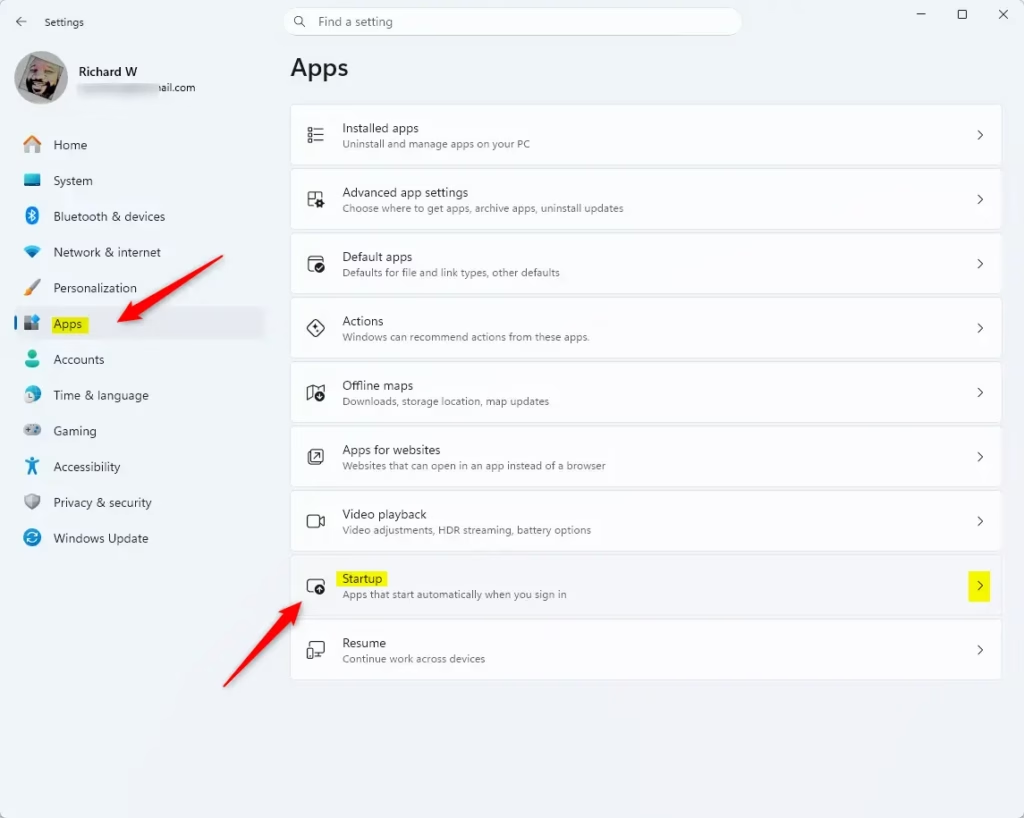
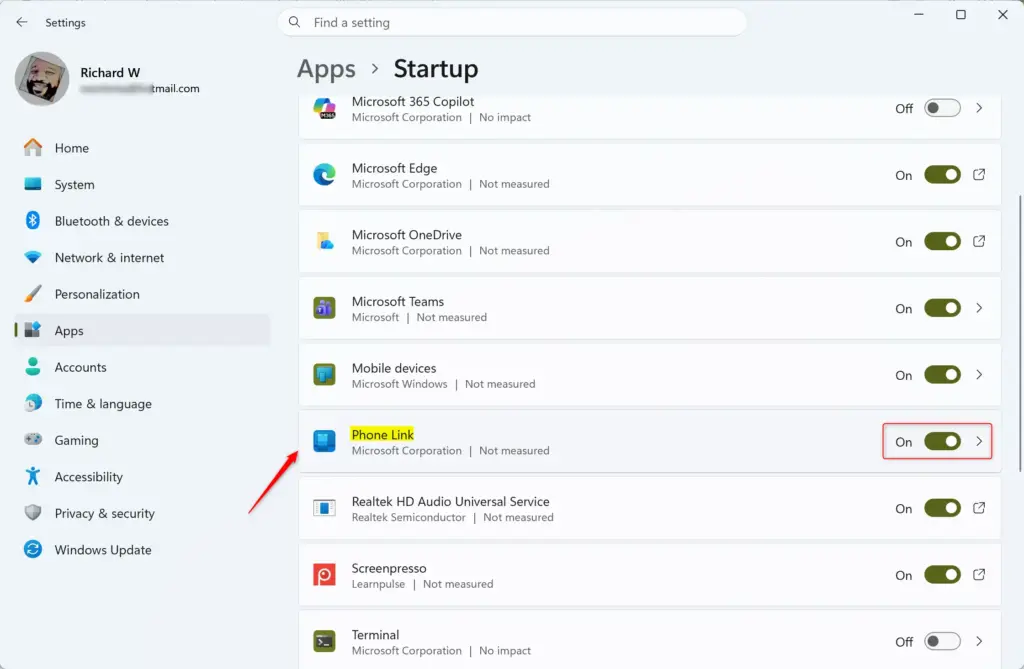
Important Note: If you disable Phone Link here, the startup option inside the Phone Link app (Option 1) becomes locked and unchangeable. Windows Settings holds the ultimate control in this case. To get the in-app option back, switch Phone Link to On in this list again.
Fewer startup apps usually means a quicker boot and a more responsive desktop right after you log in.
Close the Settings window once you are done. The change takes effect at your next sign-in.
Option 3Use Task Manager
Task Manager shows a complete list of the programs that run when Windows boots, and it lets you disable them one at a time. Open it with the keyboard shortcut, go to the startup apps tab, and disable anything you don't want opening on its own.
- Open Task Manager. Press
Ctrl + Shift + Esctogether. Or right-click the Start button and select Task Manager. The Task Manager window should open. - Go to the Startup apps tab. Look for Startup apps in the left-hand menu or the row of tabs. If you only see a short list of running programs and no tabs, click More details first.
- Find Phone Link. Scroll through the list and find Phone Link or a similar name. The Status column shows whether it is currently Enabled or Disabled.
- Enable or disable it. Select the Phone Link entry. A button appears for it, in the toolbar at the top or at the bottom of the window depending on your build. You can also right-click the entry to get the same choice.
- If Phone Link is set to start automatically, the button says Disable. Click it to stop it from starting.
- If it is not set to start automatically, the button says Enable. Click it to make it start with Windows.
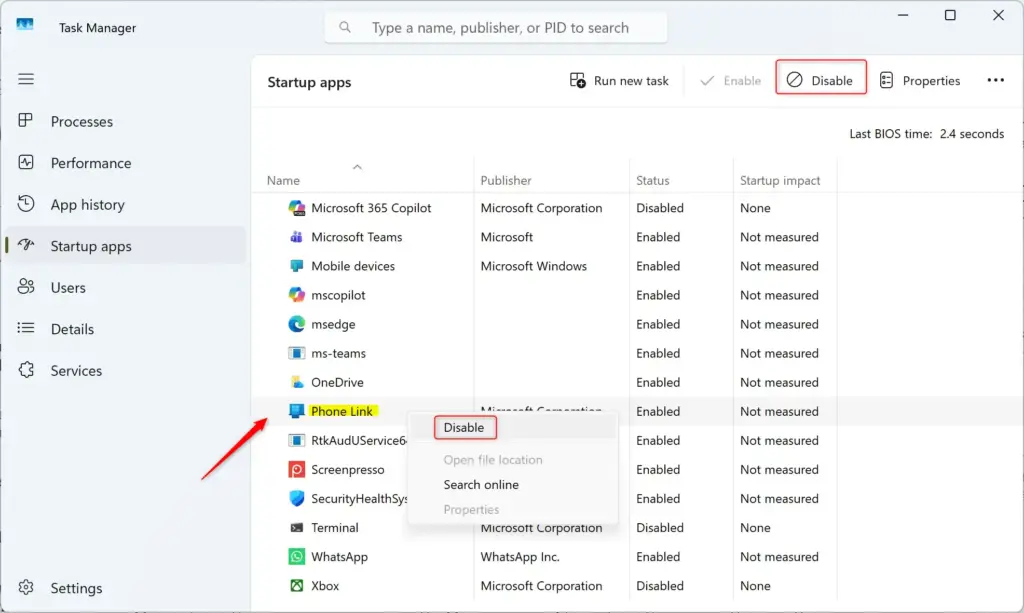
Crucial Point: Like Windows Settings, disabling Phone Link here also locks the startup option inside the Phone Link app itself (Option 1). Task Manager ultimately decides the startup behavior. To unlock the in-app switch, set the entry back to Enabled.
Warning: Be careful with other entries in this list. Make sure you understand what an application does before stopping it from starting automatically. Disabling critical system programs, such as security software or drivers, could cause problems. If you're unsure, leave it alone or look it up first.
Close Task Manager. Your selections take effect the next time you log into Windows.
Summary
You have three main ways to control whether Phone Link starts automatically when you log into Windows 11. You can change the startup setting inside the app, in Windows Settings, or in Task Manager. Windows Settings and Task Manager take priority over the app. If the in-app switch is locked or greyed out, check those two places for a disabled Phone Link entry. For most people, the quickest fix is to switch it off in Settings Apps Startup
Have a question about this guide?
Answered by AI from this guide. Good questions may be added to this page — please don't include personal details.
Did this guide fix your problem?

About the Author
Richard
Tech Writer, IT Professional
Richard is a writer at Geek Rewind who turns complex IT tasks into clear, step-by-step guides. He draws on years of hands-on experience in system administration and enterprise IT operations, focusing on Windows, Linux and WordPress: the problems people actually run into, and the fixes that work. His server and WordPress guides come from systems he runs himself. Richard builds and maintains the platform behind Geek Rewind, from its Ubuntu servers and Nginx configuration to its custom WordPress plugins. Many new tutorials start with readers' questions, and he's always glad to answer them in the comments.
[…] you sign in to Windows, the Phone Link app will automatically startup and run in the background by default. After that, it will continue to sync with your phone using its background processes. […]
[…] app. It is required to have Bluetooth turned on, paired, and connected for both your PC and linked phone. Whatever you do on your phone, like sending emojis, GIFs, and pictures via text messages, can also […]
[…] Using the Phone Link app, you can make and receive phone calls in Windows. It is required to have Bluetooth turned on, paired, and connected for both your PC and linked phone. […]