How to Enable OneDrive Sync In Windows 11 Battery Saver Mode


- 20 steps
- Needs administrator rights
- Group Policy needs Windows 11 Pro, Enterprise or Education
- Includes a restart or sign-out
To keep OneDrive syncing in battery saver mode, open the OneDrive app settings and uncheck Automatically pause sync when this device is in battery saver mode. You find it under Help & Settings Settings Sync and backup, and you do not need admin rights. If the checkbox is missing or locked, there are two admin-level fallbacks (the registry and Group Policy), plus a way to check whether Windows is still throttling OneDrive. That way your files stay backed up while you still save power in other ways.
Uncheck the “Automatically pause sync when this device is in battery saver mode” option in OneDrive settings. Click the OneDrive cloud icon, go to Help & Settings, then Settings, and navigate to the Sync and backup tab. This allows OneDrive to sync continuously even when battery saver is active.
Why OneDrive Sync Pauses in Battery Saver Mode
OneDrive has a setting that pauses syncing automatically when Windows turns on battery saver. Battery saver limits background activity to stretch your battery life, and OneDrive syncing counts as background activity. By default, Windows 11 turns battery saver on when the battery drops to 20%. You can change that level in Settings System Power & battery.
Newer Windows 11 builds may call the feature Energy saver instead of Battery saver. If you have seen it called Windows saver mode, it is the same feature under another name.
When OneDrive pauses, you will see a paused status on its cloud icon. Your files are not lost. Changes just wait on the PC until syncing resumes.
What Happens When You Disable Battery Optimization
If you turn this setting off, OneDrive keeps syncing even when the battery is low. Your documents stay up to date in the cloud, which matters if you edit files on more than one device or rely on OneDrive as a backup.
The cost is battery life. The PC has to keep the network connection and processor busy with background work, so the battery drains faster. A large first sync or a big batch of changed files makes this worse. If you are on the road with no charger, think about whether you need the sync right now.
Comparison: Battery Saver vs. Balanced Mode
| Feature | Battery Saver Mode | Balanced Mode |
|---|---|---|
| Sync Frequency | Paused or Throttled | Continuous |
| Background Apps | Restricted | Full Access |
| Power Usage | Low | Moderate/High |
How to Enable OneDrive Sync in Battery Saver Mode
These steps let OneDrive keep syncing while your PC is in battery saver mode. It is a single setting in the OneDrive app. You do not need admin rights, and it only affects the account you are signed in with.
- Click the OneDrive cloud icon in your taskbar. If you do not see it, click the Show hidden icons arrow in the system tray first. A OneDrive panel opens showing your sync status.
- Open Help & Settings Settings. Use the gear icon in the OneDrive panel to find Help & Settings, then click Settings. The OneDrive settings window opens.
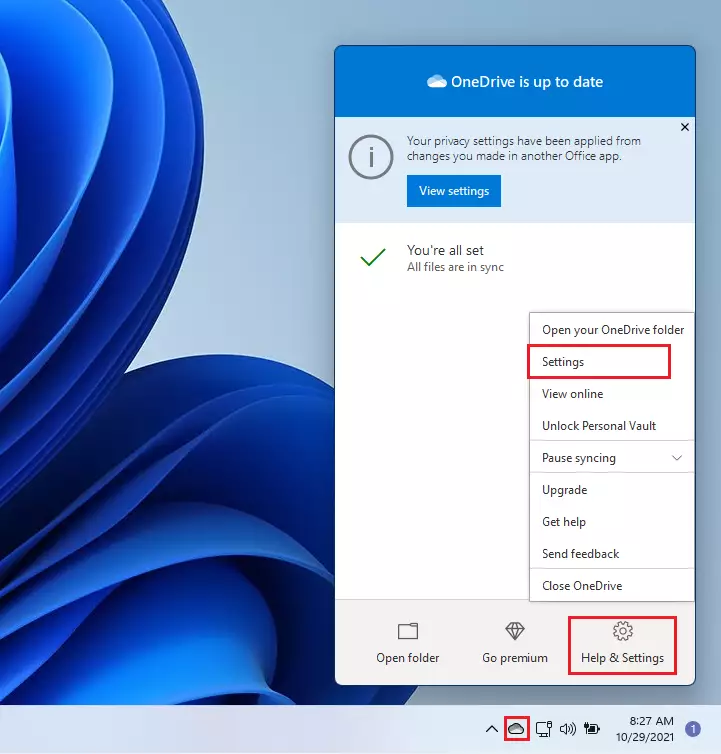
- Click the Sync and backup tab. It is in the left pane. Depending on your OneDrive version, the option may sit lower on this tab or under Advanced settings, so scroll if you do not see it straight away.
- Find Automatically pause sync when this device is in battery saver mode. If the box is checked, OneDrive pauses whenever battery saver is on.
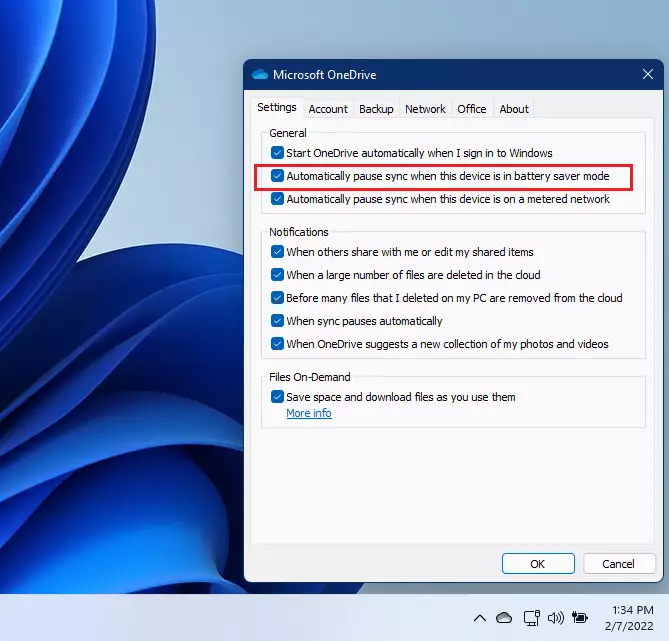
- Uncheck the box. This allows continuous syncing. The change applies right away and you do not need to restart.
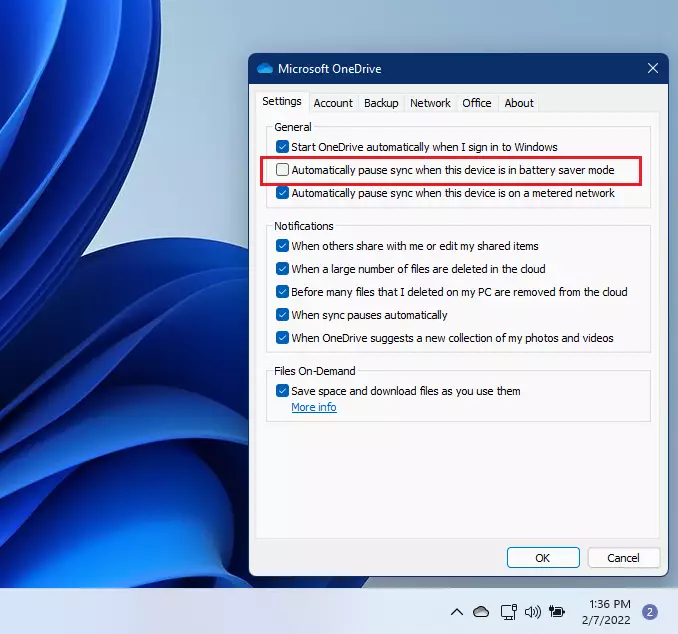
- Close the settings window. To undo the change later, come back to the same place and check the box again.
If the option is missing or greyed out, your OneDrive may be out of date, or your organization may manage it with a policy. Update OneDrive first, or ask your IT admin.
Advanced Troubleshooting: Registry and Group Policy
If the app setting does not work, you can force the behavior with the registry or Group Policy. Note: These steps require admin privileges. Both change system-wide behavior, so use them only when the checkbox is not enough or is locked.
Using Registry Editor
You can modify the registry to prevent power throttling for OneDrive. Back up the registry first, or create a restore point, because a wrong edit can cause problems. Then follow these steps:
- Open
regedit. Approve the User Account Control prompt if it appears. - Navigate to
HKEY_CURRENT_USER\Software\Microsoft\OneDrive. If part of the path does not exist, you may need to create the missing key. - Right-click in the right pane and choose New, then DWORD (32-bit) Value. A new value appears in the list, ready to be named.
- Name the new value
DisablePauseOnBatterySaver. - Double-click the value and set it to
1, then click OK. - Restart the PC, or sign out and back in. The change does not take effect until you do.
To undo this, delete the value you created or set it back to its previous data, then restart.
Using Group Policy Editor
If you are on Windows 11 Pro, Enterprise, or Education, you can check Group Policy. This is not available on Windows 11 Home, so Home users should stick with the registry method above. Follow these steps:
- Open
gpedit.msc. The Local Group Policy Editor opens. - Go to
Computer Configuration\Administrative Templates\OneDrive. - Look for policies related to power management. Double-click each one that could affect background activity to open its settings.
- Set each one to Disabled or Not Configured, then click OK. This lets Windows allow normal operation.
Policy changes usually apply after a restart. You can also sign out and back in. If the PC belongs to a work or school domain, a domain policy may override your local settings. To undo your change, set the policy back to its earlier state.
Pro Tip: Check Throttling in Task Manager
Task Manager can show whether Windows is still throttling OneDrive. Here is how to check:
- Press Ctrl+Shift+Esc. Task Manager opens.
- Select the Details tab in the left pane. A list of running processes appears.
- Right-click any column header, choose Select columns, tick Power throttling, and click OK. Skip this if the column is already showing.
- Find OneDrive.exe in the list. Read its Power throttling value.
If it shows "Enabled," Windows is actively limiting OneDrive's performance. If it shows "Disabled," OneDrive can run at full speed. The status can change as conditions change, so check it while battery saver is on.
Summary
By default, the OneDrive battery saver setting stops syncing while battery saver is on, which protects your battery when it runs low. If you would rather keep files current, uncheck the option in the OneDrive settings. If the checkbox is not enough, use the registry or Group Policy methods. Keep an eye on your battery level afterward.
Frequently asked questions
Will OneDrive sync when computer is asleep?
No. OneDrive stops syncing when your PC goes to sleep, because the computer stops running background tasks. When you wake the PC and it reconnects to the internet, OneDrive picks up where it left off and uploads or downloads the changes. Changes saved before sleep are not lost.
Does my OneDrive sync when computer is sleeping?
No. Sleep pauses OneDrive syncing along with everything else on the PC. Syncing starts again when you wake the computer and it is connected to the internet. If a sync needs to finish, keep the PC awake until the OneDrive icon shows a green checkmark instead of sync arrows.
Does OneDrive sync in sleep mode?
No. OneDrive does not run in sleep mode. Sleep stops the computer's background activity, so OneDrive waits. Syncing resumes when the PC wakes and reconnects to the internet. Files that changed during sleep upload or download then. Check the OneDrive icon in the notification area to confirm the sync finishes.
Does onedriver sync while my PC is sleeping?
No. The OneDrive app does not sync while your PC is sleeping. Sleep halts background work, including syncing. Once the PC wakes and is online, OneDrive resumes and catches up on any changes. Your files stay safe in the meantime, and nothing is lost.
How to put OneDrive to sleep?
OneDrive has no sleep mode. To pause syncing for a while, click the OneDrive cloud icon in the notification area, select Help & Settings, then choose Pause syncing and pick 2, 8, or 24 hours. Syncing resumes automatically when the pause ends. To sleep the whole computer, go to Start, then Power, then Sleep.
Still have a question?
Answered by AI from this guide. Good questions may be added to this page — please don't include personal details.
Did this guide fix your problem?

About the Author
Richard
Tech Writer, IT Professional
Richard is a writer at Geek Rewind who turns complex IT tasks into clear, step-by-step guides. He draws on years of hands-on experience in system administration and enterprise IT operations, focusing on Windows, Linux and WordPress: the problems people actually run into, and the fixes that work. His server and WordPress guides come from systems he runs himself. Richard builds and maintains the platform behind Geek Rewind, from its Ubuntu servers and Nginx configuration to its custom WordPress plugins. Many new tutorials start with readers' questions, and he's always glad to answer them in the comments.
No comments yet — be the first to share your thoughts!