How to Pause and Resume OneDrive Sync On Windows 11


Pausing OneDrive (a cloud storage service built into Windows) on Windows 11 stops file uploads and downloads for 2, 8, or 24 hours. It saves internet data and frees up bandwidth and PC resources. You control it from the OneDrive cloud icon in your taskbar , near the clock. The icon is blue for a personal account and a darker blue for a work or school account.
Stopping sync helps when you want to play online games or watch videos without a slow connection. Any changes you make to your files stay on your computer until you resume, and OneDrive then uploads them. Nothing is lost while sync is paused.
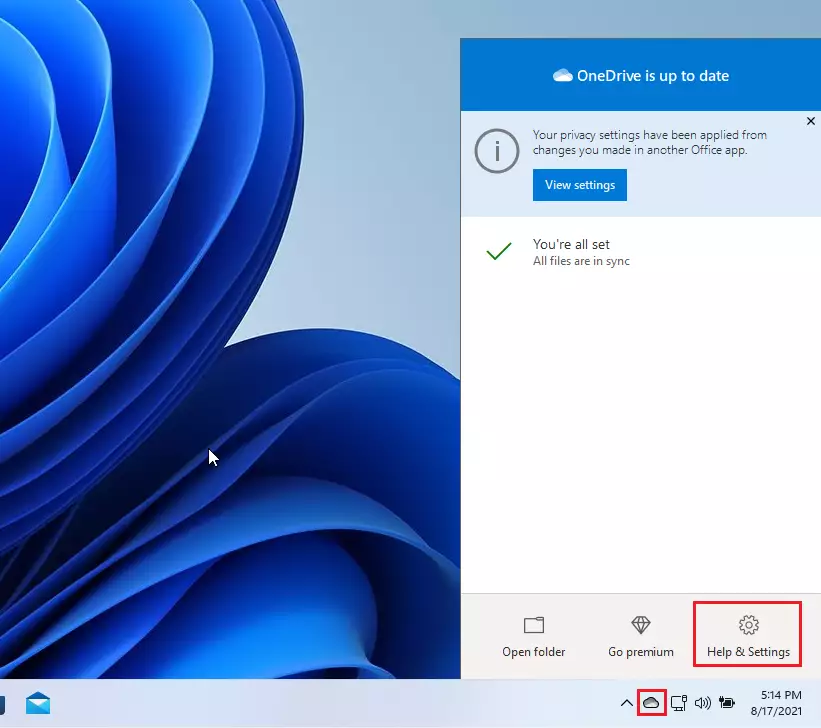
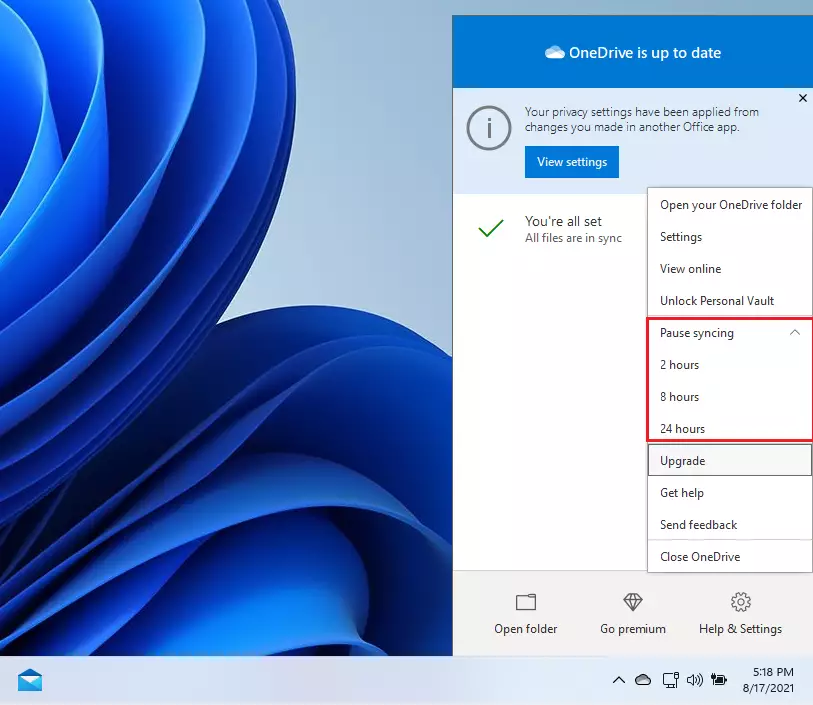
Click the OneDrive cloud icon in the System Tray at the bottom right of your taskbar , select the gear icon for Help & Settings, click Pause syncing, and choose 2 hours, 8 hours, or 24 hours. Sync stops immediately and resumes automatically when the time expires.
How to Identify the OneDrive Icon
The OneDrive icon is in the System Tray (the area on the right side of the taskbar that shows background apps), at the bottom right of your screen next to the clock.
If you don’t see the cloud, click the small Show hidden icons arrow (the caret) in the same area. The icon is probably tucked into that overflow panel. If it isn’t there either, OneDrive may not be running. Open the Start menu , type OneDrive, and launch it from the results.
How to Pause OneDrive Sync 🪟 Windows 11
Pause sync when your internet is slow or you need all your bandwidth for something else. In short: open the notification area in the bottom right corner, click the OneDrive cloud icon, select the gear icon for Help & Settings, click Pause syncing, and pick how long you want updates to stop. The numbered steps below show what you should see at each point.
- Click the OneDrive cloud icon in the System Tray . A small OneDrive panel opens above the taskbar and shows your recent sync activity.
- Click the Help & Settings gear icon in the top right corner of the panel. A menu drops down.
- Select Pause syncing. A submenu appears with three time options.
- Choose 2 hours, 8 hours, or 24 hours. The menu closes and sync stops right away.
Pick the shortest time that covers what you’re doing. OneDrive resumes by itself when the time runs out, so you don’t have to remember to turn it back on. The steps are the same on Windows 11 Home and Pro.
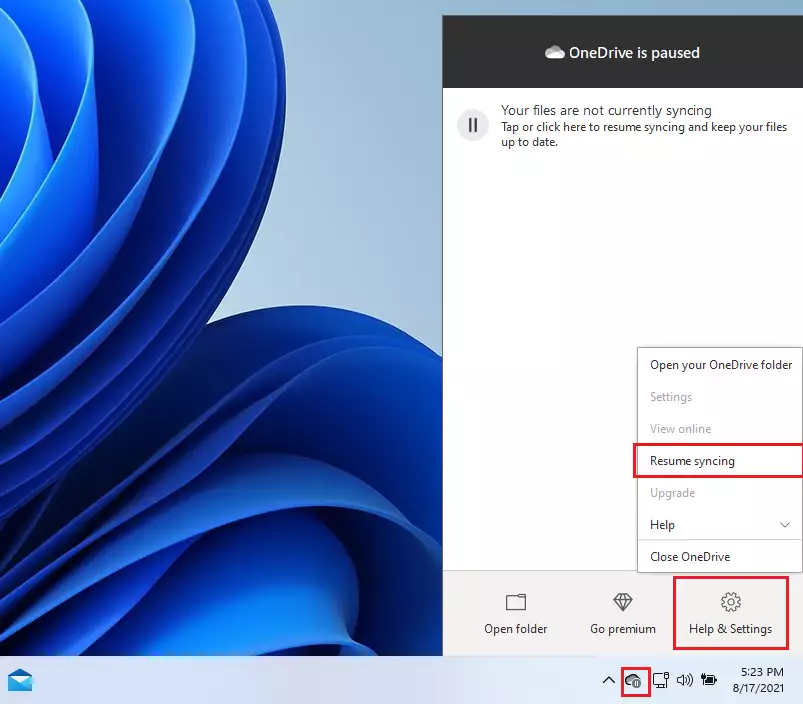
Once sync is paused, the OneDrive icon shows a pause symbol, and the panel says that syncing is paused. Your files remain safe on your computer and in the cloud. Syncing between the two stops until you resume or the timer ends.
The edits are saved locally and queued. They don't reach the cloud, or your other devices, until sync starts again.
Temporary Pause vs. Quitting OneDrive
Pausing OneDrive sync stops your files from updating for a set time (two, eight, or twenty-four hours) and then turns sync back on by itself. Quitting OneDrive shuts the app down completely. It stays off until you open it again from the Start menu, which suits cases where you need syncing stopped for longer.
To quit, click the cloud icon, click the Help & Settings gear, and choose Quit OneDrive. Keep in mind that OneDrive normally starts again the next time you sign in to Windows, so quitting isn't permanent either.
How to Resume Syncing
To start again before the timer ends, click the cloud icon and select Resume syncing. If you can't find it, the same option is in the Help & Settings gear menu. OneDrive then checks for changes and updates your files in both directions.
If you quit OneDrive instead of pausing it, open it from the Start menu first. The cloud icon returns to the System Tray, and sync picks up from there.
After you resume, the icon shows sync activity for a while, depending on how much changed. When it finishes, the pause symbol is gone and your files show a green check or a cloud status in File Explorer. A large backlog of edits can take a few minutes to upload.
Troubleshooting Sync Issues
If sync is stuck after you resume, or won't pause or resume the way you expect, try these steps:
- Check your internet connection. Make sure other sites load and you aren't on a connection that is down or very slow.
- Click the OneDrive icon to see if there are specific file errors. The panel lists files that couldn't sync and usually gives the reason, such as an open file or an invalid name.
- If you need to remove your account, go to Settings Account Unlink this PC. Here, Settings means the OneDrive settings window, which you open from the Help & Settings gear. Use this as a last resort, because you'll need to sign in and set up OneDrive again afterward.
The copies already on your PC stay in your OneDrive folder, and everything stored online remains in your account.
Summary
Pausing OneDrive sync puts you in control of your internet bandwidth. For example, pausing prevents large file uploads during critical work or gaming sessions. This helps manage bandwidth and keeps other applications running smoothly. When you're done, resume syncing so your latest changes are backed up and available on your other devices.
Frequently asked questions
How do I temporarily pause OneDrive syncing?
Click the OneDrive cloud icon in the system tray, near the clock. Select Pause syncing, then choose 2, 8, or 24 hours. OneDrive stops uploading and downloading files until the time runs out. Your changes stay on your computer and upload once sync resumes.
My computer syncing is paused. How can I resume it?
Click the OneDrive cloud icon in the system tray, then select Resume syncing. If the icon shows a pause symbol, click it and choose Resume syncing from the menu. Sync starts right away and uploads any changes you made while paused. You can also wait for the pause timer to end, and sync will resume on its own.
How do I unpause OneDrive syncing?
Unpause OneDrive by clicking its cloud icon in the system tray and selecting Resume syncing. Sync restarts immediately and uploads the changes you made while it was paused. If you don't see the icon, open OneDrive from the Start menu first.
How do I pause syncing?
Pause syncing from the OneDrive cloud icon in the system tray, beside the clock. Choose 2, 8, or 24 hours from the Pause syncing menu. During that time, OneDrive stops uploading and downloading files. Your edits stay on your PC and upload once sync resumes.
Still have a question?
Answered by AI from this guide. Good questions may be added to this page — please don't include personal details.
Did this guide fix your problem?

About the Author
Richard
Tech Writer, IT Professional
Richard is a writer at Geek Rewind who turns complex IT tasks into clear, step-by-step guides. He draws on years of hands-on experience in system administration and enterprise IT operations, focusing on Windows, Linux and WordPress: the problems people actually run into, and the fixes that work. His server and WordPress guides come from systems he runs himself. Richard builds and maintains the platform behind Geek Rewind, from its Ubuntu servers and Nginx configuration to its custom WordPress plugins. Many new tutorials start with readers' questions, and he's always glad to answer them in the comments.
I have Windows 11; When I open One Drive there is no place to Resume Sync when I go in to “help and settings”.
i am not able to see microsoft one drive i have also did settings in taskbar but icon is not coming ion taskbar
[…] can also pause OneDrive syncing temporarily if you are on a slow or mobile […]