How to Set Windows Terminal to Open with Command Prompt on Windows 11

Windows Terminal is an app in Windows 11 that brings command-line tools like Command Prompt and PowerShell together in one window with multiple tabs. By default, it opens a PowerShell tab when you launch it.
You can change the startup setting so Command Prompt opens automatically every time you start Windows Terminal. That saves you from opening a new Command Prompt tab by hand each time. The change takes a minute, needs no restart and works the same on Windows 11 Home and Pro.
Open Windows Terminal, click the dropdown arrow next to the plus icon, select Settings, find Default profile on the Startup page, change it from Windows PowerShell to Command Prompt, and click Save. Windows Terminal now opens with Command Prompt automatically.
What happens when you are done?
After you make the change, Windows Terminal will launch straight into Command Prompt every time. It applies to new windows and new tabs you open from then on. Tabs that are already open keep the shell they started with.
Installation and Environment Setup
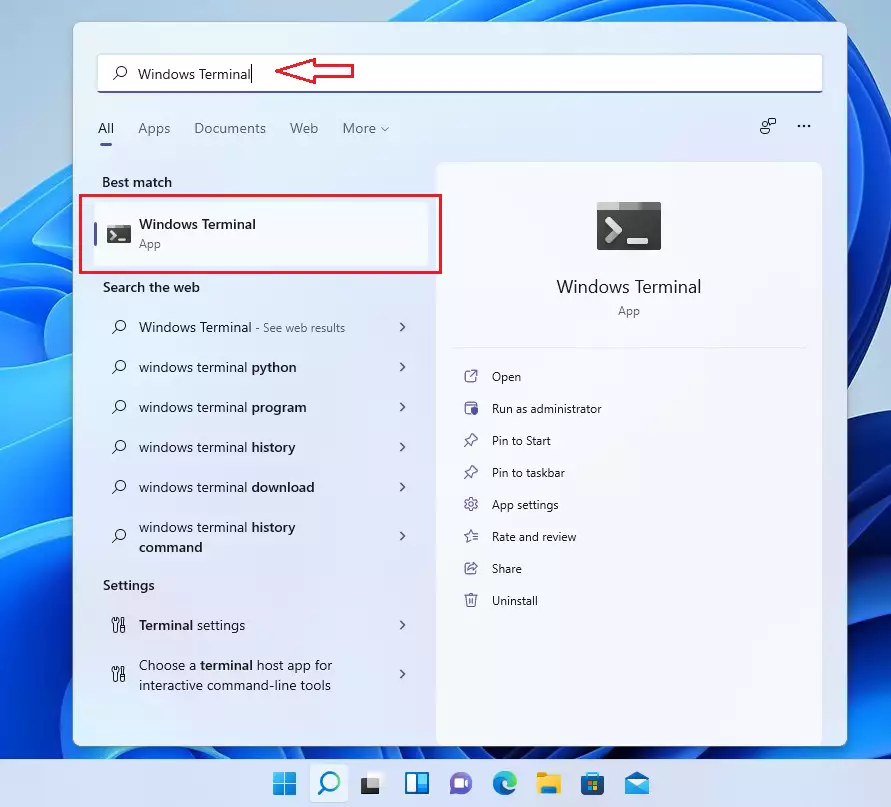
To check, open the Start menu and type Terminal. If it appears in the results, you are ready to go.
If you don’t have Windows Terminal yet, grab it from the Microsoft Store or use the Windows Package Manager. Open a command-line window and run winget install Microsoft.WindowsTerminal to get the latest version. When the install finishes, search for Terminal in the Start menu to confirm it is there.
How to Set Windows Terminal to Open with Command Prompt
Setting Command Prompt as your default profile makes Windows Terminal open it automatically each time you launch the app, so you no longer have to leave PowerShell by hand. The setting lives in the app’s own Settings page. The steps below start with Windows Terminal open. If it is not open yet, search for Terminal in the Start menu and launch it.
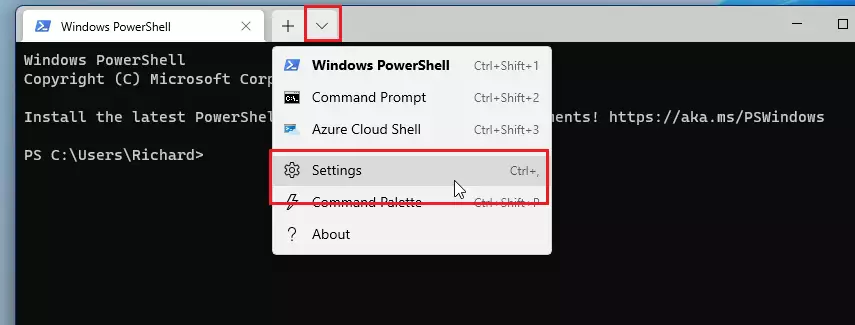
- With the app open, click the downward-facing arrow next to the ( + ) icon in the top bar. A drop-down menu opens with your available profiles, such as Windows PowerShell and Command Prompt, plus a few other entries.
- Select Settings from the drop-down menu. A Settings tab opens inside Windows Terminal, with a list of pages down the left side.
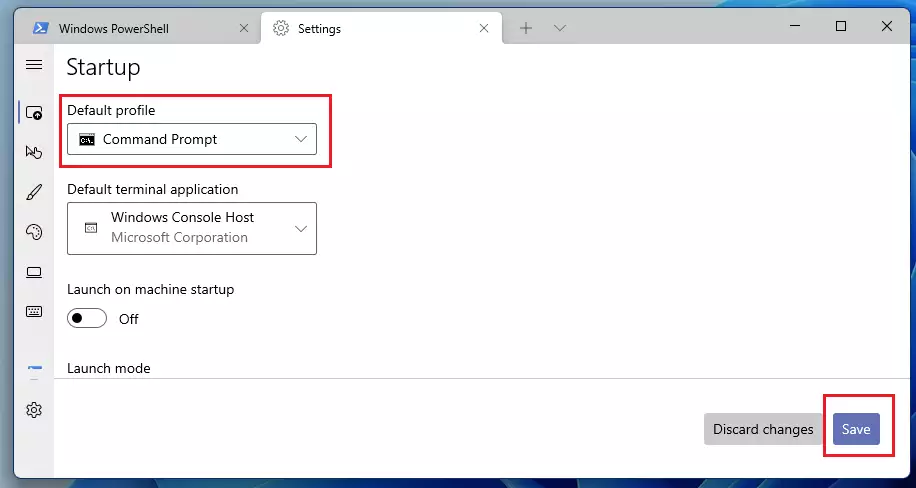
- Look for the Default profile option. On current versions it sits on the Startup page, which is usually the first page that opens.
- Click the box and change the selection from Windows PowerShell to Command Prompt. The box should now show Command Prompt.
If Command Prompt is missing from the list, it may have been hidden or removed from your profiles. Look for it on the profile pages in the left-hand list of the Settings tab.
- Click the Save button at the bottom right corner of the window to apply your changes. The button stays greyed out until you actually change something.
To check that it worked, close Windows Terminal completely and open it again. It should now start with a Command Prompt tab. To undo the change, go back to the same setting and select Windows PowerShell again.
Advanced Configuration with settings.json
The Windows Terminal settings.json file controls every preference in the app. It lets you customize color schemes, keyboard shortcuts and startup profiles beyond what the standard menu offers. Holding the Alt key while you click the Settings menu opens a configuration file directly in your default text editor. On current builds that can be the read-only defaults file, which is only a reference. To edit your own settings, open the Settings tab and click Open JSON file near the bottom left.
A small typo, such as a missing comma, can stop Terminal from reading your settings, and a backup lets you restore the file quickly.
Using the wt Command
You can also launch the terminal with the wt command. Press Win+R and type wt to open it. The same command works from Command Prompt, PowerShell or the Start menu's search box. You can also use command-line arguments to open specific folders. For example, use wt -d C:\Users\GenericUser\Documents to start in a specific directory.
A window started this way still uses your default profile unless you tell it to use another one. After the change above, it opens with Command Prompt.
Summary
Switching your default profile to Command Prompt means your preferred shell is ready the moment you open the app. You can make the change through the Settings page, as shown above, or by editing the settings.json file if you want more advanced customization. Either way, you can switch back to PowerShell at any time by changing the default profile again.
Did this guide fix your problem?

About the Author
Richard
Tech Writer, IT Professional
Richard is a writer at Geek Rewind who turns complex IT tasks into clear, step-by-step guides. He draws on years of hands-on experience in system administration and enterprise IT operations, focusing on Windows, Linux and WordPress: the problems people actually run into, and the fixes that work. His server and WordPress guides come from systems he runs himself. Richard builds and maintains the platform behind Geek Rewind, from its Ubuntu servers and Nginx configuration to its custom WordPress plugins. Many new tutorials start with readers' questions, and he's always glad to answer them in the comments.
[…] First, open Windows Terminal and select Command Prompt. […]
[…] enabling a feature, open the Windows Terminal app and select the Command Prompt tab. Then, paste the path to the ViVeTool.exe file into the […]
[…] open Windows Terminal, then select the Command Prompt […]
[…] Open Windows Terminal with the Command Prompt tab […]
[…] Windows Terminal with the Command Prompt […]
[…] can also create new files using the Windows Terminal (command line). To do that, use the steps […]
[…] open Windows Terminal as administrator and select either Windows PowerShell or Command […]
[…] sync the system clock using Windows Terminal, go and open Windows Terminal as administrator and select Windows PowerShell or Command […]
[…] open Windows Terminal as administrator. Then use either the Command Prompt or Windows […]
[…] you can use Windows Terminal with the Command Prompt tab to run the Command below to allow or disable a user changing their […]
[…] the Windows Terminal app and select the Command Prompt tab. Then, run the command below to hide the Taskbar in Windows 11 […]
[…] Yet another way to disable receiving updates for other Microsoft products is to use the Windows Terminal. […]
[…] Via Windows commands or PowerShell […]
[…] First, open the Windows Terminal app. […]
[…] open the Windows Terminal […]
[…] Windows Terminal with PowerShell, run the commands below to find your device’s memory […]
[…] do that, first open Windows Terminal as administrator and select either Windows PowerShell or Command […]
[…] open Windows Terminal as administrator, then run the commands […]
[…] select either the PowerShell or Command Prompt tab and run the command […]
[…] open the Windows Terminal […]
[…] Open Windows Terminal with the Command Prompt tab […]
[…] open the Windows Terminal app as administrator. Then, run the command below using either the Command Prompt or Windows PowerShell to check the current version of WSL installed on your […]
[…] do that, first, open the Windows Terminal app as […]
[…] To do that, first, open the Windows Terminal app. […]
[…] open the Windows Terminal app and select the Command Prompt […]
[…] Yet another way one can view the build number in Windows 11 is to use the Terminal app with Command Prompt. […]
[…] open Windows Terminal or the Command Prompt as […]
[…] Another way to install the JPEG XL image extension is to use the winget command on the Windows Terminal. […]
[…] BitLocker built-in commands can enable or disable auto-locking fixed drives in Windows 11. To do that, open the Windows Terminal app. […]
[…] First, open Windows Terminal and select either Windows PowerShell or Command Prompt. […]
[…] copy your SSH key to the server, open Windows Terminal, copy and paste the line below, and press […]
[…] There are other ways one can change one’s account password in Windows. For example, if you have a local account, you can use PowerShell or Windows commands to reset your account password from Command Prompt or Windows Terminal. […]
[…] 11 also has a command-line interface app called Windows Terminal. Windows Terminal is the default console for opening installed shells like PowerShell and the […]
[…] 11 also has a command-line interface app called Windows Terminal. Windows Terminal is the default console for opening installed shells like Command Prompt and […]
[…] do that, first, open Windows Terminal as administrator and select either Windows PowerShell or Command […]
[…] the Windows Terminal app as […]
[…] Windows Terminal as an administrator. To do this, search for “Windows Terminal” in the Start menu, […]
[…] can also open Settings from the PowerShell or Command Prompt by […]
[…] Click the Start button, type Windows Terminal, right-click it, and select Run as administrator. (Learn how to open Windows Terminal as admin) […]
[…] you want a step-by-step guide with screenshots on how to open Command Prompt in Windows Terminal or PowerShell in Windows 11, check out these helpful […]
[…] the Start button and choose Windows Terminal. You can also open Windows Terminal guide if you want […]
[…] Windows Terminal as Administrator. To do this, search for “Windows Terminal” in the Start menu, right-click it, and […]
[…] enable Compact OS, open Windows Terminal as […]
[…] Windows Terminal with Command Prompt, do […]
[…] another tool to list all user accounts in Windows is the Command Prompt. To do that, open the Command Prompt, then type the commands […]
[…] Or search for “Windows Terminal” in the Start menu and run it as administrator. Learn more about opening Windows Terminal. ⚠️ Admin privileges […]
[…] + X and select Windows Terminal (Admin) or Command Prompt (Admin). If you want, you can also open Windows Terminal and switch to the Command Prompt […]
[…] Windows Terminal with the Command Prompt […]
[…] the Windows Terminal app. Search for it in the Start […]
[…] Windows Terminal as an […]
[…] Windows Terminal as an […]
[…] open Windows Terminal and use the Command Prompt tab as administrator. Then use the command format […]
[…] can also learn more about your system settings by visiting the Windows Terminal Windows documentation […]
[…] users can use the Windows Terminal or Command Prompt or Windows […]