How to Check WinSxS Folder Size in Windows 11


- 9 steps
- Needs administrator rights
Checking the WinSxS folder size in Windows 11 shows how much disk space your system component store really uses. On many PCs it grows past 10 gigabytes (GB) over time. The folder holds backup copies of system files, so Windows can install updates, repair itself and turn on optional features without errors.
File Explorer shows an inaccurate size for this folder because it does not account for hard links. A hard link lets the same file appear in two places, such as WinSxS and the Windows folder, while taking up disk space only once. Explorer counts those files twice, so the number looks bigger than it is. A short built-in command gives you the true figure for your C: drive. It also tells you whether a cleanup is worth doing.
Open Windows Terminal as administrator, select PowerShell or Command Prompt, and run the command dism /online /cleanup-image /analyzecomponentstore. This displays the actual size of the component store and recoverable space.
How to Check WinSxS Folder Size in 🪟 Windows 11
To get an accurate size, you run a DISM command from Windows Terminal. DISM (Deployment Image Servicing and Management) is a built-in tool for servicing Windows images, and it can analyze the component store on the PC you are using. The command only reads data. It does not delete anything, so it is safe to run as often as you like.
What will you see after running the command? A report with the total disk usage of the component store. It also says whether a cleanup is recommended and how much of the space can be reclaimed.
Warning: Do Not Delete the WinSxS Folder Manually
Deleting the WinSxS folder manually will corrupt your operating system and stop your computer from booting. Windows relies on the files inside this folder to function properly every day. Resist the urge to delete files or subfolders directly from File Explorer, and always use supported Windows management tools when you need to free up space on your hard drive.
Follow these steps to get an accurate report of your storage usage. The command needs administrator rights. If you run it in a normal window, it fails with an error that says elevated permissions are required.
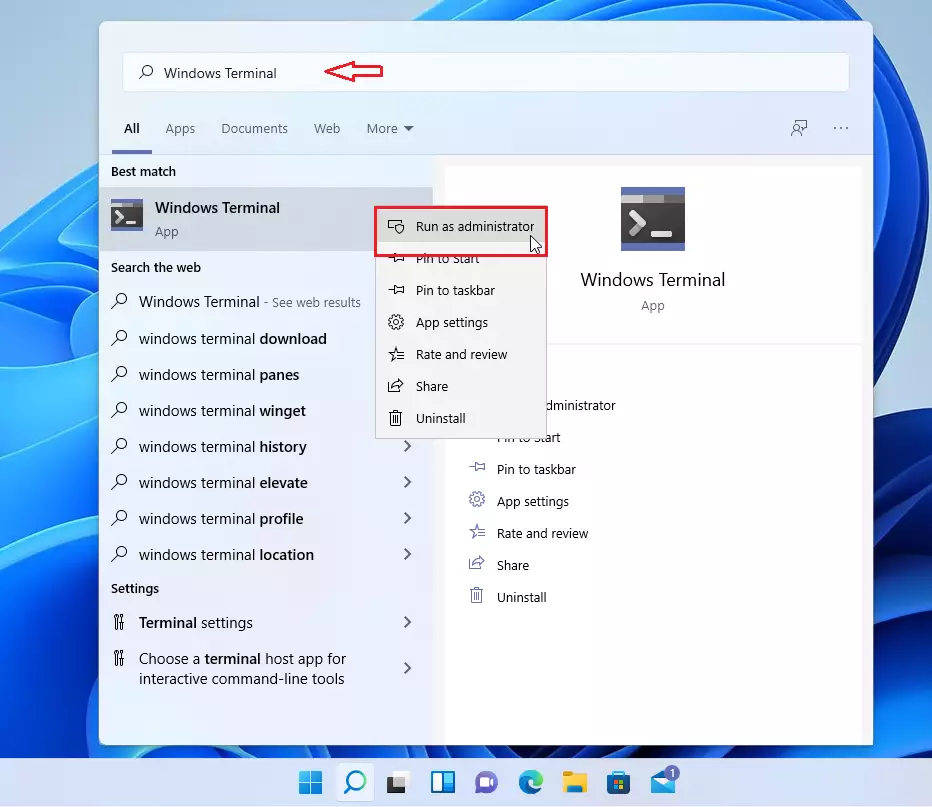
- Right-click the Start button and select Terminal (Admin). On some builds the entry is called Windows Terminal (Admin). You can also search for Terminal, right-click the result and select Run as administrator.
- Select Yes when the User Account Control prompt appears. A Terminal window opens, and its title bar shows that it is running as administrator.
- Use either Windows PowerShell or Command Prompt. The command works the same in both. Terminal opens your default profile, which is usually Windows PowerShell. To switch, select the down arrow next to the plus (+) icon in the tab bar and pick Command Prompt.
Once the window is open, type or copy the following command and press Enter:
dism /online /cleanup-image /analyzecomponentstore
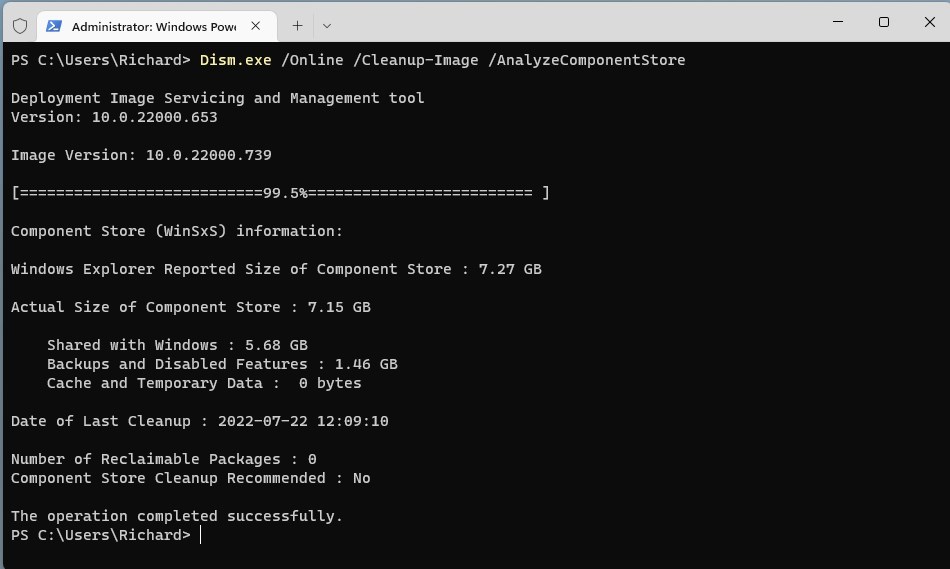
The tool takes a moment to scan the system, often a minute or two on a slow disk. A progress percentage appears while it works. When it finishes, it prints a breakdown like this:
- Windows Explorer Reported Size of Component Store: The figure File Explorer would show. It is inflated because of hard links.
- Actual Size of Component Store: The real amount of space used, accounting for hard links. This is the number you want.
- Shared with Windows: Files that are hard-linked to the Windows folder. They are needed by the running system and cannot be cleaned up.
- Backups and Disabled Features: Components kept for recovery or optional features.
- Cache and Temporary Data: Files used to speed up system updates.
- Component Store Cleanup Recommended: Tells you whether you can safely shrink the folder size. If it says Yes, a cleanup will free some space. If it says No, there is little to gain.
The report also shows the date of the last cleanup and the number of reclaimable packages. A large reclaimable count suggests a cleanup is worth running.
Safe Methods to Clean Up the Component Store
If the analysis shows potential space savings, Windows includes built-in utilities to remove unneeded files safely. These methods have Microsoft’s backing and preserve system stability. Do not delete files from the WinSxS folder by hand, and do not take ownership of it to change permissions. Removing the wrong files can break Windows Update and servicing, and in some cases leave the system unable to start.
1Using the StartComponentCleanup Command
1. Run the StartComponentCleanup Command
This command tells Windows to remove older versions of system files that are no longer needed. It needs administrator rights, so use the same elevated Terminal window as before, or open a new one using the steps above.
- Type or paste the command below into the elevated Terminal window.
- Press Enter. A progress percentage appears while the cleanup runs.
- Wait for the message saying the operation completed successfully. It can take several minutes, and the percentage may sit still for a while. Let it finish.
A restart is usually not needed. If Windows has updates waiting for a restart, the cleanup may skip some files until you reboot. Run the analysis command again afterward to see the new size.
dism /online /cleanup-image /startcomponentcleanup
2Using the ResetBase Switch
Running DISM with the /ResetBase switch performs a deeper purge by stripping out all superseded component versions. Keep in mind that applying this switch prevents uninstalling any currently installed updates. You cannot undo it. Use it only if the system is stable and you are sure you will not need to roll back a recent update.
Run the command below from the same elevated Terminal window and wait for the completion message. It takes longer than the standard cleanup.
dism /online /cleanup-image /startcomponentcleanup /resetbase
3Using Task Scheduler
Windows 11 triggers maintenance tasks automatically during idle periods, so you often do not need to run anything yourself. Manual execution is also possible through Task Scheduler by navigating to Microsoft\Windows\Servicing\StartComponentCleanup and launching the job.
- Open the Start menu, search for Task Scheduler and open it.
- In the left pane, expand Task Scheduler Library, then go to Microsoft Windows Servicing.
- Right-click StartComponentCleanup and select Run.
The task runs in the background and shows no progress window. Give it some time, then run the analysis command again to check the result.
Summary
The WinSxS folder is vital for normal system operation, yet it grows over time. File Explorer cannot measure it accurately because of how Windows handles hard links. Running a DISM command reveals the true size and tells you whether a cleanup is recommended. If it is, the built-in cleanup options free space safely. Always use them instead of deleting files from the folder yourself.
Have a question about this guide?
Answered by AI from this guide. Good questions may be added to this page — please don't include personal details.
Did this guide fix your problem?

About the Author
Richard
Tech Writer, IT Professional
Richard is a writer at Geek Rewind who turns complex IT tasks into clear, step-by-step guides. He draws on years of hands-on experience in system administration and enterprise IT operations, focusing on Windows, Linux and WordPress: the problems people actually run into, and the fixes that work. His server and WordPress guides come from systems he runs himself. Richard builds and maintains the platform behind Geek Rewind, from its Ubuntu servers and Nginx configuration to its custom WordPress plugins. Many new tutorials start with readers' questions, and he's always glad to answer them in the comments.
No comments yet — be the first to share your thoughts!