How to Open PowerShell in Windows 11

Windows PowerShell is a built-in command-line tool in Windows 11. You use it to run commands and automate routine tasks. You can open it in 6 different ways, including from the Start menu , the Quick Link menu, or the Run box. Every method below works on both Windows 11 Home and Pro.
Press Win+S, type powershell.exe, and click Windows PowerShell in the results. For administrator rights, right-click the result and select Run as administrator, then click Yes in the User Account Control prompt. You can also press Win+R, type powershell.exe, and press Enter to open it without touching the mouse.
Why use PowerShell?
A command-line interface gives you direct text control over the operating system. Complex maintenance jobs, such as checking network settings, listing installed apps, or fixing a service, often take one line of text instead of a dozen clicks through graphical menus. Knowing how to open PowerShell is a useful skill even if you only use your PC at home.
What happens when done?
PowerShell gives you a reliable way to reach settings that are buried or hidden in the graphical interface. It also lets you automate repetitive work. A task you do every week can be written once and run again whenever you need it.
Open PowerShell in Windows Terminal
Windows 11 uses a program called Windows Terminal to host command-line utilities. Windows Terminal is the main hub for PowerShell and the Command Prompt. Each one opens in its own tab, so you can keep several sessions open in one window. On Windows 11 version 22H2 and later, Windows Terminal is the default host, and it normally opens PowerShell by default.
How to set PowerShell as the default terminal
If Windows Terminal opens a different shell, such as Command Prompt, you can change the default profile. Here is how:
- Open Windows Terminal. A window with a tab bar at the top appears.
- Click the down arrow in the tab bar and select Settings. The Settings page opens in a new tab. You can also press Ctrl + , (comma) to get there.
- Under the Startup section, find the Default profile dropdown.
- Select Windows PowerShell and click Save. No restart is needed. The next time you open Windows Terminal, it starts in PowerShell.
Windows PowerShell is the version built into Windows 11. To undo the change, pick a different profile from the same dropdown.
Open PowerShell from Windows Search
This is the method most people use, because Search is always available from the taskbar.
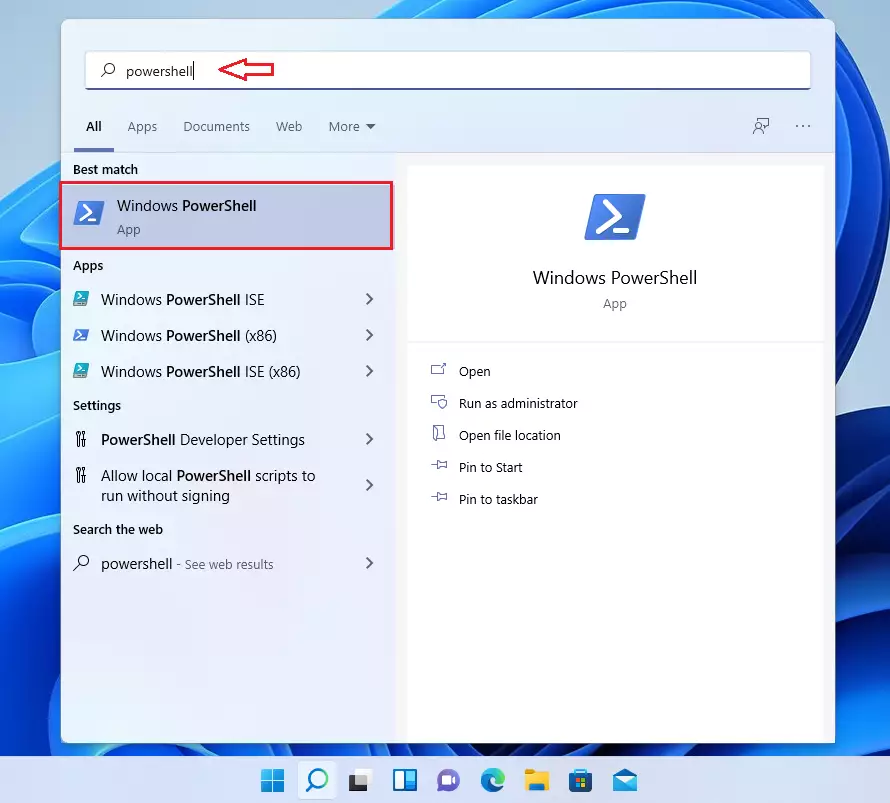
- Open Windows Search or press the Windows key + S. A search box appears.
- Type
powershell.exeinto the box. Windows PowerShell appears at the top of the results. - Click on the Windows PowerShell app to open it. A PowerShell window opens with a prompt ready for commands.
Some tasks need administrator rights. In that case, right-click the Windows PowerShell result and select Run as administrator, then click Yes if User Account Control asks for permission. The same options also appear in the pane on the right side of the search results.
Open PowerShell from the Run Box
The Run box is a quick option if you prefer to keep your hands on the keyboard.
- Press the Windows key + R on your keyboard. The small Run dialog appears in the lower-left corner of the screen.
- Type
powershell.exeinto the box. - Press Enter. A PowerShell window opens.
Then click Yes in the User Account Control prompt.

Open PowerShell from File Explorer
This method launches the program file directly. It is handy when you want to see where PowerShell lives on your drive.
- Open File Explorer or press the Windows key + E. A File Explorer window opens.
- Go to this path:
C:\Windows\System32\WindowsPowerShell\v1.0You can paste it into the address bar at the top of the window and press Enter. - Find the file named
powershell.exeand double-click it. A PowerShell window opens.
If you need administrator rights, right-click the file and select Run as administrator instead of double-clicking it. On Windows 11, you may need to select Show more options first to see that entry in the older-style menu.

PowerShell ISE vs. Terminal
PowerShell ISE (Integrated Scripting Environment) is a legacy tool for writing and testing scripts. A script is a mini-program, a text file of commands that runs on your own computer. ISE gives you a script editor and a console in one window. Searching for powershell_ise.exe opens this environment. However, Windows Terminal remains the modern, recommended way to run commands in Windows 11, and ISE is no longer receiving new features.
Understanding Execution Policy
Windows restricts scripts from running by default to keep the system secure. This setting is called the Execution Policy, and you can change it. On Windows 11 client editions, the default policy blocks script files from running, although you can still type individual commands. Administrators often adjust this setting when they troubleshoot script errors, and changing it needs a PowerShell window opened as an administrator. Loosen it only as far as you need, and only for scripts you trust.
Summary
Windows Terminal is the easiest way to open PowerShell in Windows 11, because it runs the command line in a modern tabbed window. You can also start PowerShell from the Start menu search bar, the Run box, or the hidden Quick Link menu, which opens when you right-click the Start button or press the Windows key + X. Most people prefer the search bar because it is fast and always available.
- PowerShell is a command-line tool for managing your Windows 11 system.
- You can open it using Search, the Run box, File Explorer, or the Power User Menu.
- Using Windows Terminal is the modern, recommended way to access it.
- Always remember that some tasks require you to run the program as an administrator.
- Check your Execution Policy if you encounter errors when running scripts.
Frequently asked questions
How to open PowerShell in Windows?
Press Windows key + X to open the Quick Link menu, then choose Windows PowerShell or Terminal. You can also click Start, type PowerShell, and select Open. Both methods work on Windows 11 Home and Pro. If the Quick Link menu does not list PowerShell, use the Start menu method.
How to view 🪟 Windows 11 product key in PowerShell?
Open PowerShell and enter (Get-WmiObject -query 'select * from SoftwareLicensingService').OA3xOriginalProductKey. This command shows the product key stored in your PC's firmware, which many manufacturers set at the factory. If the output is blank, your key is not stored there, and Windows is activated another way.
What PowerShell does 🪟 Windows 11 use?
Windows 11 includes Windows PowerShell 5.1, the version built into the operating system and installed by default. Microsoft also offers PowerShell 7 as a separate download. It runs alongside Windows PowerShell, so you can use both. Most built-in system tasks work in Windows PowerShell 5.1.
How to run PowerShell without administrator in 🪟 Windows 11?
Click Start, type PowerShell, and select Open rather than Run as administrator. Windows then starts it with your normal user rights. You can also press Windows key + X and choose Windows PowerShell or Terminal without the Admin label. Both options open without administrator rights.
Still have a question?
Answered by AI from this guide. Good questions may be added to this page — please don't include personal details.
Did this guide fix your problem?

About the Author
Richard
Tech Writer, IT Professional
Richard is a writer at Geek Rewind who turns complex IT tasks into clear, step-by-step guides. He draws on years of hands-on experience in system administration and enterprise IT operations, focusing on Windows, Linux and WordPress: the problems people actually run into, and the fixes that work. His server and WordPress guides come from systems he runs himself. Richard builds and maintains the platform behind Geek Rewind, from its Ubuntu servers and Nginx configuration to its custom WordPress plugins. Many new tutorials start with readers' questions, and he's always glad to answer them in the comments.
No comments yet — be the first to share your thoughts!