How to Manage Windows 11 Notifications: Turn On/Off Alerts

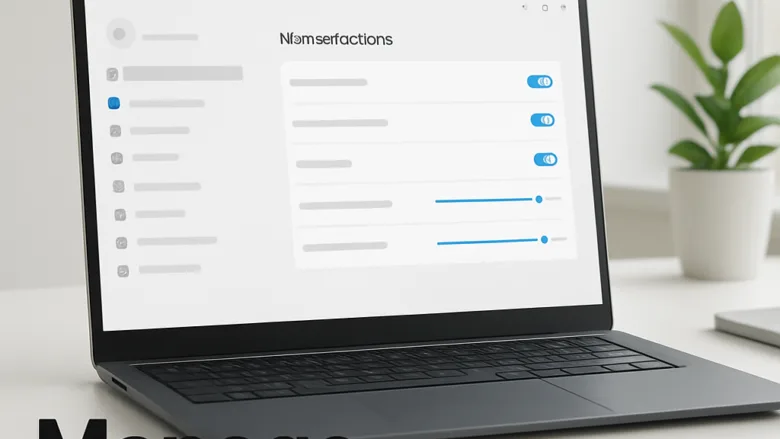
Notification management in Windows 11 gives you control over the pop-up alerts, sounds, and banners that apps send to your desktop. You can turn off alerts from specific apps, hide preview text, or set up Focus assist (called Do not disturb on newer builds) to stop interruptions. Most of this takes under two minutes.
Nearly everything starts in the Settings app. Press the Win plus I to open it. None of the changes need a restart, and you can reverse each one by flipping the same switch back. The steps are written for current Windows 11. Some labels differ slightly between versions, and I say so where that is likely.
You can disable all Windows 11 notifications by going to Settings, then System, then Notifications, and turning the main toggle off. This stops pop-ups and sounds from most apps and Windows alerts. You can also manage settings for individual apps or use Focus assist to silence alerts.
Get Started with 🪟 Windows 11 Notifications
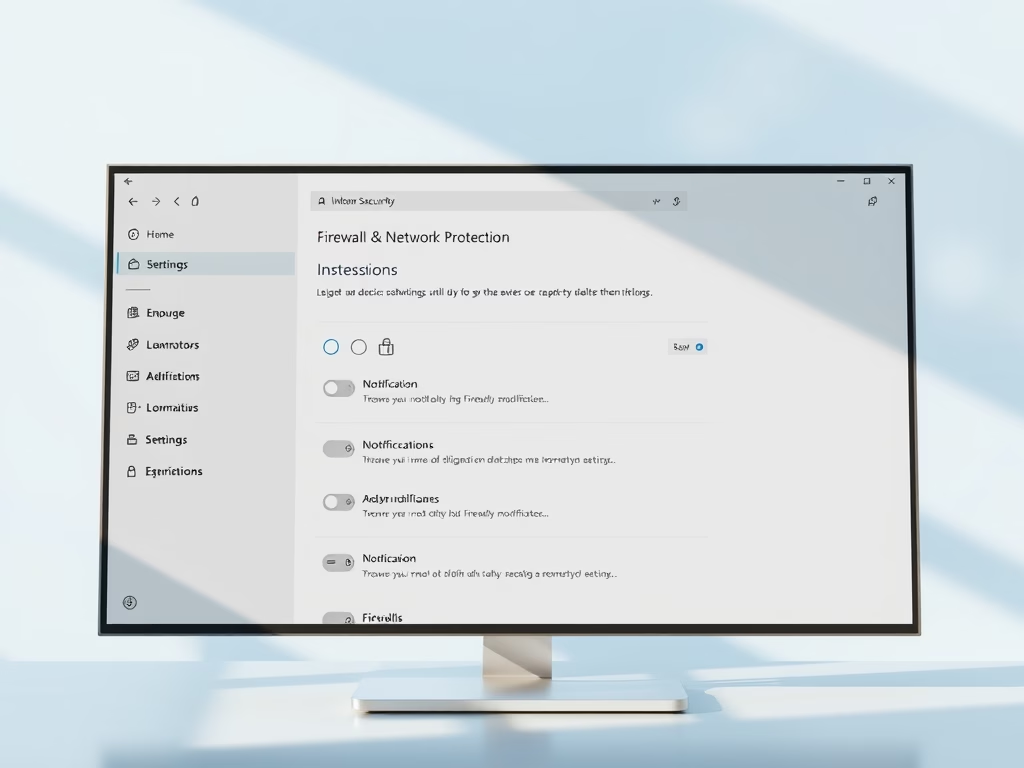
Before you change settings for individual apps, it helps to know how the system is laid out. Windows has one master switch for all notifications. Below it is a list of every app that can send alerts, and each app has its own switches. Some apps, such as Teams and Messenger, also keep a second set of notification settings inside the app. If you silence an app in Windows but still get alerts, check the app’s own settings. This section covers the master switch and the general system alerts.
Windows shows alerts in two places. A banner pops up near the bottom right of the screen, and the alert is then stored in the notification center. You can switch each of these off separately for any app.
Control App and Text-Related Alerts
This section covers the alerts that affect how you communicate and write. Settings that warn you about camera use, correct your typing, or flag spelling errors can save you from awkward mistakes, so they are worth checking.
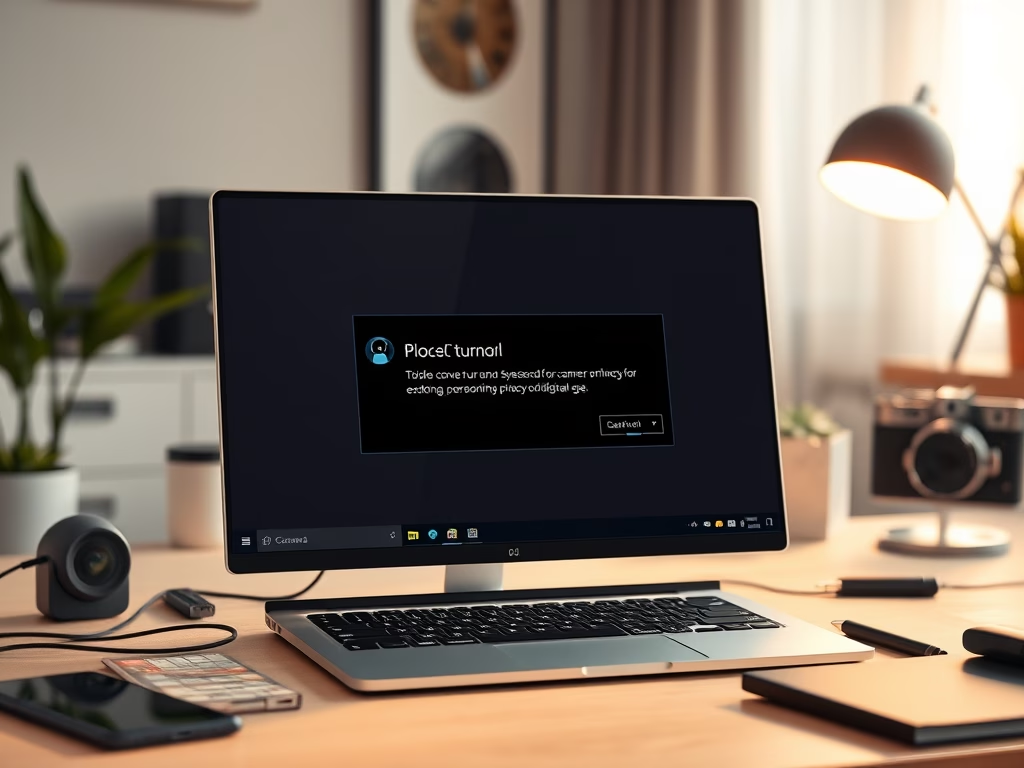
- Open Settings Privacy & security Camera You will see a list of apps and a switch for Camera access. Review which apps are allowed to use your camera and turn off any you do not recognize.
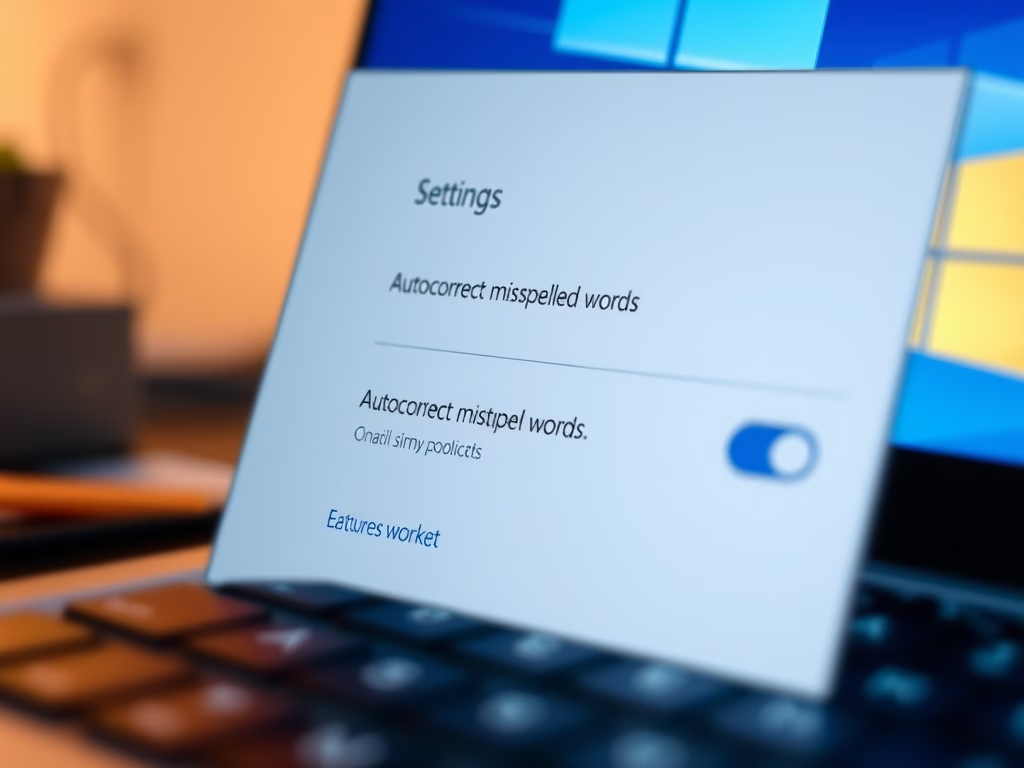
- Open Settings Time & language Typing This page holds the typing helpers.
- Turn Autocorrect misspelled words on or off, depending on whether you want Windows to fix typos as you type.
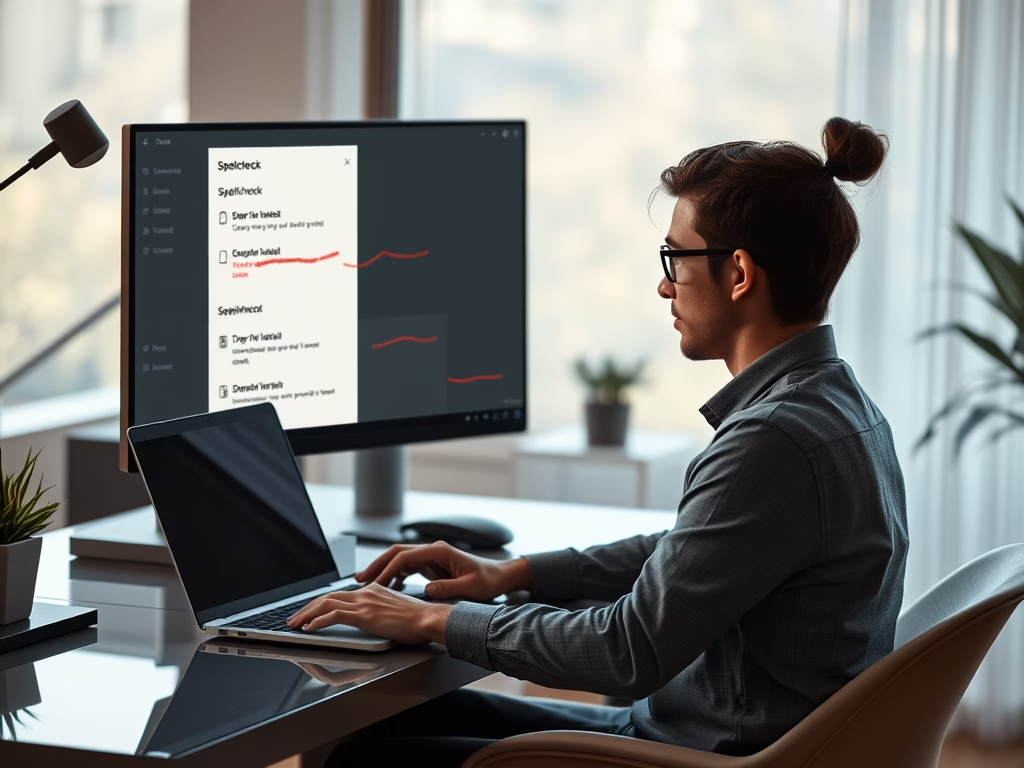
- Turn Highlight misspelled words on or off. When it is on, a red wavy underline appears under words Windows thinks are wrong.
These typing settings apply to apps that use the standard Windows text controls. Some apps, such as web browsers and Microsoft Office, have their own spellcheck. If you still see underlines after turning the Windows option off, change the setting inside that app.
Master Microsoft Teams Notifications
Microsoft Teams sends a lot of alerts: chat messages, mentions, calls, and sounds. Managing them inside Teams keeps your workday focused. Teams has its own notification settings that work alongside the Windows ones. If a notification is switched off in Windows, Teams cannot show it, whatever its own settings say.
- Open Teams and select the three dots (Settings and more) at the top right of the window.
- Select Settings, then choose Notifications and activity (in the classic version of Teams, this page is called Notifications).
- Go through the categories, such as chat, mentions, and calls, and choose how each one should alert you. You will usually see choices like a banner and feed alert, feed only, or off.
The layout differs between new Teams and classic Teams, so a label on your screen may not match the one above exactly. The idea is the same in both versions.





Manage Notifications in Other Apps
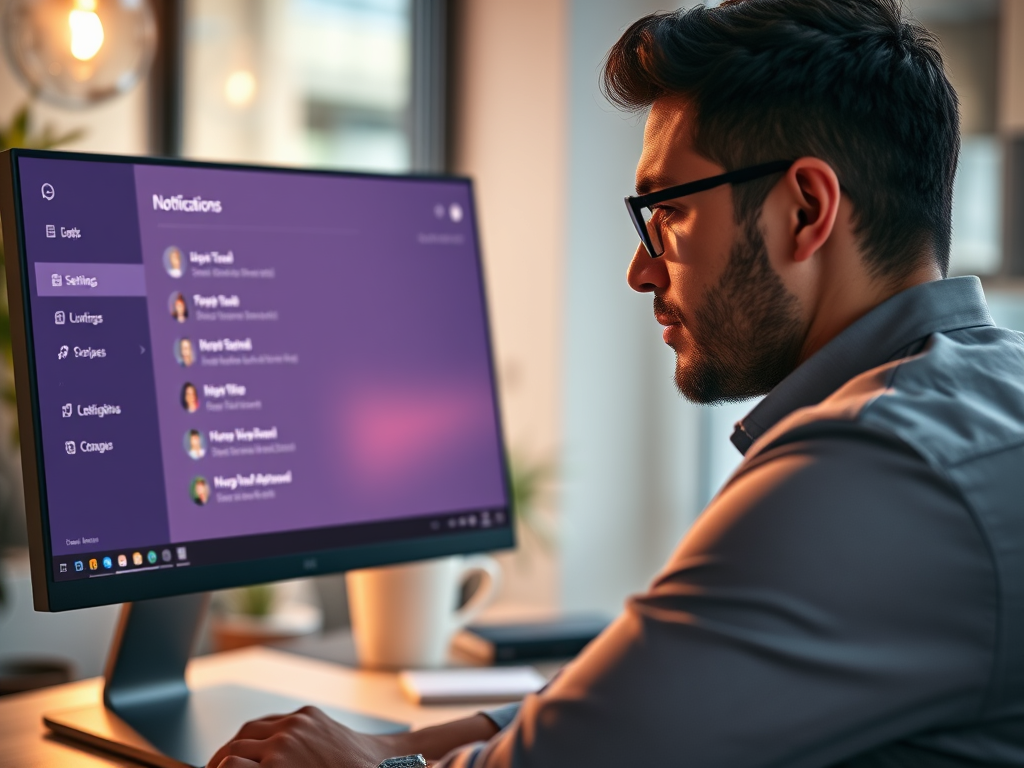
Some popular messaging apps keep notification settings separate from Windows. Messenger is one example. To quiet an app like this, work at two levels. First, check the app's own settings, usually under a Settings or Preferences menu, where you will find a notifications section. Second, check Windows itself under Settings System Notifications, where you can switch off the banner or the sound for that app.
The exact menu path inside a third-party app depends on its version, and the app's developer can change it at any time. If you cannot find the option, look for a gear icon or your profile picture in the app. If the app has no usable setting, the Windows list will still let you silence it.

Common questions
How do I stop all notifications in 🪟 Windows 11?
To turn off all notifications at once, use the master switch.
- Open Settings System Notifications
- Find the Notifications toggle at the top of the page and switch it to Off. The options below it will collapse or grey out.
Pop-ups and sounds from most apps and Windows alerts stop immediately. To get them back, return to the same page and switch the toggle to On. Your per-app choices are kept, so you do not need to set them up again.
If you only want quiet for a while, a better choice is Do not disturb, covered below. It mutes alerts without changing any of your settings.
How do I turn off notification sounds for specific apps?
You can mute the sound for one app and still see its banner. Do this per app.
- Open Settings System Notifications
- Scroll to the list of apps and other senders, and select the app you want to quiet. A page opens with that app's options.
- Turn off Play a sound when a notification arrives. The banner will still appear, but without the sound.
If an app is missing from the list, it has not sent a notification yet. Some apps only appear after their first alert. If the option is greyed out, check that the app's own Notifications toggle at the top of its page is on.
What are @Mentions in Teams?
@Mentions are special notifications in Microsoft Teams. They alert you directly whenever your name appears in a chat or channel. Because they are often the messages that matter most, it is worth deciding how loudly they should arrive rather than turning them off.
- In Teams, open Settings and more (the three dots) > Settings Notifications and activity.
- Find the section for mentions and expand it if needed.
- Choose how personal @mentions should appear. Typical choices are a banner with a feed entry, feed only, or off.
- Do the same for channel mentions if you want them treated differently from personal ones.
Keeping personal @mentions on while you mute general channel activity is a good compromise. You hear about the messages meant for you and nothing else.
Can I silence notifications during meetings in 🪟 Windows 11?
Windows 11 includes Focus assist, a feature that silences notifications during scheduled times or while you are in a meeting, including meetings in apps like Teams. On the original release of Windows 11, you configure it in Settings System Focus assist
On newer versions of Windows 11 (22H2 and later), Microsoft replaced Focus assist with Do not disturb. You turn it on from Settings System Notifications, and the automatic rules are listed on that page. The rules cover things like specific times, duplicating your display, playing a game, and using an app in full-screen mode. If you do not see Focus assist, check for Do not disturb on that page.
- Open Settings System. Look for Focus assist. If it is not there, open Notifications instead.
- Choose how strict you want it to be, or turn Do not disturb on.
- Pick the automatic rules that fit how you work, such as quiet hours or full-screen apps.
While it is active, alerts go straight to the notification center instead of popping up, so you can read them later. Turn the feature off at the same place when you want normal alerts back.
How do I manage notifications for calls in Microsoft Teams?
Microsoft Teams lets you control incoming call notifications. You can choose a different sound or turn off call alerts completely, which stops interruptions during focused work.
- In Teams, open Settings and more (the three dots) > Settings.
- Open Notifications and activity and look for the calling options. Choose how incoming calls should alert you, or switch the alert off.
- To change the ringtone, look for a ringtone option under the calling or devices settings. The name and location vary between Teams versions.
Turn off call alerts only if you are sure you can live without them. A missed call does not ring again, and you will not hear about it until you check Teams. Do not disturb in Windows is a safer way to get a quiet hour, because it ends on its own schedule.
Have a question about this guide?
Answered by AI from this guide. Good questions may be added to this page — please don't include personal details.
Did this guide fix your problem?

About the Author
Richard
Tech Writer, IT Professional
Richard is a writer at Geek Rewind who turns complex IT tasks into clear, step-by-step guides. He draws on years of hands-on experience in system administration and enterprise IT operations, focusing on Windows, Linux and WordPress: the problems people actually run into, and the fixes that work. His server and WordPress guides come from systems he runs himself. Richard builds and maintains the platform behind Geek Rewind, from its Ubuntu servers and Nginx configuration to its custom WordPress plugins. Many new tutorials start with readers' questions, and he's always glad to answer them in the comments.
No comments yet — be the first to share your thoughts!