Manage Likes and Reactions Notifications in Microsoft Teams


Microsoft Teams likes and reactions notifications alert you whenever someone leaves a thumbs-up, heart, or emoji on a chat message. These banner alerts and sounds give you fast feedback without forcing you to read full replies, but too many of them break your focus during a busy workday.
You can turn these specific alerts on or off inside your app settings to keep your screen quiet. Managing this feature stops constant buzzing so you only see the chat updates that truly matter.
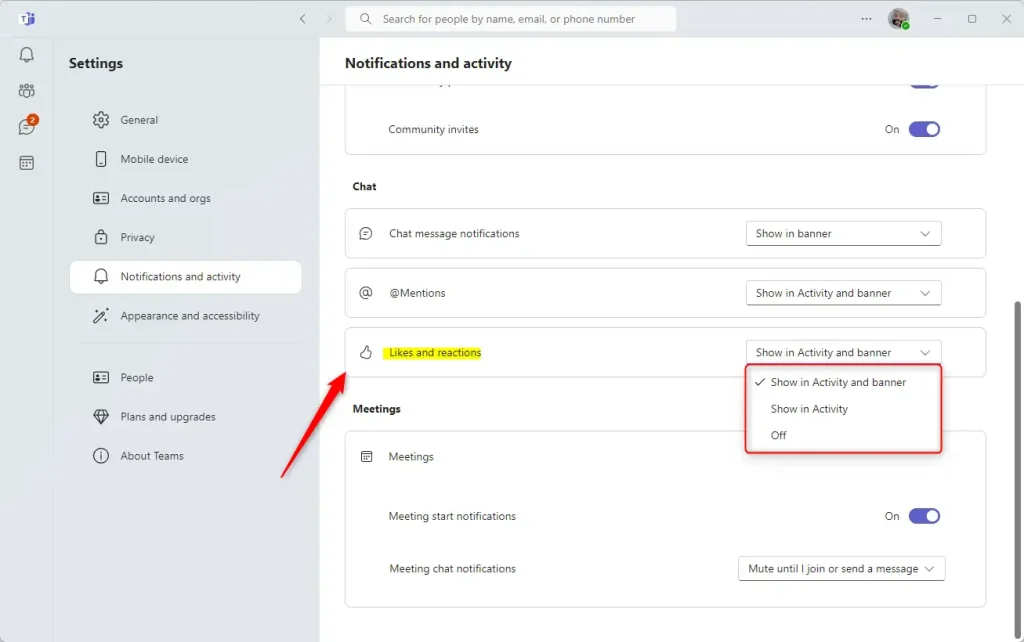
Manage likes and reactions notifications by going to Settings and more > Settings Notifications and activity. Within the Chat section, choose to show likes and reactions in Activity and banner, only in Activity, or turn them Off. This helps reduce distractions.
Turn notifications for likes and reactions on or off in Teams
To change these alerts, open your account settings, go to the Notifications area, and change the setting for likes and reactions. This stops small alerts from popping up on your screen when someone gives a thumbs-up or heart to your chat message. The change is not a Windows setting. It only affects Teams, so your other apps keep notifying you as before.
Start by opening Teams:
- Open Microsoft Teams from your Start menu or taskbar.
- If a mini window appears, click the expansion button on the menu bar to open the full window.

You can also launch the app from the Taskbar or Taskbar overflow. Use whichever is quicker for you. The result is the same.

When you first launch the Teams app, the mini window may open instead of the full app. Click the expansion button on the menu bar to open the full Teams window. You should now see the left-hand app bar and your chats. The settings you need are not available from the mini window.

- In the full Teams window, click the Settings and more ( …) button next to your profile picture.
- Select Settings from the menu. The Settings page opens with a list of tabs on the left.

- Select the Notifications and activity tab on the left of the Settings page. You should see notification options grouped by area.
- Under Chat, find the Likes and reactions tile.
- Open the drop-down menu on that tile and pick the option you want.
Your options are:
- Show in Activity and banner: you get a pop-up banner and an entry in your Activity feed. This is the noisiest choice.
- Show in Activity: no banner appears, but each like or reaction is still listed in your Activity feed, so you can check it when you choose.
- Off: you get neither a banner nor an Activity entry for likes and reactions.
The change should apply right away, and you shouldn't need to restart Teams. To undo it, return to the same tile and choose a different option.
If you still see banners after choosing Show in Activity or Off, they are probably coming from another notification type, such as mentions or replies, which have their own tiles on the same page. Also check that Windows itself isn't hiding Teams banners. Windows notification settings and Focus or Do not disturb mode can suppress banners no matter what Teams is set to.
That should do it!
Tweaking these notification settings keeps your activity feed relevant without losing track of urgent chats.
- Turning notifications for likes and reactions on or off in Microsoft Teams helps you minimize disruptions and stay focused.
- You can find these settings in the Microsoft Teams app under Settings Notifications and activity.
- You can choose how visible these interactions are: show them in the Activity feed and as banners, show them in the Activity feed only, or turn the notifications off entirely.
- By following these steps, you can adjust likes and reactions notifications in Microsoft Teams to suit your workflow, and change them back whenever you like.
Have a question about this guide?
Answered by AI from this guide. Good questions may be added to this page — please don't include personal details.
Did this guide fix your problem?

About the Author
Richard
Tech Writer, IT Professional
Richard is a writer at Geek Rewind who turns complex IT tasks into clear, step-by-step guides. He draws on years of hands-on experience in system administration and enterprise IT operations, focusing on Windows, Linux and WordPress: the problems people actually run into, and the fixes that work. His server and WordPress guides come from systems he runs himself. Richard builds and maintains the platform behind Geek Rewind, from its Ubuntu servers and Nginx configuration to its custom WordPress plugins. Many new tutorials start with readers' questions, and he's always glad to answer them in the comments.
No comments yet — be the first to share your thoughts!