How to Change Default Installation Drive for Microsoft Store

The default installation drive for Microsoft Store decides where Windows 11 saves new games and large apps. Changing it keeps your system drive from running out of space. Out of the box, Windows 11 puts every Store app on the C: drive. That drive fills up quickly once you add a few big games, and Windows starts showing low-disk warnings.
You can fix this in the Settings app. Point new downloads at a second hard drive or SSD (Solid State Drive) and the C: drive stays free for Windows itself. The change takes under a minute, and you don’t need to restart.
Open Settings System Storage Advanced storage settings Where new content is saved, then select your preferred drive from the dropdown under New apps will save to and click Apply. Future Microsoft Store downloads install on that drive; already-installed apps remain unchanged.
Quick Answer: Change Where New Apps Save
The setting lives at Settings System Storage Advanced storage settings Where new content is saved. This page sets the default location for every app and game package you download from now on.
The same page also lets you move new documents, music, photos and videos to another drive. You only need the apps setting for this tutorial, so leave the others alone unless you want them moved too.
Why Change Your Default Installation Drive?
Windows needs free space for updates, temporary files and the page file, so a C: drive with some headroom runs more smoothly.
An internal SSD is ideal. An external drive works, but it has to be formatted as NTFS, or Windows may refuse to install Store apps on it.
What Happens When You Change the Drive?
Changing the default installation path only affects future downloads. Apps you have already installed stay on their current drive.
If you install apps on an external drive and then unplug it, those apps will not start until you plug the drive back in. Windows may also show an error or ask you to reconnect the drive. If you switch back to C: later, apps already placed on the other drive stay there.
How to Change Default Installation Location in 🪟 Windows 11
Follow these steps in the Windows 11 Settings app to change the drive:
- Open Settings on your computer. You can press Windows key + I, or right-click the Start button and choose Settings. The Settings window opens.
- Go to System and select Storage. You should see a bar showing how full your drives are, with a list of what is using the space.
- Click Advanced storage settings. You may need to scroll down to find it. It expands to show a few more options.
- Select Where new content is saved. A page opens with a dropdown menu for each type of content.
- Choose your preferred drive from the dropdown menu under New apps will save to:. The list shows every drive Windows can see, so an external drive appears only if it is plugged in.
- Click Apply. The button sits next to the dropdown you just changed. The new drive now shows in the box, and your next Store download goes there. To undo the change, repeat these steps and pick C: again.
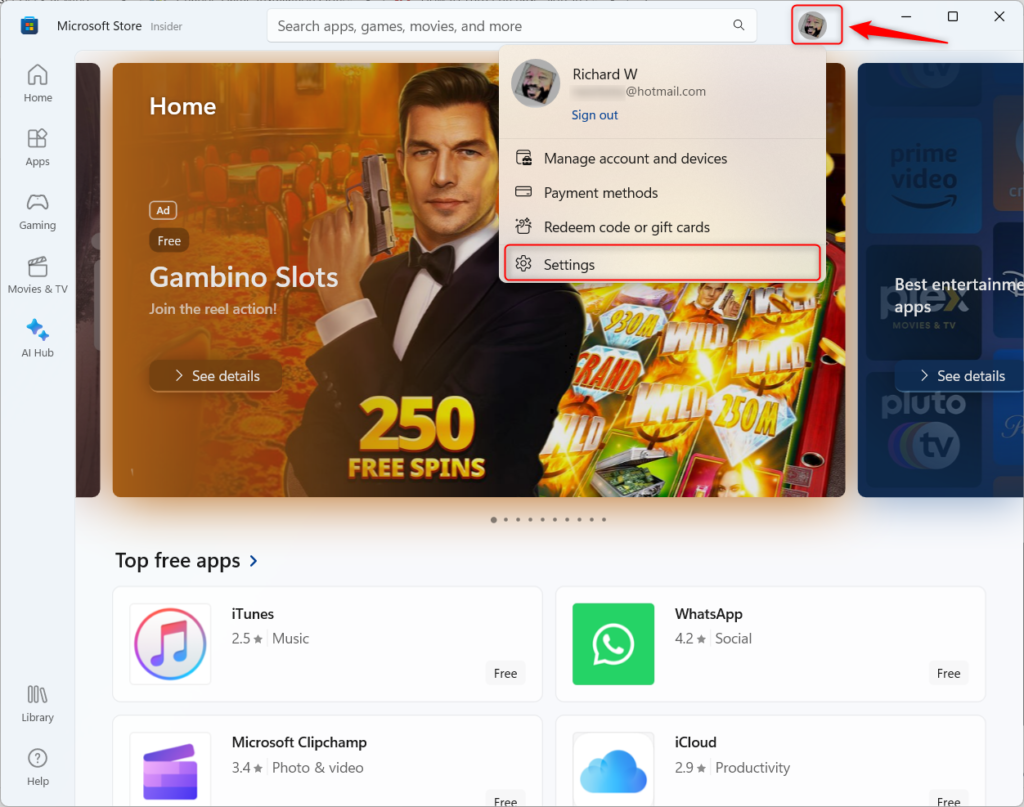
Using the Microsoft Store and Xbox App
The Microsoft Store and the Xbox app follow the same folder rules, but Game Pass subscribers manage game library folders from inside the Xbox app. To change the location there:
- Open the Xbox app.
- Go to Profile, then Settings, and then General.
- Find the game install options and change the library location from there. Menu names in the Xbox app change between updates, so the wording may differ slightly on your version.
Troubleshooting: Why is the Option Greyed Out?
If the storage menus are unavailable or greyed out, the local user account usually lacks administrative privileges. Sign in with an administrator account, or ask the person who manages the PC to make the change. On a work or school PC, an administrator may also have locked the setting through policy, and you will need to ask your IT team.
If the drive you want is missing from the dropdown, check that it is connected, shows up in File Explorer, and is formatted as NTFS.
Moving Already Installed Apps
Apps you have already installed can often move to a new drive without a full reinstall. To try it:
- Go to Settings Apps Installed apps
- Click the three dots beside the application.
- Select "Move" if it appears in the menu. Some apps show it under Advanced options instead, and some apps don't offer it at all.
- Choose the destination drive and confirm. Windows moves the app and keeps your data.
Certain built-in system components reject relocation attempts, and the Move option will not appear for them.
Summary
Changing your default installation drive keeps your primary storage clear as you download new apps and games. Pick a drive that stays connected, check that it is formatted as NTFS, and you won't have to touch the setting again.
Did this guide fix your problem?

About the Author
Richard
Tech Writer, IT Professional
Richard is a writer at Geek Rewind who turns complex IT tasks into clear, step-by-step guides. He draws on years of hands-on experience in system administration and enterprise IT operations, focusing on Windows, Linux and WordPress: the problems people actually run into, and the fixes that work. His server and WordPress guides come from systems he runs himself. Richard builds and maintains the platform behind Geek Rewind, from its Ubuntu servers and Nginx configuration to its custom WordPress plugins. Many new tutorials start with readers' questions, and he's always glad to answer them in the comments.
[…] can choose to install new apps on internal or external drives in Windows […]
[…] How to Choose Where New Apps Install […]