How to Add Storage Space to Windows 11 Pool


Storage Spaces in Windows 11 lets you combine two or more drives into one virtual drive, so you can increase your total capacity without buying one large replacement drive. It spreads your data across the connected drives, and the result shows up in File Explorer as a normal drive. Storage Spaces is available in both Home and Pro editions.
Connect the extra physical drive to your PC first, then add it to an existing storage pool through the Settings app.
Navigate to Settings System Storage Advanced storage settings Storage Spaces. Select your pool, click “Add a space,” configure the size and resiliency, and then click Create. Format the new volume in File Explorer to finish.
Add Storage space to a Storage pool on 🪟 Windows 11
A storage pool is a group of physical drives managed together for extra capacity and, optionally, protection against drive failure. The short route is Settings System Storage Advanced storage settings Storage Spaces From there you pick your pool and use Add a space to put the capacity to use.
Before you start, check these things:
- The new drive is connected and shows up in Windows. Any data on a drive you add to a pool can be erased, so back up anything you want to keep.
- You are signed in with an administrator account. Windows may show a User Account Control prompt, so click Yes when it appears.
- You know which resiliency type you want (see the list further down). The number of drives in the pool limits your choices.
- Open the Windows Settings app.
- Click the Start menu and select Settings. You can also press Win+I to launch the Settings app . The Settings window should open with a list of categories on the left.
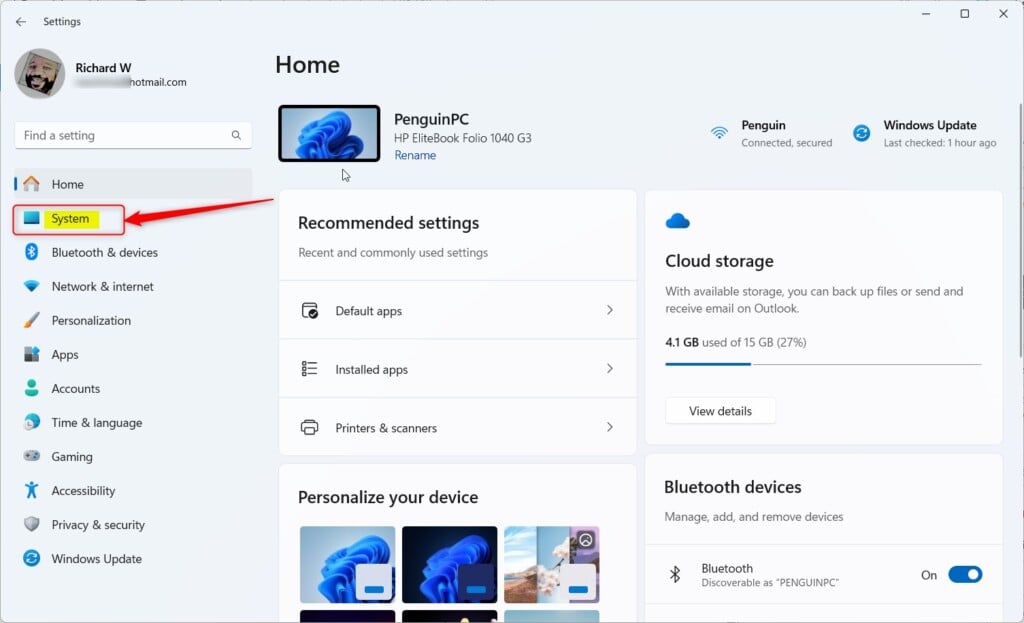
- Click System on the left. The System options appear on the right.
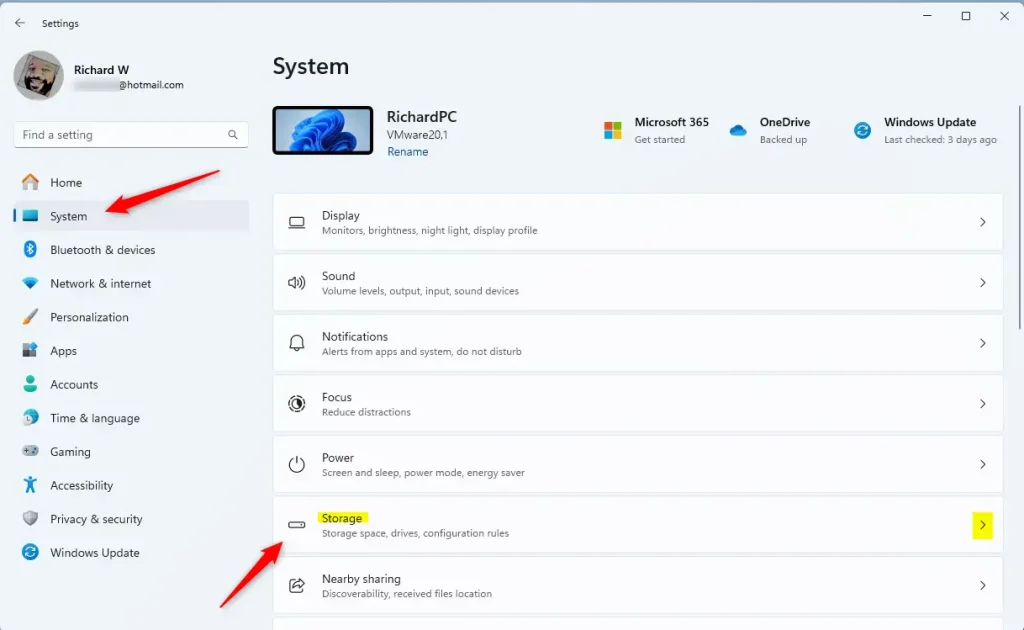
- Select the Storage tile on the right. You should now see your drives and a breakdown of what is using your space.
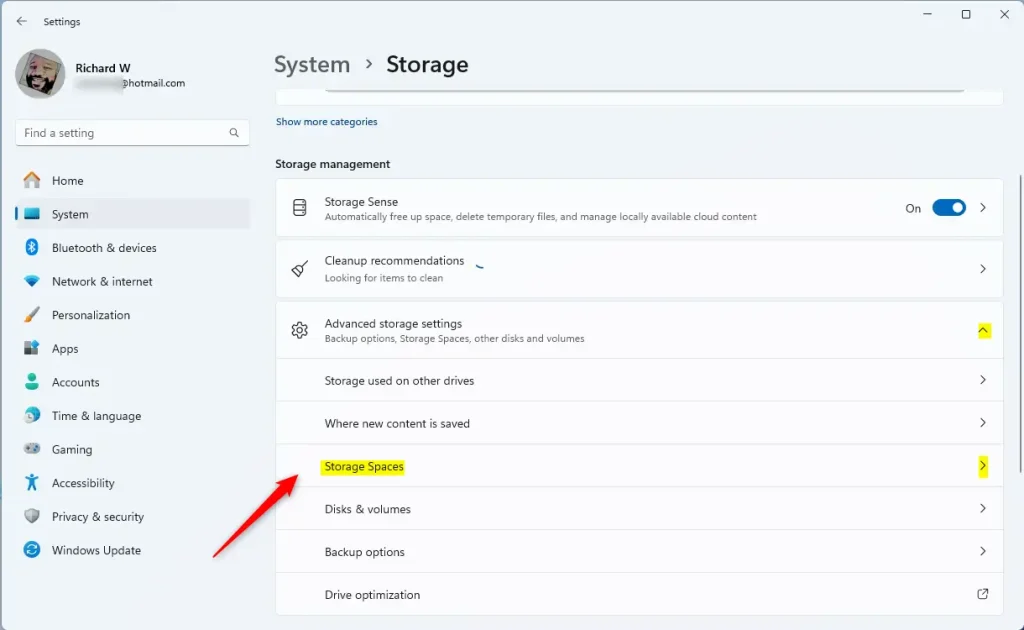
- Scroll down and click Advanced storage settings to expand it, then click Storage Spaces. The page lists your existing storage pools.
If you see no pools, you have not created one yet. In that case you need to create a pool first, and this guide does not apply until you have one.
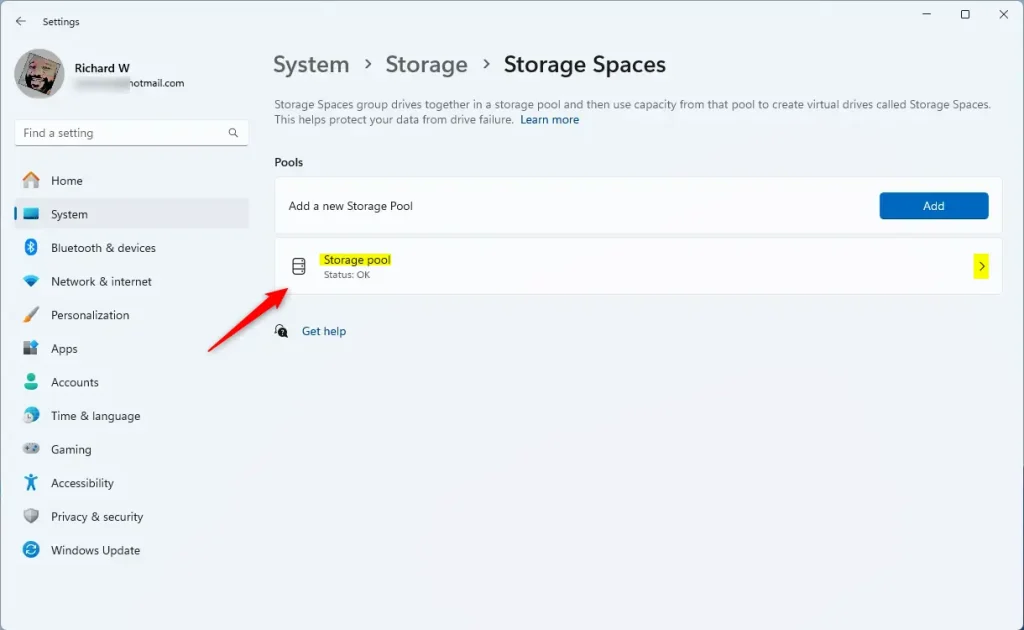
- Select the Storage pool tile to expand it. Its drives and storage spaces are listed.
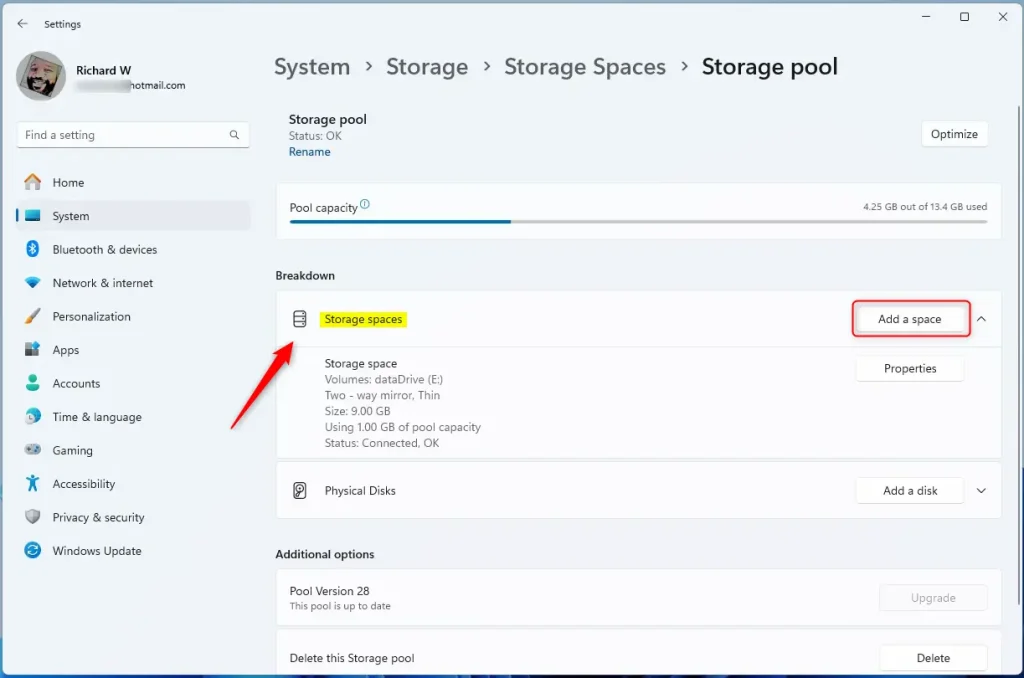
- Select the Storage space tile, then click the Add a space button to put new capacity from the pool to use.
If the option is greyed out or missing, the pool probably has no free capacity. Check that the new drive is connected and listed in the pool. If the pool page offers an option to add drives, use it to bring the new drive in first.
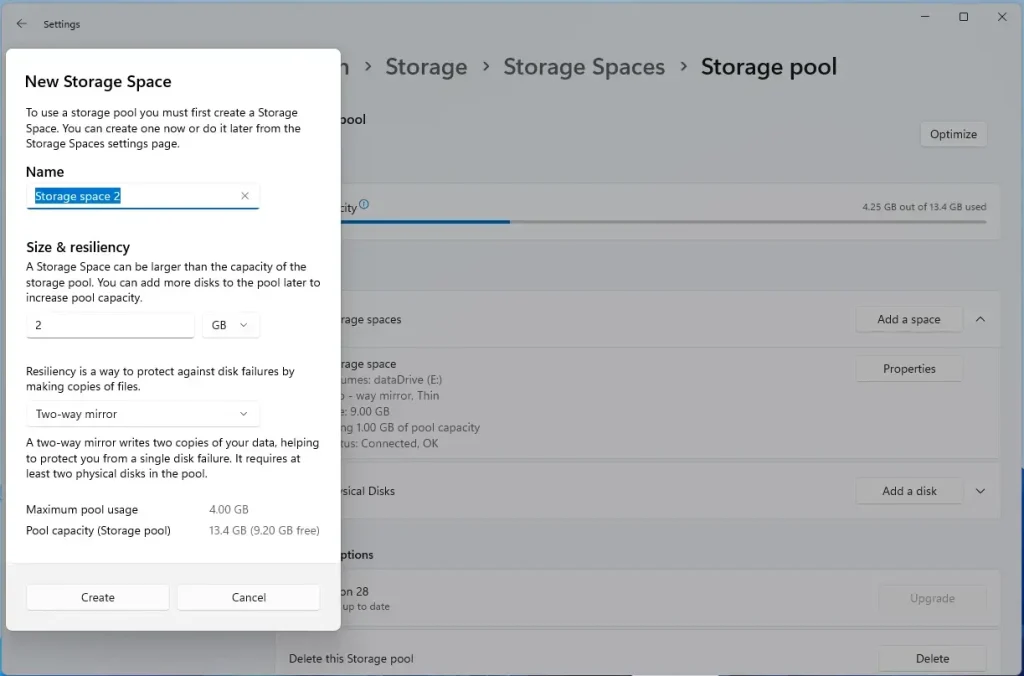
- In the next window, type a name for the storage space.
- Choose a size.
- Choose a resiliency option.
The resiliency type decides how your data is protected and how many drives you need:
- Simple – requires at least two drives and provides no data protection. If one drive fails, you lose data.
- Two-way mirror – requires at least two drives, and there is data protection when a drive fails.
- Three-way mirror – requires at least five drives and provides data protection. It will withstand two drive failures.
- Parity – requires three drives with data protection and performance.
- Dual parity – requires at least seven drives and provides data protection and performance. It will withstand two drive failures.
If an option is greyed out, the pool does not have enough drives for it. Mirrored and parity layouts also use part of your raw capacity for protection, so the usable space is smaller than the total of all drives.
- Click Create to finalize the new storage space. Windows builds the space, and a format window should open next.
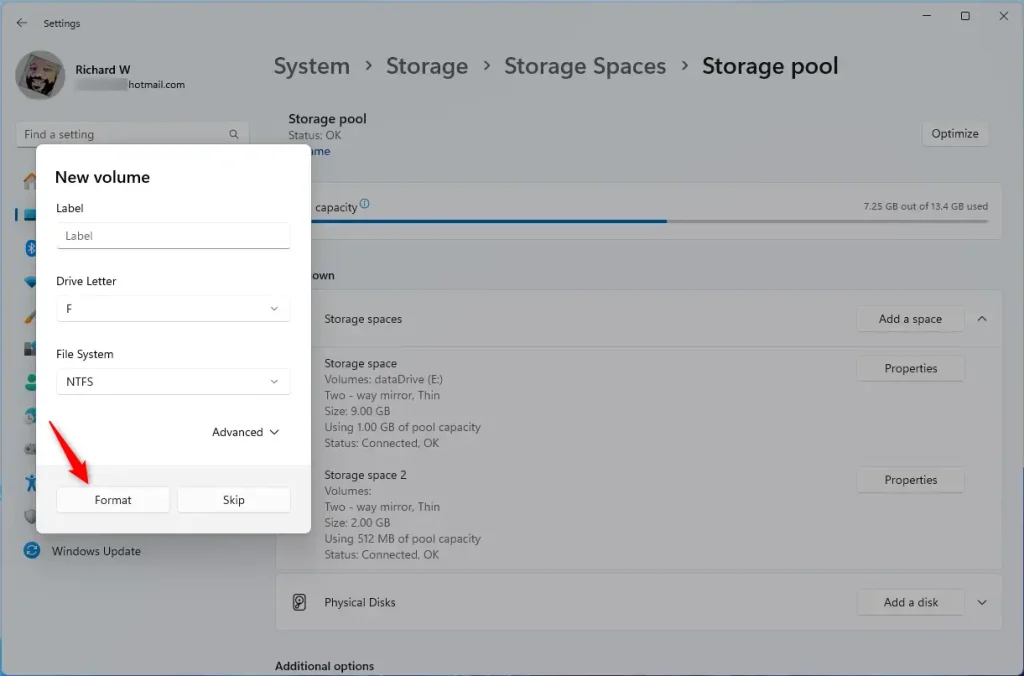
- In the new volume window, enter a label name.
- Choose a drive letter.
- Choose a file system: NTFS or FAT32. NTFS is the better choice for most people. FAT32 cannot store a single file larger than 4 GB.
- Click Format to build the volume. Formatting is quick on a new space, but wait for it to finish before you close the window.
A new drive linked to the "Storage pool" appears and becomes accessible through File Explorer. It shows up under This PC with the label and drive letter you chose.
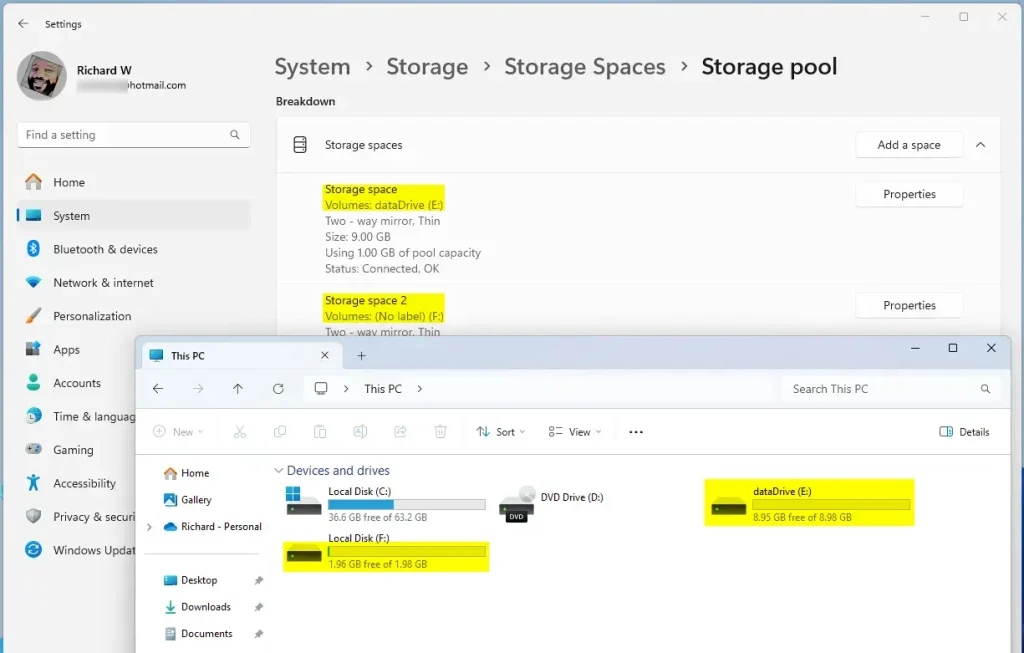
The configuration process is now complete. Close the Settings app to finish. No restart is needed.
To undo this, go back to Settings System Storage Advanced storage settings Storage Spaces, open the pool, and delete the storage space. Deleting a space erases everything stored on it, so copy your files elsewhere first.
Conclusion:
- Increased Storage Capacity: Adding storage space to a Windows storage pool increases available storage capacity, providing a more flexible and scalable solution.
- Data Redundancy and Resiliency: Configuring the storage pool to mirror data across multiple physical drives can enhance data redundancy and resiliency, improving overall data protection.
- Simplified Storage Management: Consolidating data onto a single virtual drive can simplify storage management, which is especially beneficial for those with limited physical space or seeking a streamlined approach to data storage.
- Access and Utilization: Upon completion, the new storage space volume will be created and easily accessible via File Explorer, ready for utilization.
Have a question about this guide?
Answered by AI from this guide. Good questions may be added to this page — please don't include personal details.
Did this guide fix your problem?

About the Author
Richard
Tech Writer, IT Professional
Richard is a writer at Geek Rewind who turns complex IT tasks into clear, step-by-step guides. He draws on years of hands-on experience in system administration and enterprise IT operations, focusing on Windows, Linux and WordPress: the problems people actually run into, and the fixes that work. His server and WordPress guides come from systems he runs himself. Richard builds and maintains the platform behind Geek Rewind, from its Ubuntu servers and Nginx configuration to its custom WordPress plugins. Many new tutorials start with readers' questions, and he's always glad to answer them in the comments.
[…] Storage spaces, you can create a Storage pool, rename it, add physical disk drives to it, add a Storage space to an existing Storage pool, optimize it, and […]