How to Rename a Storage Pool in Windows 11

Renaming a storage pool in Windows 11 takes a few clicks in Settings, or one command in PowerShell. It gives your combined drives a custom label, so you can tell them apart at a glance. Storage Spaces groups two or more physical drives into one virtual drive. You use it either to protect your files from a drive failure or to expand your total capacity. Renaming a pool only changes its label. Your files, the drives in the pool and the drive letters stay as they are, and you can rename the pool again at any time.
Open Settings System Storage Advanced storage settings Storage Spaces, click your pool, select Rename, type the new name and click OK. The pool label updates immediately without restarting.
What is a Storage Pool?
What is a Storage Pool?
A storage pool is a set of physical drives that Windows treats as one bucket of capacity. You then carve virtual drives (called storage spaces) out of that bucket. Those virtual drives appear in File Explorer like any other drive. Depending on the resiliency type you chose when you created the space, Windows can keep duplicate copies of your files across the drives in the pool. That way your data survives if one drive fails. The pool is the group of disks underneath, and the storage space is the drive you see and use. This tutorial renames the pool.
Why Rename a Storage Pool?
Why Rename Your Storage Pool?
The default name, usually “Storage pool”, tells you nothing about what is inside. That is fine with one pool. It gets confusing once you have two or three, or when you look after several PCs. A clear name such as “Photos-Archive” or “Backup-Pool” helps you find the right pool quickly during routine maintenance, when you replace a drive, or when you add capacity.
How to Rename a Storage Pool Using Windows Settings
You can rename a storage pool in Windows Settings by opening the Storage page and then the properties of your pool. This is the better choice if you prefer a graphical interface to the command line. You need an administrator account, because Windows asks for permission before it lets you change a pool.
The Settings app leads you to the renaming controls in a few clicks. Open Settings, go to System, then Storage, and follow the steps below. On some Windows 11 builds the final Storage Spaces link opens the classic Storage Spaces page from Control Panel. That is normal, and the Rename option is on that page.
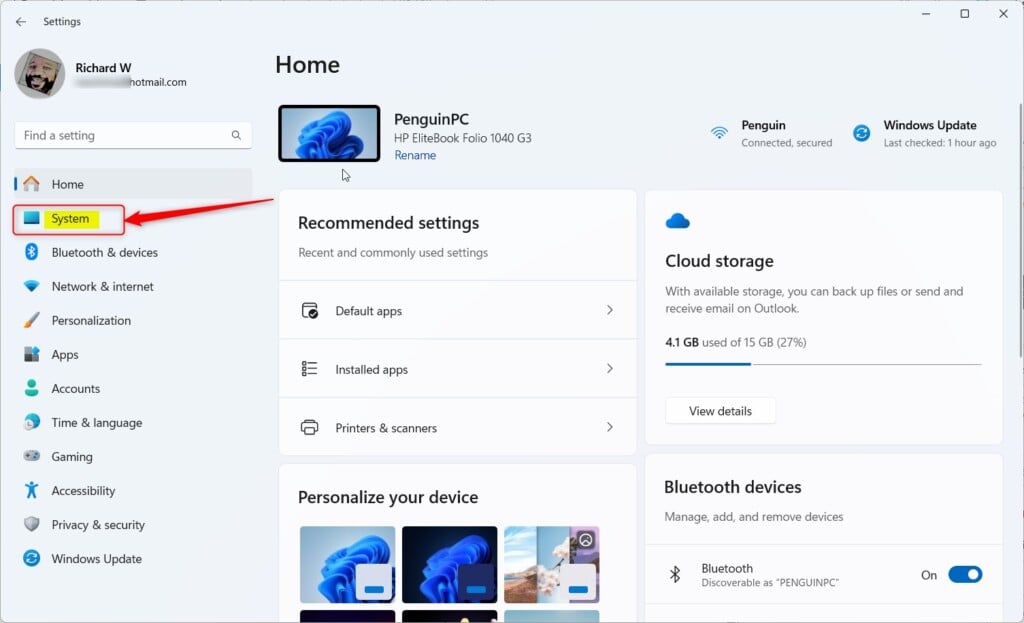
- Click the Start menu and select Settings, or
- Press Windows key + I on your keyboard. The Settings window opens either way.
- In Settings, click System on the left side. The System options appear on the right.
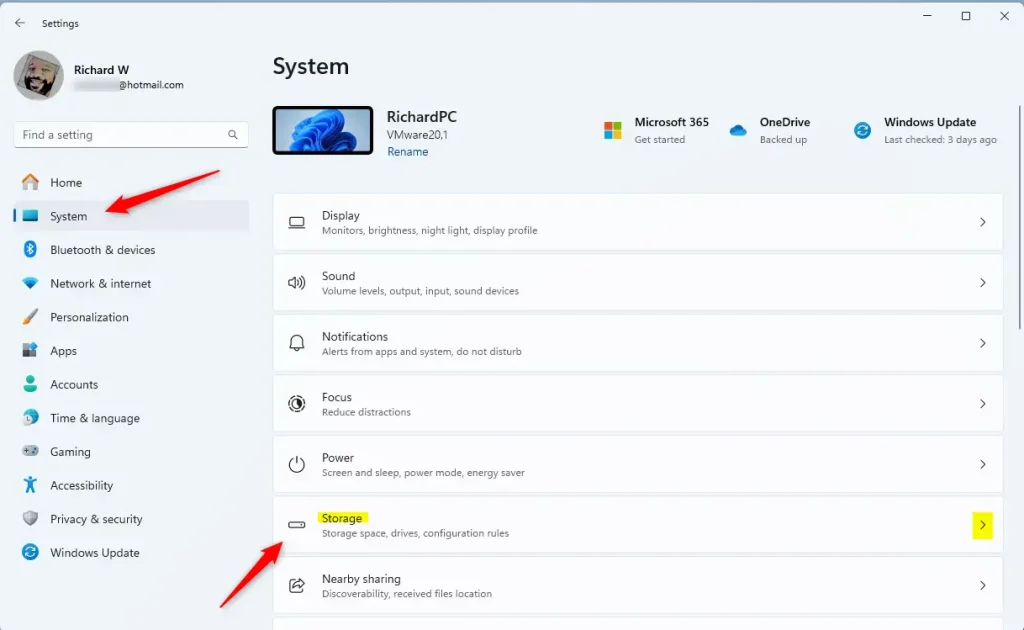
- Click on Storage on the right side. You will see your drives and a breakdown of what is using space.
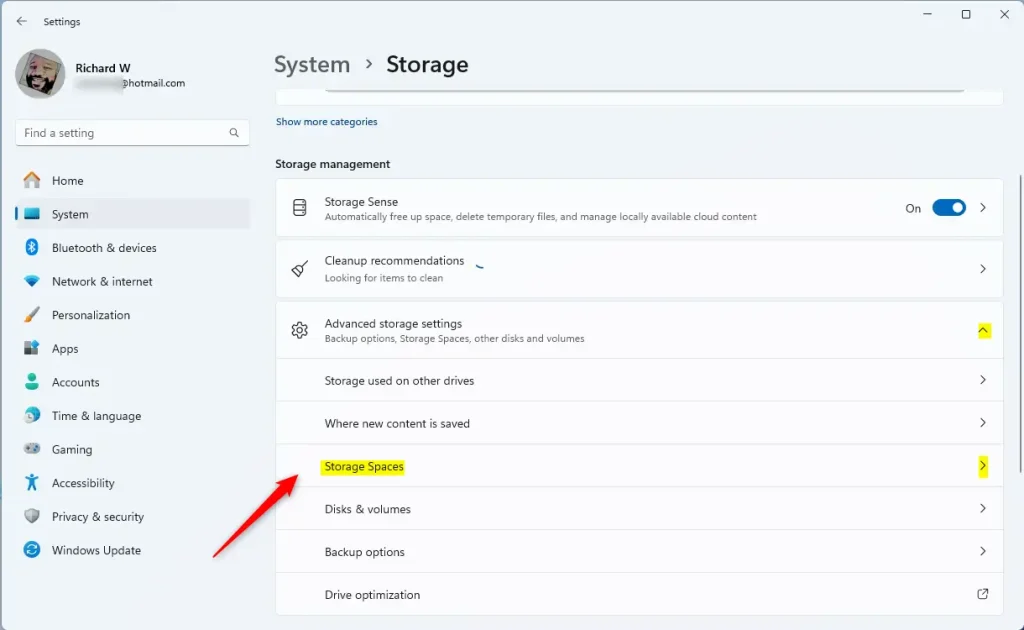
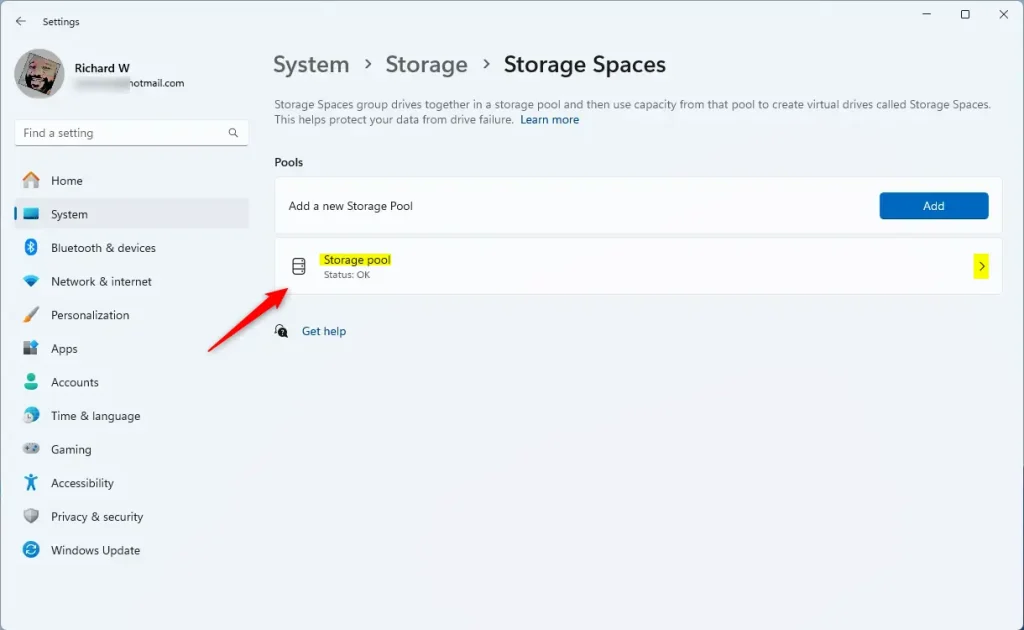
- Scroll down and expand Advanced storage settings, then click Storage Spaces. The list of your storage pools and spaces appears. If you have never created a pool, the list is empty and there is nothing to rename.
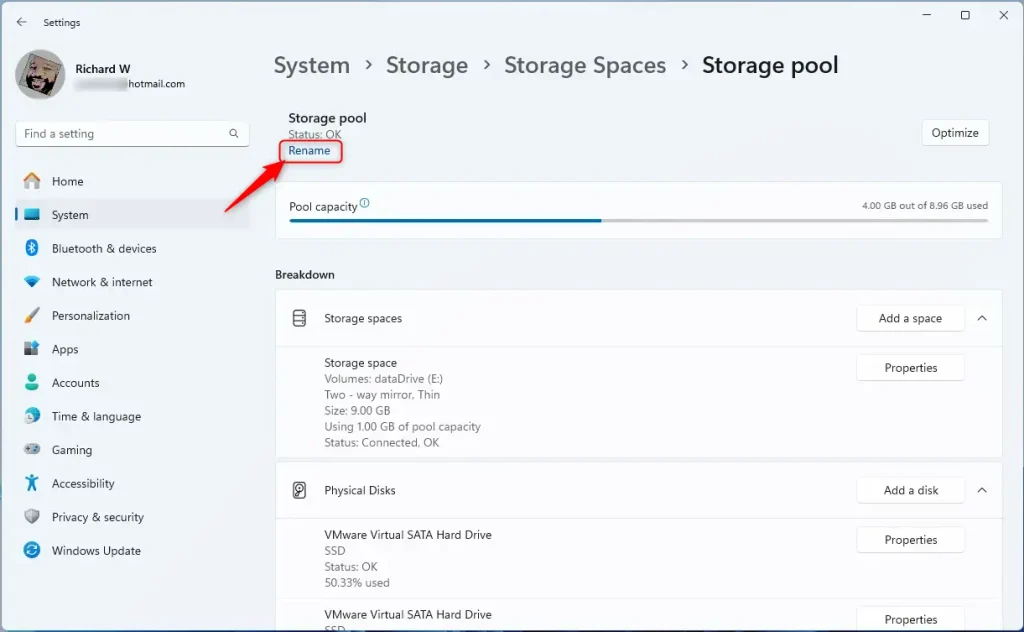
- Click on your storage pool to open its details. If you see a Change settings button instead, click it and approve the User Account Control prompt. This is the usual reason the rename option is missing or greyed out.
- Click the Rename link. The pool name becomes an editable field.
- Type the new name you want for your storage pool. Keep it short and descriptive.
- Click OK to save the new name. The pool now shows the new label in the list. You do not need to restart the PC. To undo the change, repeat the steps and enter the old name.
Here are some images to help you follow these steps:
How to Rename a Storage Pool Using PowerShell
You can rename a storage pool in PowerShell by running one command that updates the pool's name right away. You have to open the tool with administrator rights first. This method is quicker if you are comfortable in a console, and it is easy to reuse if you manage several PCs. It works the same on Windows 11 Home and Pro.
Launch it with administrative rights before you run anything. Without them, the command fails with an access denied error.
Open PowerShell as Administrator (Admin privileges required):
- Right-click the Start button and select Windows Terminal (Admin) or Windows PowerShell (Admin). Approve the User Account Control prompt. A console window opens, and its title bar or tab should show that it is running as Administrator.
First, list your current storage pools so you know the exact name of the one you want to change. Type this command:
Get-StoragePoolThe output lists each pool with its friendly name. Note the name of your pool exactly as it appears. You will need it in the next command. Use this command to rename your storage pool:
Set-StoragePool -FriendlyName "CurrentPoolName" -NewFriendlyName "NewPoolName"Replace the current name and the new name in that command with your own values. If a name contains spaces, keep it inside quotation marks. For example, if your pool is currently named 'Storage pool' and you want to rename it to 'MyNewStoragePool', run this command:
Set-StoragePool -FriendlyName "Storage pool" -NewFriendlyName "MyNewStoragePool"It prints nothing when it succeeds. To check the result, run the listing command again and look for the new name. If you get an error saying the pool was not found, the old name probably does not match exactly. To undo the change, run the same command again with the names swapped.
Summary
Renaming a storage pool helps you keep your multi-drive setup organized and easy to manage over time. You can use either the Windows Settings app or PowerShell, whichever you find easier to work with. The result is the same, and neither method touches your data.
Summary
Clear labels make multi-drive configurations easier to maintain. Administrators who look after several machines benefit from using the same naming convention on every PC. Both the graphical menus and the command-line tools make this change reliably.
- Renaming your storage pool helps keep your storage organized and easy to manage.
- You can rename it through the Windows Settings app or by using PowerShell commands.
- This is especially helpful if you have multiple storage pools or manage other users' computers.
- For more details on creating and managing storage pools, check out this Storage Pool creation guide.
Have a question about this guide?
Answered by AI from this guide. Good questions may be added to this page — please don't include personal details.
Did this guide fix your problem?

About the Author
Richard
Tech Writer, IT Professional
Richard is a writer at Geek Rewind who turns complex IT tasks into clear, step-by-step guides. He draws on years of hands-on experience in system administration and enterprise IT operations, focusing on Windows, Linux and WordPress: the problems people actually run into, and the fixes that work. His server and WordPress guides come from systems he runs himself. Richard builds and maintains the platform behind Geek Rewind, from its Ubuntu servers and Nginx configuration to its custom WordPress plugins. Many new tutorials start with readers' questions, and he's always glad to answer them in the comments.
No comments yet — be the first to share your thoughts!