How to Keep Microsoft Teams Running in the Taskbar


Keeping Microsoft Teams running in the taskbar means the app stays open in the background after you click the red X to close the main window. You still get message alerts, and you can join a call without waiting for Teams to start up again.
Recent versions of Microsoft Teams for Windows include a setting for this. Instead of shutting down, Teams hides in the system tray (the notification area at the right end of the taskbar ). Turning it on helps you avoid missing work or school updates during the day.
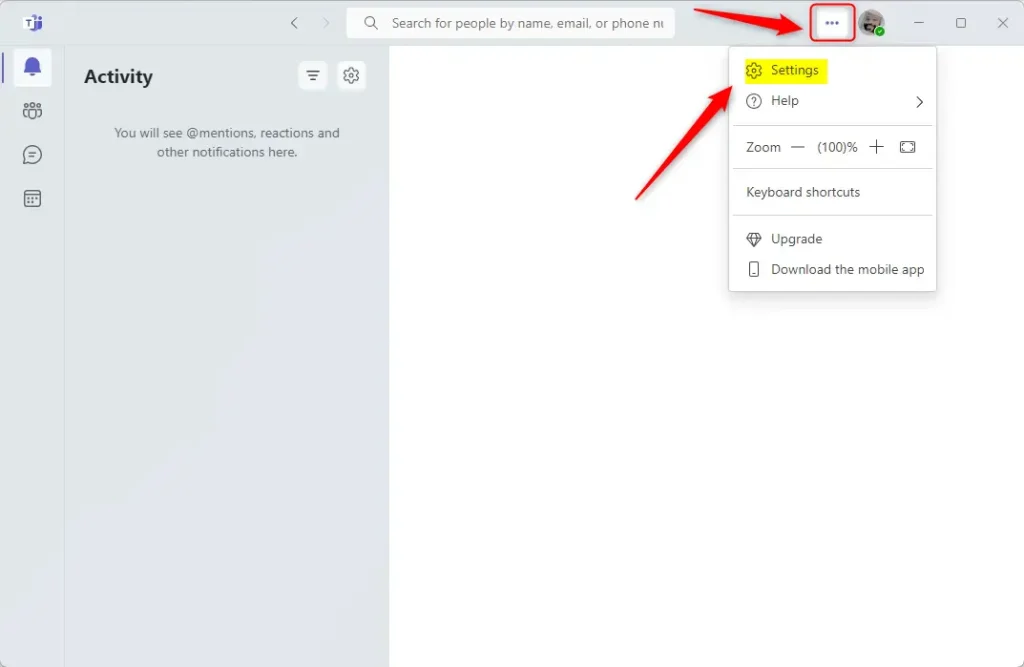
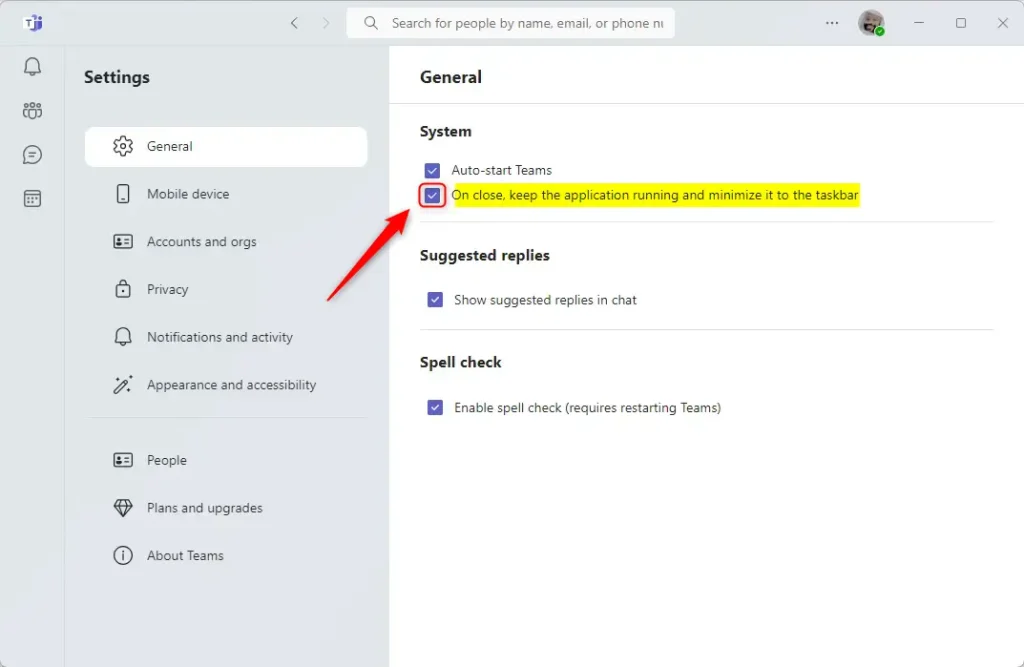
Open Microsoft Teams, click Settings and more (…) next to your profile picture, select Settings, then General, and check the box next to On close, keep the application running and minimize it to the taskbar . Teams now stays running in the notification area when you close it.
Turn “On close, keep the applications running and minimize it to the taskbar” on or off in Teams
You turn this on with one checkbox in the Teams settings. Once it is on, clicking the X close button no longer quits Teams. The app keeps running in the background, so chats and calls still come through while you work in other programs.
Here’s how to set it up.
- Open Microsoft Teams from the Start menu or the taskbar . The main Teams window opens, and you can reach its features and settings from there.

You can also launch the app from the Taskbar or Taskbar overflow.

- If the mini window opens first, click the expansion button on its menu bar. The mini window appears the first time you launch Teams. The full Teams window should now be on screen.

- In the full Teams window, click the Settings and more (…) button next to your profile picture. A menu drops down.
- Select Settings from the menu. The Settings page opens.
- On the left side of the Settings page, select the General tab.
- Under System, check the box next to On close, keep the application running and minimize it to the taskbar . The setting takes effect straight away, and you do not need to restart Teams or Windows.
To turn it off again, uncheck the same box. After that, clicking the X closes Teams completely.
Menu names and the placement of settings can vary between versions of the app, and the new Teams and the classic Teams don't look exactly alike. Check that Teams is up to date, then look through the General tab again. If you use a work or school account, your organization's policies may also control some settings.
That should do it!
To test it, click the X on the Teams window. Then look for the Teams icon in the notification area at the right end of the taskbar. If you don't see it, click the small arrow to show hidden icons. The icon being there means Teams is still running.
Leaving this setting on lets you reply to messages or rejoin meetings without launching the app from scratch. The main benefits are:
- Quick access to Teams without waiting for it to reload
- Fewer missed notifications and messages when you step away from the computer
- Faster joining of meetings and calls, because the app is already open
On a slower PC or a laptop on battery, you may prefer to leave the setting off.
Was this guide helpful?

About the Author
Richard
Tech Writer, IT Professional
Richard is a writer at Geek Rewind who turns complex IT tasks into clear, step-by-step guides. He draws on years of hands-on experience in system administration and enterprise IT operations, focusing on Windows, Linux and WordPress: the problems people actually run into, and the fixes that work. His server and WordPress guides come from systems he runs himself. Richard builds and maintains the platform behind Geek Rewind, from its Ubuntu servers and Nginx configuration to its custom WordPress plugins. Many new tutorials start with readers' questions, and he's always glad to answer them in the comments.




No comments yet — be the first to share your thoughts!