Manage Microsoft Teams Notifications During Calls


Microsoft Teams (a chat and video call app that helps people work together) can interrupt a meeting with banners and alert sounds on Windows 11 and Windows 10. Turning off the call sounds keeps incoming alerts from talking over your conversation.
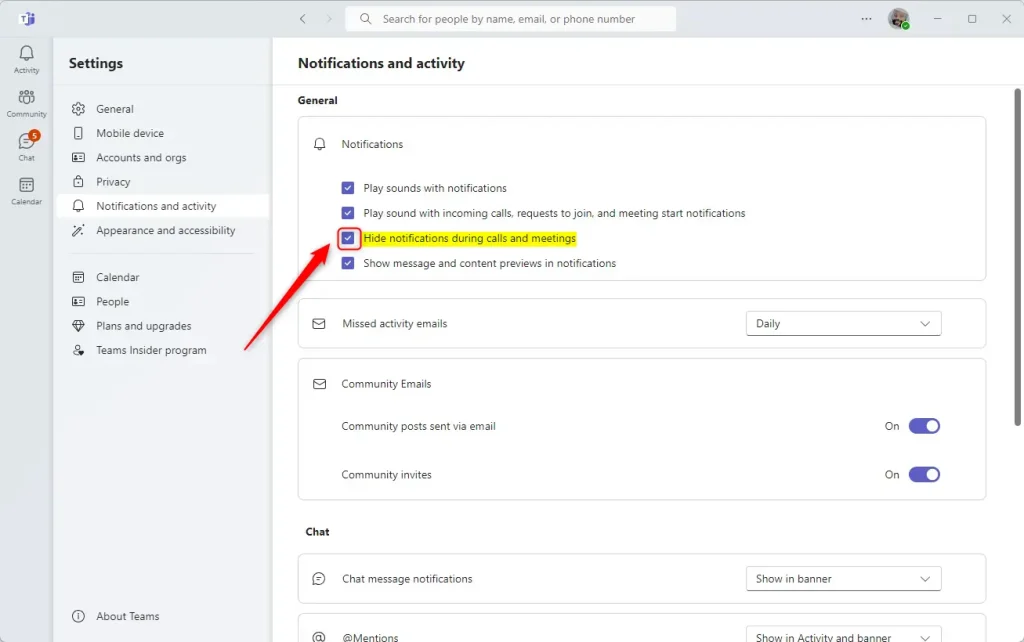
To stop Microsoft Teams notification sounds during calls on Windows 11 and 10, open Teams, click Settings and more (…) next to your profile picture, select Settings, go to the Notifications and activity tab, and uncheck Play sound with incoming calls, requests to join, and meeting start notifications.
Turn on or off notifications during calls and meetings in Teams
The setting below lives inside the Teams app and takes effect straight away. You do not need to restart Teams or Windows. It controls the sound Teams plays for incoming calls, requests to join, and meeting start notifications. Your normal chat alerts are not affected, so you will still see them after the call.
Set your Teams status to Do not disturb, or turn on Do not disturb in Windows under Settings System Notifications. Both are easy to switch back off.
- Open the Start menu and select Microsoft Teams from the All apps list, or click its icon on the Taskbar .

You can also open Teams another way: Taskbar or Taskbar overflow.

If you see it, click the expansion button on the menu bar. The full Teams window should now open, which gives you access to all the settings .

- Click the Settings and more (…) button next to your profile picture.
- Select Settings from the menu. The Settings page should now open.
Menu layouts can differ slightly between the classic and new Teams apps. If you do not see the button where described, look for the three dots near your profile picture at the top of the window.

- Select the Notifications and activity tab on the left side of the Settings page.
- On the right, find the General section.
- Find the box labelled Play sound with incoming calls, requests to join, and meeting start notifications. When it is checked, Teams plays these sounds.
- Uncheck the box to turn the sounds off.
To undo the change later, return to the same page and check the box again.
That completes the process.
Conclusion:
- Leaving notifications on keeps you informed of essential messages during calls and meetings.
- Turning off the call sounds avoids interruptions during important conversations.
- With these steps, you can manage your notification settings in the Microsoft Teams app and reverse them at any time.
Did this guide fix your problem?

About the Author
Richard
Tech Writer, IT Professional
Richard is a writer at Geek Rewind who turns complex IT tasks into clear, step-by-step guides. He draws on years of hands-on experience in system administration and enterprise IT operations, focusing on Windows, Linux and WordPress: the problems people actually run into, and the fixes that work. His server and WordPress guides come from systems he runs himself. Richard builds and maintains the platform behind Geek Rewind, from its Ubuntu servers and Nginx configuration to its custom WordPress plugins. Many new tutorials start with readers' questions, and he's always glad to answer them in the comments.
[…] disable sound notifications, enable or disable notifications for incoming calls and meetings, enable or disable notifications during calls and meetings, and […]
[…] to Google Calendar, link your mobile device, turning message preview on or off, manage teams notifications during calls, set default speakers, set default microphone, enable high fidelity […]
[…] to Google Calendar, link your mobile device, turning message preview on or off, manage teams notifications during calls, set default speakers, set default microphone, enable high fidelity […]
[…] Teams, connect to Google Calendar, link your mobile device, turn message preview on or off, manage teams notifications during calls, set default speakers, set default microphone, enable high fidelity sound, change mic […]
[…] sound notifications, enable or disable notifications for incoming calls and meetings, enable or disable notifications during calls and meetings, enable or disable chat message notifications, turn @mentions notifications banners on or […]
[…] sound notifications, enable or disable notifications for incoming calls and meetings, enable or disable notifications during calls and meetings, enable or disable chat message notifications, turn @mentions notifications banners on or […]