How to Manage Phone Number Visibility in Microsoft Teams


Phone number visibility in Microsoft Teams controls whether other people inside your organisation can see your direct phone number in your contact card. This privacy setting lets you hide your number from coworkers so they must use chat or email to reach you instead.
You can change who sees your number in the Microsoft Teams privacy settings within your account profile. Hiding your number stops people from finding your phone details in directory searches instantly.
Control phone number visibility by going to Settings, then Privacy, and managing contact information. Toggle the switch next to your phone number to On to make it searchable or Off to hide it from your profile.
Administrative Control: Caller ID Policies
You can control how numbers are presented to external parties using the Teams Admin Center. This is often used to mask individual user numbers with a main company line.
How to configure Caller ID Policies (Admin Only)
Microsoft Teams phone number visibility is controlled across your organization using Caller ID policies in the Teams Admin Center. Administrators use these policies to decide whether a user’s phone number shows up, is masked, or displays a replacement number when they make external calls. You can edit the global default policy or create a new one to apply specific rules to different groups of users.
- Log in to the Teams Admin Center.
- Navigate to Voice > Caller ID policies.
- Select an existing policy or create a new one.
- Toggle Mask caller ID to hide the user’s specific number and show a service number instead.
- Assign the policy to specific users via the Users tab.
PowerShell Automation for Teams
Microsoft Teams phone number visibility can be updated in bulk using PowerShell commands instead of the web portal. Administrators run specific cmdlets to assign caller ID policies or set outgoing phone numbers for multiple users simultaneously. This method saves time when you need to configure calling settings for a large organization or automate user onboarding.
# Example: Set a specific number as the caller ID for a user
Set-CsCallingLineIdentity -Identity "user@domain.com" -CallingLineId "+15550100123" -EnableUserOverride $false
Refer to the official Microsoft documentation for more details on these cmdlets.
Troubleshooting Phone Number Visibility
Microsoft Teams phone number visibility problems usually happen because of policy update delays, missing licenses, or conflicting user settings. Changes made in the admin center or through PowerShell often take up to 24 hours to apply fully across the system. Checking your assigned policies and waiting for replication usually resolves most display errors.
- Policy Latency: Changes made in the Teams Admin Center or via PowerShell can take up to 24 hours to propagate.
- User Privacy Settings: Ensure the end-user has not manually disabled their contact information visibility in the Teams desktop client.
- License Requirements: Ensure the user is assigned the correct Audio Conferencing or Phone System license.
Steps to show or hide your phone number (End-User)
Microsoft Teams phone number visibility can be adjusted directly inside the app settings if your administrator allows end-user control. You can choose whether your direct dial number displays to people you call or remains hidden. Open the settings menu in Teams to update your calling preferences without needing help from IT support.
- Open the Start menu and find Microsoft Teams in your apps list.

Turn on or off automatically starting Microsoft Teams - You can also open it from the Taskbar.

Turn on or off automatically starting Microsoft Teams - If the small window opens, click the expansion button to open the full Teams window.

Turn on or off automatically starting Microsoft Teams - Click the Settings and more (...) button near your profile picture and select Settings.

Turn on or off automatically starting Microsoft Teams - Click the Privacy tab on the left side of the window.
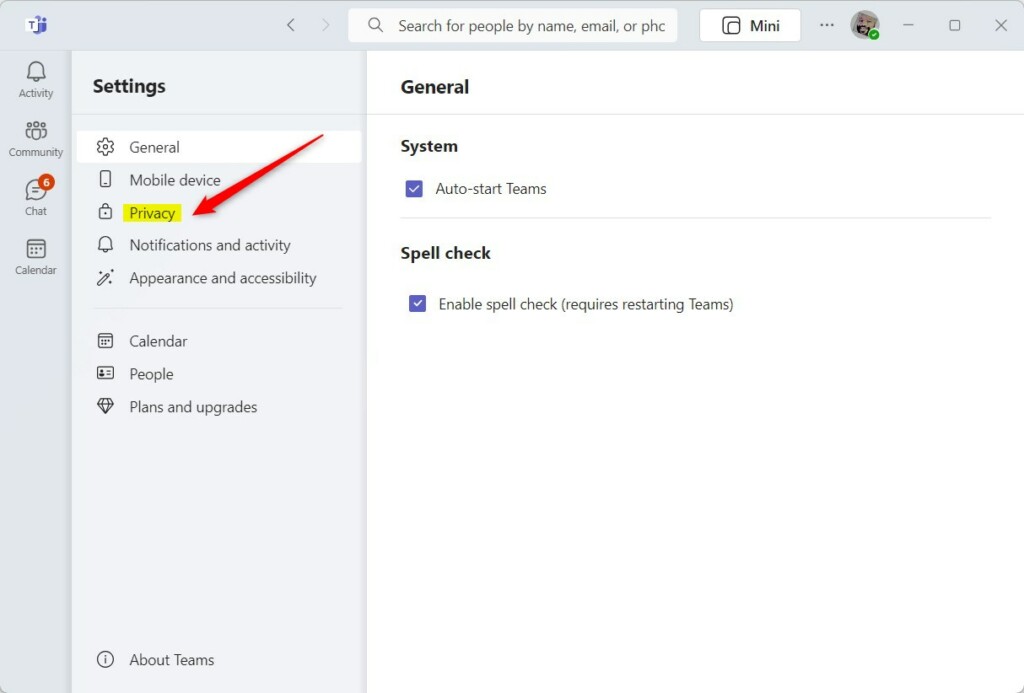
Microsoft Teams privacy settings menu with profile picture highlighted. - Select the button labeled Manage contact information.
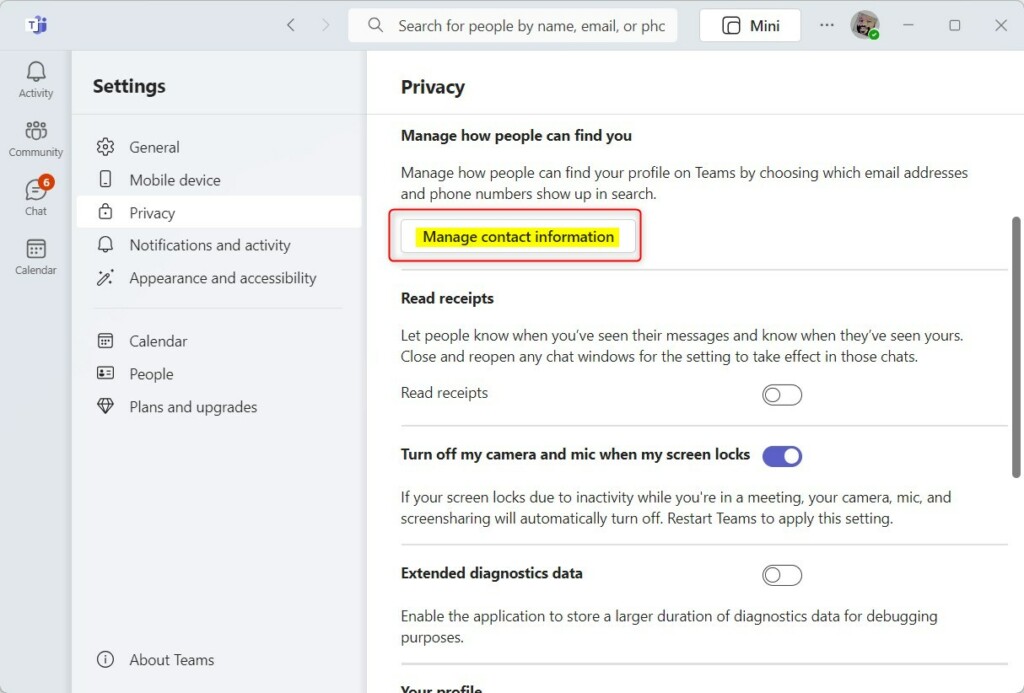
Microsoft Teams privacy settings interface for phone number visibility - Find your phone number tile. Toggle the switch to On to make it searchable or Off to hide it.
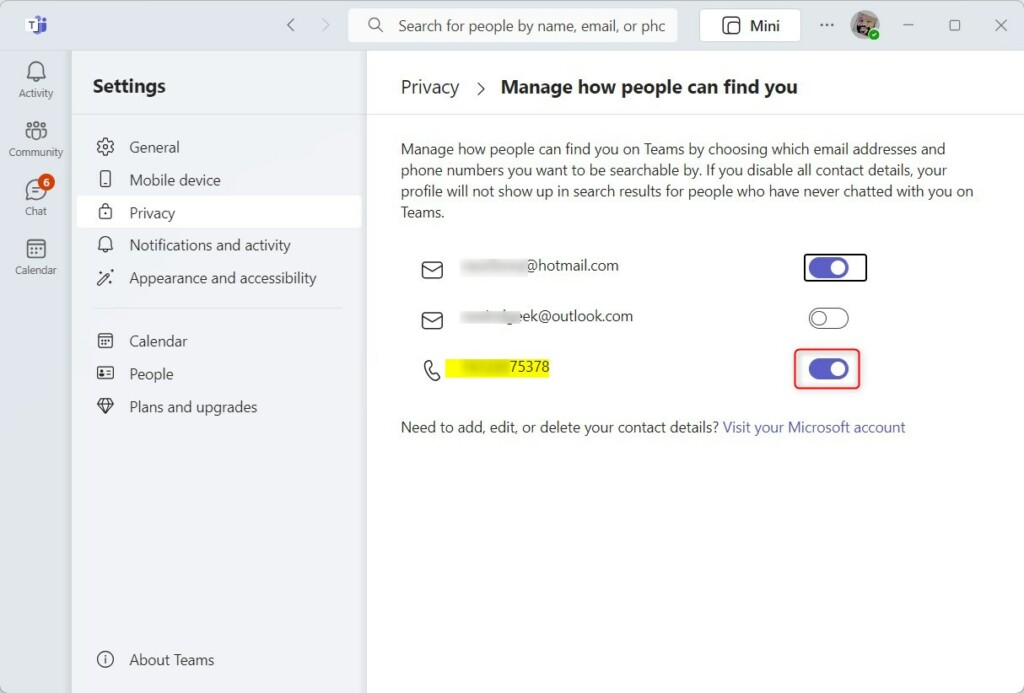
Buttons for managing phone number visibility in Microsoft Teams
Summary
Effectively managing Microsoft Teams phone number visibility combines user privacy choices with administrator-controlled caller ID policies, ensuring professional calls and personal privacy.
Was this guide helpful?

About the Author
Richard
Tech Writer, IT Professional
Richard is a writer at Geek Rewind who turns complex IT tasks into clear, step-by-step guides. He draws on years of hands-on experience in system administration and enterprise IT operations, focusing on Windows, Linux and WordPress: the problems people actually run into, and the fixes that work. His server and WordPress guides come from systems he runs himself. Richard builds and maintains the platform behind Geek Rewind, from its Ubuntu servers and Nginx configuration to its custom WordPress plugins. Many new tutorials start with readers' questions, and he's always glad to answer them in the comments.




[…] your mobile device, turning message preview on or off, turn spell check on or off, turn on or off phone number in search results, manage notifications, turn on or off suggested replies in chat, enable or disable […]
[…] your mobile device, turning message preview on or off, turn spell check on or off, turn on or off phone number in search results, manage notifications, turn on or off suggested replies in chat, enable or disable […]
[…] your mobile device, turning message preview on or off, turn spell check on or off, turn on or off phone number in search results, manage notifications, turn on or off suggested replies in chat, enable or disable […]
[…] your mobile device, turning message preview on or off, turn spell check on or off, turn on or off phone number in search results, manage notifications, turn on or off suggested replies in chat, enable or disable sound […]
[…] your mobile device, turning message preview on or off, turn spell check on or off, turn on or off phone number in search results, manage notifications, turn on or off suggested replies in chat, enable or disable sound […]
[…] your mobile device, turning message preview on or off, turn spell check on or off, turn on or off phone number in search results, manage notifications, turn on or off suggested replies in chat, and […]