How to Enable or Disable Spell Check In Microsoft Teams


Spell check in Microsoft Teams flags typos and spelling mistakes with red underlines as you type messages in chats and channels. The feature runs automatically in Teams version 2.0 and newer, so most people never have to switch it on. It helps keep your work chats clear and professional.
You can turn this writing aid on or off at any time in the app settings. Turning it off hides the red lines if you prefer a clean chat box without typo warnings. The change only affects how Teams looks and behaves for you. It does not change anything for the other people in the conversation.
Open Microsoft Teams and click the Settings and more (…) icon next to your profile picture. Select Settings, then the General tab, scroll down to Spell check, and check the box to enable it. Close and reopen Teams to apply the change.
Why enable spell check in Teams?
Turning on spell check helps you catch typos before you press Enter. A wrong word in a message to a client or a manager is easy to avoid, and in a channel it stays visible to everyone. With spell check on, a misspelled word gets a red underline while you are still typing, so you can fix it on the spot. The steps are further down this page.
What happens when you change spell check settings?
When you change the spell check setting, Teams either checks each word you type against a dictionary or stops scanning your text altogether. With it on, any word not found in the dictionary gets a red underline. With it off, nothing is underlined and typos go through unmarked, so reread important messages yourself before sending. You can switch the setting back whenever you like.
How to enable spell check in Teams
To enable spell check, open the Microsoft Teams app and go to the settings menu. Click the three dots next to your profile picture, select Settings, and open the General tab. Scroll down to the spell check option and check the box to turn it on. Teams will then catch your typing mistakes. To turn it off, follow the same path and uncheck the box.
If you can’t find the option, update Teams to the latest version and look again.
- Open the Microsoft Teams app from your desktop. The main Teams window should appear with your chats and channels.

Turn on or off automatically starting Microsoft Teams - Click the Settings and more (...) icon next to your profile picture, at the top right of the window. A dropdown menu should open.

Turn on or off automatically starting Microsoft Teams - Select Settings from the dropdown menu. The Settings window or page should open.
- Select the General tab on the left sidebar. The general options for the app should appear on the right.
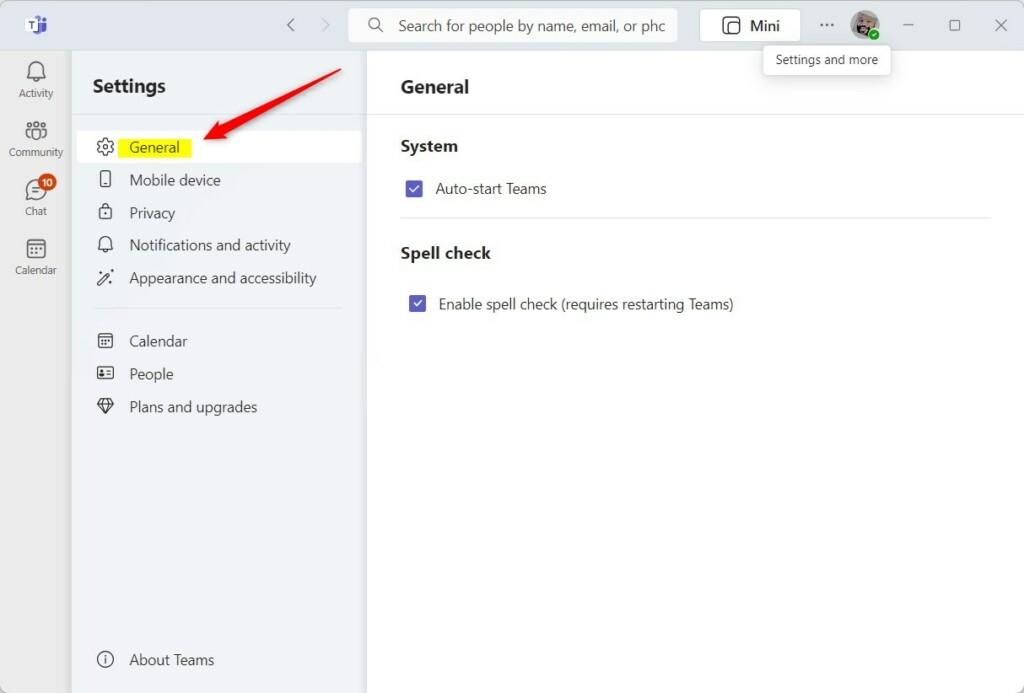
Microsoft Teams settings for enabling spell check - Scroll down and find the Spell check setting. Check the box to enable it, or uncheck it to disable it.
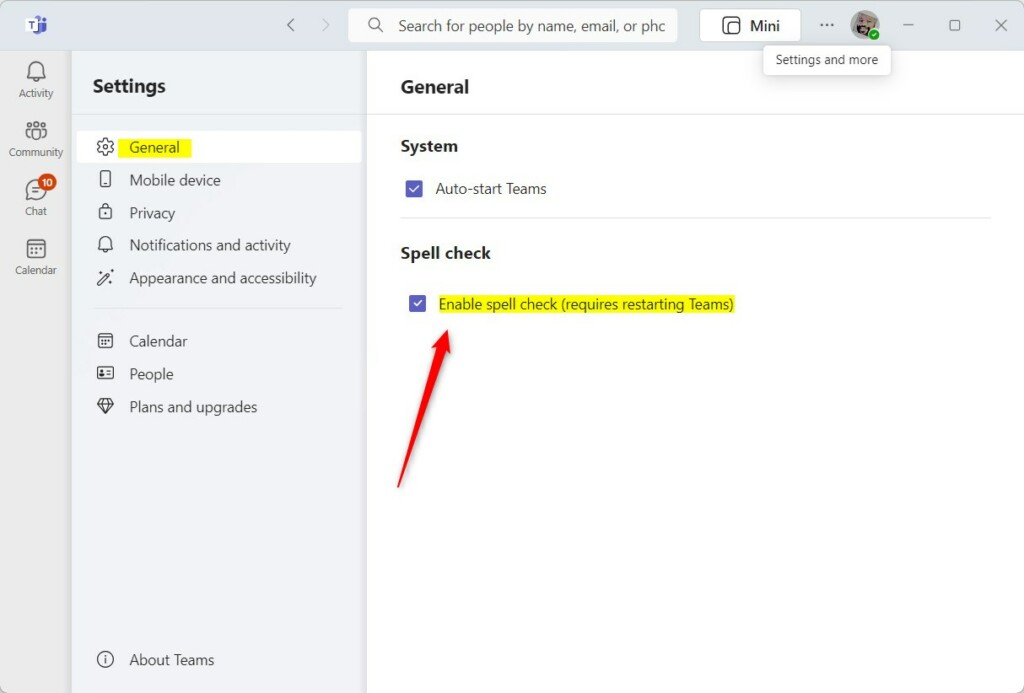
Spell check option in Microsoft Teams interface - Close Teams completely and open it again to apply the change. If Teams stays running in the notification area of the taskbar, quit it from there too. Then type a deliberately misspelled word in a chat to confirm the red underline appears (or doesn't, if you turned the feature off).
Does Microsoft Teams use the Windows system spell checker?
Yes. Microsoft Teams uses your Windows system's spell checker and pulls language support directly from your computer's settings. That means the languages installed in Windows decide which dictionaries Teams can use. If a language is missing from Windows, Teams can't check it. You can add languages in Windows 11 under Settings Time & language > Language & region.
Troubleshooting: Why does Teams mark all words as misspelled?
If Teams marks every word as misspelled, your computer's language settings most likely don't match the language you're typing. For example, you may be typing English while only another language is active for spell check. Check which languages are installed in Windows and make sure the one you type in is added. Then restart Teams and test again.
How to add words to your Teams dictionary
You can add words to your Teams dictionary by right-clicking an underlined word in your chat and choosing 'Add to dictionary'. A menu with suggested corrections appears when you right-click, and the add option is in that same menu. This works well for names, product terms and company jargon that Teams keeps flagging. Once you add a word, the red underline should disappear and not come back.
Multi-language configuration and known issues
If you write in more than one language, add each of them. After installing a new language pack, restart Teams so it picks up the change.
Summary
You can manage spell check in Teams from the General settings, and turning it on or off takes less than a minute. Most problems with it come down to your computer's language settings, so check those first if words are wrongly flagged or nothing is checked at all.
Have a question about this guide?
Answered by AI from this guide. Good questions may be added to this page — please don't include personal details.
Did this guide fix your problem?

About the Author
Richard
Tech Writer, IT Professional
Richard is a writer at Geek Rewind who turns complex IT tasks into clear, step-by-step guides. He draws on years of hands-on experience in system administration and enterprise IT operations, focusing on Windows, Linux and WordPress: the problems people actually run into, and the fixes that work. His server and WordPress guides come from systems he runs himself. Richard builds and maintains the platform behind Geek Rewind, from its Ubuntu servers and Nginx configuration to its custom WordPress plugins. Many new tutorials start with readers' questions, and he's always glad to answer them in the comments.
[…] Teams, connect to Google Calendar, link your mobile device, turning message preview on or off, turn spell check on or off, turn on or off phone number in search results, manage notifications, turn on or off suggested […]
[…] to Google Calendar, link your mobile device, turning message preview on or off, turn spell check on or off, turn on or off phone number in search results, manage notifications, turn on or off […]