Create Storage Spaces and Volumes in Windows 11

- 15 steps
- Needs administrator rights
Storage Spaces in Windows 11 combines two or more hard drives into a single storage pool. If one drive fails, your files can survive. The built-in tool turns the physical disks into virtual drives called volumes, and these show up on your PC like regular drives.
You need at least two drives connected to the computer to set up a useful pool. Windows spreads copies of your data across the disks, so you get protection without special RAID hardware. Storage Spaces works in both Windows 11 Home and Pro, and you need an administrator account to change it.
Storage Spaces in Windows 11 combines two or more physical drives into a single storage pool that protects your files if a drive fails. Open Settings, go to System Storage Advanced storage settings Storage Spaces, click Add under “Add a new Storage Pool”, name your pool, select drives, choose a resiliency type like two-way mirror, and create a volume with a name and drive letter.
Steps to Create Storage Spaces and Volumes in 🪟 Windows 11
The short version: open Settings, go to System, select Storage, and choose Storage Spaces. From there you add your extra physical disks to a pool and create a new virtual volume on it.
Copy anything you want to keep off those drives first. You can’t add the drive Windows is installed on. Internal drives work best; USB drives can be pooled, but they are slower and easier to disconnect by accident.
- Open Windows Settings . Click the Start button, then select Settings. You can also press the Win+I. The Settings window opens.
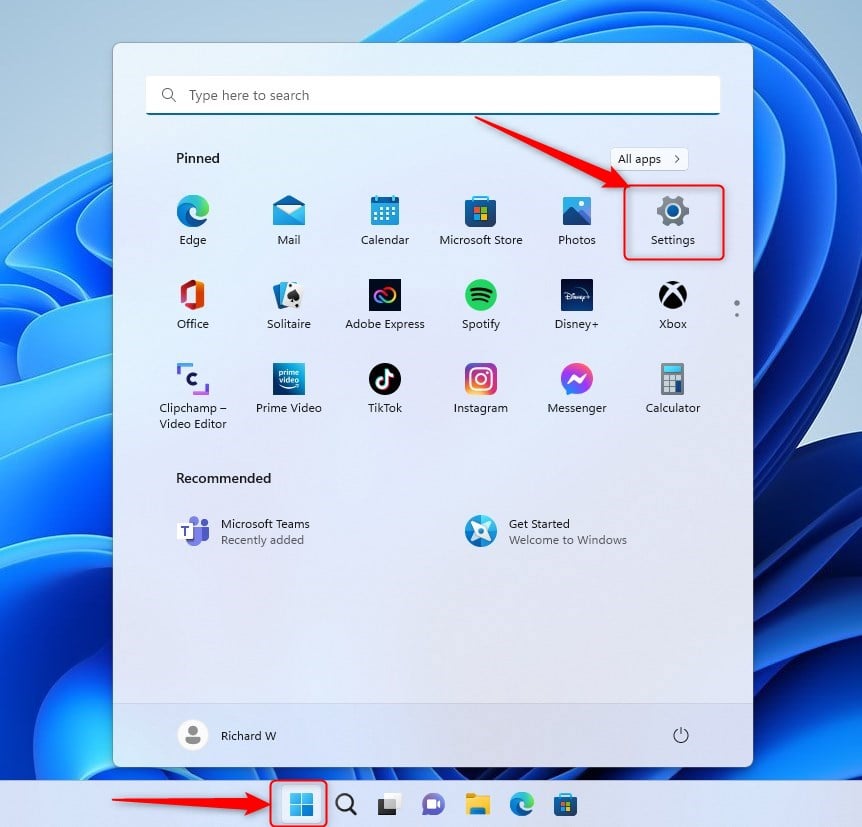
Click the Settings button from the Start menu - Go to System Storage. In Settings, click System on the left side, then click Storage on the right. You should see a bar showing how much space your main drive uses.
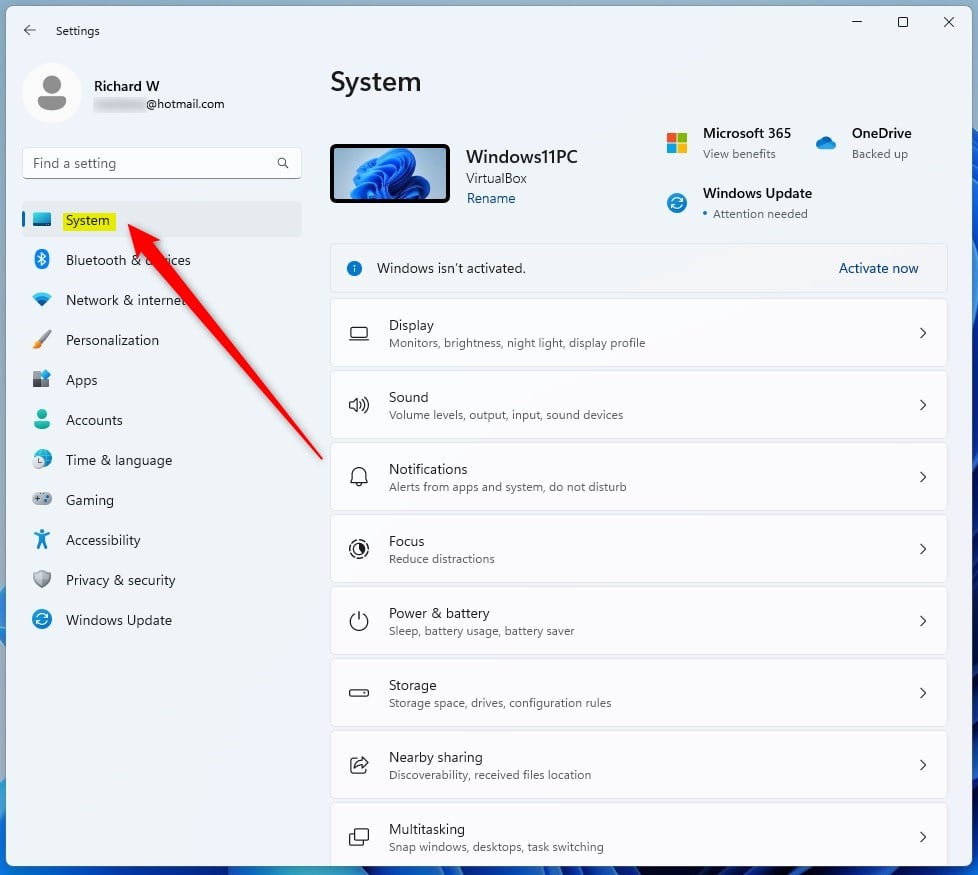
Click System in Settings 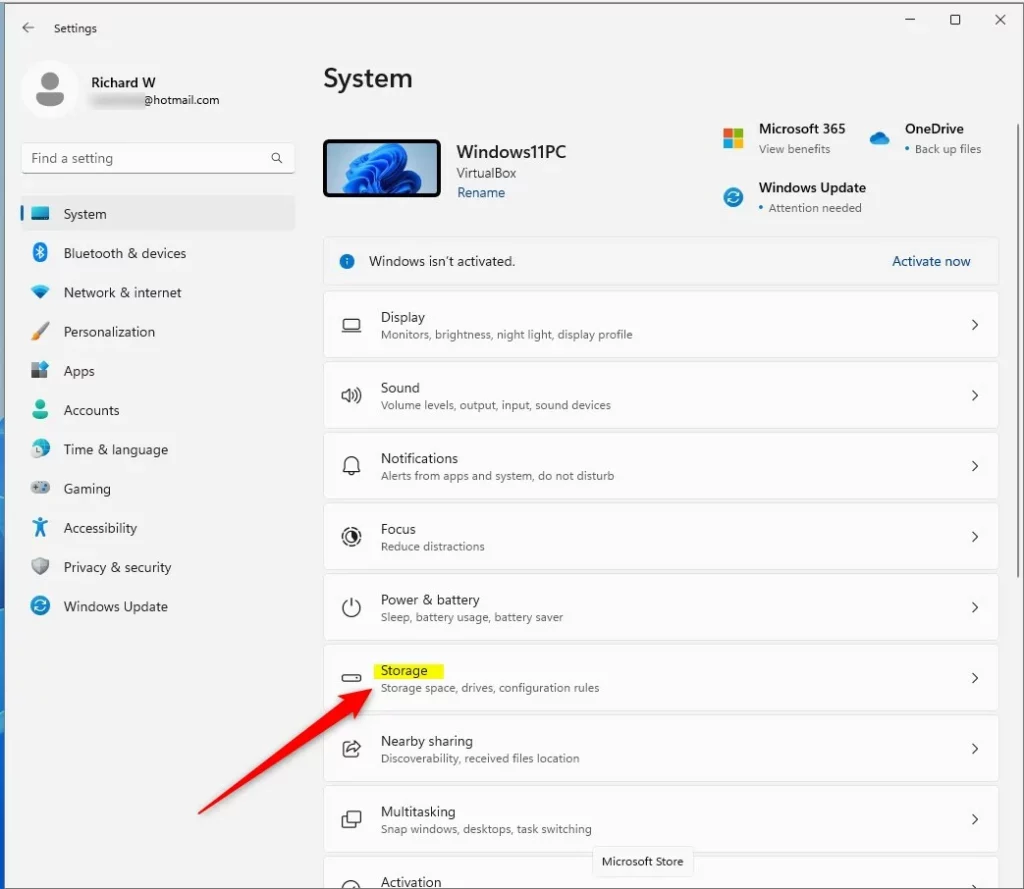
Click Storage in System - Open Advanced storage settings Storage Spaces. Scroll down and click Advanced storage settings to expand it. Then select Storage Spaces. If Windows asks for permission, approve the prompt.
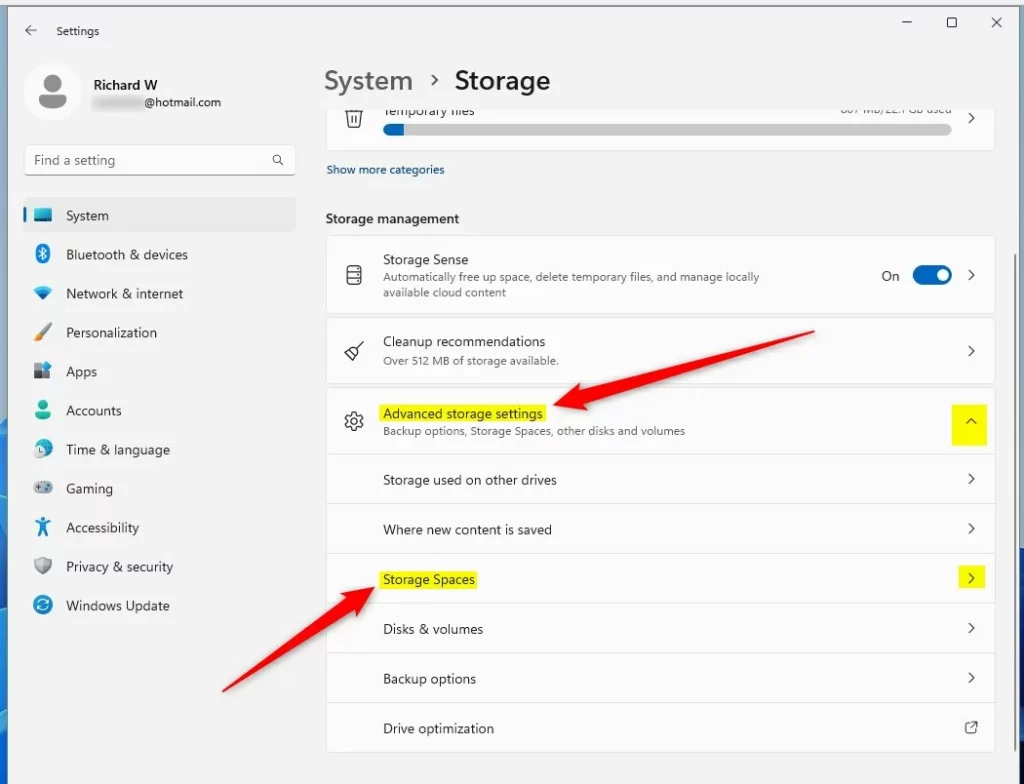
Find Storage Spaces under Advanced storage settings - Start a new storage pool. Under “Add a new Storage Pool”, click the Add button. A new page opens where you name the pool and pick drives.
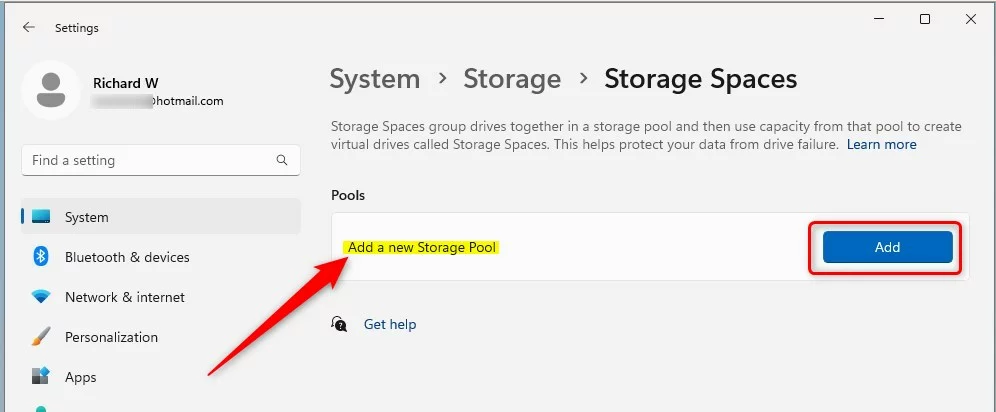
Click Add to start creating a new Storage Pool - Name the pool and select the drives. Type a name for the pool, such as “My Storage Pool”. Tick the drives you want to include. If a drive you expect is missing, check that it is connected and visible in Disk Management, and remember the system drive can’t be used. Click Create when you’re done. The pool is created, and the next screen lets you make a storage space in it.
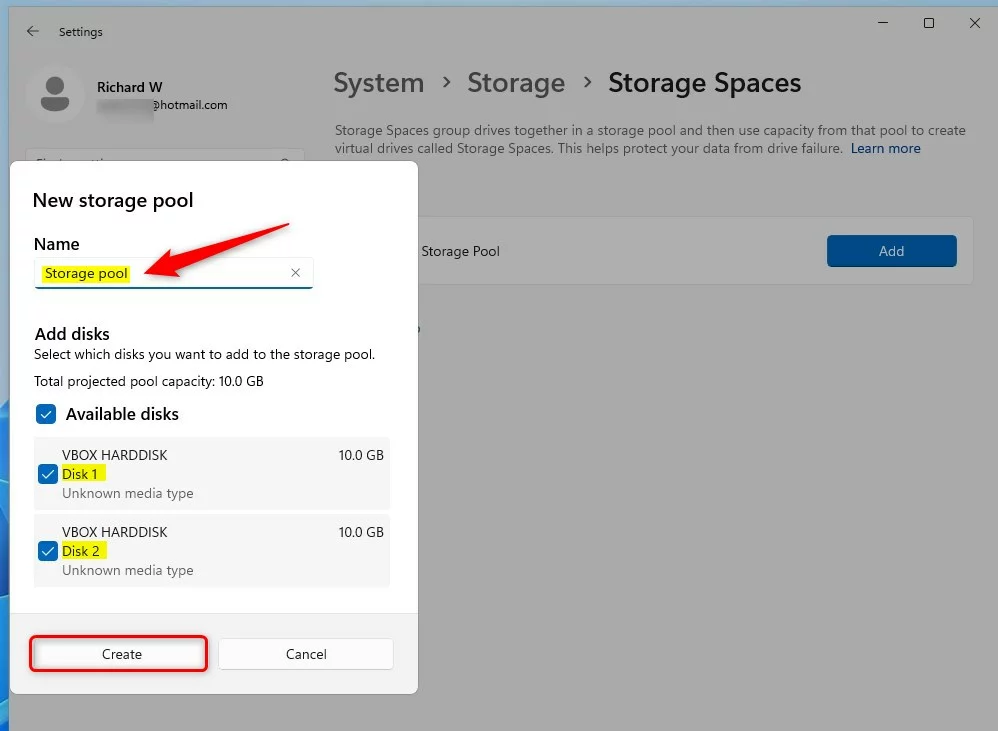
Name your Storage Pool and pick the drives to add - Choose the size and resiliency type. Pick how big the virtual drive should be. Then choose a resiliency option, which decides how your data is protected. A mirror or parity space uses part of your raw capacity for protection, so you will see less usable space than the drives add up to. The options are:
- SimpleNo protection. It just combines space, so one failed drive can lose data. It needs at least 1 drive and is best for temporary or easily replaced files.
- Two-way mirrorKeeps a copy of your data on two drives. It survives 1 drive failure and needs at least 2 drives.
- Three-way mirrorKeeps 3 copies of your data. It survives 2 drive failures and needs 5 or more drives.
- ParityBalances protection and usable space. It survives 1 drive failure and needs 3 or more drives.
- Dual parityStronger protection that handles 2 drive failures. It needs 7 or more drives.
If you only have two drives, two-way mirror is the usual choice. Click Create to continue.
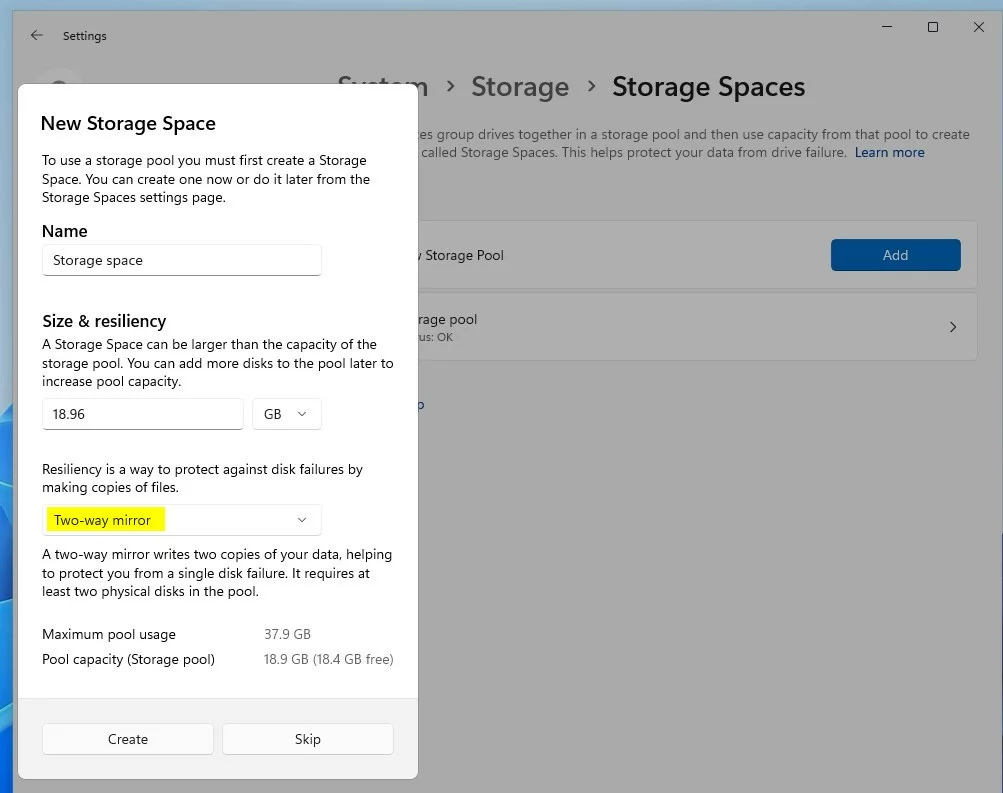
Choose the size and resiliency for your storage space - Set the volume name, drive letter and format. Give the new virtual drive a name in the Label box and pick a drive letter. Then choose the file system:
- NTFSBest for Windows drives. Pick this unless you have a reason not to.
- FAT32Compatible with many devices, but a single file can’t be larger than 4 GB.
Click Format to finish creating the volume. Formatting a large volume can take a moment. No restart is needed.
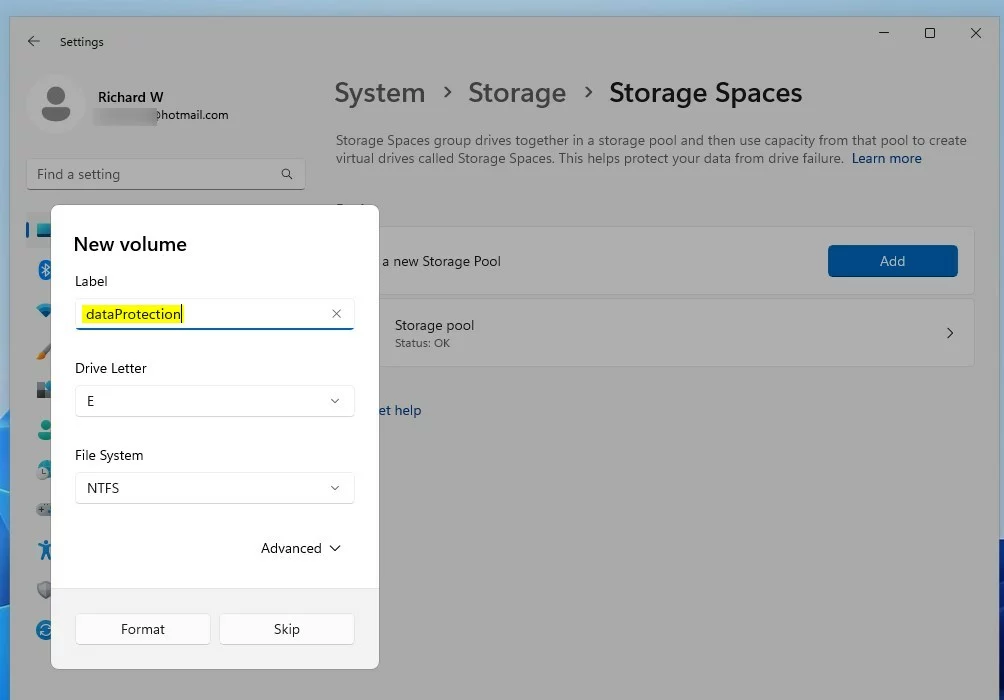
Name and format your new volume - Access your new drive. After formatting, the new virtual drive appears in File Explorer like any other drive, under the letter you picked. You can copy files to it right away.
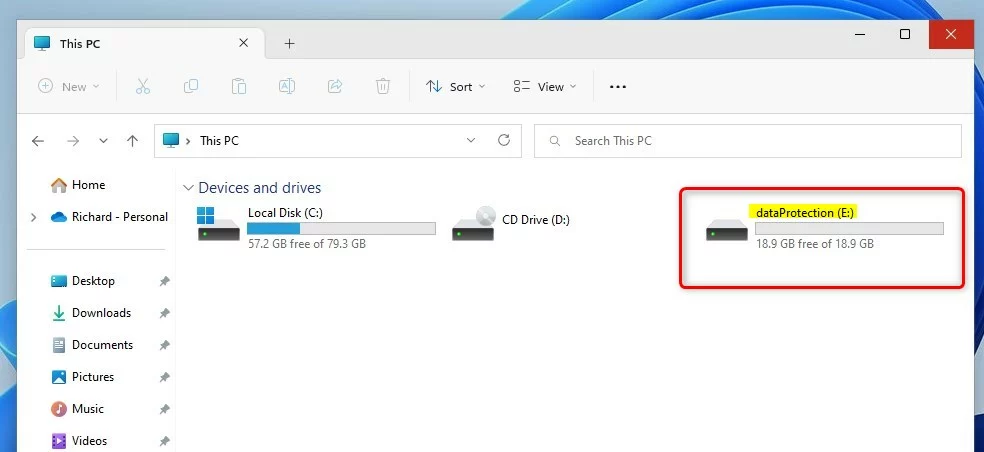
Your new Storage Spaces volume ready to use
Deleting them erases everything on the volume, so move your files off first. Also keep in mind that a mirror is not a backup: it protects against a dead drive, not against deleted files or ransomware.
Summary
- Storage Spaces lets you combine multiple drives into one big storage pool.
- You can create virtual drives (volumes) that keep your data safe even if a drive fails.
- Different protection (resiliency) options let you choose how your data is backed up.
- Follow the steps above to create your own Storage Spaces and keep your data safer.
Windows 11 Storage Spaces is a built-in tool that groups multiple hard drives into a single storage pool and creates virtual volumes with built-in data protection. It helps you make use of extra hardware and keeps your important files available even if one of your physical drives breaks.
Have a question about this guide?
Answered by AI from this guide. Good questions may be added to this page — please don't include personal details.
Did this guide fix your problem?

About the Author
Richard
Tech Writer, IT Professional
Richard is a writer at Geek Rewind who turns complex IT tasks into clear, step-by-step guides. He draws on years of hands-on experience in system administration and enterprise IT operations, focusing on Windows, Linux and WordPress: the problems people actually run into, and the fixes that work. His server and WordPress guides come from systems he runs himself. Richard builds and maintains the platform behind Geek Rewind, from its Ubuntu servers and Nginx configuration to its custom WordPress plugins. Many new tutorials start with readers' questions, and he's always glad to answer them in the comments.
No comments yet — be the first to share your thoughts!