How to Shutdown Your Windows 11 PC


Shutting down your Windows 11 PC cuts power completely, closes every open app, and clears out temporary memory so your system gets a fresh start. This process stops background tasks and resets system files to keep your computer running fast.
A full shutdown differs from sleep mode, which puts your PC into a low-power state, and hibernation, which saves your open work to the hard drive. Shutting down your computer at least once a week helps clear out bugs and keeps performance stable.
One caveat: if Fast Startup is turned on (it is by default on many PCs), Shut down saves part of the system state to disk so the next boot is quicker. Restart always does a full reset. If you shut down to fix a problem and it comes back, try Restart, or turn off Fast Startup as described in the troubleshooting section below.
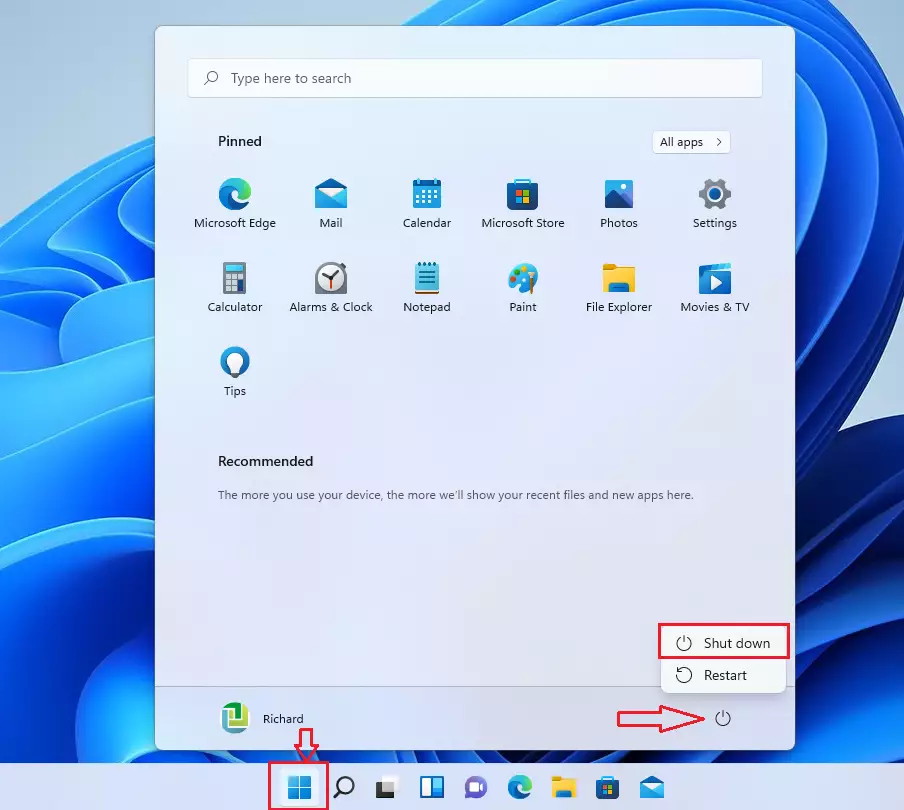
Click the Start button , select the power icon in the bottom right corner, and choose Shut down. Windows closes your apps and powers off. If updates are waiting, select Update and shut down instead and let it finish.
Using the Start Menu
Most people turn off their PC using the Start menu . Save your work first, then follow these steps:
- Click the Start button on your Taskbar . The Start menu opens.
- Click the power icon in the bottom right corner of the Start menu . A small menu appears with Sleep, Shut down and Restart.
- Select Shut down. Windows closes your apps and the screen goes dark once the PC has powered off.
Choose it and let the PC finish. Do not hold the power button while it says “Installing updates”, because that can leave the update half-applied.
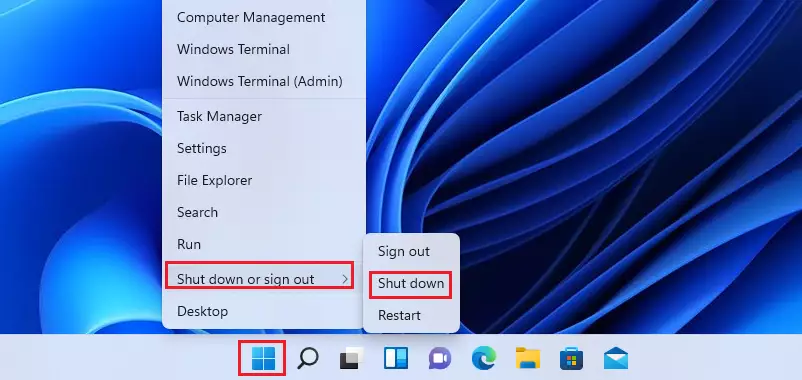
You can also shut down from the hidden power user menu. It works even if the Start menu is slow to open.
- Right-click the Start button. A menu of system tools appears.
- Click Shut down or sign out. A submenu opens to the side.
- Select Shut down.
The keyboard version of this is Win+X, then U, then U again. The first U opens the Shut down or sign out submenu and the second selects Shut down.
Keyboard Shortcuts
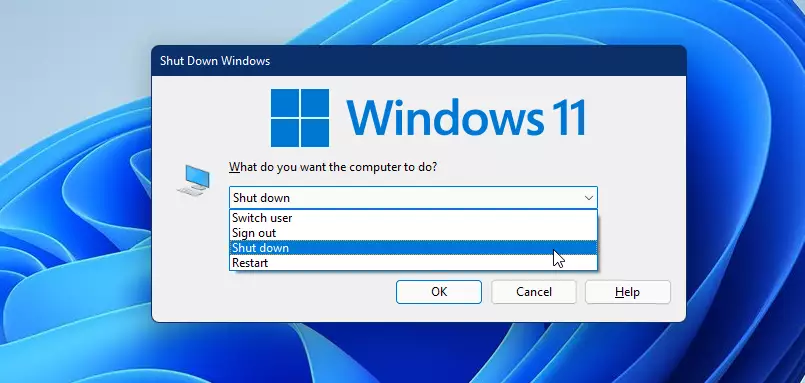
You can quickly shut down Windows 11 using keyboard shortcuts when your mouse is not working or you want to save time. There are two options. Alt+F4 opens the shutdown dialog from the desktop, and Ctrl+Alt+Del opens the security screen, which has its own power icon. The Ctrl+Alt+Del route is the better choice when a frozen app is taking over the screen.
- Click an empty spot on the desktop, or minimize your windows, so the desktop has focus. Press Alt+F4 to open the Shut Down Windows dialog. Select Shut down from the dropdown list and press Enter or click OK. If a regular app window is in focus, Alt+F4 closes that app instead, so check the dialog is on screen before you continue.
- Press Ctrl+Alt+Del to open the security menu. The screen turns to a full-screen menu with options such as Lock, Sign out and Task Manager . Click the power icon in the bottom right corner and choose Shut down. To back out without shutting down, press Esc.

Using the Command Prompt
Advanced users can use the command line to turn off the computer. This is handy for remote sessions, scripts and scheduled tasks. Note: Depending on your system settings, administrator privileges are required for this method. If you get an “Access is denied” message, close the window and reopen Command Prompt as an administrator.
Open the Command Prompt, then type the following command and press Enter:
The PC begins shutting down right away, so save your work before you run it. Any open app with unsaved changes may stop the shutdown and ask you what to do.
shutdown /s /t 0
Creating a Shutdown Shortcut
Create a desktop icon to shut down your PC with one click. Follow these steps:
- Right-click an empty area of your desktop and select New Shortcut. The Create Shortcut wizard opens.
- In the location box, type shutdown.exe /s /t 0 and click Next. The /s switch means shut down, and /t 0 sets a delay of zero seconds.
- Name it “Shutdown” and click Finish. A new icon appears on your desktop.
Keep it away from where you might click by accident. To pin it, right-click the icon and look under Show more options for a pin to Taskbar or Start. To undo everything, delete the icon from your desktop.
Troubleshooting Stuck Shutdowns
Fix a Windows 11 PC that gets stuck during shutdown by turning off Fast Startup, a setting that often prevents normal power downs. Here is how:
- Open Control Panel and go to Hardware and Sound Power Options
- Click Choose what the power buttons do in the left pane.
- Click Change settings that are currently unavailable. This needs administrator rights, and until you click it the checkboxes below are greyed out.
- Under Shutdown settings, clear the Turn on fast startup (recommended) checkbox.
- Click Save changes.
No restart is needed. Your PC may boot a little slower afterwards. To undo it, tick the box again and save. If you do not see the Fast Startup option, hibernation is probably disabled on your PC.
If a frozen program causes the shutdown problem, use Task Manager (a tool to manage running programs and processes, accessed by pressing Ctrl+Shift+Esc) to close it before you try again.
If a program is stuck, use Task Manager (CTRL + SHIFT + ESC) to end the process. On the Processes tab, click the app marked "Not responding", then click End task. You will lose any unsaved work in that app, so give it a minute first.
You can also check the Event Viewer (a log of system events) under Windows Logs System to see if a specific driver prevents the shutdown. Open Event Viewer by searching for it in the Start menu. Look for entries marked Warning or Error with a timestamp near your last shutdown attempt, and read the details in the lower pane. If one names a driver, update or reinstall that driver.
Frequently Asked Questions
Summary
- Start Menu: The standard way to turn off your PC. Start > power icon > Shut down.
- Shortcuts: Use ALT + F4 for quick access from the desktop, or CTRL + ALT + DEL when an app is in the way.
- Automation: Create a desktop shortcut for one-click shutdowns.
- Troubleshooting: Disable Fast Startup if your PC refuses to turn off. Use Task Manager to end frozen apps.
- Safety: Always save your work before shutting down to avoid data loss.
Shutting down your Windows 11 PC works in multiple ways depending on what you prefer. You can use the standard Start menu, press Alt+F4 for quick access, set up a desktop shortcut for one-click shutdowns, or turn off Fast Startup if your computer refuses to turn off properly. Whichever method you pick, save your work first and give the PC a few seconds to finish before you unplug anything.
Have a question about this guide?
Answered by AI from this guide. Good questions may be added to this page — please don't include personal details.
Did this guide fix your problem?

About the Author
Richard
Tech Writer, IT Professional
Richard is a writer at Geek Rewind who turns complex IT tasks into clear, step-by-step guides. He draws on years of hands-on experience in system administration and enterprise IT operations, focusing on Windows, Linux and WordPress: the problems people actually run into, and the fixes that work. His server and WordPress guides come from systems he runs himself. Richard builds and maintains the platform behind Geek Rewind, from its Ubuntu servers and Nginx configuration to its custom WordPress plugins. Many new tutorials start with readers' questions, and he's always glad to answer them in the comments.
[…] when the lid is closed. However, you can customize these settings to have your laptop stay awake, shut down, or hibernate when the lid is […]
[…] you have an app open with tasks running and try to shut down, restart or sign out of your desktop, Windows will not automatically follow through with your […]
[…] on the sign-in screen that allows you to put your computer to sleep, hibernate, shut down, […]
[…] can safely unplug the disks from the computer if they are external. If the disks are internal, turn off the computer and physically remove […]
[…] you left off without losing your work or sessions. On most PCs, one can resume using the power button. Pressing any key on the keyboard or opening a lid on the laptop may wake the PC from […]
[…] on your hard drive before turning off the computer. On most PCs, one can resume using the power button. Sometimes, pressing any key on the keyboard or opening a lid on the laptop may wake the PC […]
[…] Down: Shut down the PC when the power button is […]
[…] most PCs, one can resume using the power button. However, in many cases, pressing any key on the keyboard or opening a lid on the […]
[…] If the keyboard light comes on and pressing the Windows key + CTRL + SHIFT + B keys doesn’t resolve the issues, press and hold the power button on your PC for 10 seconds to turn it off. […]
[…] can read this post to learn how to shut down your computer. Then turn it back on to see if it fixes the […]
[…] that, restart Windows Explorer, or restart your PC for the changes to take […]
[…] when you try to turn off, restart, or sign out of your Windows 11 computer while an app is busy, Windows waits before it […]
[…] Shut down your computer […]
[…] your disk is inside the computer (internal), turn off your PC before removing the […]
[…] How to Shut Down a Windows 11 PC […]
[…] Users can also specify what action to take when the sleep button is pressed on a Windows 11. A normal shutdown is when Windows waits for background processes to finish or allows users to save documents before […]