How to Enable or Disable Forced Shutdown in Windows 11

Forced shutdown in Windows 11 cuts power to your PC immediately, without saving open files, when you hold down the physical power button for about 10 seconds. It is a hard shutdown. Use it as a last resort when the computer is completely frozen and the normal ways to restart have failed.
A setting named PowerButtonSuppression in the Registry Editor (a database for system settings) controls whether this emergency power-off works. Changing this value can lead to data loss or file corruption if you trigger a forced shutdown while apps are writing to your drive. This guide covers three things: the hard reset itself, a safer Command Prompt alternative, and the Control Panel options that decide what the power button does.
Hold the physical power button for about 10 seconds to force a shutdown in Windows 11. The hardware cuts power immediately without saving open files, so use it only when the screen is frozen. For a gentler option, open Command Prompt as administrator and run shutdown /s /f /t 0, which still closes Windows normally but discards unsaved work.
How to Force a Shutdown if the Screen is Frozen
Do this only after you have waited a minute or two, because a PC that looks frozen is sometimes just busy.
- Press and hold the physical power button on your computer case or laptop for 10 seconds. Keep holding it even if the screen flickers.
- Let go once the lights and fans stop. The hardware cuts power, and the screen goes dark.
- Wait a few seconds, then press the power button once to start the PC again.
This is the most common way to handle a system hang. Windows may run a disk check or show a recovery screen on the next start. That is normal after an unclean shutdown. Anything you had not saved is lost.
Using the Command Line for Forced Shutdown
If Windows still responds, even slowly, you can force a shutdown from the Command Prompt. It is safer than pulling the plug or holding the power button, because Windows still goes through its normal shutdown steps. Apps are closed without asking you to save, though, so unsaved work is still lost.
- Click the Start button and type cmd.
- Right-click Command Prompt and choose Run as administrator.
- Click Yes if User Account Control asks for permission. A black Command Prompt window opens.
- Type or paste the command shown below and press Enter.
shutdown /s /f /t 0
The /s tells the computer to shut down, /f forces running apps to close, and /t 0 sets the timer to zero seconds. The PC shuts down at once, with no countdown. Save anything important before you press Enter.
Disabling Fast Startup to Fix Battery Drain
You need to be signed in with an administrator account, or be able to enter an administrator’s password at the prompt. On a standard account, the next steps stay greyed out or fail without it.
- Open the Control Panel . The quickest way is to click Start, type Control Panel and press Enter.
- Go to Hardware and Sound Power Options. The list of power plans appears.
- Click Choose what the power buttons do in the left pane. The Power Button and Lid Settings and Shutdown settings page opens.
- Click Change settings that are currently unavailable. This needs administrator rights. Until you click it, the options in the Shutdown settings area are greyed out and you cannot tick or untick them. Once it is done, they become active.
- Uncheck Turn on fast startup (recommended). If you do not see this option, hibernation is probably turned off on your PC, since Fast Startup depends on it.
- Click Save changes. You do not need to restart for the setting to be saved. To undo it, come back to this page and tick the box again.
Steps to Enable or Disable Forced Button/Lid Shutdown
You can change forced shutdown settings in Windows 11 through the Control Panel to control what happens when you press your physical power button or close your laptop lid. Adjusting these options lets you stop an accidental button press from turning off your PC right away. You need administrator access to make the changes. This setting is an advanced power option, and some PCs do not show it, depending on the hardware and the power plan.
- Launch the Control Panel app in Windows 11. Click Start, type Control Panel and press Enter.
- In the Control Panel , go to Hardware and Sound Power Options.
- Select your active power plan and click the Change plan settings link next to it. The Edit Plan Settings page opens.
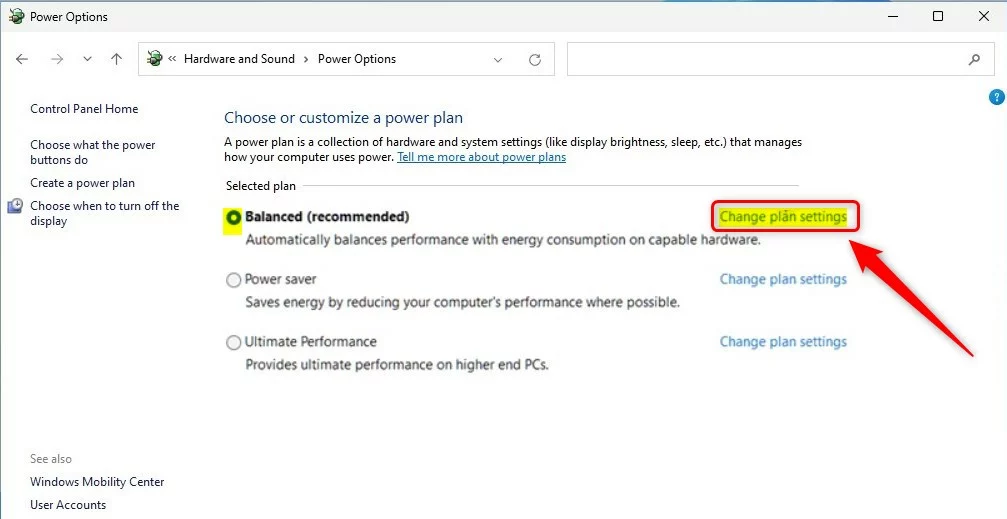
windows 11 change power plan settings link - Click the Change advanced power settings link. A small Power Options window opens with a list of settings you can expand.
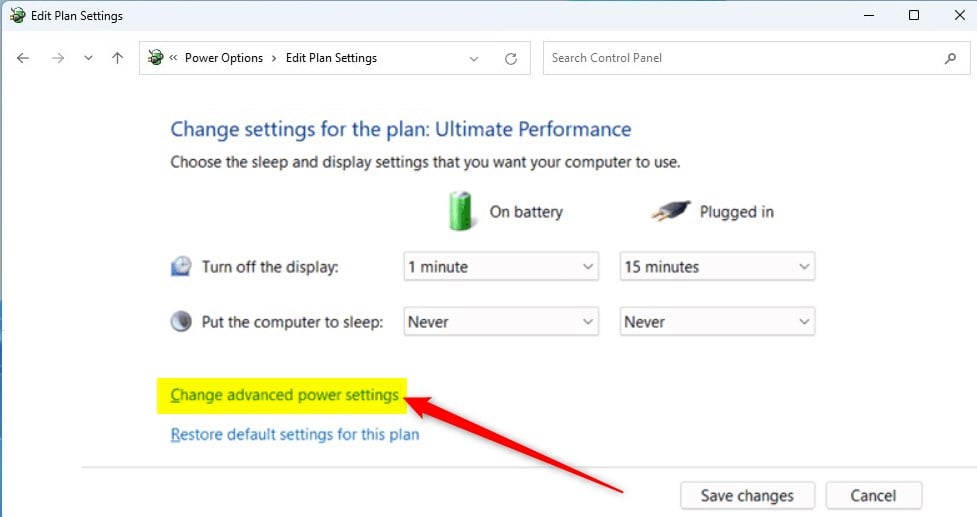
windows 11 change advanced power settings control panel - Find the Power buttons and lid section and expand it by clicking the plus sign next to it.
- Expand Enable forced button/lid shutdown. If it is not in the list, your PC does not offer this setting, and you cannot change it here.
- Choose On or Off for both “On battery” and “Plugged in” modes. Desktop PCs show only the “Plugged in” option, because they have no battery. The setting applies to the plan you selected, so repeat the steps if you use more than one plan.
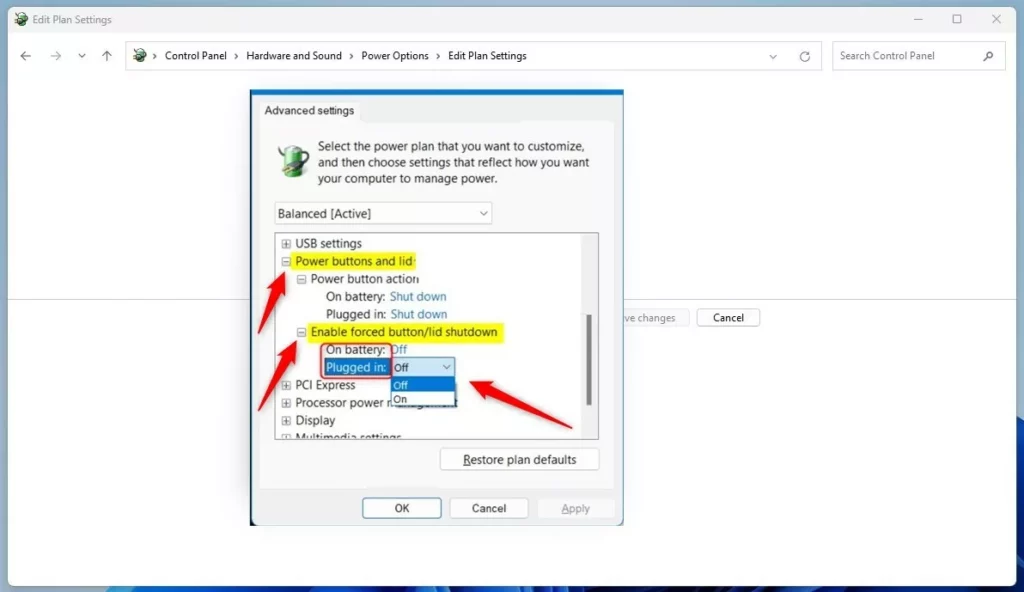
windows enable or disable force button lid shutdown - Click OK to save your changes. To undo them, open the same window and set the options back to their earlier values.
Summary
- Forced shutdown cuts power instantly, which can cause data loss or file corruption if apps are writing to the drive.
- Use the
shutdown /s /f /t 0command for a clean but forced exit when Windows still responds. - Disable Fast Startup in the Control Panel to prevent battery drain. You need administrator rights, and you can turn it back on at any time.
- Always save your work before triggering a hard shutdown, and wait a minute or two first in case the PC is only busy.
Reference: Microsoft.com
Have a question about this guide?
Answered by AI from this guide. Good questions may be added to this page — please don't include personal details.
Did this guide fix your problem?

About the Author
Richard
Tech Writer, IT Professional
Richard is a writer at Geek Rewind who turns complex IT tasks into clear, step-by-step guides. He draws on years of hands-on experience in system administration and enterprise IT operations, focusing on Windows, Linux and WordPress: the problems people actually run into, and the fixes that work. His server and WordPress guides come from systems he runs himself. Richard builds and maintains the platform behind Geek Rewind, from its Ubuntu servers and Nginx configuration to its custom WordPress plugins. Many new tutorials start with readers' questions, and he's always glad to answer them in the comments.
No comments yet — be the first to share your thoughts!