How to Change Power Plan in Windows 11

Power plans in Windows 11 are built-in energy profiles that control how your computer uses electricity to balance speed and battery life. Windows 11 includes standard options like Balanced, Power Saver, and High Performance to help you manage energy use on your desktop or laptop.
Switching your power plan lets you squeeze extra speed out of your processor for heavy tasks, or save battery power when you are away from an outlet.
The change takes effect immediately and does not need a restart. Home and Pro editions both include power plans. Which plans appear depends on your hardware and the manufacturer’s drivers. Many newer laptops show only Balanced at first, and the other plans are hidden until you ask for them. Both methods below cover this.
Open Control Panel , go to Hardware and Sound Power Options, and click the radio button next to your preferred power plan such as Balanced, Power Saver, or High Performance. The change takes effect immediately without restarting.
Comparison Table: Which Plan is Best?
| Plan | Best For |
|---|---|
| Power Saver | Travel and long battery life |
| Balanced | General daily use |
| High Performance | Gaming and video editing |
| Ultimate Performance | Workstations and heavy rendering |
How to Change Your Power Plan via Control Panel
You can change your power plan using Control Panel to quickly adjust how your Windows 11 PC balances performance and battery life. This classic tool lets you switch between different power schemes like Balanced, Power Saver, and High Performance with just a few clicks.
This is the easiest method if you want to see every plan on your PC in one list. Follow the steps below to open the Power Options page.
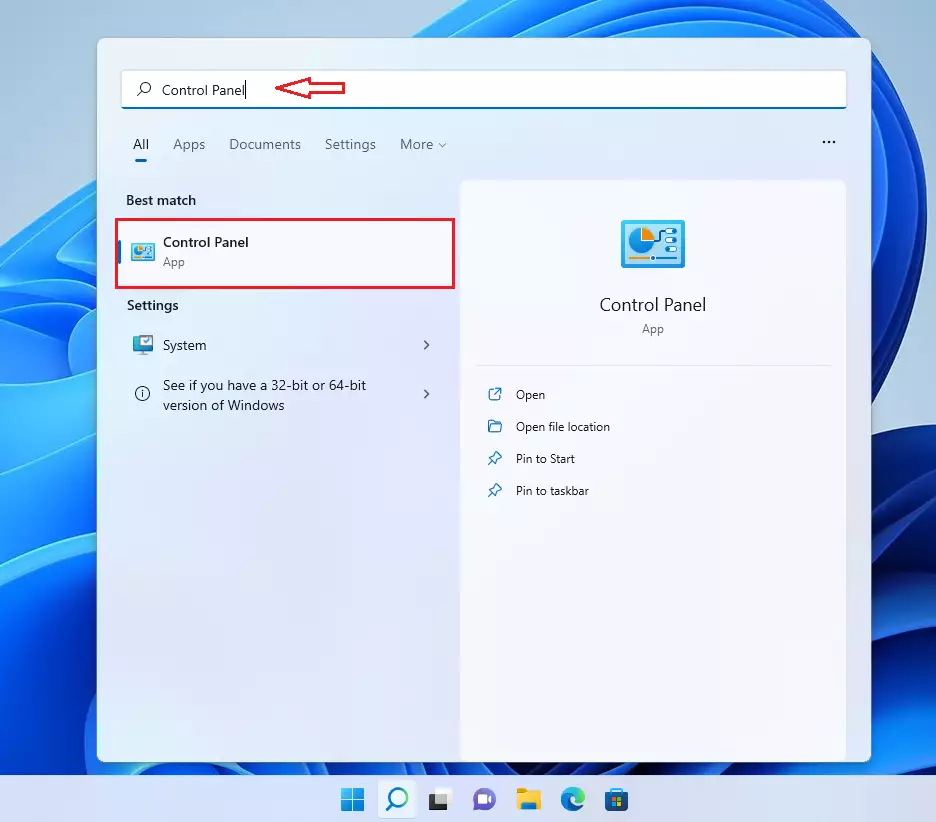
- Click the Start button. The Start menu opens with the search box at the top.
- Type Control Panel and press Enter. The Control Panel window opens.
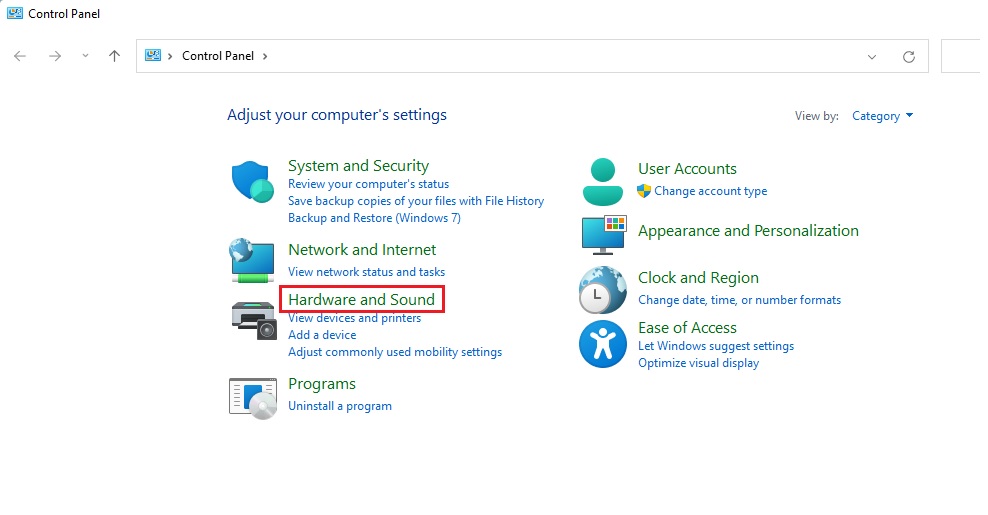
- Go to Hardware and Sound Power Options. If Control Panel is set to show large or small icons instead of categories, you will not see Hardware and Sound. Click Power Options directly in the list. The Power Options page now shows your available plans, and the active one is selected.
If the page looks different from the screenshots, check the view setting in the top-right corner of Control Panel . It only changes how the items are grouped. The Power Options page itself is the same.
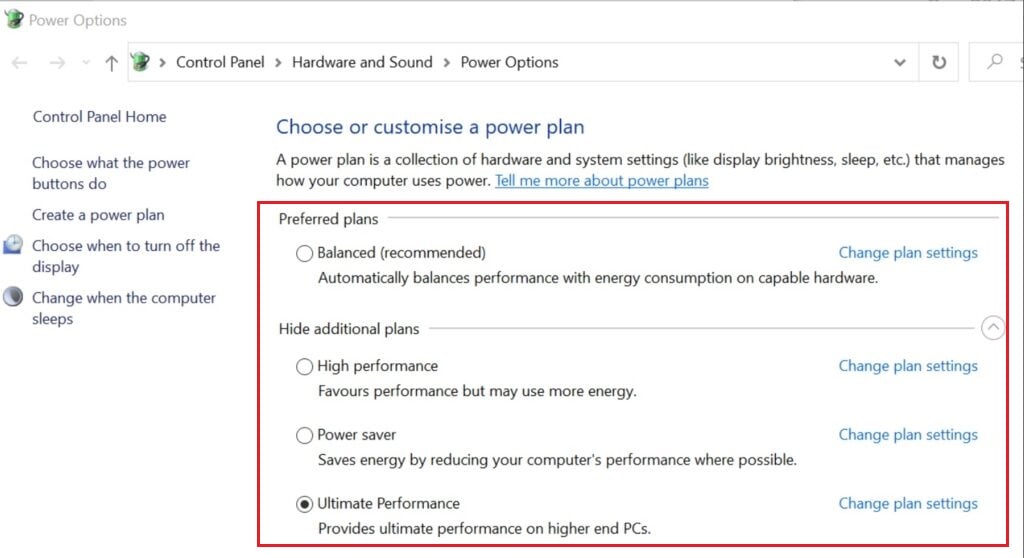
- Select your preferred plan by clicking the radio button next to its name. If you do not see your desired plan, click the arrow next to Show additional plans. The list expands and may show plans such as High Performance. The plan you selected is now active right away, with no need to click Save or restart.
This is common on laptops that use Modern Standby. In that case, the powercfg method below may let you work with plans that are not shown here.
To undo the change, come back to this page and select your previous plan. Balanced is the safe default for most people.
Using the Command Line (Powercfg)
This built-in utility lets you view all available power schemes and apply a specific plan using its unique identifier code directly from Command Prompt or PowerShell.
This method is useful for scripts, remote sessions, or when a plan does not show up in Control Panel . It works the same way in Home and Pro. Open Command Prompt, Windows PowerShell, or Terminal from the Start menu . If a command is refused with an access error, close the window and reopen it with Run as administrator.
Run this command to see your available schemes:
The output lists each plan with its name and a long identifier. The plan currently in use is marked with an asterisk at the end of its line.
powercfg -list
powercfg /listLocate the GUID (a unique code for each plan) in the returned list, then apply it using the correct syntax. Copy the GUID exactly as it appears. You can select it in the window and press Enter to copy it, or type it carefully. Replace the placeholder in the command with the GUID of the plan you want.
The command normally prints nothing when it works. To confirm the change, run the list command again and check that the asterisk has moved to the plan you chose. To go back, run the apply command again with the GUID of your previous plan.
Many modern laptops feature Modern Standby (a state that keeps the system connected to the internet even with the lid shut). This background activity can drain batteries faster than traditional sleep mode, making power plan tweaks essential.
If your laptop loses charge while asleep, switch to a plan that favors battery life and review your sleep settings. Keep in mind that a power plan cannot turn Modern Standby off. It only changes how aggressively the PC saves power around it.
Summary
Managing Windows 11 power plans gives direct control over thermal output and battery retention, tailoring hardware behavior for gaming or mobile productivity.
As a rule, use a performance-focused plan when you are plugged in and doing heavy work, and use Balanced or Power Saver on battery. Either method above can be reversed in seconds, so it is safe to try each plan and see which fits how you work.
Have a question about this guide?
Answered by AI from this guide. Good questions may be added to this page — please don't include personal details.
Did this guide fix your problem?

About the Author
Richard
Tech Writer, IT Professional
Richard is a writer at Geek Rewind who turns complex IT tasks into clear, step-by-step guides. He draws on years of hands-on experience in system administration and enterprise IT operations, focusing on Windows, Linux and WordPress: the problems people actually run into, and the fixes that work. His server and WordPress guides come from systems he runs himself. Richard builds and maintains the platform behind Geek Rewind, from its Ubuntu servers and Nginx configuration to its custom WordPress plugins. Many new tutorials start with readers' questions, and he's always glad to answer them in the comments.
No comments yet — be the first to share your thoughts!