How to Enable Respect Power Settings When Indexing in Windows 11


Respect Power Settings when Indexing in Windows 11 stops background search indexing to save laptop battery life when your device runs on low power or Battery Saver mode.
This setting tells Windows 11 whether to pause file indexing tasks so your processor uses less energy. Turning this option on helps your battery last longer on a single charge by cutting down on heavy background work when power gets low.
Indexing is the background job that scans your files so Windows Search can find them quickly. It is useful, but on a laptop it can keep the processor and disk busy while you are unplugged. This guide shows two ways to control it: the Settings app , and the Registry Editor for when the toggle is missing.
Open Settings Privacy & security Searching Windows and toggle Respect power settings when indexing to On. This stops Windows Search indexing from running when your device is on battery or Battery Saver mode, preserving battery life.
Method 1Using the Settings App
You can turn on respect power settings in Windows 11 through the main Settings app . This stops search indexing from draining your laptop battery when you are not plugged in. The path is Settings Privacy & security Searching Windows The steps below walk through it.
This method works on both Home and Pro, and you do not need to restart afterwards. You do not need an administrator account to change the toggle on most PCs, but a work or school PC may lock it through policy.
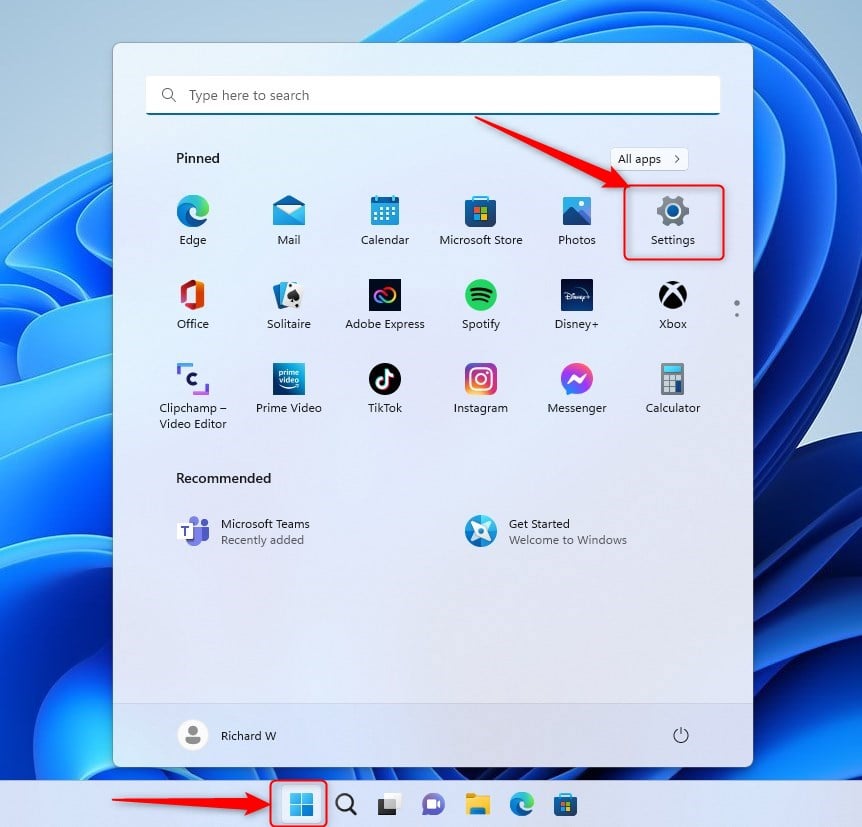
- Open the Windows Settings app. You can click the Start menu and select Settings, or press the Win+I on your keyboard. The Settings window opens with a list of categories on the left.
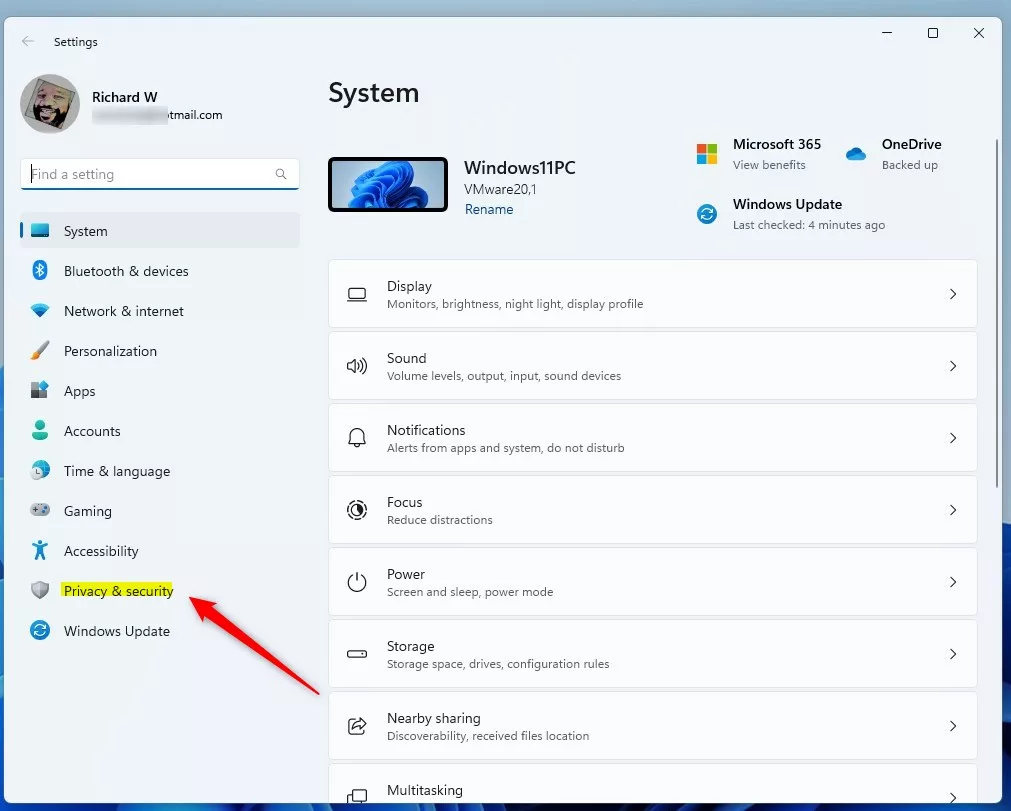
- Click Privacy & security on the left sidebar. The privacy options appear on the right.
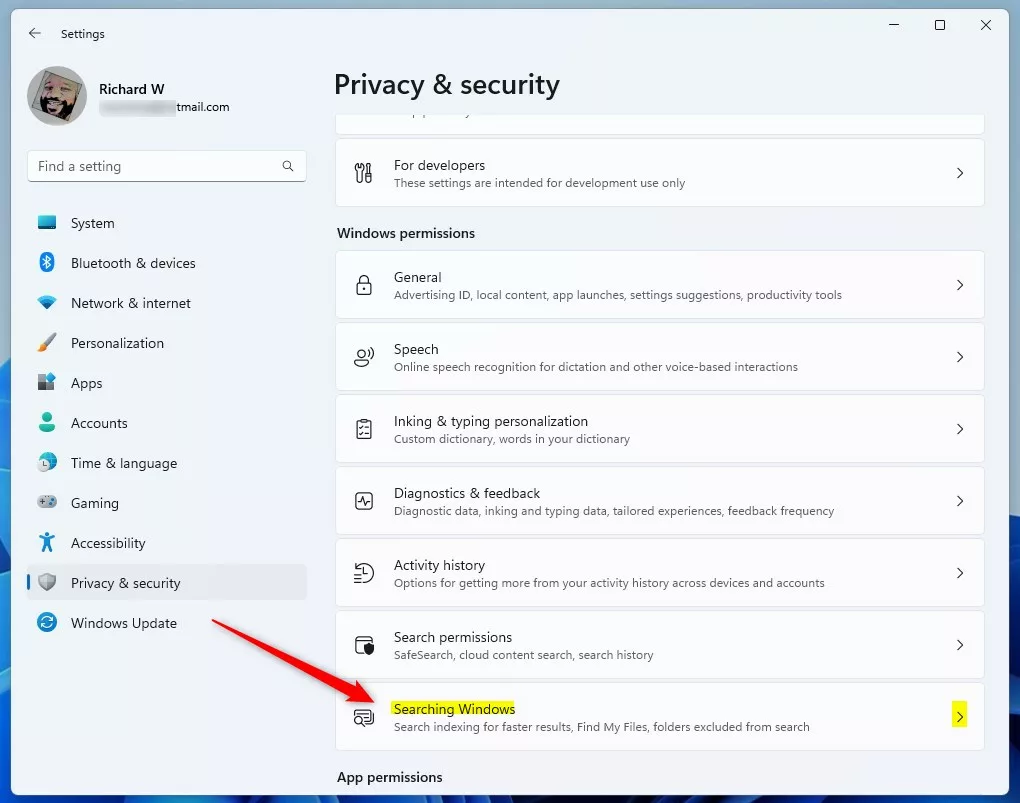
- Click the Searching Windows tile on the right. The page that opens holds the search and indexing options.
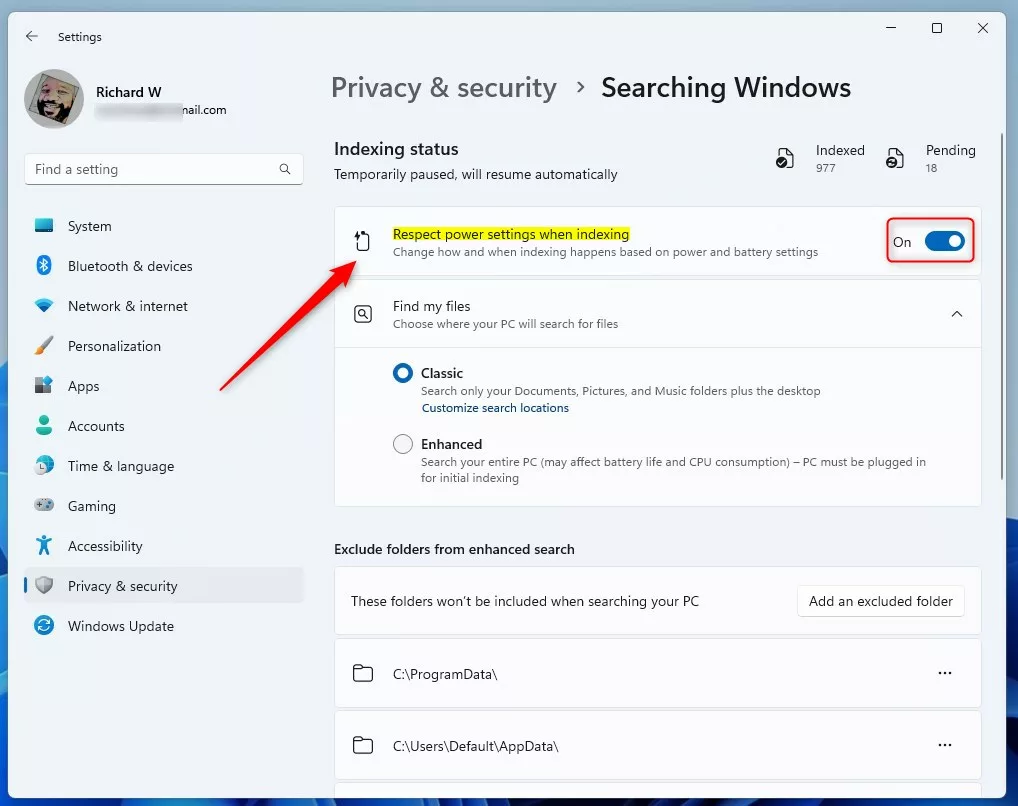
- Look for Respect power settings when indexing. Toggle the switch to On to enable it, or Off to disable it. The change takes effect straight away.
If you cannot find this option, scroll down the page first, since it may sit below the other search settings. Not every Windows 11 build shows it. If it is missing or greyed out, use the registry method below. To undo the change at any time, return to this page and flip the switch back.
Method 2Using the Windows Registry Editor
You can force respect power settings in Windows 11 by adding a new DWORD value in the Registry Editor if the standard menu option is missing. Open the Registry Editor, go to HKEY_LOCAL_MACHINE\SOFTWARE\Microsoft\Windows Search\Gather\Windows\SystemIndex, and create a setting that tells Windows to pause heavy search work when power is low.
You need to be signed in with an administrator account, because the change is made under HKEY_LOCAL_MACHINE. Before you start, it is a good idea to back up the registry. In the Registry Editor, click File and then Export, choose All as the export range, and save the file somewhere safe. Double-clicking that file later restores your settings.
- Open the Windows Registry. If Windows asks whether you want to allow the app to make changes, click Yes.
- Navigate to this path:
HKEY_LOCAL_MACHINE\SOFTWARE\Microsoft\Windows Search\Gather\Windows\SystemIndex. You can paste it into the address bar at the top of the Registry Editor and press Enter, or expand the folders in the left pane one by one. - If you do not see the SystemIndex folder, right-click the Windows folder, select New, and create a subkey named SystemIndex. The new folder should now appear under Windows. Click it so it is selected.
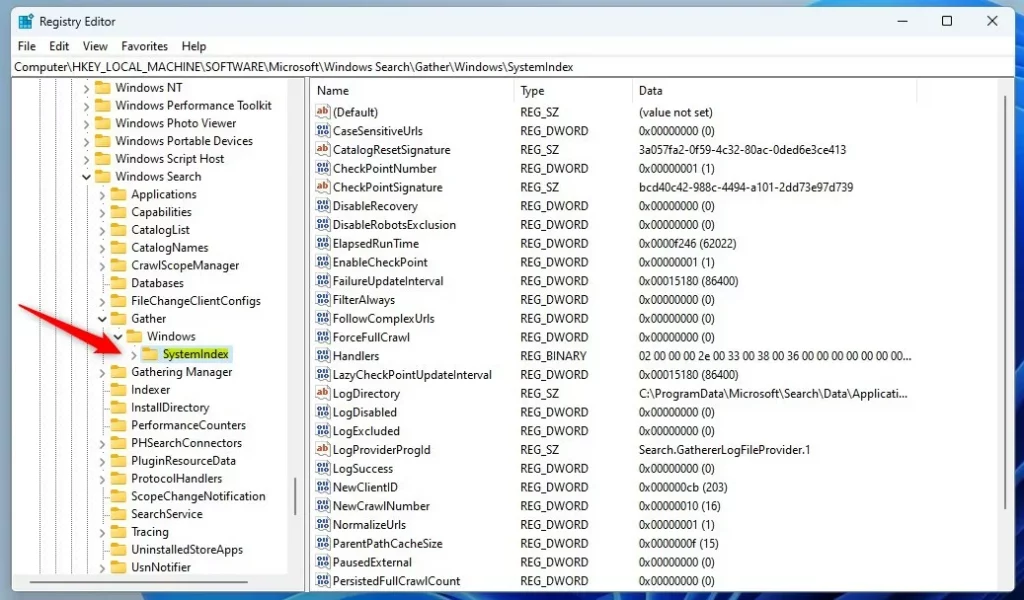
- Right-click in the empty space on the right side and select New DWORD (32-bit) Value. Name it
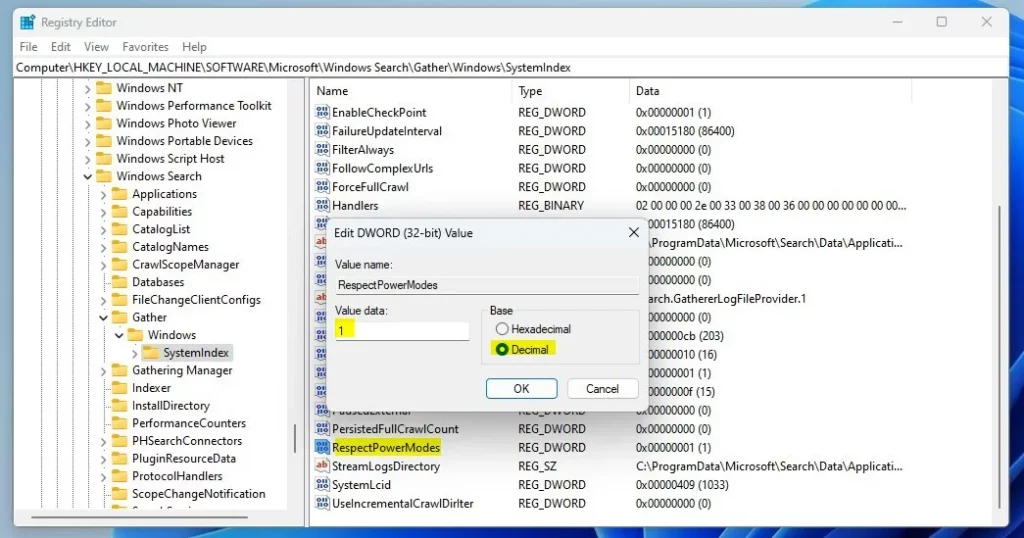
RespectPowerModes. The new value appears in the right pane. - Double-click
RespectPowerModesand change the Value data to1to turn the feature on. Set it to0to turn it off. Click OK to save.
- Restart your computer to apply the changes. A restart is needed here, unlike the Settings method.
You can also import the backup file you exported earlier.
Troubleshooting Power Plan Overrides
Windows 11 may override your power settings during indexing, especially after an update, causing the system to appear unresponsive to your preferences. This happens because the Windows Search Indexer, a background process, consumes significant resources. It might temporarily disable power-saving features to finish its tasks faster.
After a big update, Windows often rebuilds parts of the index, which is when you are most likely to notice this. It usually settles down on its own once the indexing finishes. If battery drain continues, check that the setting is still on in Settings Privacy & security Searching Windows, or that the registry value is still there, and restart once more.
Summary
Windows 11 lets you control how your computer uses power when it's organizing files for searching, and you can choose to respect power settings to save battery. Use the Settings toggle first, and fall back on the registry value only if the toggle is missing. Either way, your laptop does less background work when power runs low, and you can reverse the change whenever you like.
Have a question about this guide?
Answered by AI from this guide. Good questions may be added to this page — please don't include personal details.
Did this guide fix your problem?

About the Author
Richard
Tech Writer, IT Professional
Richard is a writer at Geek Rewind who turns complex IT tasks into clear, step-by-step guides. He draws on years of hands-on experience in system administration and enterprise IT operations, focusing on Windows, Linux and WordPress: the problems people actually run into, and the fixes that work. His server and WordPress guides come from systems he runs himself. Richard builds and maintains the platform behind Geek Rewind, from its Ubuntu servers and Nginx configuration to its custom WordPress plugins. Many new tutorials start with readers' questions, and he's always glad to answer them in the comments.
No comments yet — be the first to share your thoughts!