How to Put Your Windows 11 PC to Sleep

Sleep mode in Windows 11 saves your open apps and files in memory so you can return to your work in seconds. This low-power state keeps just enough electricity flowing to your memory chips to hold your exact spot.
Unlike shutting down, which closes all running programs completely, sleep lets you step away for a quick break and wake your PC instantly with a single key press or mouse click. It is a good fit for short breaks, such as lunch or a meeting. For a longer absence, such as overnight or a weekend, a full shutdown or hibernate is usually the better choice.
This guide covers the ways to put your PC to sleep, how to make the power button do it, and what to check when the option is missing. The steps are written for current Windows 11 and work the same on Home and Pro.
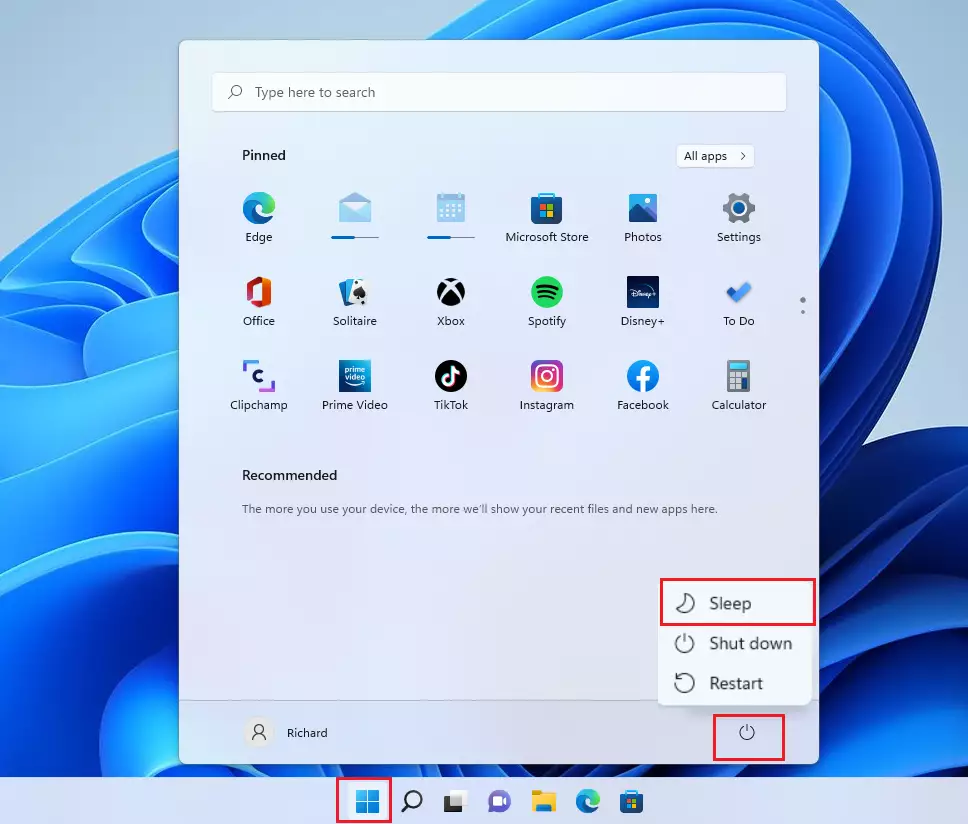
Click the Start button , select the Power icon, and click Sleep. Your screen turns off within seconds and all your open apps stay in memory. Press any key or move the mouse to wake your PC and resume exactly where you left off.
Understanding Sleep vs. Hibernate
Sleep mode keeps your open documents in your computer’s memory (RAM) so the system can wake up instantly. Hibernate instead saves your open documents to your hard drive and turns the computer completely off. Hibernation uses zero power, while sleep uses a tiny amount to keep your memory active.
Sleep resumes in a second or two but slowly drains a laptop battery. Hibernate takes a little longer to resume but draws nothing. One risk of sleep is that if the battery runs out or the power fails on a desktop, anything you had not saved is lost. Save your work before you walk away from a PC you plan to leave asleep for a while.
How to Use the Power Button
Many computers allow users to trigger sleep mode by pressing the physical power button on the case or laptop. Dedicated sleep buttons on keyboards work for this purpose as well.
What the power button does depends on your settings. On many desktops it shuts the PC down by default, so pressing it may not do what you expect. On many laptops it already sleeps. If a short press shuts your PC down and you want sleep instead, the next section shows how to change that.

How to Change What the Power Button Does
You can change what the power button does on your Windows 11 PC so pressing it triggers sleep mode instead of shutting down the computer. Open the Control Panel, go to Power Options, and change the setting next to the power button to put your Windows 11 PC to sleep with a single physical press.
Follow the numbered steps below. You will land on a page where each power button action has a drop-down list. On a laptop you will see two columns, On battery and Plugged in, so you can set a different action for each. On a desktop you will see a single column.
- Open the Control Panel and go to Hardware and Sound Power Options.
- Click Choose what the power buttons do on the left side.
- Under When I press the power button, select Sleep from the dropdown menu.
- Click Save changes.
If you close the window without saving, nothing changes. To test, press the power button once. The screen should go dark and the power light on a laptop will usually start to pulse or turn off. To undo the change, return to the same page and set the drop-down back to Shut down or whatever it was before. No restart is needed.
If the drop-down does not list Sleep, see the troubleshooting section further down.
How to Use the Start Menu
The Start menu offers the quickest way to put your PC to sleep.
You do not need to change any settings first. The steps below work on both Home and Pro, and on desktops and laptops.
- Click the Start button on your taskbar.
- Select the Power icon.
- Click Sleep.
After you choose Sleep, the screen should turn off within a second or two. To wake the PC, press a key, move the mouse, or press the power button. Some laptops also wake when you open the lid. You will usually see the lock screen, and after you sign in your apps are exactly where you left them.
If you prefer the keyboard, press the Windows key plus X to open the quick-link menu, then press U, then S. On a desktop with no apps in focus, Alt plus F4 opens a shutdown dialog that also lists Sleep.
Troubleshooting: Why is the Sleep Option Missing?
Missing sleep options on a Windows 11 PC usually point to outdated graphics drivers or disabled power plan settings. Fixing this problem requires only a few standard troubleshooting steps.
Work through these checks in order, and test the Start menu Power button after each one:
- Run Windows Update and install any pending updates, including optional driver updates.
- Update your graphics driver, either from Windows Update or from the manufacturer's website. An old or broken display driver is a common reason sleep disappears or fails.
- Check your power plan settings and make sure nothing has reduced the available power options.
- Restart the PC. Some changes only show up after a fresh start.
On a work or school PC, an administrator may have removed the Sleep option with a policy. In that case you will need to ask your IT department. Some desktop and laptop firmware also lets you turn off sleep states in the BIOS or UEFI settings, but only change those if you know what you are doing.
Advanced Power Management with Powercfg
Windows includes a built-in command-line utility called powercfg (a text-based tool for managing power settings). This utility helps identify exactly what prevents the PC from entering sleep mode, making it valuable during persistent troubleshooting.
Run it from a terminal window opened with Run as administrator, as the command in the block above requires. If the PC goes to sleep but wakes up on its own, or refuses to sleep at all, the output often names the app, driver or device responsible. Once you know what it is, you can close that app, update its driver, or stop that device from waking the PC.
Summary
Putting a Windows 11 PC to sleep conserves energy while keeping active work accessible. Multiple convenient methods exist for this task, ranging from Start menu controls to dedicated keyboard shortcuts.
For most people, the best setup is to make the power button sleep the PC and use the Start menu when you want to sleep it from the screen. Save your work before you leave the PC asleep for long, and use hibernate or a full shutdown for longer breaks.
Why is the sleep option missing from my 🪟 Windows 11 power menu?
Outdated graphics card drivers or altered power plan settings frequently cause the sleep option to vanish. Updating those drivers through Device Manager or returning the power plan to default settings within the Control Panel typically brings the missing option back.
Was this guide helpful?

About the Author
Richard
Tech Writer, IT Professional
Richard is a writer at Geek Rewind who turns complex IT tasks into clear, step-by-step guides. He draws on years of hands-on experience in system administration and enterprise IT operations, focusing on Windows, Linux and WordPress: the problems people actually run into, and the fixes that work. His server and WordPress guides come from systems he runs himself. Richard builds and maintains the platform behind Geek Rewind, from its Ubuntu servers and Nginx configuration to its custom WordPress plugins. Many new tutorials start with readers' questions, and he's always glad to answer them in the comments.



No comments yet — be the first to share your thoughts!