How to Change Power Button Actions on Windows 11

Power button actions on Windows 11 let you change what happens when you press your computer’s physical power button or close your laptop lid. You can make the button a sleep switch, a hibernate tool, or a standard shutdown command. That helps prevent accidental power-downs when you bump your PC case.
You need administrator rights to make this change. The classic Control Panel handles this setting, and it looks the same on Windows 11 Home and Pro. The change applies as soon as you save it, and no restart is needed. Here is what each action does:
- Do Nothing: No action is taken when the power button is pressed.
- Sleep: Your PC goes into a low-power sleep mode.
- Hibernate: Your PC saves its session in a memory disk and shuts down.
- Shut Down: Shut down the PC when the power button is pressed.
- Turn off the Display: Your display turns off, but your PC keeps running.
Open Control Panel Hardware and Sound Power Options Change what the power buttons do. Under Power and Sleep Button Settings, open the drop-down next to When I Press the Power Button and select your preferred action: Do Nothing, Sleep, Hibernate, Shut Down, or Turn off the Display. Click Save changes. The new action takes effect immediately.
How to change the power button action in 🪟 Windows 11
There you choose what happens when you press the physical power button, such as shutting down, sleeping, or doing nothing. There are two ways to get there. The first is the quicker one, and the second reaches the same options through the advanced power settings.
Start with the first method:
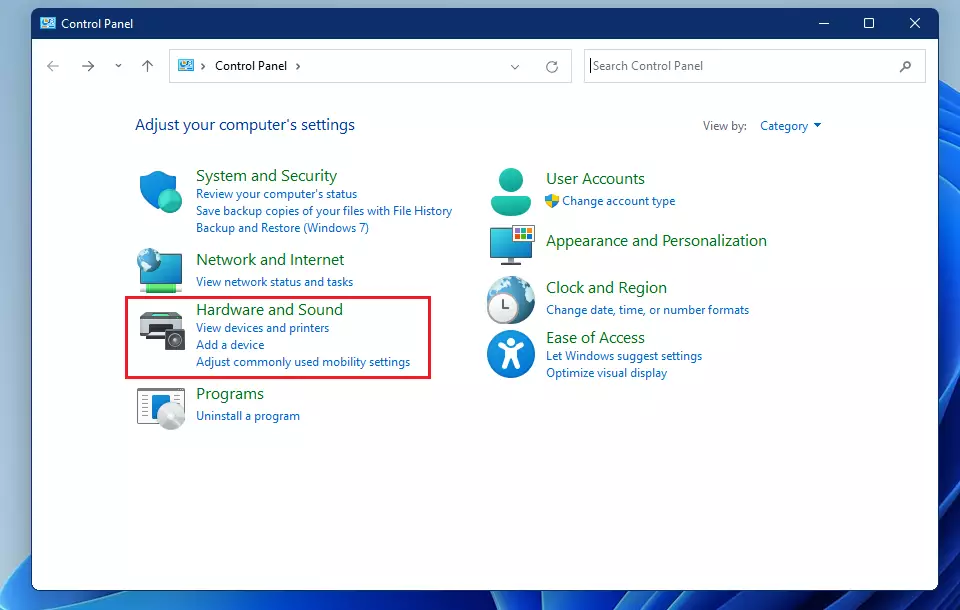
- Open the Control Panel in Windows 11. You should see the Control Panel window with its list of categories.
- Select the Hardware and Sound category.
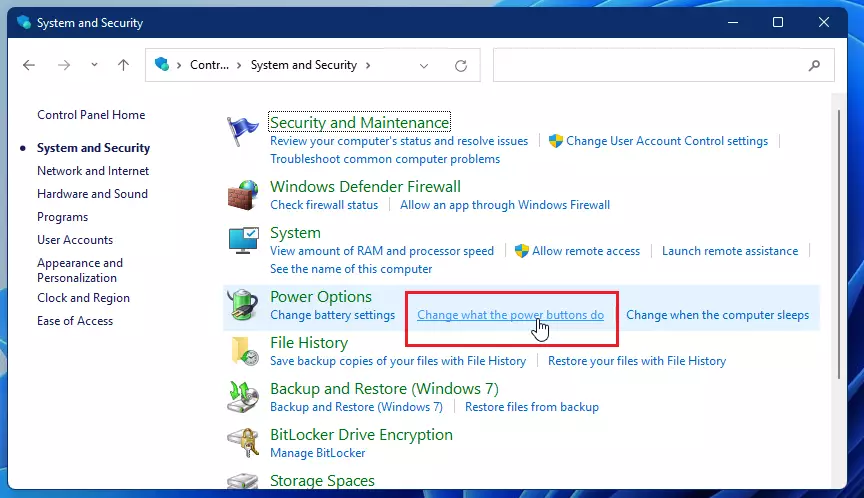
- Find the Power Options section in the Hardware and Sound category, then click Change what the power buttons do. The page that opens lists the power button settings.
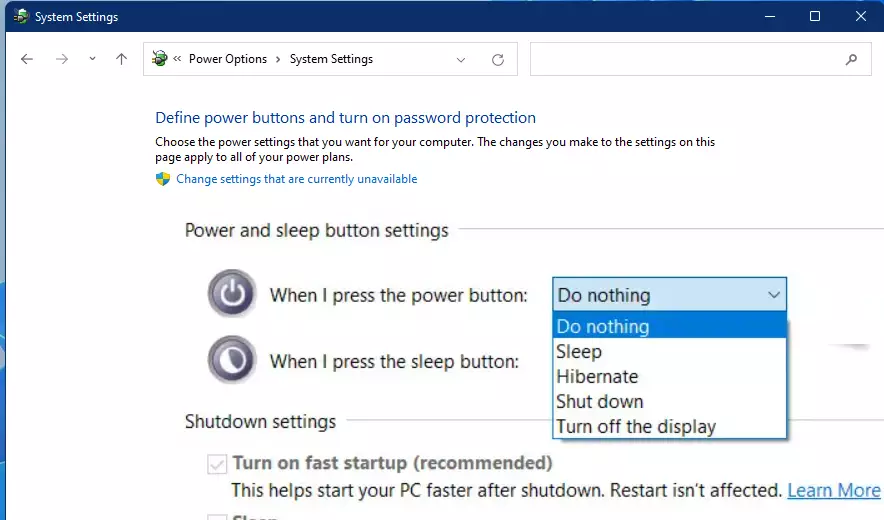
- Under Power and Sleep Button Settings, find the power button icon next to When I Press the Power Button.
- Open the drop-down menu next to it and pick one of the available options.
The options are:
- Do Nothing: Nothing happens when the power button is pressed.
- Sleep: Your PC goes into a low-power sleep mode.
- Hibernate: Your PC saves its session in a memory disk and shuts down.
- Shut Down: Shuts down the PC when the power button is pressed.
- Turn off the Display: Your display turns off, but your PC keeps running.
On a laptop you will usually see two columns, On battery and Plugged in. Set each one separately. A desktop without a battery usually shows a single column. Not every option appears on every PC. If Hibernate is missing, hibernation is probably turned off on your system. If the settings are greyed out, look for the link on the page that says Change settings that are currently unavailable. It needs administrator approval. Once it is unlocked, a Shutdown settings area appears lower on the page, where you can tick the Hibernate option so it shows in the menu.
Click Save changes at the bottom of the page when you are done. To undo the change, come back to this page and set the drop-down menu to its previous value.
The second method uses the advanced power settings. It also lets you set the laptop lid action.
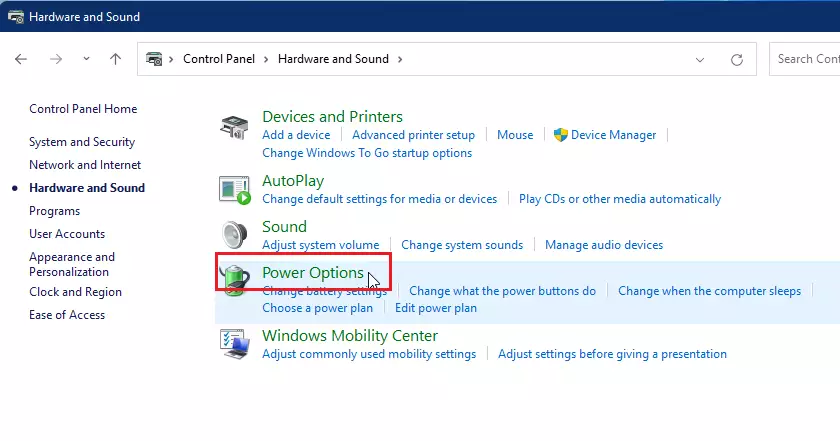
- In the Hardware and Sound category, select the Power Options settings group highlighted below.
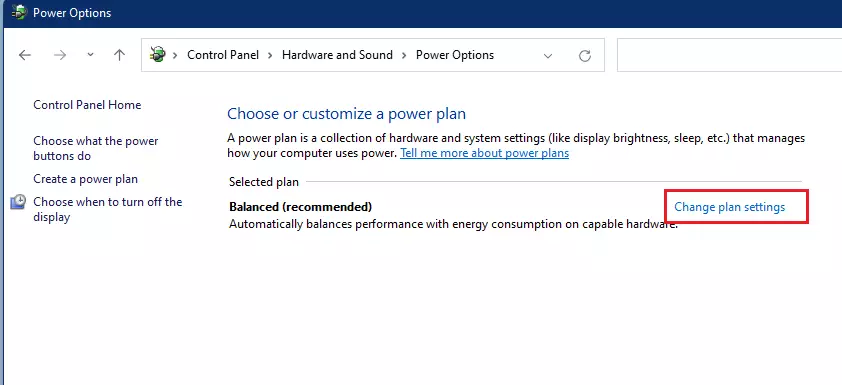
- Select the Change plan settings link in the Power Options pane, as highlighted below.
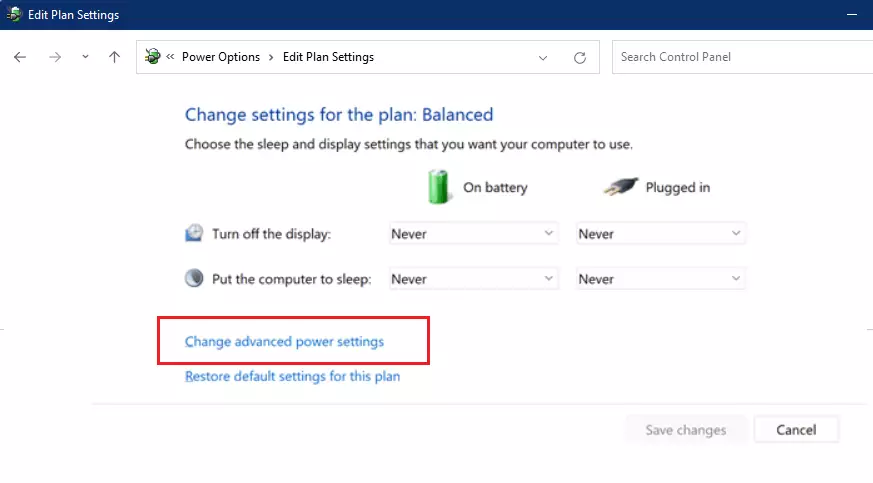
- Click the Change advanced power settings link highlighted below. A small Power Options dialog box opens with a list of settings you can expand.
- Expand Power buttons and lid, then expand Power button action, as highlighted below.
- Under Power button action, choose what action to take when you close the laptop lid. You can set a different action for each power source:
- On battery:
- Do nothing
- Sleep
- Hibernate
- Shutdown
- Plugged in:
- Do nothing
- Sleep
- Hibernate
- Shutdown
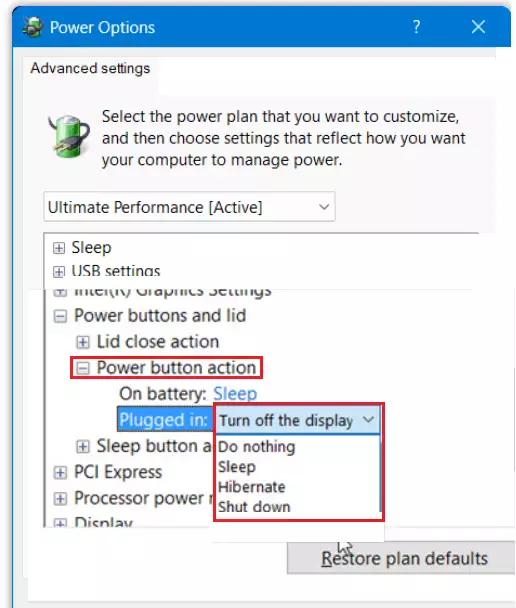
- Make your selection, then click OK to save your settings. The dialog box closes and the new action takes effect right away.
To test it, press the power button once. If you chose Shut Down, save your work first. To go back to the old behavior, open the same page and pick the earlier option.
Conclusion:
- Changing power button action settings in Windows 11 gives you control over how the system responds when the power button is pressed.
- In Control Panel, under Hardware and Sound, you can set the power button to do nothing, sleep, hibernate, shut down, or turn off the display.
- The advanced Power Options settings give you a second route to the same controls, including what happens when you close the laptop lid.
- Setting these actions to match how you work helps stop accidental shutdowns and lets your PC behave the way you expect.
Have a question about this guide?
Answered by AI from this guide. Good questions may be added to this page — please don't include personal details.
Did this guide fix your problem?

About the Author
Richard
Tech Writer, IT Professional
Richard is a writer at Geek Rewind who turns complex IT tasks into clear, step-by-step guides. He draws on years of hands-on experience in system administration and enterprise IT operations, focusing on Windows, Linux and WordPress: the problems people actually run into, and the fixes that work. His server and WordPress guides come from systems he runs himself. Richard builds and maintains the platform behind Geek Rewind, from its Ubuntu servers and Nginx configuration to its custom WordPress plugins. Many new tutorials start with readers' questions, and he's always glad to answer them in the comments.
No comments yet — be the first to share your thoughts!