How to Access Control Panel in Windows 11

- 2 ways to do it
- Needs administrator rights
Control Panel in Windows 11 is the classic settings hub. It keeps older tools for managing hardware, user accounts, and programs in one place. Microsoft hides many advanced options here because the newer Settings app does not show them. Examples are Power Options, Credential Manager, and the legacy Network and Sharing Center.
Opening it takes only a few seconds on any Windows 11 PC. Type Control Panel into the taskbar search box and press Enter, and it launches right away. The same steps work on Windows 11 Home and Pro, and you don’t need administrator rights just to open it.
Type Control Panel into the taskbar search box and press Enter to open it. Alternatively, press Win+R, type control, and press Enter. Control Panel appears in a separate window within seconds.
Control Panel vs. Windows Settings App
Control Panel vs. Windows Settings App
- Use the Settings app for everyday tasks such as Wi-Fi, display, Bluetooth, and Windows Update. Microsoft keeps moving features there.
- Use Control Panel when you need an older tool that Settings doesn’t offer, or when a guide or an IT colleague points you to a Control Panel page.
Some pages in Control Panel will send you to Settings when you click them. That is normal. Microsoft is moving features over slowly, so the two will overlap for a while.
How to Access Control Panel in 🪟 Windows 11
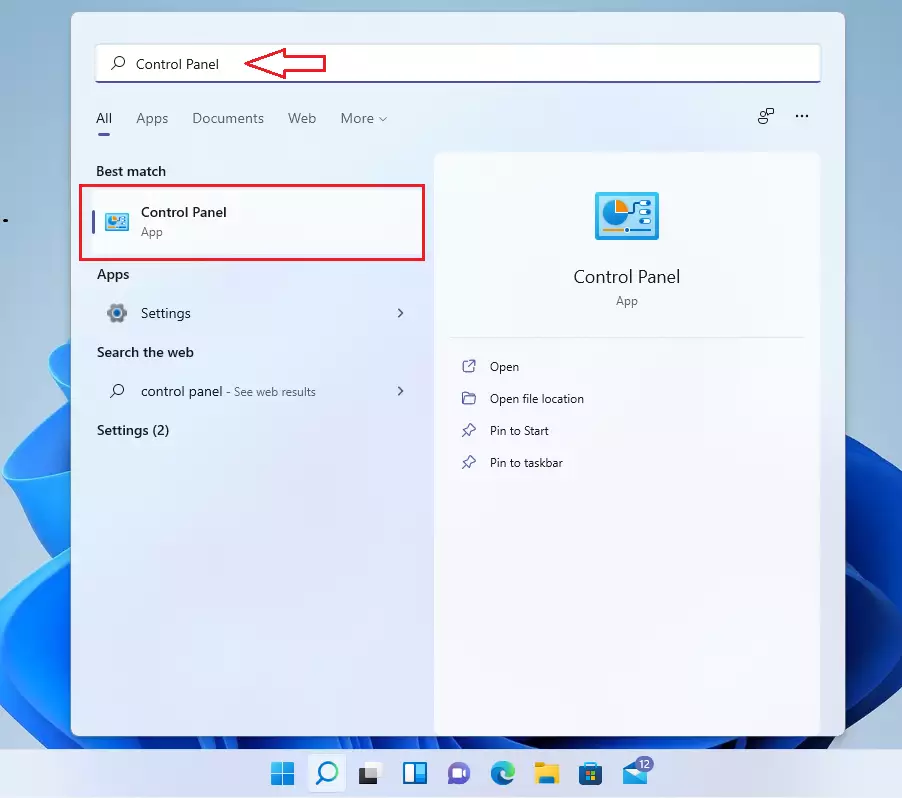
Control Panel is still available in Windows 11, even though Microsoft wants you to use the newer Settings app. You can open it in a few seconds with the Start menu search bar or the Run command. You can also pin a shortcut to your taskbar so you never have to hunt for it. Here is the Start menu method first:
- Click the Start button or the search box on the taskbar.
- Type Control Panel. The Control Panel app should appear at the top of the results as the best match.
- Press Enter, or click the result. The Control Panel window opens.
By default, Control Panel shows its pages grouped by category. If you prefer the old list of icons, use the View by drop-down in the top-right corner and choose Large icons or Small icons.
Method 2The Run Command (Quickest Way)
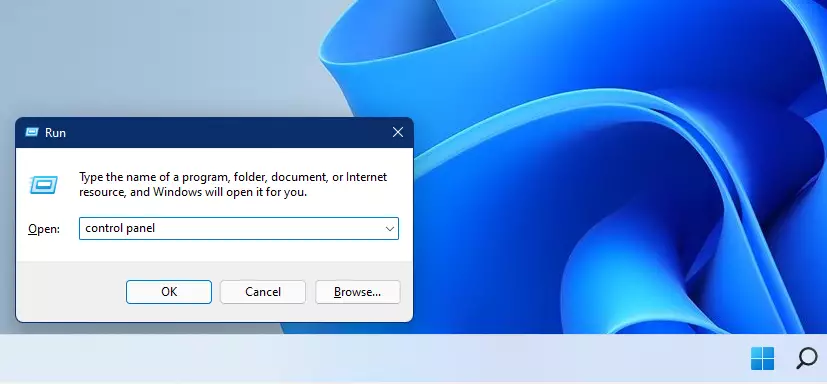
- Press
Windows Key + Ron your keyboard. The Run box opens in the bottom-left corner of the screen. - Type
controlin the Open field. - Press
Enter. Control Panel opens.
This skips the Start menu altogether, so it is the fastest option if you are comfortable with the keyboard.
Method 3Command Prompt or PowerShell
- Open Command Prompt or PowerShell. For example, right-click the Start button and choose Terminal, or search for either name from the Start menu. A normal window is enough; you don’t need to run it as administrator.
- Type
control.exeat the prompt. - Hit
Enter. Control Panel opens in its own window.
This method is handy for IT pros, and for troubleshooting system errors when you are already working in a console, or when the Start menu or search isn’t behaving.
Pro Tip: Pinning to Taskbar
To keep Control Panel handy, pin it to the taskbar:
- Open Control Panel using the Start menu, as shown above. Its icon appears on the taskbar while the window is open.
- Right-click that icon in your taskbar.
- Select Pin to taskbar. The icon stays on the taskbar after you close the window.
Now it is only one click away whenever you need it. To undo this, right-click the icon and select Unpin from taskbar.
How to Create a Desktop Shortcut
You can also put a permanent Control Panel icon on your desktop:
- Right-click an empty area of the desktop and select New Shortcut. The Create Shortcut wizard opens.
- In the location box, type
control.exe. - Click Next.
- Name the shortcut
Control Panel. - Click Finish. The new icon appears on your desktop.
You now have a permanent icon on your desktop that opens Control Panel with a double-click. If you no longer want it, right-click the icon and choose Delete. This only removes the shortcut, not Control Panel itself.
Advanced Troubleshooting and Administrative Tools
Control Panel offers powerful tools for fixing computer problems and managing system settings. Two common jobs are uninstalling programs and changing computer names. Other pages worth knowing:
- Programs and Features lists installed desktop programs and lets you uninstall or repair them.
- Power Options controls power plans and what the power button and lid do.
- User Accounts and Credential Manager handle account settings and saved logins.
- Network and Sharing Center shows connection status and adapter settings.
Summary
Control Panel remains a vital tool for managing Windows 11, especially for advanced tasks. It complements the newer Settings app rather than replacing it. Pick the method above that suits you, and pin or create a shortcut if you will use it often.

Have a question about this guide?
Answered by AI from this guide. Good questions may be added to this page — please don't include personal details.
Did this guide fix your problem?

About the Author
Richard
Tech Writer, IT Professional
Richard is a writer at Geek Rewind who turns complex IT tasks into clear, step-by-step guides. He draws on years of hands-on experience in system administration and enterprise IT operations, focusing on Windows, Linux and WordPress: the problems people actually run into, and the fixes that work. His server and WordPress guides come from systems he runs himself. Richard builds and maintains the platform behind Geek Rewind, from its Ubuntu servers and Nginx configuration to its custom WordPress plugins. Many new tutorials start with readers' questions, and he's always glad to answer them in the comments.
[…] how to change the power button behavior settings in Windows 11. Then, one had to use the classic Control Panel app. Now, users can use the Windows Settings app to change what happens when the power button is […]
[…] you try to open Devices and Printers from the Control Panel in Windows 11, it will open to Settings > Bluetooth & […]
[…] open the Control Panel app. In the Control Panel app, select Hardware and Sound group and go […]
[…] Open the Control Panel in Windows 11 to turn wake timers on or off. […]
[…] can also reset apps and programs from the Control Panel. In the search box on the taskbar, type Control Panel and select Control Panel from the […]
[…] can also use the Control Panel to turn on or off a network adapter in Windows 11. Go to the Start button to use the Control Panel, […]
[…] how the power button works in Windows 11 requires you to log in as an administrator and open the Control Panel app in Windows […]
[…] First, open the classic Control Panel in Windows 11. […]
[…] To change your device power plan, first, open the classic Control Panel in Windows 11. […]
[…] To change your device power plan, first, open the classic Control Panel in Windows 11. […]
[…] open the Control Panel in Windows […]
[…] There’s yet another location to turn on filter keys: the classic Control Panel app. […]
[…] BitLocker enabled on your OS drive, open the Control Panel and browse to the BitLocker […]
[…] First, open the Control Panel app. […]
[…] or slower to make it easier to locate. Windows allows users to change the cursor blink rate via the Control Panel or Windows Registry […]
[…] First, launch the Control Panel app in Windows 11. […]
[…] First, launch the Control Panel app in Windows 11. […]
[…] First, launch the Control Panel app in Windows 11. […]
[…] If it is confirmed your device supports it, open the Control Panel app. […]
[…] open the Control Panel and select System and Security -> BitLocker Drive […]
[…] we showed you how to change the lid close settings in Windows 11. Then, one had to use the classic Control Panel app. Now, users can use the Windows Settings app to change what happens when the lid on the laptop is […]
[…] Another way to adjust the text cursor thickness in Windows is from the Control Panel app. To do that, first, open the Control Panel app. […]
[…] or disable AutoPlay play in Windows is from the Control Panel app. To do that, first, open the Control Panel […]
[…] First, open the Control Panel app. […]
[…] the mouse wheel scroll in Windows. For example, one can use the Windows Settings app, the classic Control Panel mouse applet, or the Windows registry […]
[…] Another way to remove or uninstall Windows updates is to use the Control Panel app. […]
[…] BitLocker enabled on your OS drive, open the Control Panel and browse to the BitLocker […]
[…] are many ways to get to these tools. For example, one can use the Start menu, Control Panel, and File Explorer. Below, we’ll show you how to find and open Windows 11 […]
[…] First, open the Control Panel app. […]
[…] First, open the Control Panel app. […]
[…] students and new users steps to open Windows Tools in Windows 11. Windows Tools is a Windows 11 Control Panel folder containing tools for administrators and advanced […]
[…] many advanced settings can still be done in the old Control Panel. Changing lid open actions is one of the changes you’ll need to go to the Control Panel […]
[…] First, open the Control Panel app. […]
[…] open the Control Panel […]
[…] While BitLocker is enabled on your machine, open the Control Panel. […]
[…] Alternatively, the classic Control Panel app could add or remove Remote Desktop users. To do that, first, open the Control Panel app. […]
[…] First, open the Control Panel app. […]
[…] sharing the folder on the NFS server, open the Windows machine and navigate to Control Panel > Programs > Programs and […]
[…] commenter mentioned below to enable SMB 1.0 / CIFS File Sharing support in the Control Panel, under Programs and Features ==> Turn Windows features on or […]
[…] many advanced settings can still be done in the old Control Panel. Changing the lid open actions is one of the changes you’ll need to go to the Control Panel […]
[…] commenter mentioned below to enable SMB 1.0 / CIFS File Sharing support in the Control Panel, under Programs and Features ==> Turn Windows features on or […]
[…] open the Control Panel. You can do that by clicking the Start button and searching for Control Panel. Under Best match, […]
[…] Windows allows users to change or reset passwords from the Windows Settings app or Control Panel. […]
[…] Open the Control Panel on your Windows 11 PC. […]
[…] the Control Panel on your Windows 11 […]
[…] Open the Control Panel on your Windows 11 PC. […]
[…] Open Control Panel: Click the Start button, type Control Panel, and press Enter. Learn more about Control Panel […]
[…] Open Control Panel: Click the Start menu button, type Control Panel, and press Enter. Learn how to open Control Panel […]
[…] Open Control Panel: Click the Start menu, type Control Panel, and press Enter. Or learn more about opening Control Panel here: Open Control Panel in Windows 11. […]
[…] Control Panel. You can search for it in the Start […]
[…] Open Control Panel: Click the Start button, type Control Panel, and click it from the list. Learn more about opening Control Panel. […]
[…] Click the Start button and type Control Panel, then press Enter. Or you can follow this guide: How to Open Control Panel in Windows 11 […]
[…] the Control Panel. To do this, type Control Panel in the search box and click […]
[…] how the power button works in Windows 11 requires you to log in as an administrator and open the Control Panel app in Windows […]
[…] To delete a driver, open the Control Panel in Windows 11 […]
[…] to change the sleep button behavior settings in Windows 11. Then, one had to use the classic Control Panel app. Now, users can use the Windows Settings app to change what happens when the sleep button […]
[…] Open the Control Panel. You can do this by typing Control Panel in the search box on the taskbar. Control Panel […]
[…] Open the Control Panel app. If you need help opening Control Panel, check this guide: How to Open Control Panel in Windows 11. […]
[…] the Control Panel and select Network and Sharing […]
[…] the Control Panel on your Windows 11 […]
[…] Open the Control Panel on your PC. Learn how to open Control Panel […]
[…] the Control Panel and click the User Accounts […]
[…] for and open the Control Panel, then go to Hardware and Sound > Power Options. Click Change plan settings next to your active […]
[…] To get started, open the Control Panel app. […]
[…] 11 Control Panel Shortcuts […]
[…] launch the Control Panel app in Windows […]
[…] First, open the Control Panel app. […]