How to Enable Hybrid Sleep on Windows 11

Hybrid Sleep protects your work from unexpected power cuts. It is a setting in the advanced power options, and it takes about a minute to turn on in Windows 11.
Open Control Panel Power Options Change plan settings Change advanced power settings Expand the Sleep folder, set Allow hybrid sleep to On, click Apply, then OK. No restart is needed.
What is Hybrid Sleep?
Hybrid sleep is a power state that saves your open apps and files to both your memory (RAM) and your hard drive at the same time. If your computer loses power while it is asleep, you will not lose your work. When you press the power button, your PC wakes up quickly, just like it does from regular sleep.
Because the data is written to the drive as well as RAM, a Windows 11 PC can wake in seconds. If the power fails, Windows restores your session from the drive, as it does after hibernation.
This mode is most useful on desktop PCs, which have no battery to keep them running through a power cut. Laptops usually have it off by default.
If hibernation is disabled, the hybrid sleep option may be missing from the menu. The command section further down covers how to check this.
How to Enable Hybrid Sleep on 🪟 Windows 11
To enable hybrid sleep in Windows 11, open the Control Panel and go to your power plan settings. You change the advanced power settings so your computer saves your work to the hard drive before it enters a low-power state. You need an administrator account, or the administrator password, to save the change.
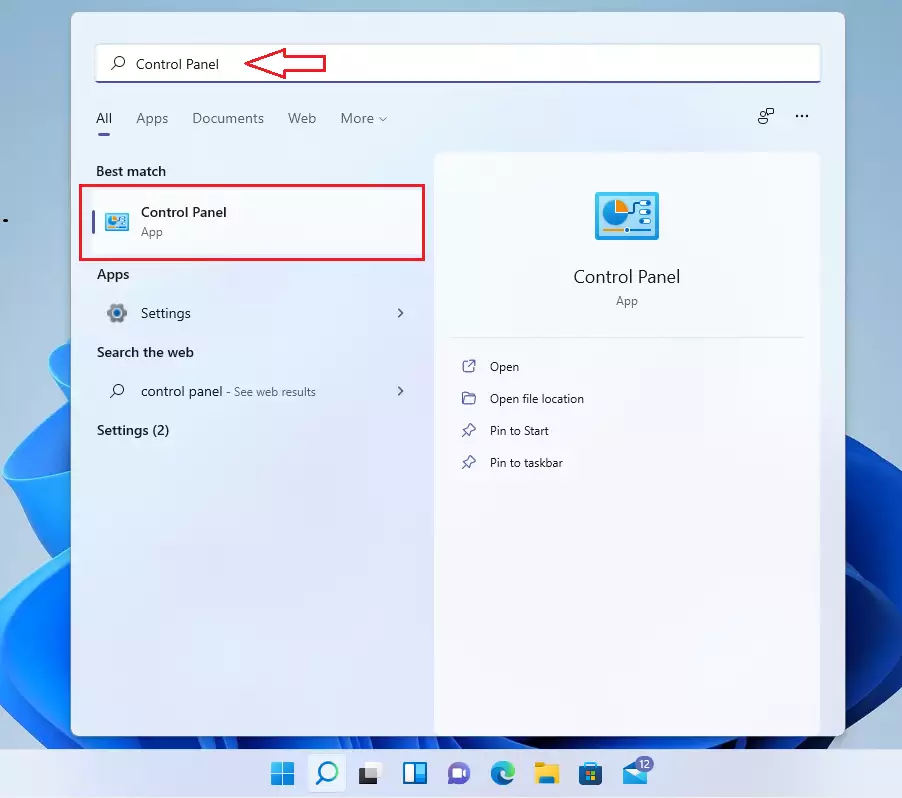
- Click Start, type Control Panel , and open it from the results. The Control Panel window appears.
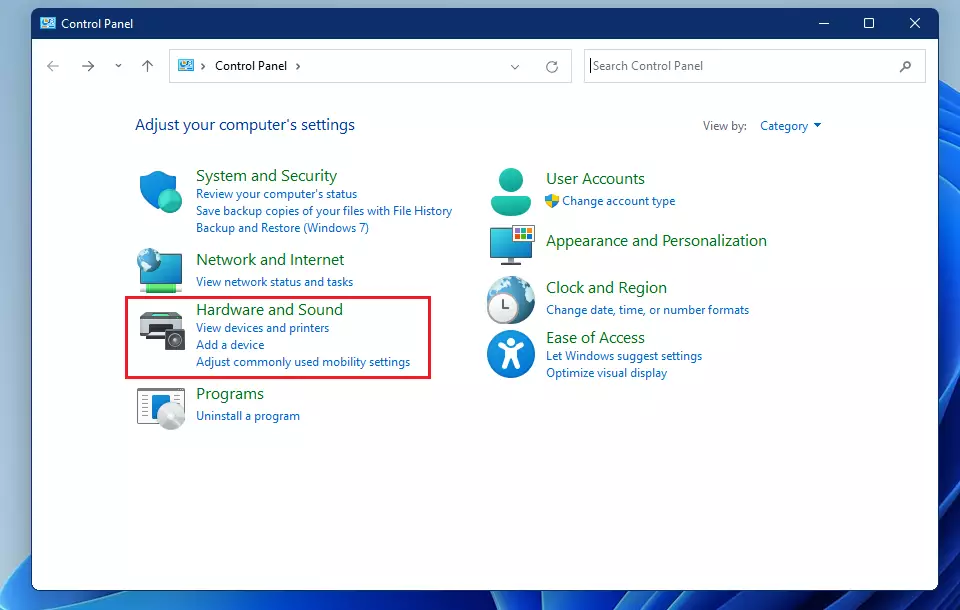
- Click Hardware and Sound. A list of hardware categories appears.
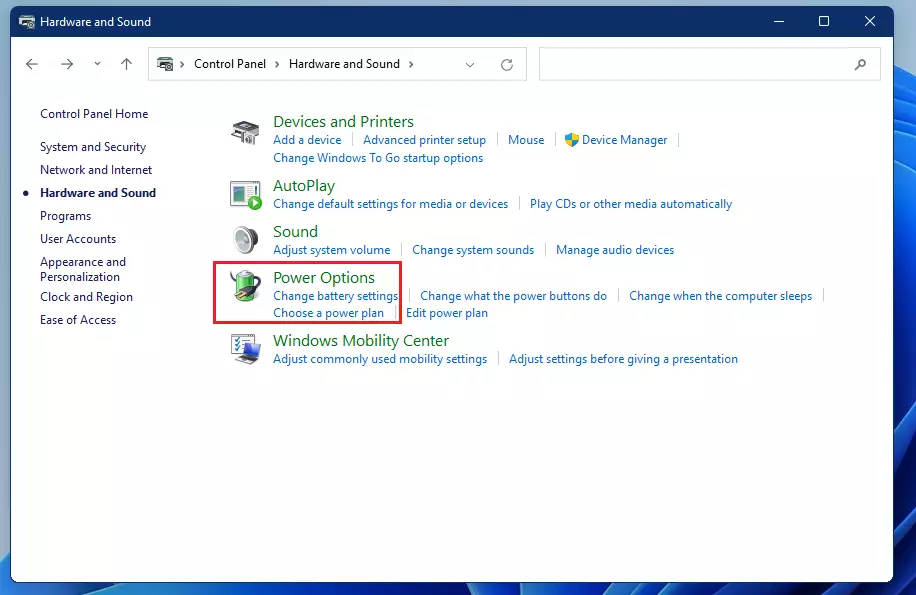
- Click Power Options. You will see your available power plans, such as Balanced.
- Find your active power plan, the one with the filled-in circle, and click Change plan settings next to it. The plan’s sleep and display settings open.
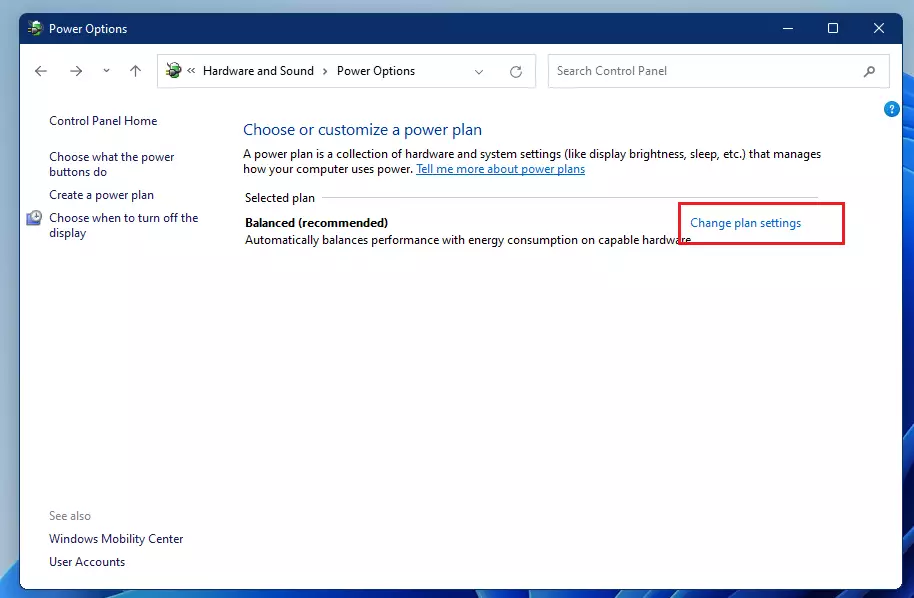
- Click Change advanced power settings. A small Power Options dialog opens with a list of settings in folders.
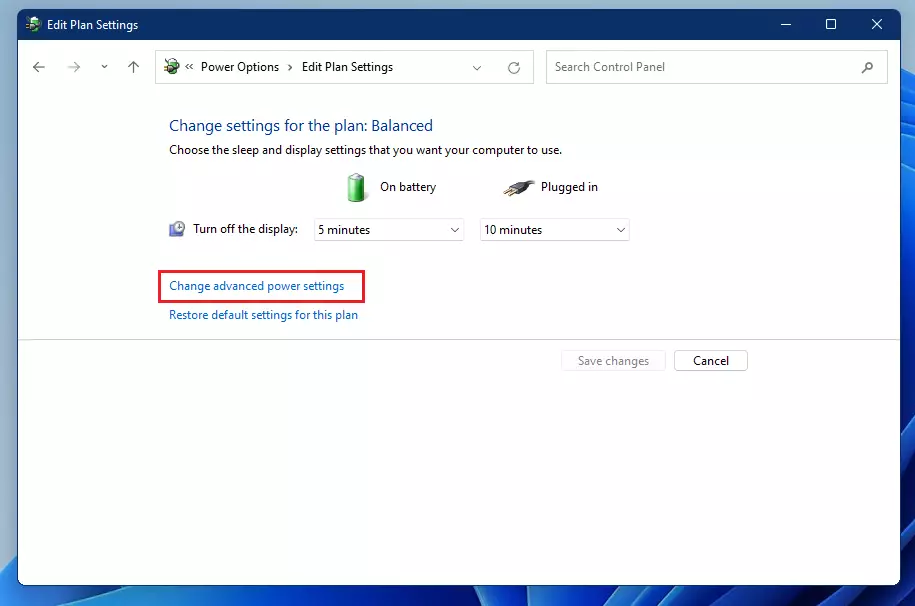
⚠️ Admin privileges required. If the options look greyed out, click Change settings that are currently unavailable at the top of the dialog (if it is shown) and approve the prompt.
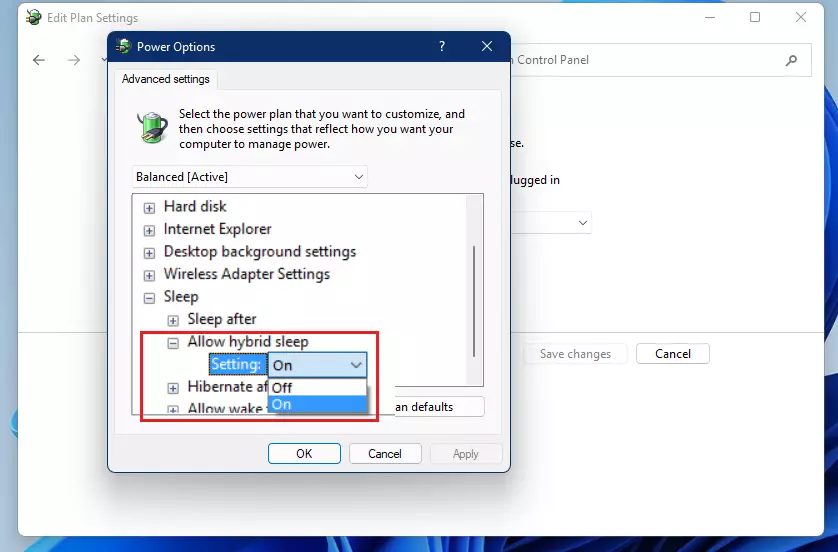
- Expand the Sleep folder by clicking the plus sign next to it.
- Expand Allow hybrid sleep.
- Set it to On. If you use a laptop, you will see separate On battery and Plugged in entries, so set the one you want.
- Click Apply, then OK.
No restart is needed. To undo the change, return to the same place and set Allow hybrid sleep back to Off. Each power plan has its own setting, so if you switch plans, check the new one too.
Does Hybrid Sleep work with Modern Standby?
If Allow hybrid sleep is missing from the Sleep folder, your PC probably uses Modern Standby. Hybrid Sleep doesn’t typically work with Modern Standby, a power state that keeps your PC connected to the internet while asleep. On those systems Windows hides or ignores the setting. Missing hibernation can also hide it.
Troubleshooting: The Hypervisor Conflict
Troubleshooting: the hypervisor conflict. If an error appears stating the hypervisor doesn’t support a standby state, this often means features like virtual machines are preventing deep sleep. Virtualization features such as Hyper-V run underneath Windows and can block some sleep states. If you don’t need them, turning off those Windows features may help. Restart afterwards and test sleep again.
Command Line Configuration
If you prefer not to use the Control Panel , you can turn on hybrid sleep from the command line. Open Command Prompt as administrator, because power commands that change settings need elevated rights. Running the right power commands changes your sleep settings directly, without clicking through menus.
You can check whether hibernation is enabled with a specific command. Enabling hibernation is a necessary step for using Hybrid Sleep, which combines elements of both sleep and hibernation.
If you turn hibernation on, run the check again afterwards to confirm it took effect. Then go back to the Control Panel steps above and confirm that Allow hybrid sleep now appears and is set to On.
powercfg -h on
Summary
Hybrid Sleep is a safe way to protect your data. It suits desktop users who want quick wake-ups and protection from power loss. To check it works, save your files, put the PC to sleep, and wake it again. Your apps should be exactly as you left them.
Have a question about this guide?
Answered by AI from this guide. Good questions may be added to this page — please don't include personal details.
Did this guide fix your problem?

About the Author
Richard
Tech Writer, IT Professional
Richard is a writer at Geek Rewind who turns complex IT tasks into clear, step-by-step guides. He draws on years of hands-on experience in system administration and enterprise IT operations, focusing on Windows, Linux and WordPress: the problems people actually run into, and the fixes that work. His server and WordPress guides come from systems he runs himself. Richard builds and maintains the platform behind Geek Rewind, from its Ubuntu servers and Nginx configuration to its custom WordPress plugins. Many new tutorials start with readers' questions, and he's always glad to answer them in the comments.
Second paragrapgh “but if there is some kinD of power failure” just a teenie-tiny typo
[…] has multiple Sleep or hibernation modes: Hybrid Sleep is a type of sleep state that […]
[…] your computer goes to sleep, the power usage is reduced, allowing users to save their work and sessions without worrying about losing them. Your PC can […]
[…] has multiple sleep or hibernation modes: A Hybrid sleep is a type of sleep state that […]
[…] Sleep: Your PC goes into a low-power sleep mode. […]
[…] default, when you put a Windows computer to sleep or if a laptop goes into modern standby or hibernation, it normally waits until you press a button before it wakes from […]