How to Manage OneDrive Photos in Microsoft Photos App


Photos can show your OneDrive pictures alongside the ones on your PC, so you can browse the whole library on Windows 11 or Windows 10 without filling your hard drive. The Microsoft Photos app is the built-in image viewer. It lets you view, organize, and hide pictures stored in your Microsoft cloud account.
Hiding old screenshots or specific folders takes a few clicks in the app settings, and your original files stay safe online. You decide which albums appear in the main gallery on each PC. This guide covers the requirements, how to connect your account, how syncing works, and what to check when storage runs low.
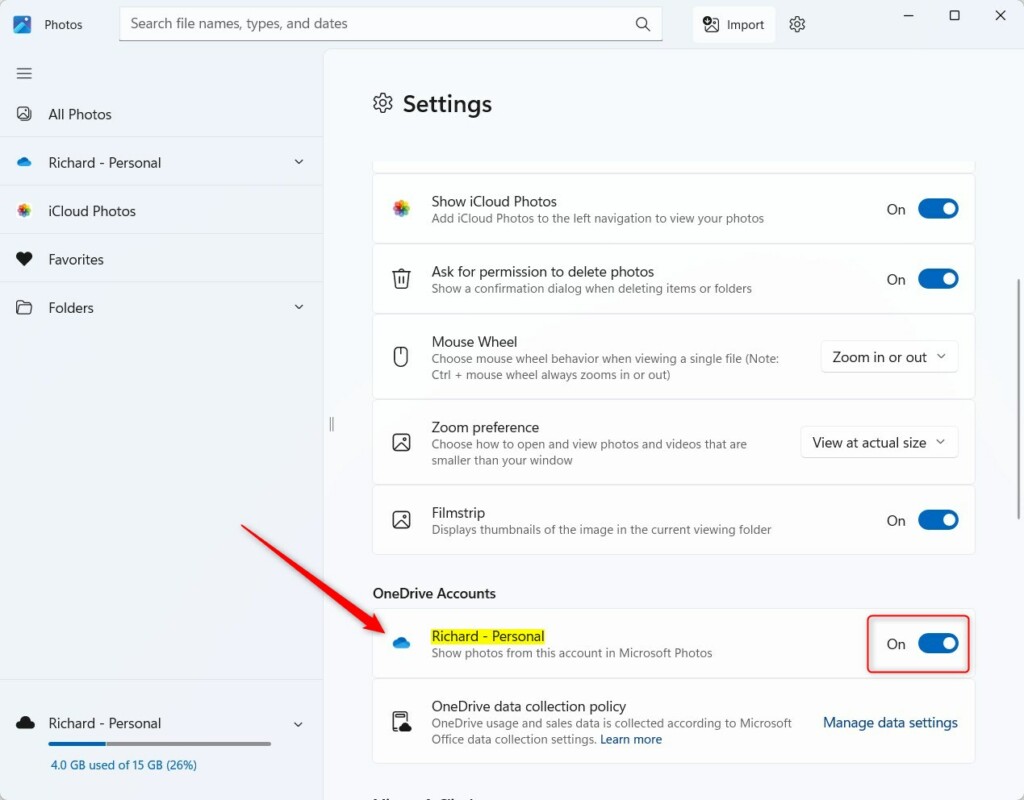
Open the Photos app, go to Settings , and toggle your OneDrive account to On in the OneDrive Accounts section. This links your cloud photos to the app for viewing and management.
System Requirements for Integration
A few things must be in place before OneDrive photos show up in Photos. You need an active Microsoft account, an internet connection, and the latest version of the Microsoft Photos app from the Microsoft Store. Free accounts and paid Microsoft 365 plans both work, as long as your cloud account still has free storage.
Windows edition makes no difference here. The steps are the same on Home and Pro. Photos is updated through the Microsoft Store, so if a setting described below is missing, update the app first. Open the Microsoft Store, go to Library, and install any pending updates for Microsoft Photos.
- A valid Microsoft 365 Personal or Family subscription (or a free Microsoft account). A free account includes a smaller storage quota, which is enough to start.
- The latest version of the Microsoft Photos app installed from the Microsoft Store.
- An active internet connection for cloud synchronization. Photos can only fetch new or changed pictures while you are online.
- Sufficient cloud storage quota available in your OneDrive account. When the quota is full, new photos stop uploading.
How to link OneDrive to Microsoft Photos
Linking OneDrive to Microsoft Photos takes only a few clicks in the app settings. You turn on the switch for your account, and your cloud pictures then appear in the main gallery without a manual download. The steps below show how.
The window layout can differ slightly between versions of the Photos app. If a name below does not match what you see, update the app and look again.
- Open the Photos app from your Start menu. The gallery opens with the pictures it already knows about.
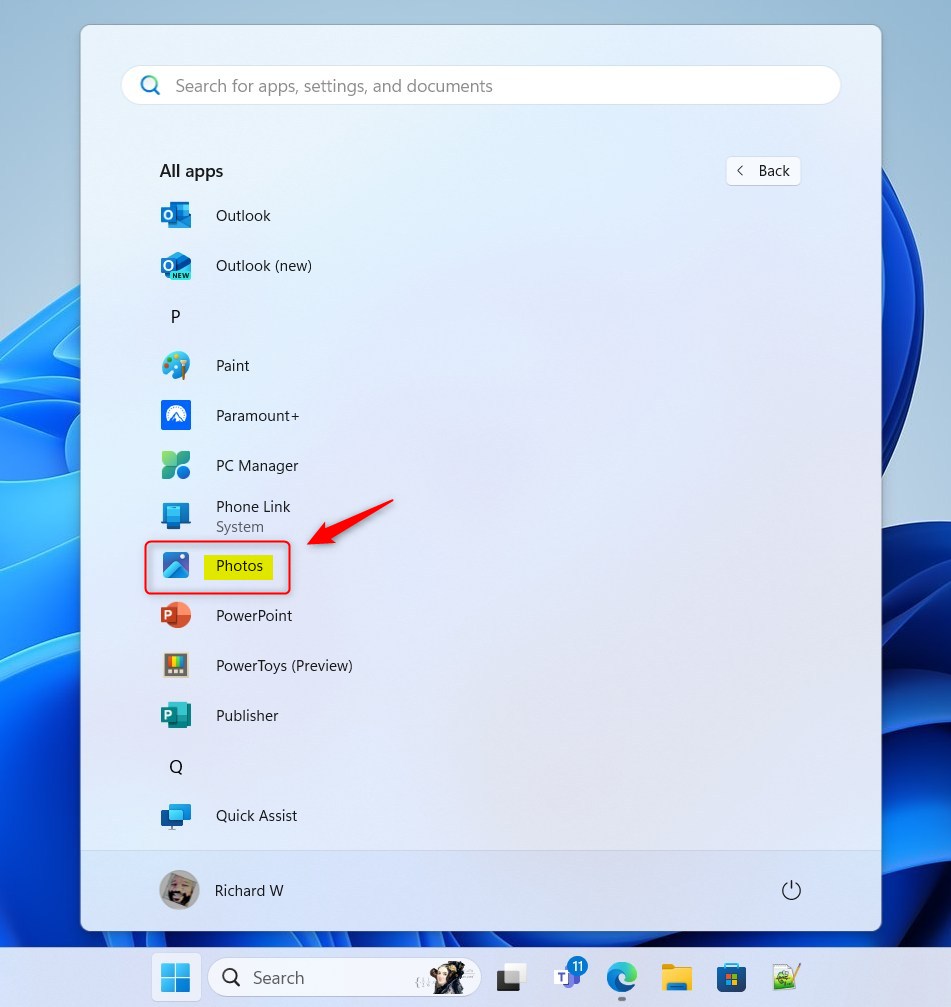
Microsoft Photos app on the All apps list - Click the Settings (gear) icon at the top right of the window. The Settings page opens.
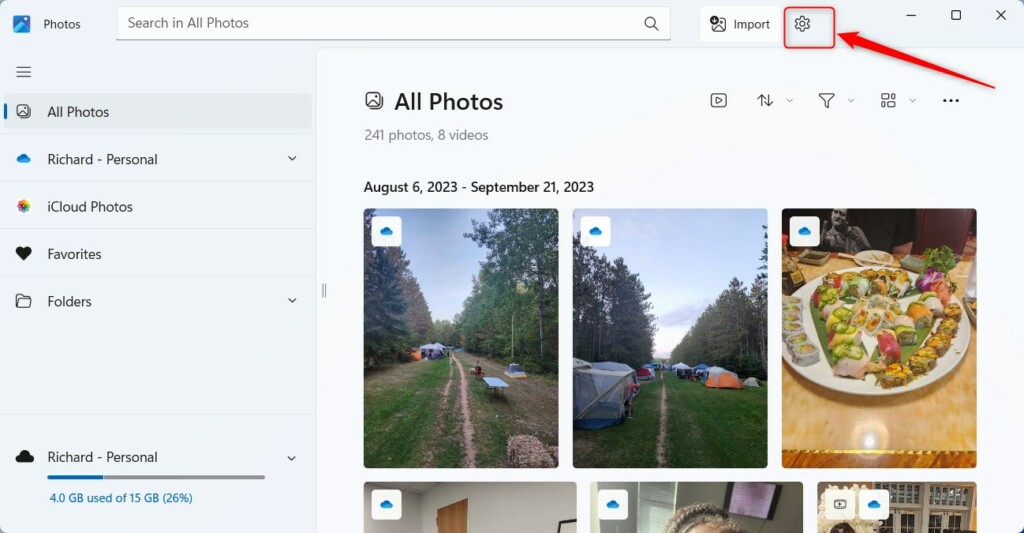
Windows Photos app settings button - Navigate to the OneDrive Accounts section. Your Microsoft account should be listed here. If it is not, sign in to Windows or to the Photos app with that account first.
- Select your account tile and toggle the switch to On. Your OneDrive pictures should now start appearing in the gallery. A large library can take a few minutes to load.
Microsoft Photos OneDrive account button
No restart is needed. To undo the change, go back to the same page and set the switch to Off. Your photos stay in OneDrive, and Photos simply stops showing them.
Keep hiding and deleting separate in your mind. Hiding a photo or folder from the gallery only changes what Photos displays. Deleting a OneDrive photo from inside the app removes it from your cloud library as well, so check before you press Delete.
Syncing and Backup Settings
Your OneDrive photos sync automatically with the Microsoft Photos app using the OneDrive desktop client. Photos reads what OneDrive provides, so the two need to agree.
If new pictures are slow to appear, check the OneDrive cloud icon in the taskbar notification area. Make sure you are signed in with the same account and that syncing is not paused. A paused or signed-out client is the most common reason a gallery looks out of date. Give it a minute or two after you reconnect before you assume something is broken.
Cross-Device Accessibility
With Microsoft 365 integration, your photos are accessible on your PC, tablet, and phone. Edits made in the Photos app are saved back to the cloud, so your metadata and tags stay consistent across all platforms. This makes it easy to manage your digital memories from anywhere.
Because the library is shared across devices, a change you make on one device can show up on the others. That includes moving or deleting files. Take that into account before you clean up in bulk.
Managing Storage Space
If you are running low on space, check your OneDrive storage quota. You can move large files or clear out old backups to free up room. Large videos and old backups are usually the quickest wins, and a full quota is a common reason new photos fail to upload.
Remember that the Personal Vault feature provides extra security for sensitive documents. These items are typically managed separately from your standard photo library, so do not expect them to show up in the normal Photos gallery.
Summary
Managing your OneDrive photos in the Microsoft Photos app is easy, and it gives you control over backups and syncing. Turn the account switch on to see your cloud library, turn it off to stop showing it, and keep an eye on your storage quota so uploads keep working.
Have a question about this guide?
Answered by AI from this guide. Good questions may be added to this page — please don't include personal details.
Did this guide fix your problem?

About the Author
Richard
Tech Writer, IT Professional
Richard is a writer at Geek Rewind who turns complex IT tasks into clear, step-by-step guides. He draws on years of hands-on experience in system administration and enterprise IT operations, focusing on Windows, Linux and WordPress: the problems people actually run into, and the fixes that work. His server and WordPress guides come from systems he runs himself. Richard builds and maintains the platform behind Geek Rewind, from its Ubuntu servers and Nginx configuration to its custom WordPress plugins. Many new tutorials start with readers' questions, and he's always glad to answer them in the comments.
[…] that allows users to view, edit, and organize their photos and images. You can include and display your photos stored on OneDrive within the […]
[…] that allows users to view, edit, and organize their photos and images. You can include and display your photos stored on OneDrive within the […]
HEllo, Windows 11 has changed the options and you cannot stop the Microsoft photos widget from randomly displaying your personal photos. Please help! The Settings/One Drive Accounts/Personal section no longer has a toggle switch but rather only two available options: “Account Settings” OR “Remove Onedrive Albums…”. I looked under both sections and there is no place to toggle off “show photos from Onedrive” Can someone please assist me? Thank you!
[…] editor that allows users to view, edit, and organize their photos and images. You can include and display your photos stored on OneDrive within the […]
[…] your photos here. It also lets you edit pictures and even connect to online photo storage like OneDrive or […]
[…] can also sync your OneDrive storage to see your files on any […]