How to Display Weather in Outlook Calendar on Windows 11


Outlook Calendar on Windows 11 can show weather information, with current conditions and a forecast right in your schedule.
The feature uses live weather data to show the temperature and forecast for a location you choose. It helps when you plan your day or a trip.
This tutorial covers the new Outlook for Windows app, the version Microsoft is rolling out with Windows 11. Older desktop versions such as Outlook 2019 and 2016 also offer a weather view, but their menus look different. I point out the differences where they matter.
Why add weather to your calendar?
Weather in Outlook Calendar shows live temperatures and forecasts next to your scheduled appointments. You can check the outdoor conditions at a glance, decide what to wear, or change your plans before you head out.
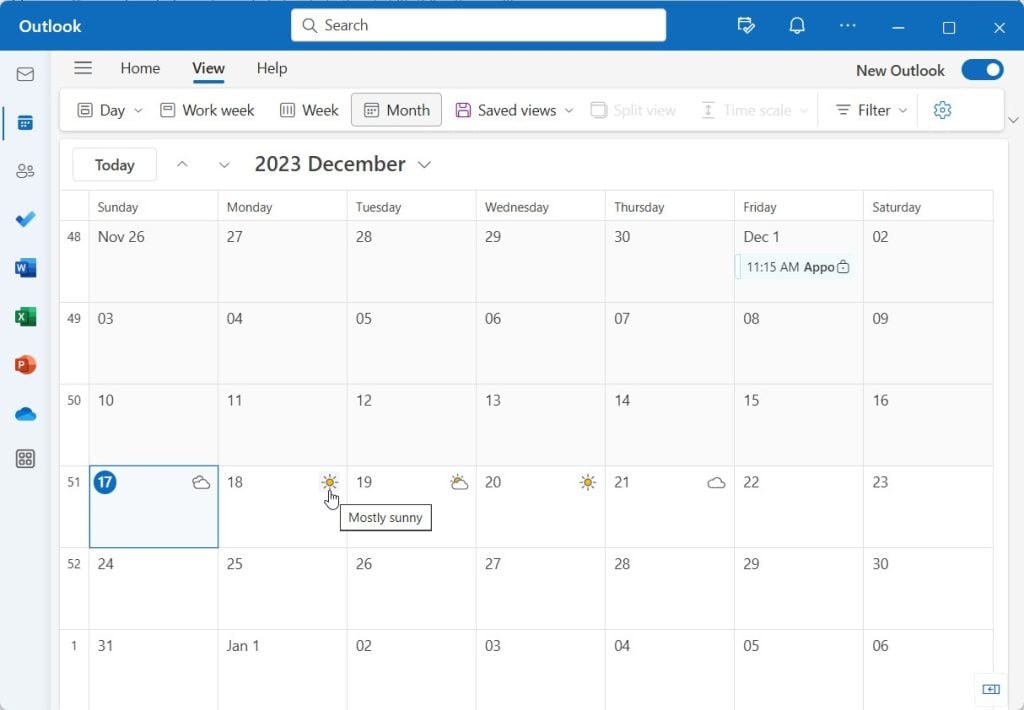
The forecast appears with the date headers in the calendar views. You will see it most clearly in Day, Work week and Week view. Month view gives you less room, so what it shows can vary by version.
Step 1Enable Weather in Calendar
Weather is a calendar setting, so you turn it on from the Settings pane. Follow these steps in the new Outlook for Windows:
- Open Outlook from the Start menu or the taskbar. Make sure you are in the new Outlook app, not the classic one.
- Click the Settings (gear) icon at the top right. A Settings window opens.
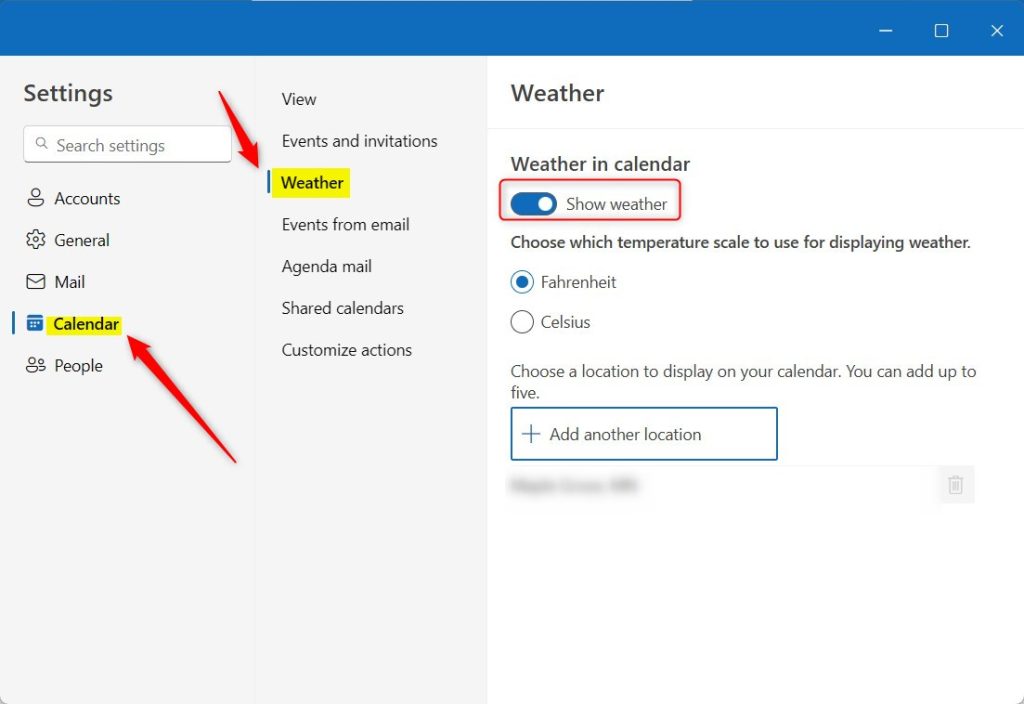
- Select Calendar from the left sidebar. The calendar options appear in the pane next to it.
- Scroll down to the Weather section. If you can't find it, look on the View page under Calendar settings. Some builds place it there.
- Flip the switch to On. The weather should now appear on your calendar.
- Close Settings and open the calendar. Switch to Day or Week view if you are not already there. You should see the forecast near the date headers.
No restart is needed. To undo the change, go back to the same place and flip the switch to Off.
If you use classic Outlook 2019 or 2016, the setting is in a different place. Go to File Options Calendar and look for the weather option there.
Step 2Set the Weather Location
Setting your weather location uses the same Calendar settings. Open the Weather section, enter your city name, and choose the right match from the list. Once the location is saved, the local forecast shows in your calendar view. You don't need a separate weather app to follow the conditions in your area.
The same section also lets you choose between Celsius and Fahrenheit. If your forecast shows the wrong unit, change it there.
If you travel and want to follow more than one place, check whether your version lets you add extra locations in the weather settings. Classic Outlook has a location list in the weather bar. Which locations you can add depends on your version.
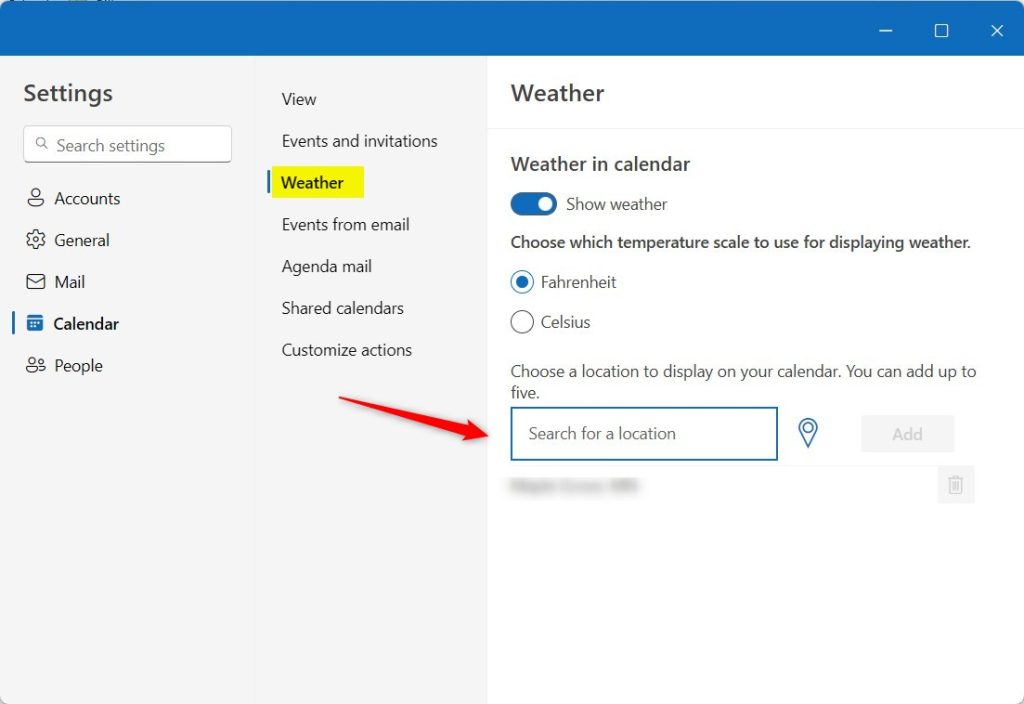
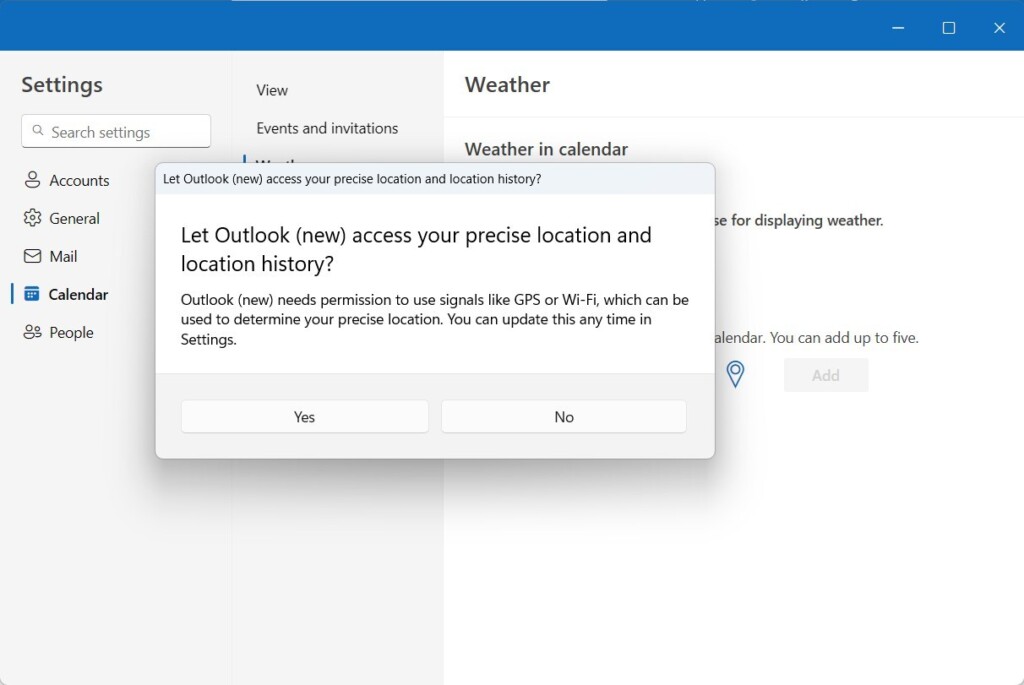
You can check this in Settings Privacy & security Location. Make sure Location services is on and that apps are allowed to access your location.
Admin Rights Needed: If your work computer is managed by your organization, a policy may block location access. In that case, ask your IT administrator to enable location permissions for you. You can still type in a city by hand in the weather settings, which doesn't need Windows to find your position.
Troubleshooting: Weather Bar Missing
If the weather bar is missing, work through these checks in order:
- Confirm the weather switch is still On in Settings Calendar, as described above.
- Check that you are in a calendar view that shows the forecast. Day, Work week and Week view are the best ones to test.
- Update Outlook. In classic Outlook, go to File Office Account, then select Update Options and choose Update Now. The new Outlook for Windows updates through the Microsoft Store, so open the Store, go to Downloads, and install any pending updates.
- Check your privacy settings. In Windows, go to Settings Privacy & security Location and make sure apps are allowed to access your location.
- Close Outlook completely and open it again. The weather should appear after a short wait.
If the bar is still missing after this, your account type or organization may limit the feature. Your IT administrator can confirm that.
Third-Party Calendar Subscriptions
You can also add weather through an external calendar subscription. For this you need a web address (URL) in iCal format from a weather provider. Not every provider offers one, so check the provider's help pages first. Then follow these steps:
- Open the Calendar view in Outlook.
- Go to Add calendar Subscribe from web.
- Paste the iCal URL into the address box.
- Give the calendar a name you will recognize, then confirm the subscription. The new calendar should appear in your calendar list.
This shows weather as actual calendar events, not just a separate bar. Subscribed calendars refresh on a schedule that Outlook controls, so the data may be a little behind the live forecast. To remove it, right-click the calendar in the list and choose to remove it.
Summary
With this set up, your schedule and local forecast sit side by side, which makes daily planning simpler. You now know how to display weather in Outlook Calendar, fix a missing weather bar, and add more weather data through a subscription.
Have a question about this guide?
Answered by AI from this guide. Good questions may be added to this page — please don't include personal details.
Did this guide fix your problem?

About the Author
Richard
Tech Writer, IT Professional
Richard is a writer at Geek Rewind who turns complex IT tasks into clear, step-by-step guides. He draws on years of hands-on experience in system administration and enterprise IT operations, focusing on Windows, Linux and WordPress: the problems people actually run into, and the fixes that work. His server and WordPress guides come from systems he runs himself. Richard builds and maintains the platform behind Geek Rewind, from its Ubuntu servers and Nginx configuration to its custom WordPress plugins. Many new tutorials start with readers' questions, and he's always glad to answer them in the comments.
No comments yet — be the first to share your thoughts!