Change Language, Date & Time in Outlook on Windows 11


Language, date, and time settings in Outlook control how menus, emails, and calendar events appear in the Outlook desktop app on Windows 11. Outlook can show its menus in one language while using a different regional format for dates and times.
Outlook normally follows your Windows system language. If your calendar or inbox doesn’t pick up the right language or format on its own, you can set it by hand. That way your emails and meeting invites match your local standards and calendar habits.
To change Outlook language settings on Windows 11, open Outlook and click the Settings gear icon in the top-right corner. Select General, then click Language and time. Open the language drop-down menu, select your preferred language, choose your date and time formats, and click Save.
Change language, date, and time format in Outlook
In short, you open Outlook, go to Settings , select General, and then open Language and time. There you pick a display language, choose the date and time formats, and save. The steps below walk through each part.
If your Outlook looks different, for example with a File menu and a ribbon, you are using classic Outlook. Its language options are under File Options Language, so the screens here won’t match.
- Open the Start menu , type Outlook, and select the app. You can also open it from Outlook app on the taskbar .
If it asks you to sign in, do that first, because the settings are saved to your account.

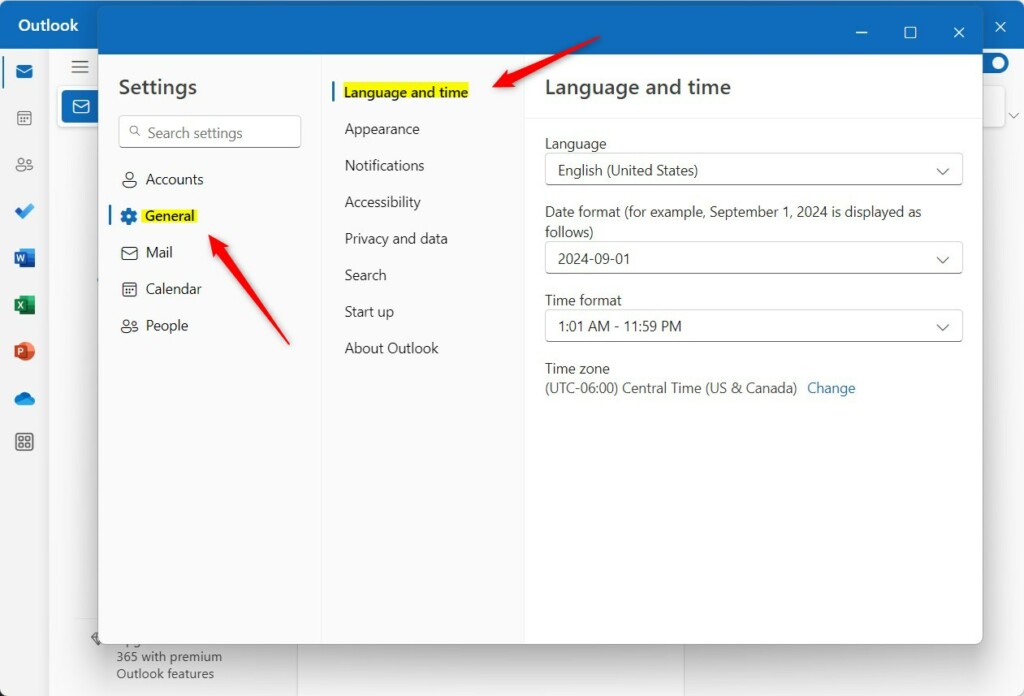
- Click the
Settingsbutton, the gear icon in the top-right corner.
The Settings window opens over your inbox.

- On the left sidebar of the Settings page, select the
Generaltab. - In the right pane, click
Language and time.
The Language and time page opens with the language, date, and time options.
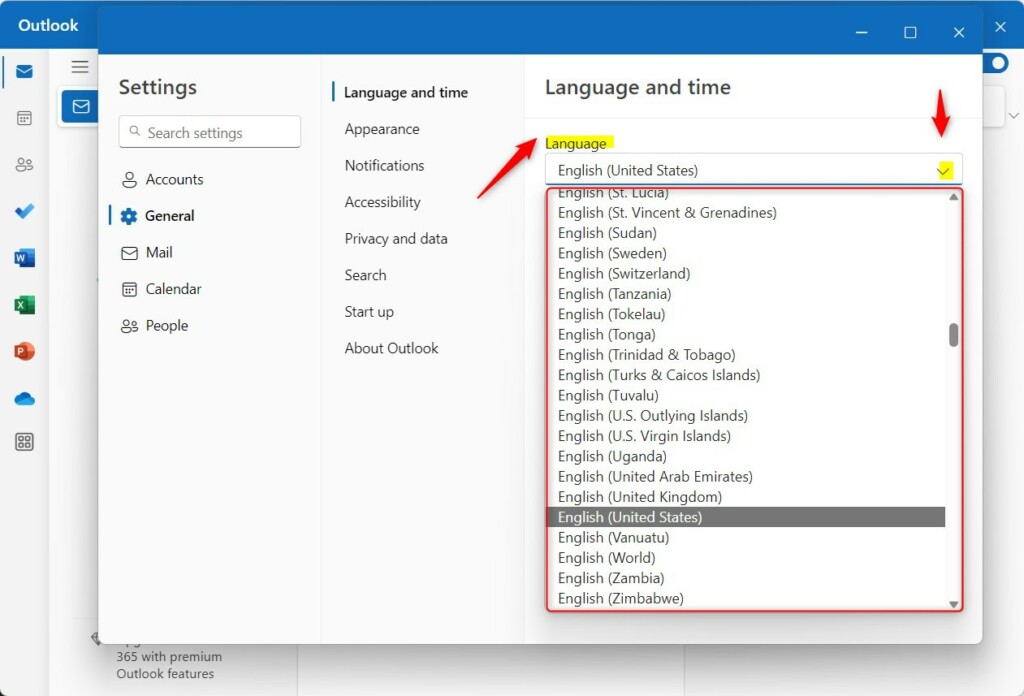
- Open the language drop-down menu on the Language and time page.
- Select the language you want Outlook to use.
Outlook shows the languages it supports in this list. If yours is missing, check that you picked the closest regional variant, such as English (United Kingdom) instead of English (United States).
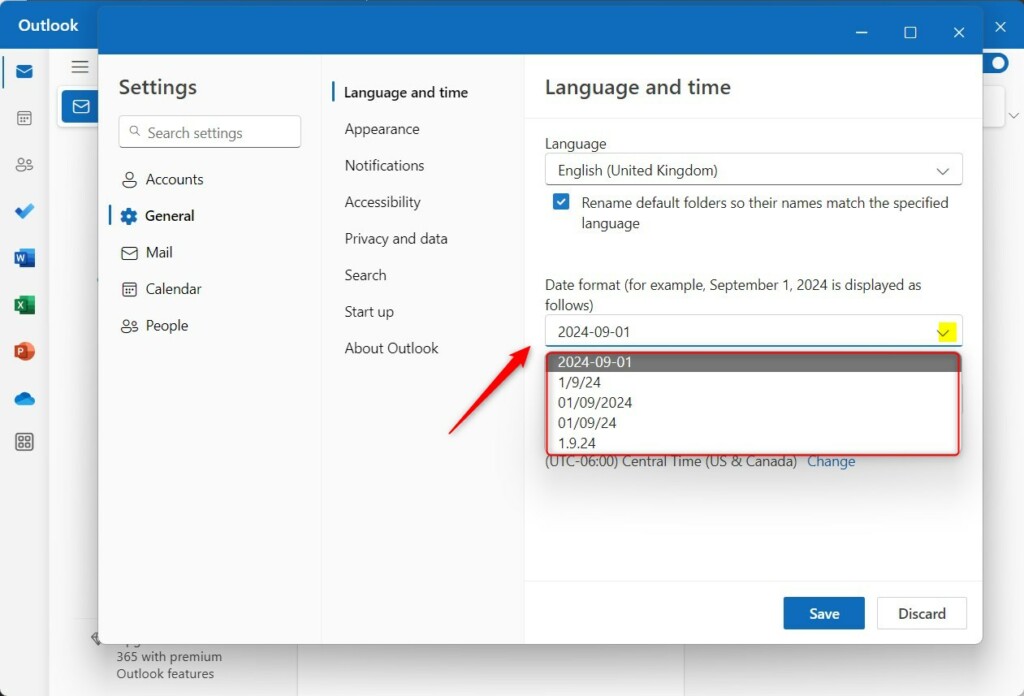
Choosing a new language usually updates the date and time formats to match. For example, selecting English (United Kingdom) applies the default yyyy--dd-mm (2024-09-01) date layout, shown here for September 1, 2024.
You can still change the date format. Other options for the same language are:
- d/m/yy (1/9/24)
- dd/mm/yyyy (01/09/2024)
- dd/mm/yy (01/09/24)
- d.m.yy (1.9.24)
Pick the layout your team or clients expect. Day-first and month-first formats are easy to confuse, and 01/09/2024 means two different dates depending on the reader.
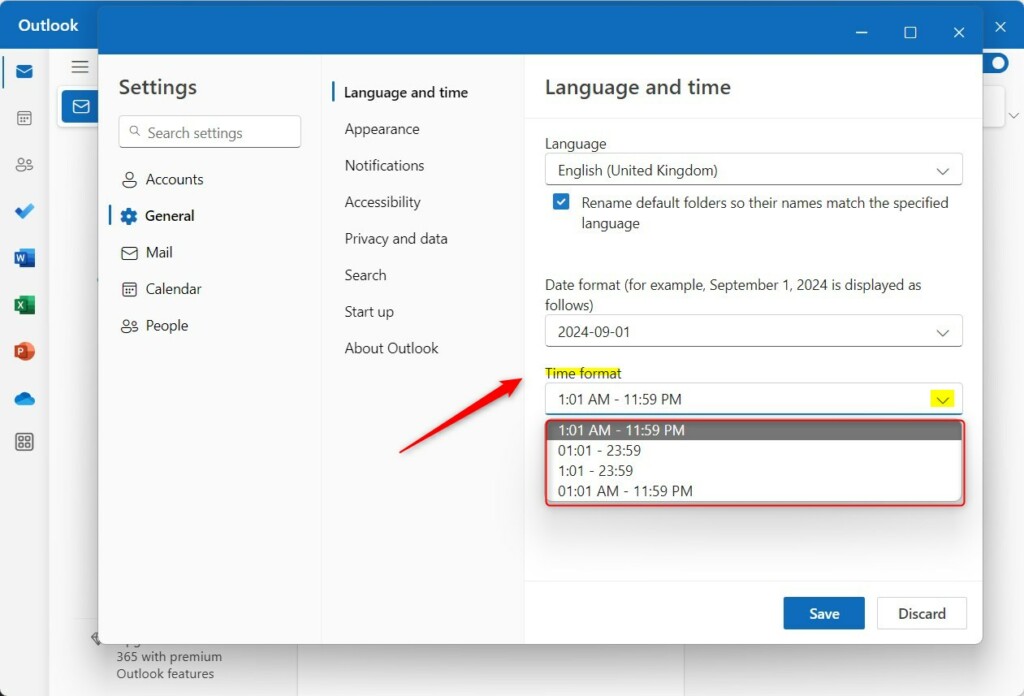
For the same English (United Kingdom) language, the default time format is hr:mm AM/PM (1:01 AM - 11:59 PM), which represents a 12-hour display.
Other time options are:
- hh:mm - hh:mm (24-hour display)
- h:m - h:m (24-hour display)
- hh:mm (12-hour display)
- h:m (12-hour display)
Choose a 24-hour option if you want calendar entries and message times shown without AM or PM.
- Click Save at the bottom of the window to apply your choices.
The inbox and calendar should now show the new language and formats. If some menus still show the old language, close Outlook completely and open it again.
That completes the process. To undo any change, return to the same page, select the previous language or format, and click Save again.
Keep these points in mind:
- These settings change how Outlook displays language, dates, and times. They do not change your Windows system language. For that, use Settings Time & language Language & region
- Changing the language usually resets the date and time formats to that language's defaults, so check them after you switch.
- A matching date and time format avoids confusion when you schedule meetings or set deadlines with people in other regions.
- If you work in more than one language, you can switch the display language at any time without affecting your existing emails or calendar items.
Was this guide helpful?

About the Author
Richard
Tech Writer, IT Professional
Richard is a writer at Geek Rewind who turns complex IT tasks into clear, step-by-step guides. He draws on years of hands-on experience in system administration and enterprise IT operations, focusing on Windows, Linux and WordPress: the problems people actually run into, and the fixes that work. His server and WordPress guides come from systems he runs himself. Richard builds and maintains the platform behind Geek Rewind, from its Ubuntu servers and Nginx configuration to its custom WordPress plugins. Many new tutorials start with readers' questions, and he's always glad to answer them in the comments.




[…] translations, turning text predictions on or off, switch primary account, sharing a calendar, changing language, date and time format, public a calendar, show week numbers in Outlook calendar, deleting your search history, export […]
[…] text predictions on or off, switch primary account, sharing a calendar, changing language, date and time format, public a calendar, show week numbers in Outlook calendar, deleting your search […]
[…] text predictions on or off, switch primary account, sharing a calendar, changing language, date and time format, public a calendar, show week numbers in Outlook calendar, deleting your search […]
[…] translations, turning text predictions on or off, switch primary account, sharing a calendar, changing language, date and time format, public a calendar, show week numbers in Outlook calendar, deleting your search history, export […]
[…] translations, turning text predictions on or off, switch primary account, sharing a calendar, changing language, date, and time format, public a calendar, show week numbers in Outlook calendar, deleting your search history, export […]
[…] text predictions on or off, switch primary account, sharing a calendar, changing language, date, and time format, public a calendar, show week numbers in Outlook calendar, deleting your search […]
[…] app has many features, including support for sharing a calendar, changing language, date, and time format, public a calendar, showing week numbers in Outlook calendar, deleting your search […]
[…] app has many features, including support for sharing a calendar, changing language, date, and time format, public a calendar, showing week numbers in Outlook calendar, deleting your search […]
[…] translations, turning text predictions on or off, switch primary account, sharing a calendar, changing language, date and time format, public a calendar, show week numbers in Outlook calendar, deleting your search history, and export […]