How to Use Pop-Out Window in Outlook for Windows 11


The pop-out window feature in the new Outlook for Windows 11 opens draft emails and replies in a separate, dedicated screen instead of your main inbox view. This layout gives you more room to type and keeps your workspace clean so you can focus on your message.
New emails and replies normally open right inside your main inbox view. Update your settings to make messages open in their own separate windows every time you start a draft or reply.
Open Outlook settings via the gear icon, navigate to Mail Compose and reply, and select “Pop-out to a new window” under Pop-out settings. You can also use Ctrl+O or double-click an email to open it in a separate window.
Write, reply, and forward a message in a new window in Outlook
An Outlook pop-out window lets you write, reply to, and forward emails in a separate window so you can check your main inbox at the same time. To set this up, open the new Outlook app on Windows 11 by clicking Start, selecting All apps, and choosing Outlook, or by searching for it in the Start menu search box .
Follow these steps to configure the setting.
First, open the new Outlook app on Windows 11.
Click Start - All app - Outlook app. Alternatively, use the Start menu search box to find and open Outlook.

When the app opens, click the Settings button (the gear icon on the top right) to proceed.

On the Settings page, click the tab represented by the gear icon in the left sidebar and select the relevant option in the right pane.
Multiple email accounts require selecting a specific account to adjust its message format. This configuration applies on an account-by-account basis. Repeat the process for any other accounts you wish to configure.
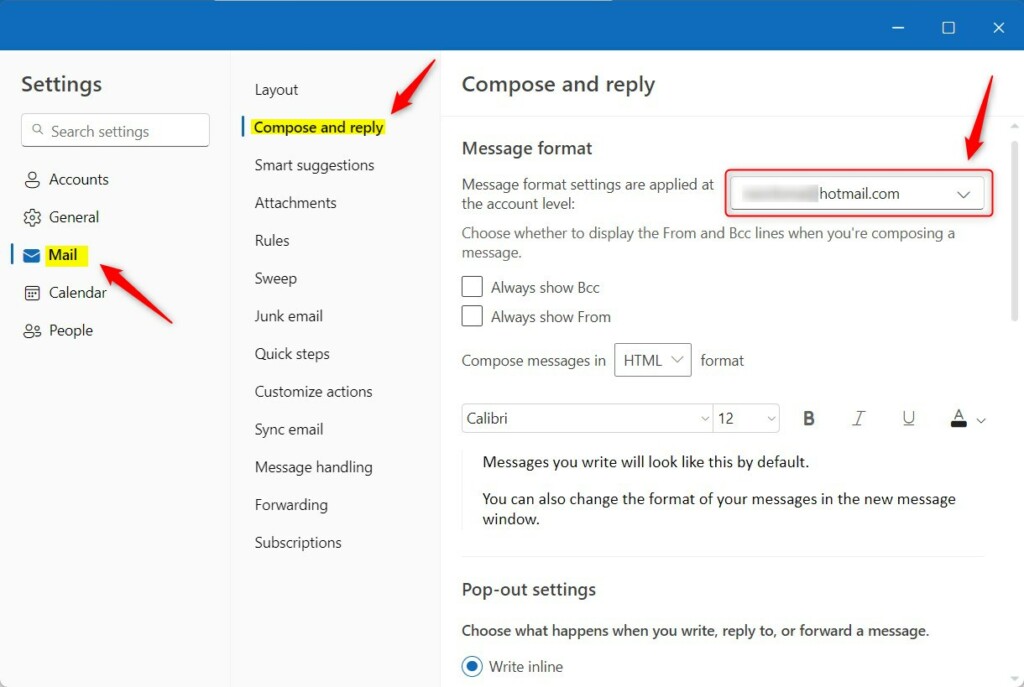
On the Layout setting page, scroll down to the Pop-out settings section. Choose one of the options available:
- Write inline – Inline the message in the same window
- Pop-out to a new window - Open a new separate window.
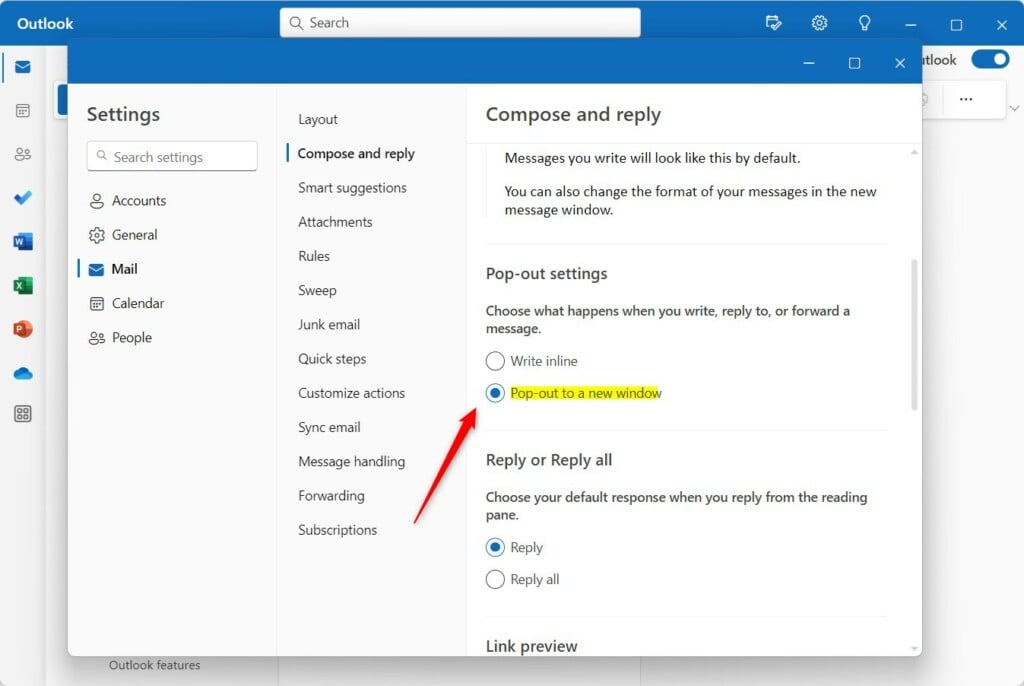
Make your selection and save the changes.
That completes the setup process.
Conclusion:
- The new Outlook app in Windows 11 offers a convenient feature to write, reply, and forward messages in a new pop-out window, enhancing user experience and productivity.
- By utilizing the pop-out window, users can focus solely on composing their messages, benefit from a larger composing area, and avoid potential distractions from their inbox or other emails.
- This functionality also facilitates multitasking by enabling easier access to other emails or information while composing a message, thus streamlining the overall email management process.
- Moreover, the option to write, reply, and forward messages in a separate window helps mitigate the risk of losing an ongoing message due to accidental closure of the main Outlook window.
- This article has provided clear and detailed instructions for activating this feature within the Outlook app, empowering users to customize their composing and replying experience based on their preferences and workflow.
Was this guide helpful?

About the Author
Richard
Tech Writer, IT Professional
Richard is a writer at Geek Rewind who turns complex IT tasks into clear, step-by-step guides. He draws on years of hands-on experience in system administration and enterprise IT operations, focusing on Windows, Linux and WordPress: the problems people actually run into, and the fixes that work. His server and WordPress guides come from systems he runs himself. Richard builds and maintains the platform behind Geek Rewind, from its Ubuntu servers and Nginx configuration to its custom WordPress plugins. Many new tutorials start with readers' questions, and he's always glad to answer them in the comments.


[…] default From address, backing up your mailbox, changing the reading pane, opening a new window for a message, language translations, turning text predictions on or off, switch primary […]
[…] default From address, backing up your mailbox, changing the reading pane, opening a new window for a message, language translations, turning text predictions on or off, switch primary […]
[…] default From address, backing up your mailbox, changing the reading pane, opening a new window for a message, language translations, turn text predictions on or off, and […]
[…] default From address, backing up your mailbox, changing the reading pane, opening a new window for a message, and […]
[…] forwarding, setting default From address, backing up your mailbox, changing the reading pane, opening a new window for a message, language translations, turning text predictions on or off, switch primary account, sharing a […]
[…] default From address, backing up your mailbox, changing the reading pane, opening a new window for a message, language translations, turning text predictions on or off, switch primary […]
[…] forwarding, setting default From address, backing up your mailbox, changing the reading pane, opening a new window for a message, language translations, turning text predictions on or off, switch primary account, sharing a […]