How to Access Power User Tasks Menu in Windows 11


The Power User menu in Windows 11 opens system tools with one keyboard shortcut, so you don’t have to dig through the Settings app. Press the Win and the X key together (Win+X) to open this hidden menu in any version of Windows 11, Home or Pro.
From the menu you can jump straight to Device Manager, Task Manager , Disk Management and other admin tools in a couple of seconds. It’s one of the first things I show new admins, because it saves a lot of clicking.
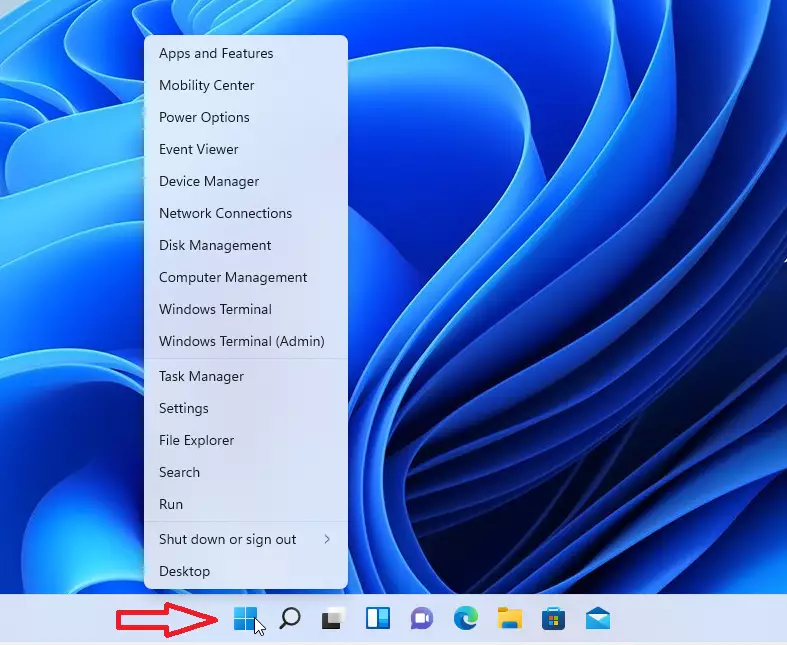
Press the Win and X together (Win+X) to open the Power User menu in the bottom-left corner of your screen. Alternatively, right-click the Start button on your taskbar. Both methods display the same menu of system tools like Task Manager , Device Manager and Disk Management.
How to open the Power User menu
There are two ways to open the menu. Both give you the same list, so use whichever suits you. The keyboard route is quicker, and the mouse route is handy when your hands are already on the mouse.
- Keyboard Shortcut: Press the Win+X at the same time. A small menu should appear in the bottom-left corner of the screen, just above the Start button .
- Mouse Method: Right-click the Start button on your taskbar . The same menu opens. A left-click opens the regular Start menu instead, so make sure you use the right button.
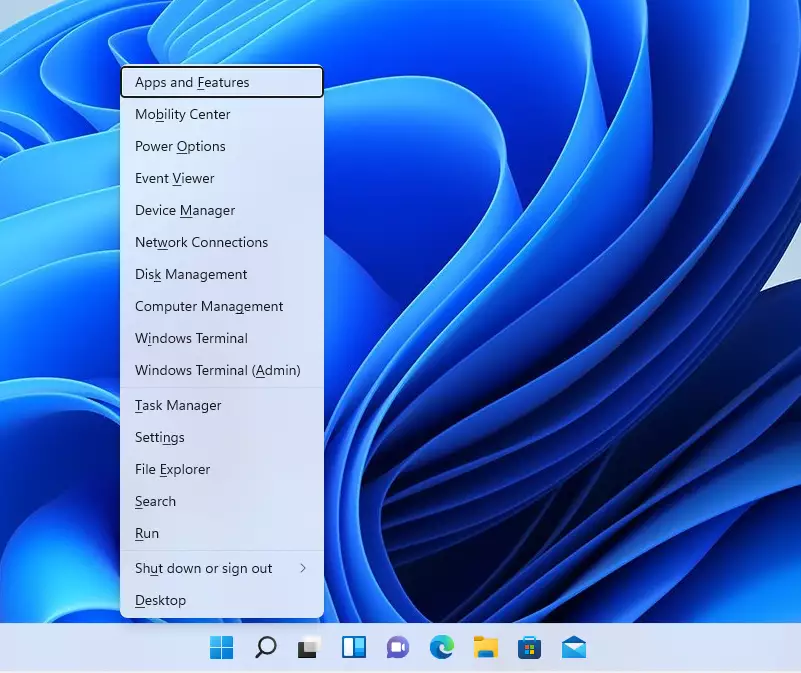
Default Commands in the Win+X Menu
The Power User menu holds shortcuts to the advanced system tools that admins use every day. The entries include Apps & Features for managing installed software, Event Viewer for checking system logs, Disk Management for partitioning drives, and Task Manager for stopping frozen apps. It also offers a way to reach the classic Control Panel and its deeper system tweaks.
The exact list varies a little between Windows 11 builds. Some entries are renamed in newer updates, and on some builds the Control Panel entry is missing. The main items are described below.
- Apps & Features: Manage installed software. You can uninstall programs or check what is installed. On newer Windows 11 builds this entry is labeled Installed apps.
- Event Viewer: Check system logs for errors. This is the first place to look after a crash or an unexplained restart.
- Disk Management: Partition and format drives. Be careful here, because formatting a volume erases everything on it.
- Task Manager : Monitor running processes. You can also end a frozen app from here.
- Control Panel : Access legacy settings. If you don’t see this entry on your build, type Control Panel into the Start search box instead.
- File Explorer : Browse your files. It opens a regular File Explorer window.
- Run: Execute commands directly. Type the name of a program, folder or tool and press Enter.
- Terminal (Admin): Run advanced scripts. It opens a Terminal window with elevated rights, so only use it when you need to make system-level changes.
If you pick an option like Terminal (Admin), a User Account Control prompt will ask for your approval. You need an administrator account to proceed. If you are signed in with a standard account, Windows asks for an administrator’s credentials. Without them, the tool won’t open with full rights.
Can I customize the Power User menu?
Yes, you can customize the Power User menu in Windows 11 by adding or removing shortcuts. There is no switch for this in Settings, though. The menu is built from shortcut files, so changes mean editing those shortcuts by hand or using a third-party menu editor.
That way you can put the default menu back if something breaks. Also, only install editing tools from a source you trust, since they change system files.
Troubleshooting the Win+X Menu
If your Power User menu in Windows 11 isn't opening, it might be due to corrupted files, but there are ways to fix it. Work through these checks in order, from the simplest to the most involved:
- Try both methods. Press Windows key + X, then right-click Start. If one works, the problem is probably with your keyboard rather than Windows.
- Check the keyboard. Some keyboards have a Windows key lock or a gaming mode that disables the key. Look for a lock switch or a function key marked with a Windows logo.
- Restart Windows Explorer. Press Ctrl+Shift+Esc to open Task Manager, select Windows Explorer under Processes, then click Restart. The taskbar will blink and reload, and the menu often works again afterwards.
- Restart the PC. A normal restart clears many temporary glitches.
- Install pending updates in Settings Windows Update. Updates can replace damaged system files.
- If you recently edited the menu with a third-party tool, undo those changes and restore your backup.
Summary
The Power User Tasks menu in Windows 11 is a handy shortcut for reaching advanced tools quickly. Remember Win+X, or right-click Start, and you can open Device Manager, Task Manager, Disk Management and other tools without searching for them.
Was this guide helpful?

About the Author
Richard
Tech Writer, IT Professional
Richard is a writer at Geek Rewind who turns complex IT tasks into clear, step-by-step guides. He draws on years of hands-on experience in system administration and enterprise IT operations, focusing on Windows, Linux and WordPress: the problems people actually run into, and the fixes that work. His server and WordPress guides come from systems he runs himself. Richard builds and maintains the platform behind Geek Rewind, from its Ubuntu servers and Nginx configuration to its custom WordPress plugins. Many new tutorials start with readers' questions, and he's always glad to answer them in the comments.

[…] Right-click the Start button and select System on the Power User menu. […]
[…] Right-click on the Start button to launch the Power User menu. […]
[…] first open Windows Task Manager. You can do that by right-clicking on the Start menu to launch the Power User Menu, which is the Task Manager […]
[…] First, you must launch or open the Windows Terminal app as administrator. Or press the Windows key + X to open the Power User Menu. […]
[…] way to access the Settings app in Windows 11 is to use the Power User menu. To do that, right-click on the Start button and select […]
[…] more method in Windows 11 is through the Power User Menu. First, press the keyboard short: Windows key + X or right-click on the Start menu to launch the […]
[…] do so, select and hold (or right-click) the Start button to launch the Power Users task Menu, and then select Disk […]
[…] use the Power User menu to put a computer to sleep, right-click on the Start button or press the Win + X keys on your […]
[…] CTRL + X > to open Power User Tasks menu, then select Task […]
[…] use the Power User menu to hibernate a Windows computer, right-click the Start button or press the Win + X keys on your […]
[…] File Explorer, Power User Menu […]