How to Change User Account Name in Windows 11

This tutorial shows you how to change the name of a local account or a Microsoft account in Windows 10 and Windows 11. The steps are written for Windows 11, and I point out where Windows 10 differs.
Go to Settings, click Accounts, then Other users. Expand the account you wish to rename, click Change account name, enter the new name, and click OK. This method works for both local and Microsoft accounts.
Why Change Your Account Name?
Changing the account name is useful for personalization, or when several people share one PC and each needs a clear identity on the sign-in screen.
A user can sign in to the PC with either a local account (an offline account) or a Microsoft account. The two types are renamed in different ways, so first check which type you have under Settings Accounts Your info A Microsoft account shows an email address under the name. A local account shows “Local account”.
What’s the Difference Between User Name and Full Name?
Windows keeps two names for an account. The user name is what the system uses internally. The full name is what you see on the sign-in screen and in the Start menu . The full name is easy to change. Changing the actual user name takes a bit more work and has some rules.
The full name of an account is its display name. It appears on the Sign-in screen, in the Start menu , and in Settings.
When you create a Microsoft account, you give it a full name that you can change later. Windows uses that name as the display name.
If a local account has no full name, Windows shows its user name as the display name instead.
Important Things to Know
Read these points before you rename anything. Most problems with renaming come from skipping them.
- You must be signed in as an administrator to change the user name of an account. A standard user can only change their own display name, and only in some of the methods below.
- Changing the name of an account will not change the name of its profile folder (ex:
C:\Users\Generic_User) used in paths. That folder keeps the old name, and it must stay as it is for Windows and your apps to keep working. Do not rename it by hand. - User names can't contain these characters: / \ [ ] " : ; | < > + = , ? *
- If you are not sure which name you are changing, write down the current name first. That makes it easy to undo the change later.
Option 1Change Name of Microsoft Account Online
This is the easiest method for a Microsoft account. You change the name online, and it follows the account to every device and service you sign in to. It does not change your email address, only the name shown with it. It also works on Windows 10 and Windows 11.
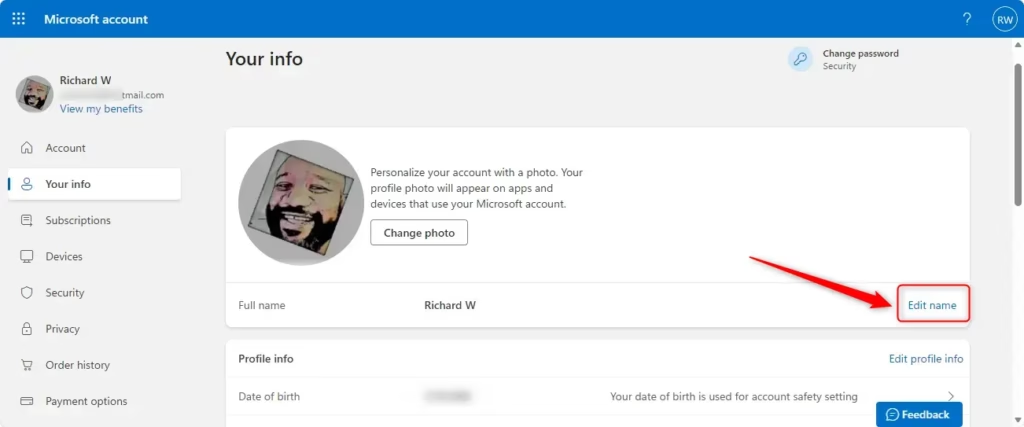
- Go to the "Your info" page on the Microsoft account website, and sign in to your Microsoft account if you are not already signed in.
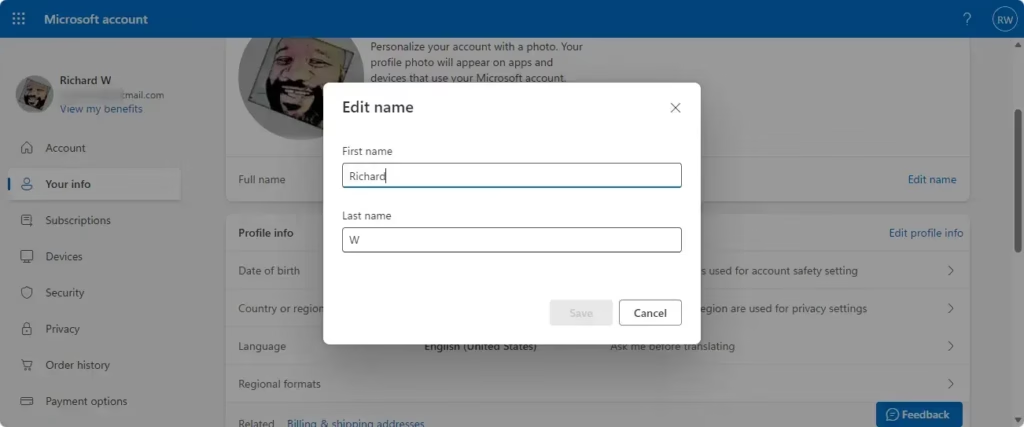
- Click/tap on the Edit name link. You should see boxes for your first and last name.
- Type the new First name and Last name you want as the display name for your Microsoft account. Enter the Captcha characters you see to verify, and click/tap on Save. The page should now show your new name.
- The First name and Last name you enter become the full name of your Microsoft account. It is shown on the lock screen and at sign-in on your devices.
- While connected to the Internet, sign out and then sign in to your Microsoft account on your Windows 11 PC to apply the change. If the old name still shows after you sign back in, wait a few minutes and try again. The change can take a little while to sync. You do not need a full restart.
To undo the change, repeat the steps and enter the old name.
Option 2Change Name in Settings
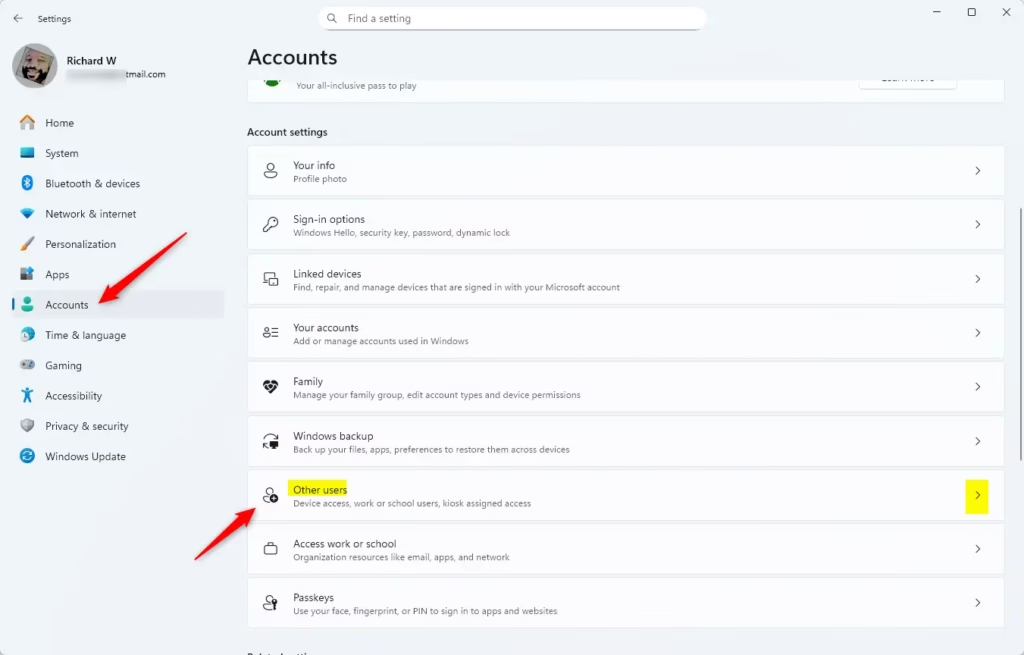
You can change the account name from the Settings app, under Accounts Other users This lists the other accounts on the PC. Microsoft has been rolling this option out gradually, so you may not see Change account name on your build. If it is missing, use one of the other methods below. You need to be signed in as an administrator.
- Open Settings by pressing
Win+I. - Click/tap on Accounts on the left side, and click/tap on Other users on the right side. You should see a list of the other accounts on the PC.
- See this related guide for more on this step: Open Other users settings
- Under Other users, click/tap on the account you want to rename to expand it, and click/tap on Change account name. A box for the new name should open.
- Type the new account name you want, and click/tap on OK.
- You can now close Settings if you like.
If the account you want is the one you are signed in to, it may not appear under Other users. In that case use the Microsoft account method above (for a Microsoft account) or one of the local account methods below. To undo the change, repeat the steps and enter the old name.
Option 3Change Name in Control Panel
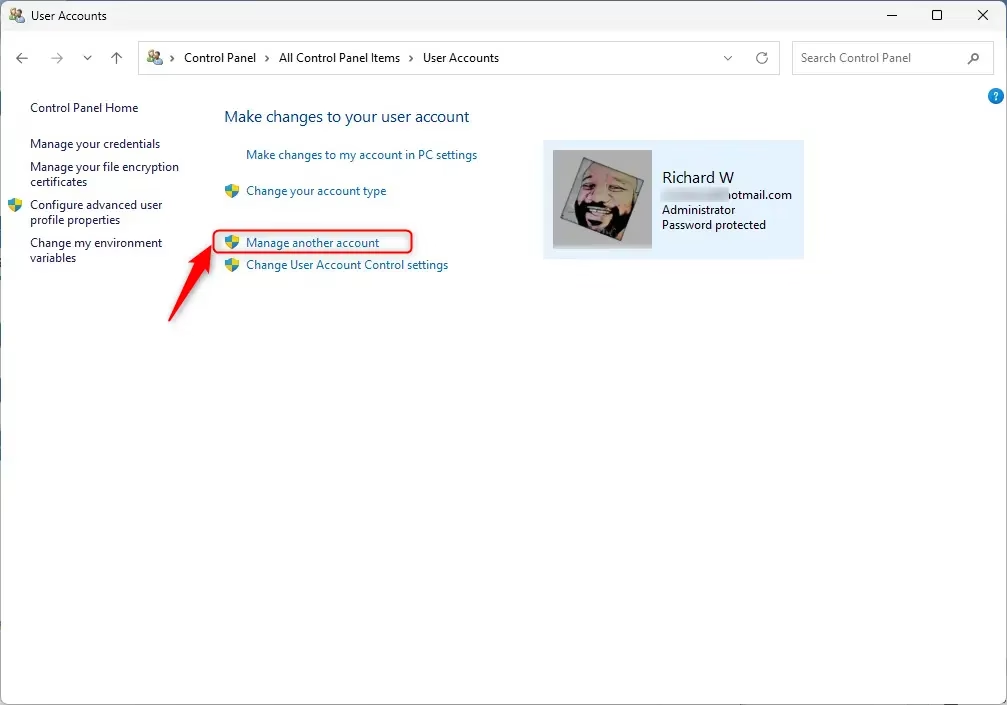
For local accounts, you can rename the account in the classic Control Panel. This method only works on local accounts. A Microsoft account is listed by its email address and has to be renamed online. It changes the name shown on the sign-in screen and Start menu, and you need administrator rights.
- Open the Control Panel (icons view). To get there, search for Control Panel in the Start menu, and set View by to Large icons or Small icons if needed. Then click/tap on the User Accounts icon.
- Click/tap on the Manage another account link. Click Yes if a User Account Control prompt appears. You should see a list of the accounts on the PC.
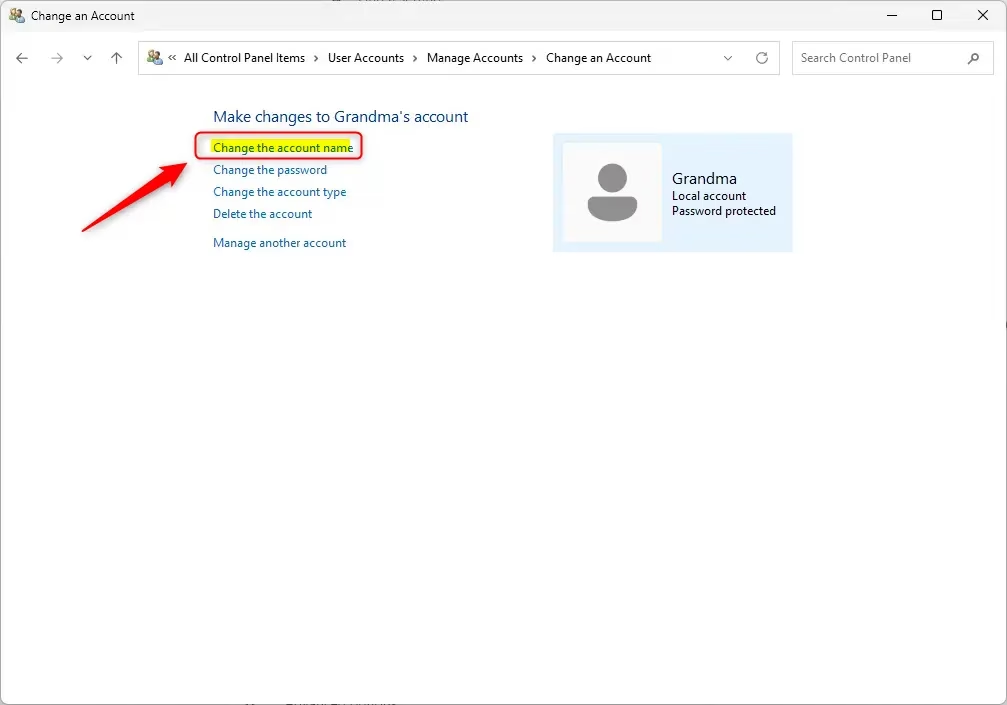
- Click/tap on the local account you want to rename.
- Click/tap on the Change the account name link.
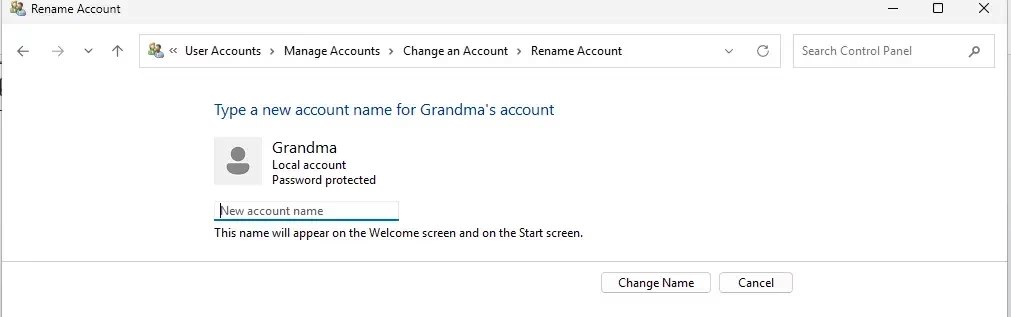
- Type the new account name you want, and click/tap on Change Name.
- You can now close the Control Panel if you like.
If the account is currently signed in, sign out and back in to see the new name everywhere. To undo the change, repeat the steps with the old name.
Option 4Change Name in netplwiz
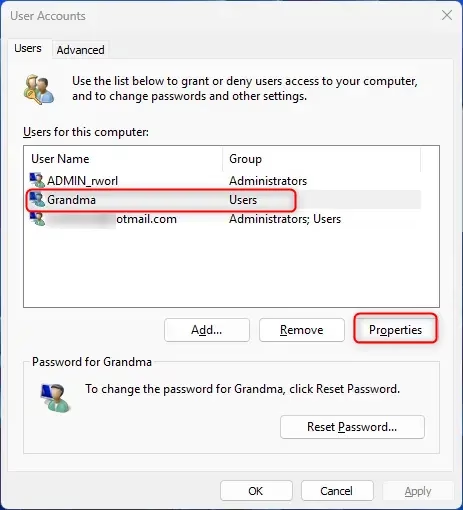
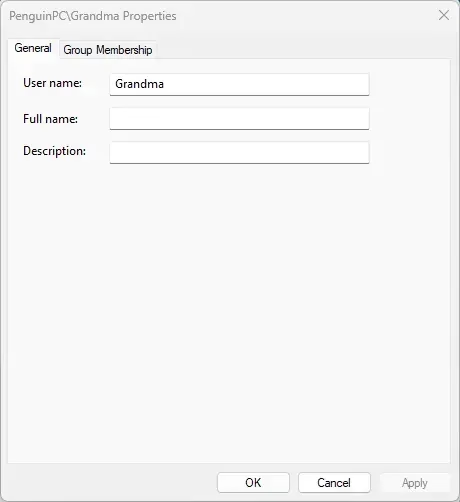
The netplwiz tool (User Accounts) lets you rename a local account. Press Windows key + R, type netplwiz, and press Enter to open it. Then select the account and open its Properties. The Properties window has both a User name and a Full name field, so you can set the display name here too. You need administrator rights.
- Open netplwiz.
- Check the Users must enter a user name and password to use this computer box if it is available. Select the local account you want to rename, and click/tap on the Properties button. A Properties window for that account should open.
- Note: If you turned on For improved security, only allow Windows Hello sign-in for Microsoft accounts on this device (aka: passwordless sign-in), you will not see the Users must enter a user name and password to use this computer check box until you turn off this setting. If your PC is currently joined to a domain, then the Users must enter a user name and password to use this computer box will not be available.
- In the General tab, type the new User name (ex:
"Generic_User3") you want for the local account. Change the Full name field as well if you want a different display name. Then click/tap on OK. - If you had Windows set to sign in to an account automatically at startup, you will need to set that up again now.
- When finished, click/tap on OK in the main netplwiz window.
- If you are currently signed in to this local account, click/tap on Yes when prompted to sign out and apply your changes.
To undo the change, open netplwiz again and enter the old name.
Option 5Change Name in Command Prompt
If you are comfortable with command-line tools, you can rename a local account from Command Prompt using a WMI-based command. You must open Windows Terminal as an administrator. Write down the current account name before you start. On recent Windows 11 builds (24H2 and later), the WMIC tool these commands rely on may be disabled or missing. If the commands are not recognized, use the PowerShell method below instead.
⚠️ Admin Privileges Required
- Open Windows Terminal (Admin), and select Command Prompt. To do this, right-click the Start button and select Terminal (Admin), then click Yes at the User Account Control prompt. Open the dropdown arrow in the tab bar and choose Command Prompt. The prompt should say Administrator in the tab title.
- Copy and paste the command below into the elevated command prompt, and press Enter. It lists the accounts on the PC. Make note of the current name of the local account you want to rename:
Get-LocalUser - Type the command below into the elevated command prompt, and press Enter:
Rename-LocalUser -Name "Current Name" -NewName "New Name" - Substitute Current Name in the command above with the actual current name of the local account from step 2 above. Substitute New Name in the command above with the actual new name you want for the local account.
- For example:
Rename-LocalUser -Name "Generic_User2" -NewName "Generic_User3" - You can now close Windows Terminal (Admin) if you like.
If the command works, the prompt reports that it ran successfully. Sign out and back in to see the new name. To undo the change, run the same command again with the names swapped.
Option 6Change Name in PowerShell
PowerShell is the more current way to rename a local account, and it works on recent builds where WMIC is missing. As before, open Windows Terminal as an administrator, this time with a PowerShell tab, and write down the current account name first.
⚠️ Admin Privileges Required
- Open Windows Terminal (Admin), and select Windows PowerShell. To do this, right-click the Start button and select Terminal (Admin), then click Yes at the User Account Control prompt. In current Windows 11 builds the terminal often opens in PowerShell already.
- Copy and paste the command below into the elevated PowerShell, and press Enter. It lists the local accounts. Make note of the current name of the local account you want to rename:
Get-LocalUser - Type the command below into the elevated PowerShell, and press Enter (see screenshot below):
Rename-LocalUser -Name "Current Name" -NewName "New Name" - Substitute Current Name in the command above with the actual current name of the local account from step 2 above. Substitute New Name in the command above with the actual new name you want for the local account.
- For example:
Rename-LocalUser -Name "Generic_User2" -NewName "Generic_User3" - You can now close Windows Terminal (Admin) if you like.
If PowerShell shows an error, check that you spelled the current name exactly and that the window is elevated. Sign out and back in to see the new name. To undo the change, run the command again with the names swapped.
Option 7Change Name of Built-in Administrator Account
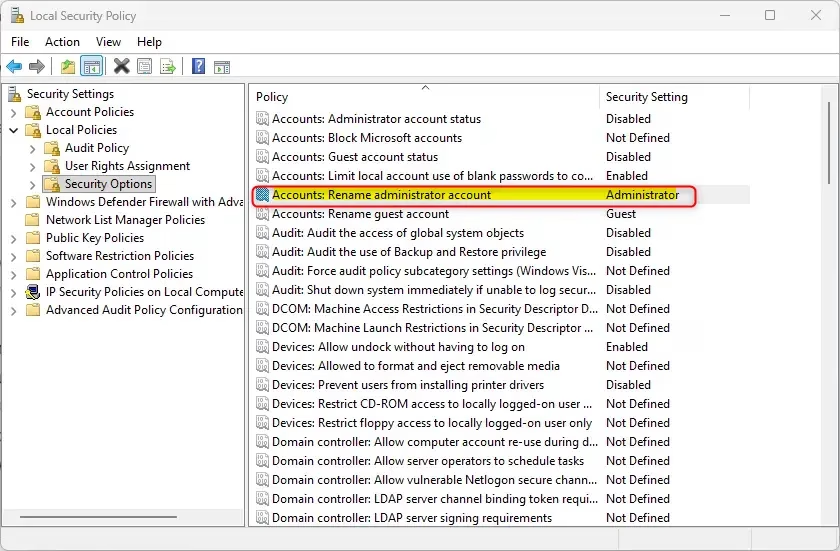
On Windows 11 Pro, Enterprise, and Education, you can rename the built-in Administrator account with the Local Security Policy tool (secpol.msc). You need administrator privileges. This is handy if you want the default administrator account to have a different name for better security or for a specific setup.
Windows Home does not include Local Security Policy, so use one of the other methods there.
⚠️ Admin Privileges Required
- Open Local Security Policy by typing
secpol.mscin the search box, and click Yes at the User Account Control prompt if it appears. - Expand Local Policies in the left pane, and click/tap on Security Options. A long list of policies should appear in the right pane.
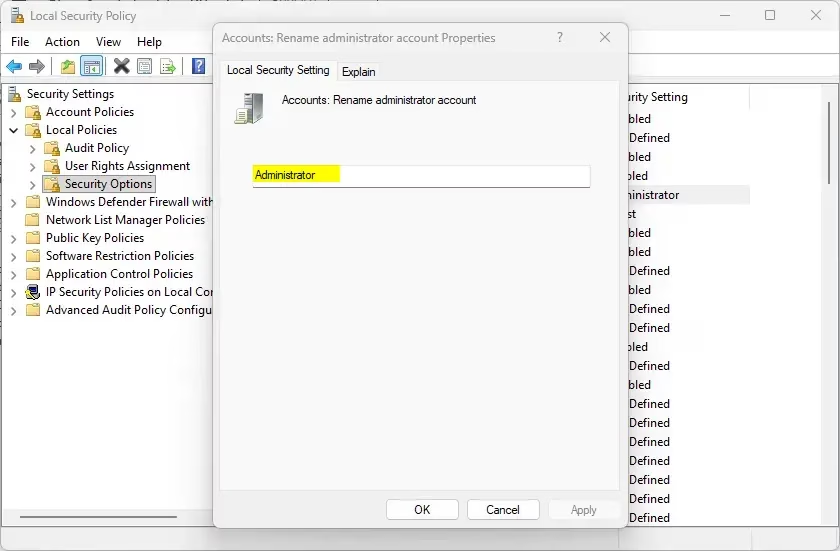
- In the right pane of Security Options, double-click/tap on Accounts: Rename administrator account. A Properties window should open.
- Type the new name you want for the built-in Administrator account, and click/tap on OK.
- You can now close Local Security Policy if you like.
The change takes effect right away. To undo it, open the same policy and enter Administrator again.
Summary
There are several ways to change a user account name in Windows 11, and the right one depends on the account type and your Windows edition. A Microsoft account is renamed online, and the change shows up on all your devices. Local accounts can be renamed from Settings, Control Panel, netplwiz, Command Prompt, or PowerShell.
Quick recap:
- Option One: Change your Microsoft account name online. This works on all your devices.
- Option Two: Use the Settings app to change a local or Microsoft account name. (New feature, rolling out gradually)
- Option Three: Use Control Panel to change a local account name. Works on most Windows versions.
- Option Four: Use netplwiz to change a local account name. Good if you need to manage multiple accounts.
- Option Five: Use Command Prompt to change a local account name. Fast if you know command-line tools, but it may not work on newer builds where WMIC is missing.
- Option Six: Use PowerShell to change a local account name. More modern than Command Prompt.
- Option Seven: Change the built-in Administrator account name. Only works on Pro, Enterprise, and Education editions.
C:\Users\Generic_User).You need administrator privileges to make these changes. Choose the option that fits your account type and edition. If a change does not show up right away, sign out and back in.
Frequently asked questions
How do I delete my Microsoft account?
Sign in at account.microsoft.com and go to Your info. Select Close your account and follow the prompts. Closing the account is permanent after a waiting period, and you lose access to its email, files, and purchases. Removing the account from your PC does not delete it, so use the Microsoft site to delete it completely.
How to change real name on Xbox app?
The Xbox app shows the real name from your Microsoft account, so change it there. Sign in at account.microsoft.com, select Your info, then choose Edit name. The new name can take some time to appear in the Xbox app. Your gamertag is separate and is changed in your Xbox profile settings.
How do I rename my C:\Users username?
Don't rename the Users folder on your C drive directly, because Windows will fail to sign you in. To change the name shown for your account, open Settings, go to Accounts, then Your info. To get a folder with a new name, create a new local account with that name and move your files into it.
How do I edit my Microsoft account?
Sign in at account.microsoft.com to edit your Microsoft account. Select Your info to change your name, date of birth, country or region, and alias. Select Security to change your password or sign-in options. Some changes need you to confirm your identity with a code sent to your email or phone.
Still have a question?
Answered by AI from this guide. Good questions may be added to this page — please don't include personal details.
Did this guide fix your problem?

About the Author
Richard
Tech Writer, IT Professional
Richard is a writer at Geek Rewind who turns complex IT tasks into clear, step-by-step guides. He draws on years of hands-on experience in system administration and enterprise IT operations, focusing on Windows, Linux and WordPress: the problems people actually run into, and the fixes that work. His server and WordPress guides come from systems he runs himself. Richard builds and maintains the platform behind Geek Rewind, from its Ubuntu servers and Nginx configuration to its custom WordPress plugins. Many new tutorials start with readers' questions, and he's always glad to answer them in the comments.
No comments yet — be the first to share your thoughts!