How to Hide Users on Windows 11 Sign-in Screen


Hiding a user account on the Windows 11 sign-in screen removes that profile’s name from the list shown at startup. The account is not deleted and keeps working. This method uses the Registry Editor (a built-in app that holds deep system settings) to keep local user profiles off the startup list.
It works well for built-in local accounts such as the main Administrator account. It applies only to local logins. It cannot hide standard Microsoft accounts linked to an email address.
Edit the Windows Registry by navigating to WinlogonSpecialAccountsUserList and creating a DWORD value for the username, setting its data to 0. This hides the user from the sign-in screen without deleting data.
Why Hide Users on 🪟 Windows 11?
Hiding user accounts stops other people from seeing who uses your computer when they reach the sign-in screen. That keeps your login names private and makes casual snooping harder. The hidden account keeps working normally. Nobody else can tell it exists when they turn on your PC.
Hiding usernames adds a layer of security by obscuring the list of accounts on your system. Someone who walks up to the machine no longer sees valid account names, so they have less to work with if they try to guess a password.
This is not a replacement for strong passwords. It only removes the names from view. Anyone who already knows the username can still try to sign in with it.
A hidden account stays fully functional. It just no longer appears on the sign-in screen. To use it, you must type the username manually into the sign-in box. That means you need to remember the exact username before you hide it.
Before You Begin: Safety First
Editing the Windows Registry is powerful, and a mistake can cause system problems. Before you start, create a System Restore point. If something goes wrong, you can roll the system back to a working state.
- Click Start, type Create a restore point, and open the result. The System Properties window opens on the System Protection tab.
- Select your system drive in the list. If protection shows as Off, click Configure, choose Turn on system protection, and click OK.
- Click Create, type a name such as "Before hiding users", and click Create again. Windows shows a message when the restore point is finished.
As an extra safety net, you can also export the registry key you are about to change from Registry Editor using File Export
Method 1Using the Registry Editor (Advanced)
Registry Editor (a tool for changing advanced Windows system settings) lets you hide specific user accounts by creating an exclusion list in the registry. This method works on both Windows 11 Home and Pro. You need to be signed in with an administrator account.
Follow each step closely. A wrong key name or a misspelled username will simply have no effect, but changes in the wrong place can cause system problems.
- Press
Win + R, typeregedit, and press Enter. If User Account Control asks for permission, click Yes. The Registry Editor window opens. - Navigate to:
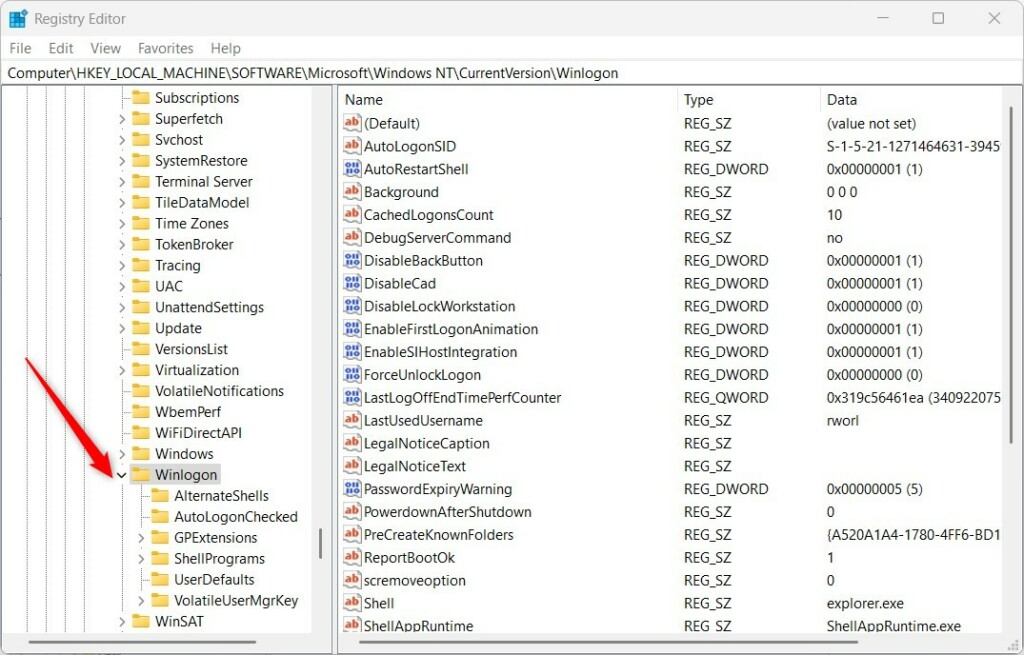
HKEY_LOCAL_MACHINE\SOFTWARE\Microsoft\Windows NT\CurrentVersion\WinlogonYou can expand the folders in the left pane, or paste the path into the address bar at the top of the window. - If the
SpecialAccountskey does not exist underWinlogon, right-clickWinlogon, select New Key, and name itSpecialAccounts. The new key appears in the left pane. If it already exists, skip to the next step. - Inside
SpecialAccounts, create another key namedUserList, using the same right-click and New Key method. Select it in the left pane when it appears. - Right-click an empty area in the right pane of
UserListand select New DWORD (32-bit) Value. A new value appears with its name highlighted for editing. - Name the DWORD exactly as the username you wish to hide (e.g.,
GenericUser), then press Enter. Spelling matters here. Use the account's actual username, not its display name. - Double-click the new DWORD and set the
Value datato0, then click OK. The value in the right pane should now show the number you set.
Close Registry Editor, then sign out or restart the PC. At the sign-in screen, the account should no longer be listed. Use the manual username entry to confirm the account still works.
To undo the change, return to the same key in Registry Editor, right-click the DWORD you created, and select Delete. The account shows on the sign-in screen again after the next sign-out or restart. If anything else breaks, use the restore point you created earlier.
Downloadable Registry File
If you need to hide accounts on more than one PC, or you want a quick way to repeat the change, you can automate it. Save the following code as a .reg file, then double-click it and confirm the prompts to merge it into the registry. Change the username in the file to match the account you want to hide before you run it.
Windows Registry Editor Version 5.00

[HKEY_LOCAL_MACHINE\SOFTWARE\Microsoft\Windows NT\CurrentVersion\Winlogon\SpecialAccounts\UserList]
"GenericUser"=dword:00000000
Method 2Using Group Policy Editor (Pro/Enterprise Only)
If you use Windows 11 Pro or Enterprise, you can use gpedit.msc. This tool is not included in Windows 11 Home, so Home users should stick with the Registry Editor method above.
- Press
Win + R, typegpedit.msc, and hit Enter. The Local Group Policy Editor opens. - Go to
Computer Configuration > Windows Settings > Security Settings > Local Policies > Security Options. Expand each folder in the left pane until the policy list appears on the right. - Find
Interactive logon: Don't display last signed-inand set it to Enabled, then click OK. The policy's state in the list should now read Enabled.
Restart the PC or sign out to apply the policy, then check the sign-in screen. To undo the change, open the same policy again and set it back to Not Configured.
If the account still shows on the sign-in screen, check these points:
- The DWORD name must match the username exactly. A typo means the entry is ignored.
- The account must be a local account. Microsoft accounts linked to an email address cannot be hidden this way.
- The keys must be in the right place in the registry, with the right names. Check the path again.
- You must sign out or restart before the change takes effect.
Summary
To hide users on Windows 11, you can use tools like the Registry Editor to keep your sign-in screen tidy and secure. Create a restore point first, double-check the username you enter, and remember that hidden accounts still work. You just have to type the username to use them.
Have a question about this guide?
Answered by AI from this guide. Good questions may be added to this page — please don't include personal details.
Did this guide fix your problem?

About the Author
Richard
Tech Writer, IT Professional
Richard is a writer at Geek Rewind who turns complex IT tasks into clear, step-by-step guides. He draws on years of hands-on experience in system administration and enterprise IT operations, focusing on Windows, Linux and WordPress: the problems people actually run into, and the fixes that work. His server and WordPress guides come from systems he runs himself. Richard builds and maintains the platform behind Geek Rewind, from its Ubuntu servers and Nginx configuration to its custom WordPress plugins. Many new tutorials start with readers' questions, and he's always glad to answer them in the comments.
[…] display name in Windows refers to the full name of an account shown on the Sign-in screen, Start Menu, and Settings. This name can differ from the username used to sign in to the […]
[…] can turn Voice Access on or off from the lock screen using the accessibility menu on the Lock screen. Or you can have it start automatically every time by checking the setting “Start voice […]