How to Enable Voice Access on Windows 11 Sign-In


Voice Access on Windows 11 lets you control your PC with spoken commands. It can work even before you type your password on the sign-in screen. This built-in accessibility tool listens to your speech so you can open apps, dictate text, and click items without touching a mouse or keyboard.
You can turn on Voice Access from the accessibility settings. You can also set it to start before you sign in, so it runs every time your computer starts. Once it is active, a voice access bar appears at the top of the screen to guide your hands-free navigation.
This guide covers two ways to do it: the Settings app, which is the easy route, and the Registry Editor, which is a fallback. The steps are written for Windows 11 version 22H2 or later, because earlier builds do not include Voice Access. If you cannot find it, run Windows Update first. It works on both Home and Pro editions.
Open Settings , go to Accessibility Speech, toggle Voice access on, then check Start voice access before you sign in. Restart your PC and Voice Access will appear on the sign-in screen.
Voice Access vs. Voice Typing
| Feature | Voice Access | Voice Typing |
|---|---|---|
| Scope | Full PC Control | Dictation Only |
| Navigation | Yes | No |
| Commands | Advanced | Basic |
How to Enable Voice Access Before Sign-In
You can enable this feature so your PC is ready for commands as soon as it turns on. That means you can say your PIN or password, or move through the sign-in screen, without touching anything.
The first time you turn Voice Access on, Windows may need to download a speech model, so stay connected to the internet until it finishes. You also need a working microphone.
Method 1Using Settings (Recommended)
- Open Settings by pressing Win+I. The Settings window opens.
- Click Accessibility on the left menu. The accessibility options appear on the right.
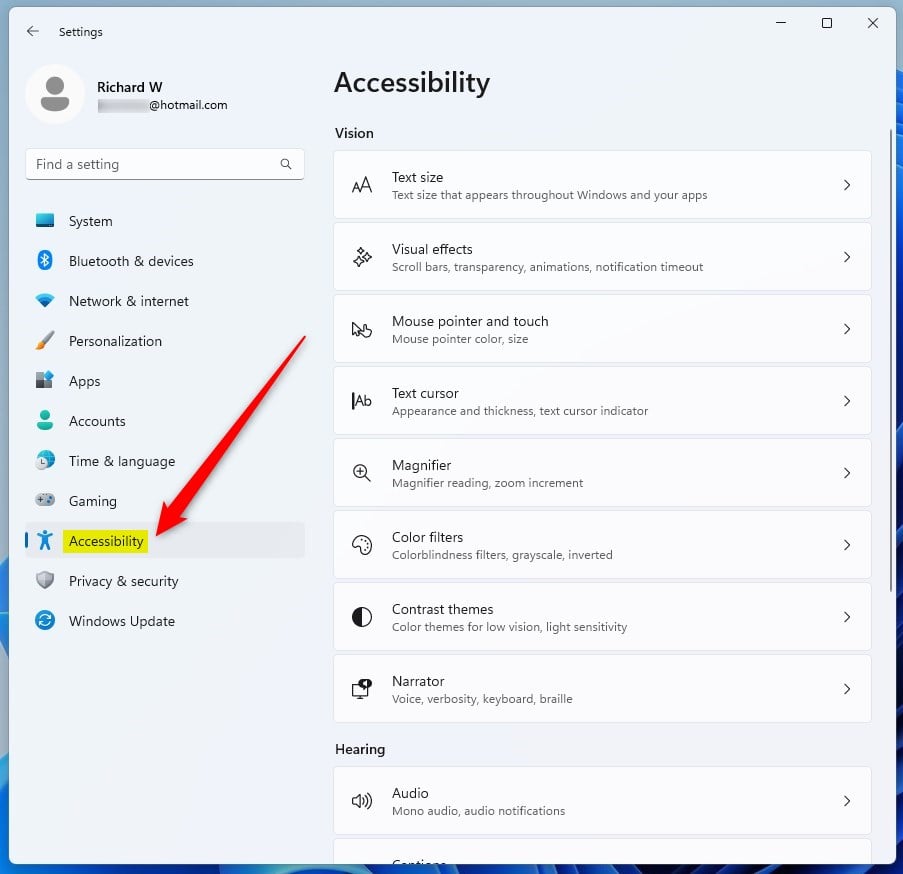
windows 11 accessibility tile - Select Speech. You will see the speech options, including Voice access.
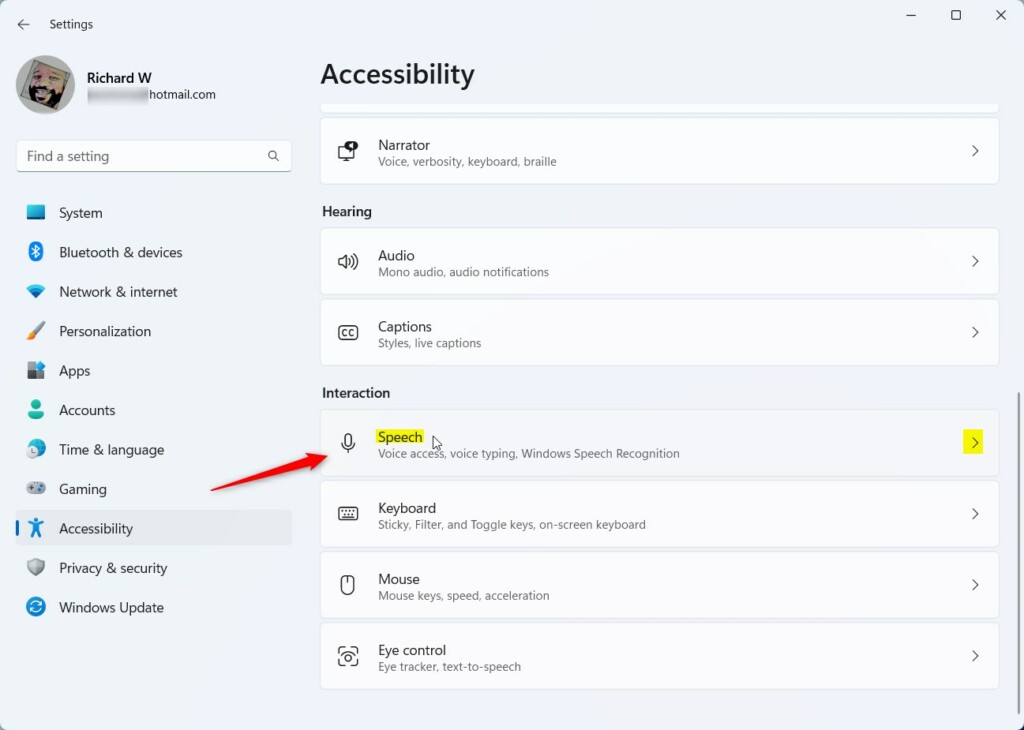
Start voice access before you sign in the PC - Toggle the switch for Voice access to On. The first time, Windows may download a speech model and ask you to choose a microphone. When it finishes, the voice access bar appears at the top of the screen and extra options appear under the switch.
- Check the box labeled Start voice access before you sign in to your PC. If you do not see it, expand the Voice access section by clicking its arrow. If the box is greyed out, make sure Voice access itself is switched on. Once the box is ticked, sign out or restart to test it. The voice access bar should appear on the sign-in screen. To undo this, clear the box.
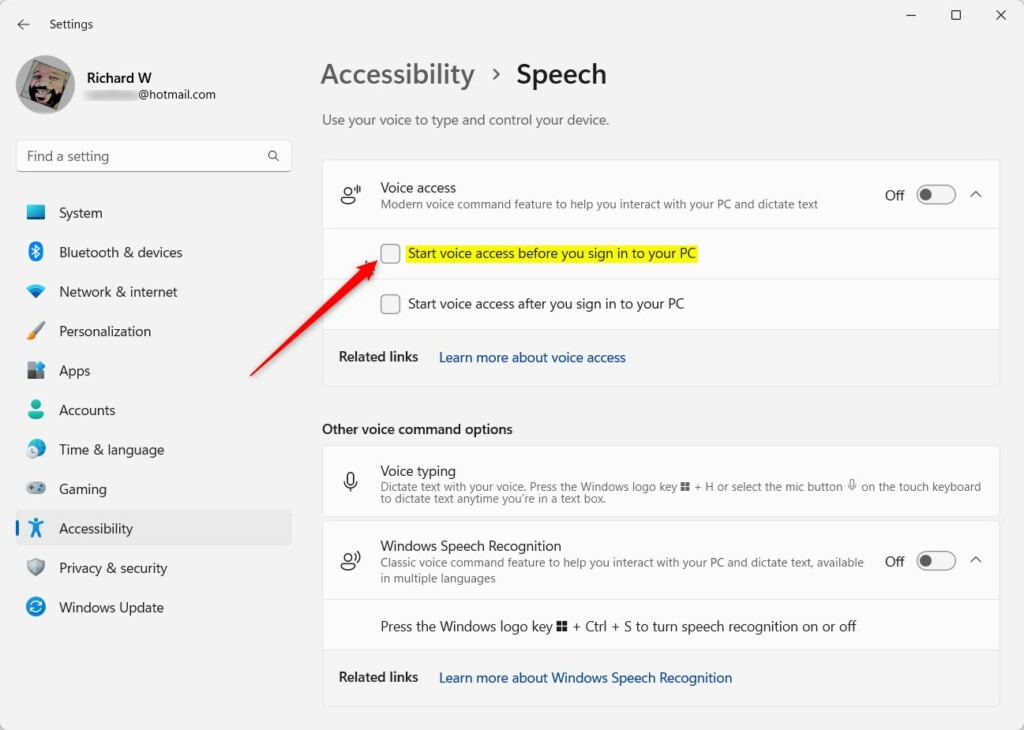
Start voice access before you sign in the PC
Method 2Using Registry Editor (Advanced)
This method is riskier than using the Settings app because a mistake can cause system errors. Make sure you follow each step carefully before you start.
Before you begin, sign in with an administrator account. Create a restore point or export a backup of the registry so you can roll back if something goes wrong. If the Settings method already works for you, you do not need this section.
- Press Windows key + R, type
regedit, and press Enter. If Windows asks whether to allow the app to make changes, click Yes. Registry Editor then opens. - Navigate to
HKEY_LOCAL_MACHINE\SOFTWARE\Microsoft\Windows NT\CurrentVersion\Accessibility. Expand the folders in the left pane one at a time until the last folder is selected.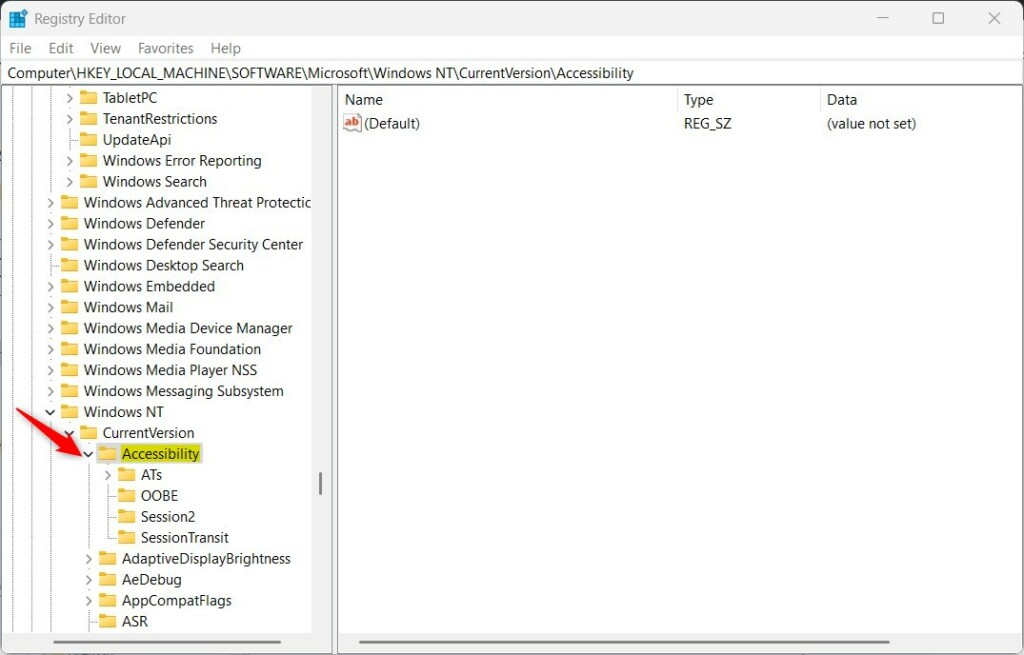
Start voice access before you sign in the PC - Right-click in the empty space of the right pane and select New String Value A new entry appears with its name highlighted for editing.
- Name it
Configuration. Press Enter to confirm the name. - Double-click it and set the value to
voiceaccess. Click OK and check that the value now shows in the right pane.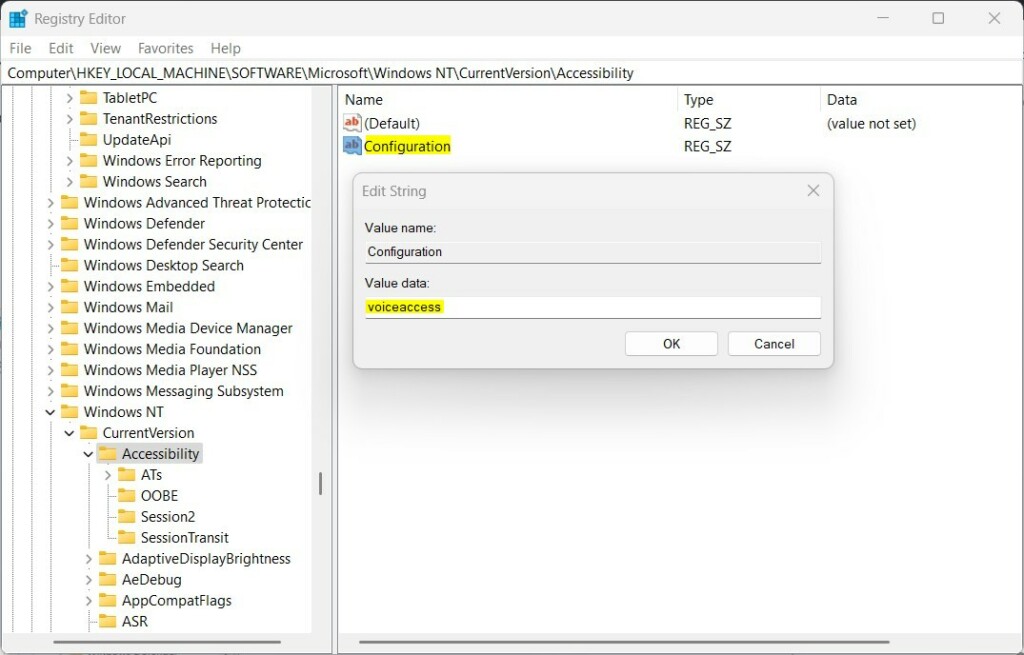
Start voice access before you sign in the PC - Restart your computer. Check the sign-in screen after the restart. To undo the change, return to the same key, delete the value you created, and restart again.
Troubleshooting and Tips
If you use a screen reader, Voice access is designed to work alongside it, though you may need to adjust your settings to ensure they do not conflict. For complex tasks, refer to our Voice Access Command List to master your workflow.
If Voice Access does not seem to hear you, check that the right microphone is selected in the voice access bar settings and that Windows is allowed to use it. Speak at a normal pace. A headset microphone usually works better than a laptop one in a noisy room.
Summary
Voice Access makes your Windows 11 computer easier to use without a mouse or keyboard, especially when you turn it on right at the sign-in screen. Use the Settings method first, keep the Registry method as a backup, and you can reverse either one in a few clicks.
Was this guide helpful?

About the Author
Richard
Tech Writer, IT Professional
Richard is a writer at Geek Rewind who turns complex IT tasks into clear, step-by-step guides. He draws on years of hands-on experience in system administration and enterprise IT operations, focusing on Windows, Linux and WordPress: the problems people actually run into, and the fixes that work. His server and WordPress guides come from systems he runs himself. Richard builds and maintains the platform behind Geek Rewind, from its Ubuntu servers and Nginx configuration to its custom WordPress plugins. Many new tutorials start with readers' questions, and he's always glad to answer them in the comments.



[…] can turn on or off Voice access, automatically start it up before signing on, stop it from starting automatically, install additional languages, list and create custom […]
[…] can turn on or off Voice access, automatically start it up before signing on, stop it from starting automatically, install additional languages, list and create custom […]