How to Access the Documents Folder on This Computer

The Documents folder is the default place Windows stores your personal files, Word documents and some app data. On a standard setup it sits at 📁C:\
You can reach it by browsing to the folder yourself. These steps work on Windows 11 Home and Pro.
- Open File Explorer , then click This PC in the left pane.
- Double-click your main drive, usually Local Disk (C:). You should see folders such as Program Files, Users and Windows.
- Open the Users folder.
- Open the folder that matches your account name. Inside it you will see Documents, Downloads, Pictures and other personal folders.
If you see other folders in Users, such as Public, ignore them. They belong to other accounts or are shared. Your own files are only in the folder with your name.
Press Win+E to open File Explorer , click Home in the left pane, then click Documents in the pinned folders list. If Documents is missing, click This PC, double-click Local Disk (C:), open Users, open your account folder, and double-click Documents.
Using File Explorer to Access Your Documents
The quickest route is the left-hand sidebar in File Explorer (the file management app built into Windows). In Windows 11, the top entry in the navigation pane is called Home. Older versions of Windows called it Quick Access. Documents is pinned there by default, so a shortcut is always one click away.
To open the folder from the default File Explorer view:
- Press Win+E on your keyboard. File Explorer opens.
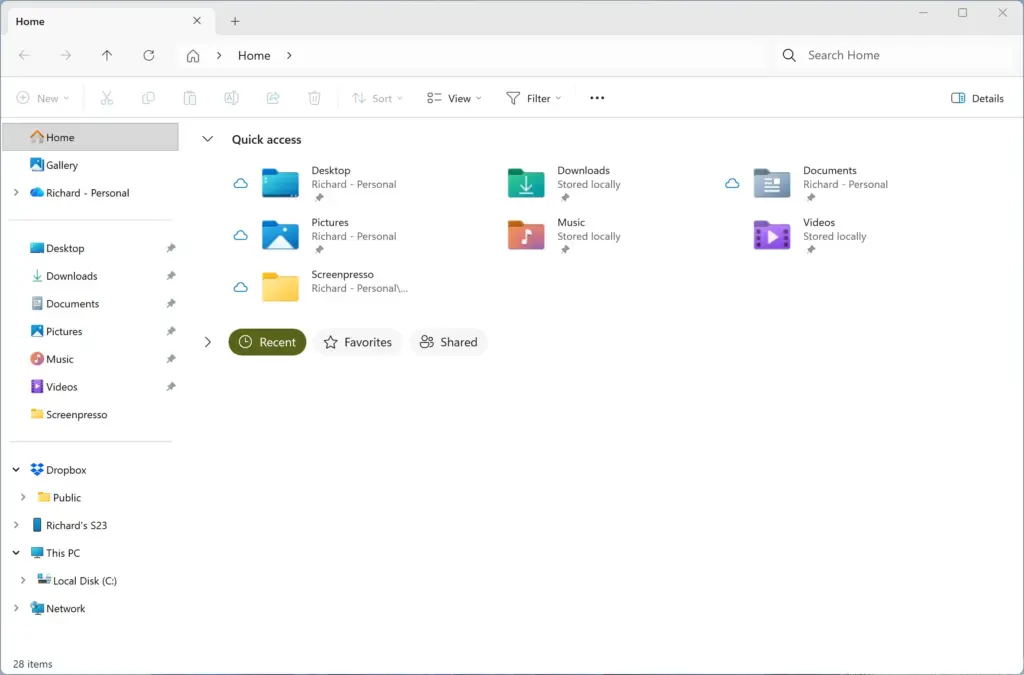
File Explorer - Look at the left-hand navigation pane.
- Click Home to see your pinned and frequent folders. You should see a list of folders in the main window.
- Find the Documents icon among the pinned folders and click it once. The folder opens and shows your files.
You can also find Documents listed directly in the navigation pane. If it is missing from the pane, use the longer route: click This PC, double-click your system drive (usually Local Disk (C:)), open Users, open your user profile folder, and double-click Documents.
If the shortcut has disappeared from Home, the folder itself is fine. You can pin it again by right-clicking the folder and choosing the pin option.
The Difference Between This PC and OneDrive Documents
Without OneDrive, the Documents folder lives only on your local drive. OneDrive is Microsoft's cloud storage service, and it can take over your Documents folder so your files are saved online and reachable from other devices. Windows often turns this on during setup when you sign in with a Microsoft account, so you may be using it without having chosen it.
Instead of the local path C:\Users\USERNAME\Documents, the folder points to a synced location such as C:\Users\USERNAME\OneDrive\Documents. If you stop syncing or sign out of your account, the paths can disconnect. Your files can then look missing even though they are still safe on your drive or in your online storage.
To check which version you are using:
- Open the Documents folder in File Explorer.
- Look at the address bar at the top of the window.
- If the path includes OneDrive, the folder is cloud-backed. If it shows only Users, your name and Documents, it is the local folder.
A cloud-backed folder also shows small sync status icons next to files, such as a cloud or a green check mark. Knowing which version you have matters before you move the folder or back it up.
How to Change the Save Location of Your Documents Folder
You can move the Documents folder to another drive using its built-in properties. Right-click the folder, open Properties, go to the Location tab, and click Move. Windows sends your files to the new location, and programs that use the standard Documents folder keep working because Windows follows the new path.
You may need administrator permissions if your account has restricted rights. If OneDrive is already backing up this folder, the path points to OneDrive, so check the address bar first, as described in the previous section. To change the physical location of the folder:
- Open File Explorer and click This PC in the left navigation pane.
- Browse to your user profile directory at C:\Users\USERNAME.
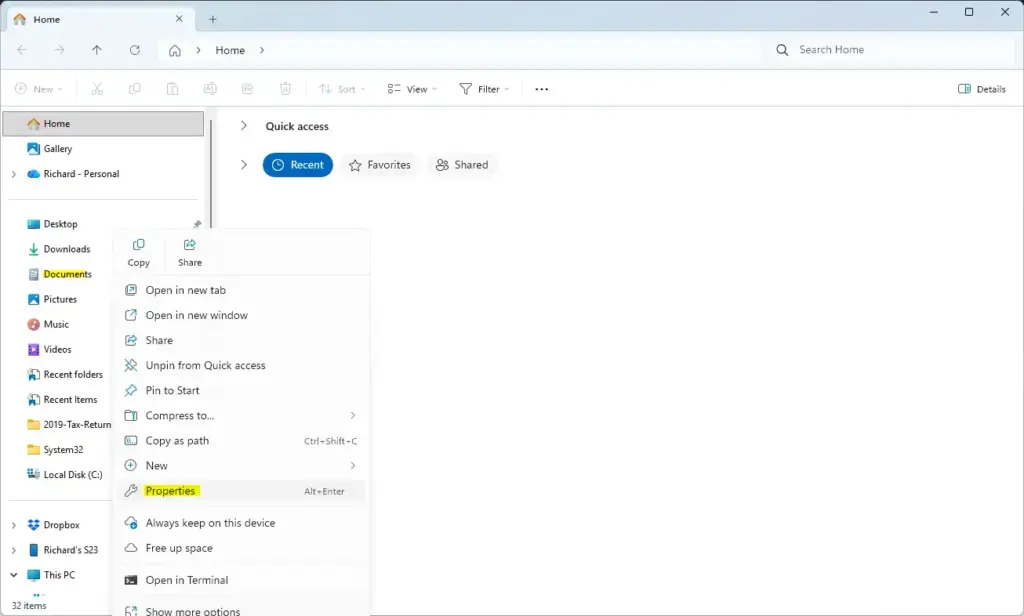
- Right-click the Documents folder and select Properties. A Properties window opens.
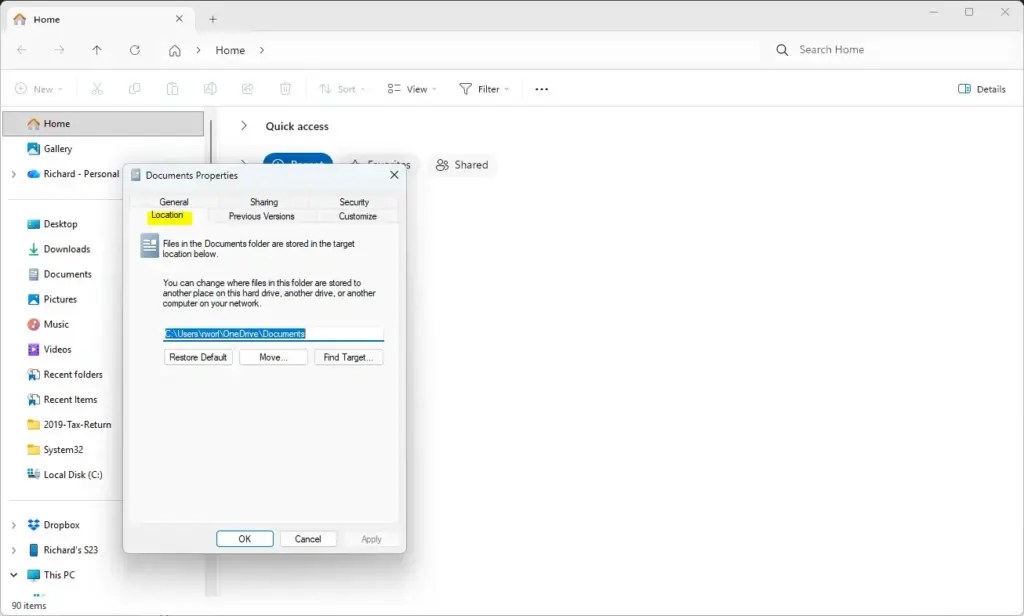
- Click the Location tab at the top of the window. The current folder path appears in a box.
- Click the Move... button. A folder picker opens.
- Browse to the folder or drive where you want to keep your files, click Select Folder, and then click Apply.
- When Windows asks whether to move all files from the old location to the new one, click Yes. This keeps everything together and leaves nothing behind. Wait for the copy to finish before closing the window.
Make sure the destination drive has enough free space first. A large Documents folder can take a while to copy.
If this didn't work
If you cannot find your Documents folder, work through these checks in order.
- Check the address bar. If the folder is cloud-backed, it may be under the OneDrive folder in your user profile rather than directly in your user profile.
- Show hidden files in File Explorer. Click View, point to Show, and select Hidden items. Hidden folders now appear slightly faded.
- Open the Recycle Bin on your desktop and look for the folder or files. If you find them, right-click and choose Restore.
- Use the Windows search bar to search your entire C drive for a file you know was in the folder, then open its file location to see where it actually lives.
- If a recent update has damaged your user profile, sign out and back into your Microsoft account. This usually brings missing folders back.
If none of this works, confirm you are signed in to the right account. A different account, such as a new local profile, has its own empty Documents folder, which can look like missing files.
Frequently asked questions
Where is the documents folder on my computer?
Your Documents folder sits on your main drive, C:, inside the Users folder. Open the folder with your account name, and Documents is inside it. Windows creates this folder automatically when you set up the PC, so it is in the same place on most computers.
How do I find documents on this computer?
Open File Explorer, click This PC in the left pane, then click Documents under it. If you cannot find it there, open C:, then Users, then the folder with your account name. To search for a specific file, type part of its name into the search box at the top right of File Explorer.
Why can't I access my documents folder?
The folder is usually blocked for one of three reasons. You may be signed in to a different account, so the folder belongs to someone else. If OneDrive backs up your Documents, a paused sync can hide the files. Or Controlled folder access in Windows Security may be stopping apps from reading it.
How do I access my documents?
Press the Windows key and E together to open File Explorer. Click This PC in the left pane, then double-click Documents to open it. Documents holds your Word files and other personal work, so check it first. If you cannot find a file, use the search box in File Explorer.
Still have a question?
Answered by AI from this guide. Good questions may be added to this page — please don't include personal details.
Did this guide fix your problem?

About the Author
Richard
Tech Writer, IT Professional
Richard is a writer at Geek Rewind who turns complex IT tasks into clear, step-by-step guides. He draws on years of hands-on experience in system administration and enterprise IT operations, focusing on Windows, Linux and WordPress: the problems people actually run into, and the fixes that work. His server and WordPress guides come from systems he runs himself. Richard builds and maintains the platform behind Geek Rewind, from its Ubuntu servers and Nginx configuration to its custom WordPress plugins. Many new tutorials start with readers' questions, and he's always glad to answer them in the comments.
No comments yet — be the first to share your thoughts!