Show and Hide Hidden Files in Ubuntu Linux


Pressing Ctrl+H is the fastest way to show and hide hidden files in Ubuntu Linux. These files start with a dot, such as .bashrc (a shell configuration file), which the system keeps out of sight by default to stop you from deleting important settings by mistake.
You can use this keyboard shortcut in any file manager window whenever you need to find a hidden folder or clean up your view.
You can show and hide hidden files in Ubuntu’s File Manager by pressing Ctrl+H. This keyboard shortcut toggles the visibility of all hidden files, including those starting with a period. Alternatively, click the view options button in the toolbar and select “Show Hidden Files.
How to show hidden files in Ubuntu Linux
You can show hidden files in Ubuntu Linux by opening the File Manager, clicking the view options button in the toolbar, and selecting ‘Show Hidden Files’. Alternatively, you can press Ctrl+H on your keyboard to instantly toggle hidden files on and off in any folder.
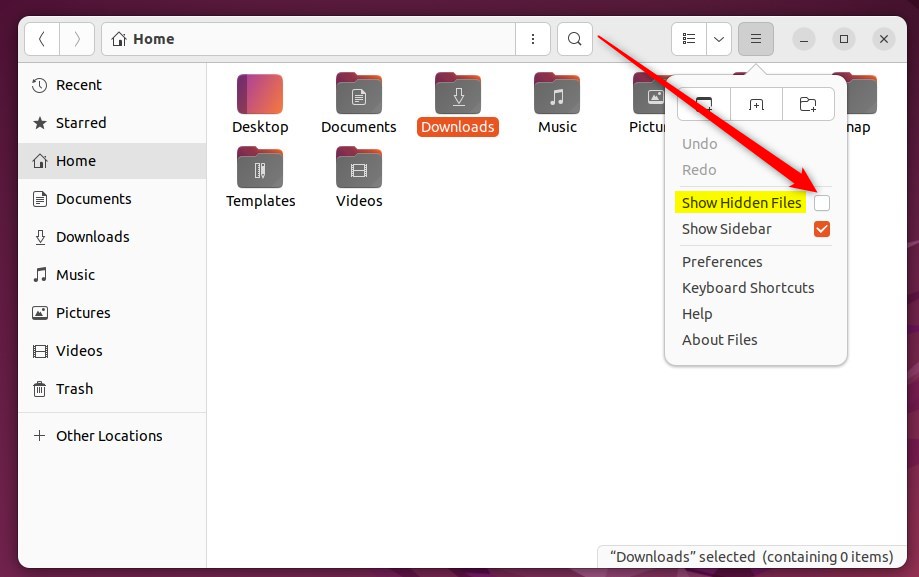
Checking every hidden item in a directory requires visiting that specific folder. Click the view options button in the toolbar and select Show Hidden Files, or press the Ctrl + H keyboard shortcut.
Launch the File Manager and click the view options button in the toolbar to begin.
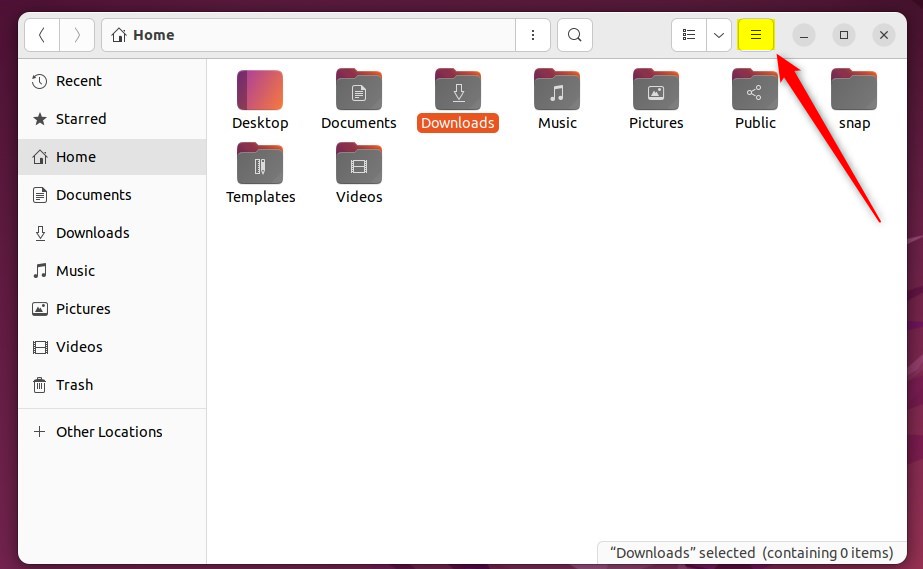
Select Show Hidden Files on the context menu , as highlighted below.
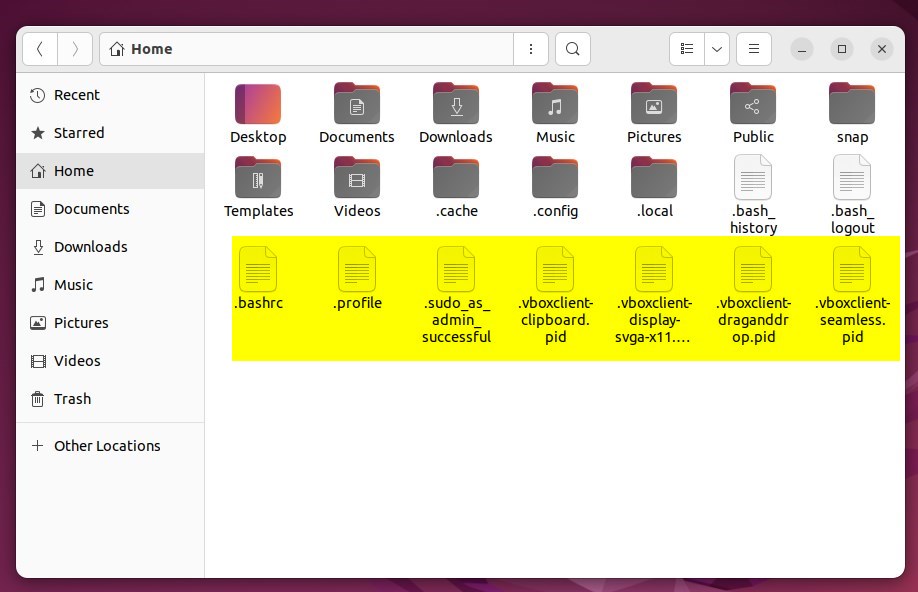
Keyboard shortcuts provide a faster route, letting Ctrl + H display all hidden items at once.
Standard and hidden files appear together in the directory view.
How to hide files in Ubuntu Linux
You can hide files in Ubuntu Linux by renaming them so the file name starts with a dot. For example, changing a file name from example.txt to .example.txt immediately removes it from the standard view in the File Manager without deleting the actual data.
Rename any target file so it starts with a dot (.) to remove it from the default view.
Rename example.txt to .example.txt to hide it.
The file vanishes from the File Manager's standard view within its containing folder, preventing accidental deletion or unwanted visibility for various file types.
That completes the process.
To review, reveal hidden items using the view options menu or the Ctrl + H shortcut, and conceal them by adding a leading dot to the filename.
- Showing hidden files in Ubuntu Linux is a simple process that can be done through the view options button or the keyboard shortcut Ctrl + H.
- Similarly, hiding files in Ubuntu Linux involves renaming the file with a dot at the beginning of its name.
- These steps provide a convenient way to manage file visibility in the File Manager, ensuring that important files can be kept out of plain sight when necessary.
Was this guide helpful?

About the Author
Richard
Tech Writer, IT Professional
Richard is a writer at Geek Rewind who turns complex IT tasks into clear, step-by-step guides. He draws on years of hands-on experience in system administration and enterprise IT operations, focusing on Windows, Linux and WordPress: the problems people actually run into, and the fixes that work. His server and WordPress guides come from systems he runs himself. Richard builds and maintains the platform behind Geek Rewind, from its Ubuntu servers and Nginx configuration to its custom WordPress plugins. Many new tutorials start with readers' questions, and he's always glad to answer them in the comments.




No comments yet — be the first to share your thoughts!