How to Schedule Night Light for Better Sleep in Windows 11 Display Settings

Night light in Windows 11 is a display setting that cuts down harsh blue light and warms up your screen colors in the evening to help you sleep better. Screens give off short-wave blue light that tells your brain it is still daytime. Turning on Night light eases eye strain and helps protect your natural sleep cycle.
You can set an automatic schedule so the screen shifts its colors every evening without you touching it. Windows 11 lets you pick exact start and stop times, or tie the color shift to your local sunset and sunrise. Night light is built into Windows 11 Home and Pro alike, and none of the changes below need a restart.
Open Settings System Display, click Night light to expand it, switch Schedule night light to On, then select Sunset to sunrise for automatic timing or Set hours to pick custom start and stop times. Your screen will warm automatically at those times each day.
How to Turn On and Configure Night Light Manually
You can turn on Night light (a display feature that reduces blue light to ease eye strain) from the Display settings page. Try the warmth slider first, before you schedule anything. That way you know what color temperature feels comfortable at your desk when the schedule kicks in. Night light only changes how colors are shown. It does not dim the screen, so brightness is still set separately.
- Press the Win+I to open Settings.
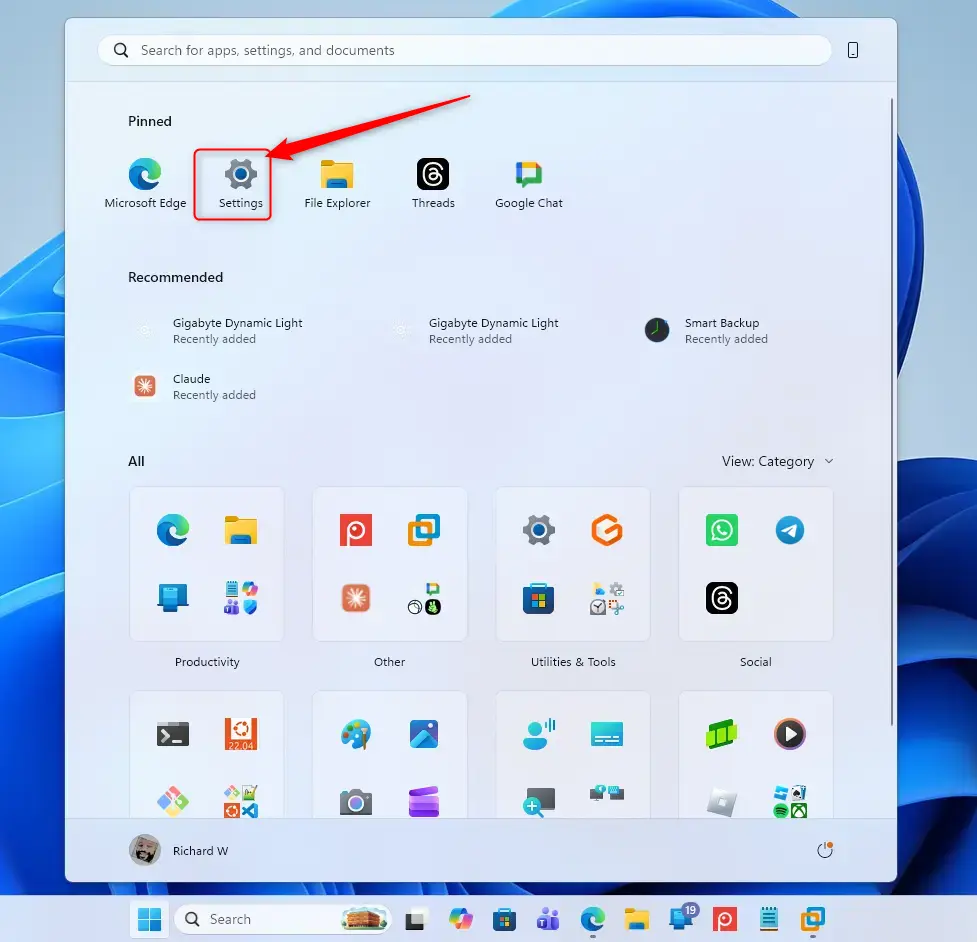
Windows 11 Start menu with Settings gear icon highlighted. - Select System in the left sidebar. The display, sound and power options appear on the right.
- Click Display.
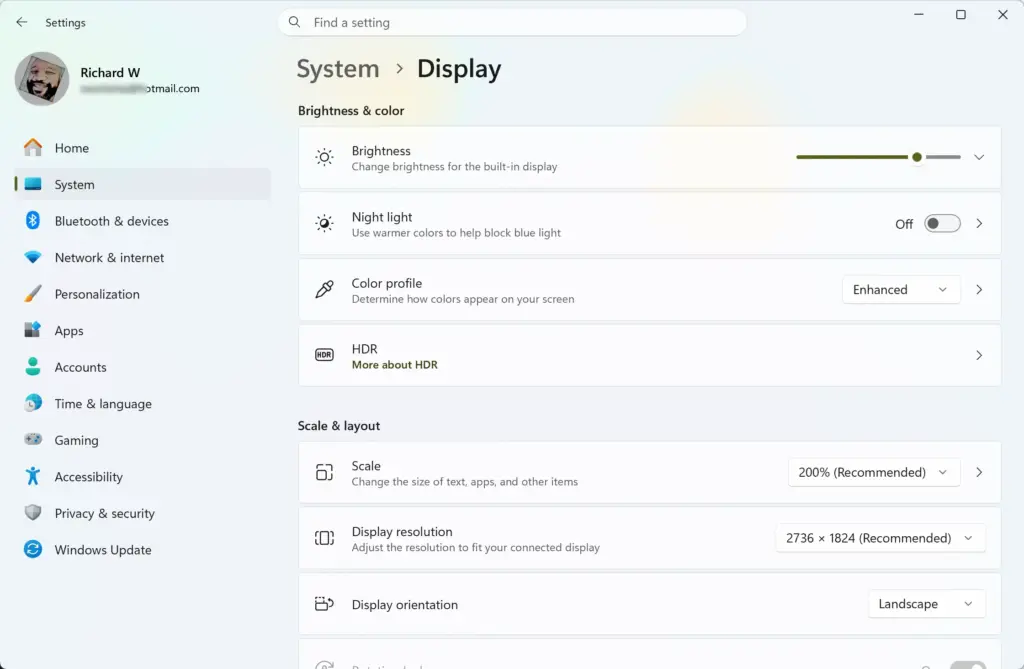
Settings › System › Display - Find the Night light row and switch its toggle to On. Your screen should turn noticeably warmer and more yellow right away.
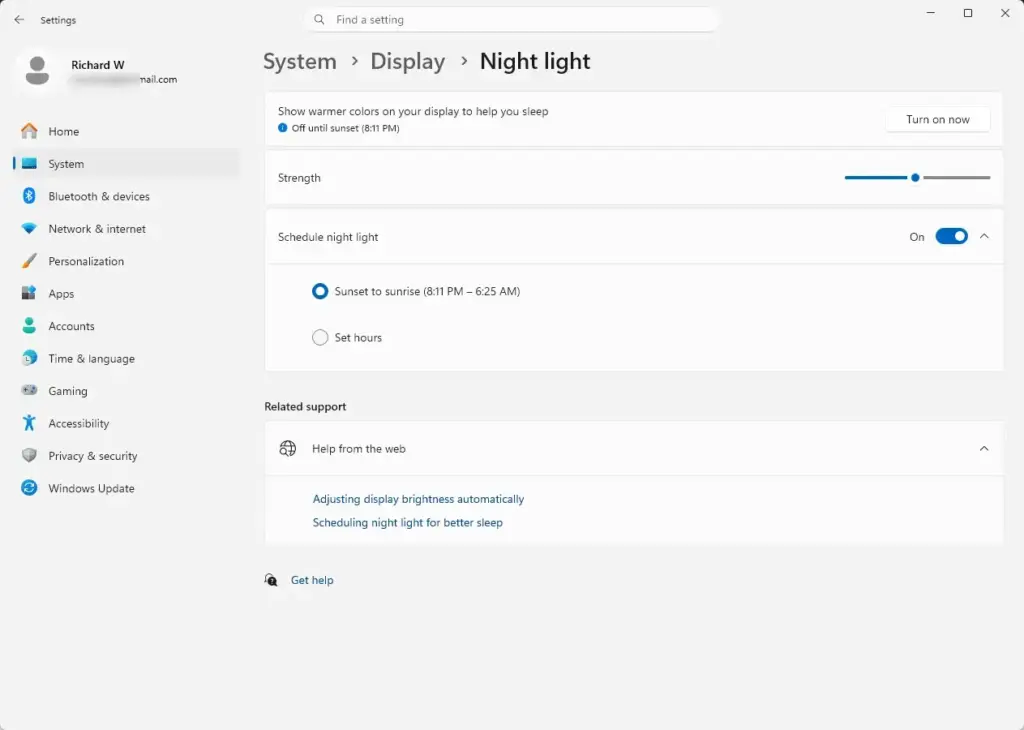
Settings › System › Display › Night light - Click the Night light text label (not the toggle) to open its detailed settings.
- Drag the Strength slider left or right. The screen changes as you drag, so you can judge it live. Stop at a level that reduces eye strain but still keeps text and colors readable.
If you want to undo this, go back to the same page and switch the Night light toggle to Off. Your strength setting is kept for next time.
How to Schedule Night Light Automatically
You can schedule Night light automatically by expanding its settings and choosing between sunset-to-sunrise timing or custom hours. Once a schedule is on, you no longer have to adjust anything by hand each evening.
- Press the Win+I to open Settings.
- Select System.
- Click Display.
Settings › System › Display - Click the Night light row to expand its settings. You should see the strength slider and the schedule options.
- Switch the Schedule night light toggle to On.
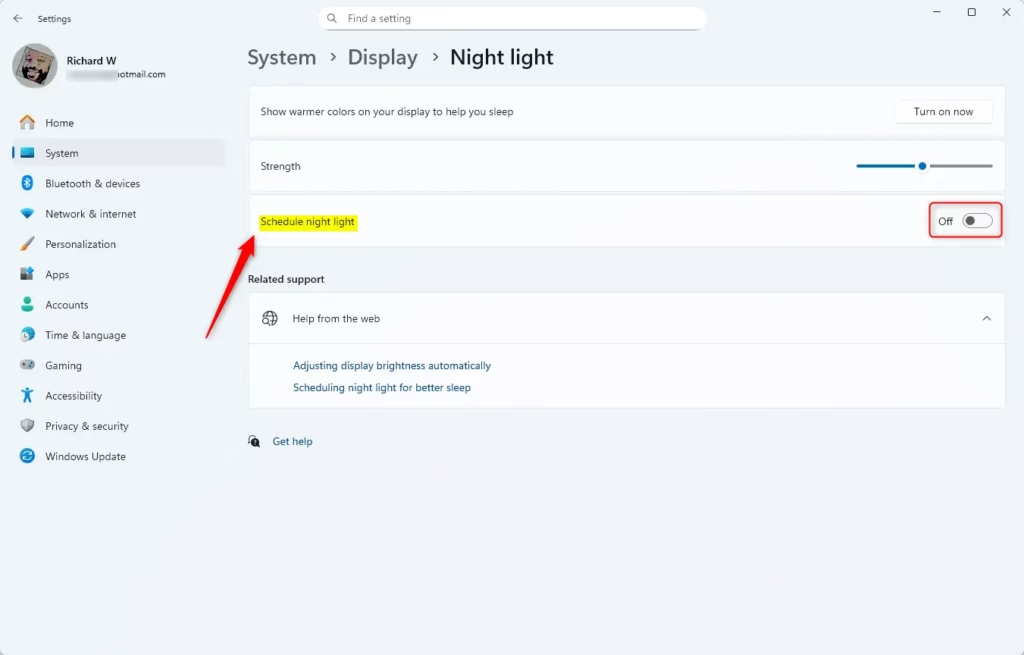
Windows 11 scheduled Night Light settings with custom hours option. - Select the Sunset to sunrise radio button if you want Windows to work out the timing from your location. The times change with the seasons, so you never have to update them.
- Or select the Set hours radio button and use the drop-down menus to pick your Turn on and Turn off times. Choose a start about an hour or two before you normally go to bed.
Fixed hours are a good choice if your location settings are off or if you work odd shifts. To undo the schedule, switch Schedule night light back to Off.
Troubleshooting Night Light Scheduling Issues
Windows needs to know where you are to calculate sunset, so you can fix most scheduling problems by turning on location services in your privacy settings.
- Open Settings and select Privacy & security.
- Click Location.
- Switch Location services to On. Make sure the switch for letting Windows use your location is on as well.
- Return to System Display Night light and check that Sunset to sunrise is now available.
Also check that your date, time and time zone are correct, because an incorrect clock shifts the schedule. If you would rather not share your location, use Set hours instead.
Using Focus and Notifications to Reduce Evening Distractions
You can use Focus (a distraction-management tool that hides incoming pop-up alerts and notification badges) to silence late-night interruptions while you wind down. Pairing it with your Night light schedule means a bright pop-up will not break the calm you are trying to build.
- Open Settings and select System.
- Click Focus.
- Choose the options you want, such as hiding badges on taskbar apps and flashing on taskbar apps, then start a focus session.
The exact options on this page vary a little between Windows 11 versions. If you only want to mute notifications, the Do not disturb setting under System Notifications does that. Stop the session or switch the option off at any time to get your alerts back.
Customizing Accent Colors and Dark Mode for Better Evening Viewing
You can turn on dark mode through the Personalization settings to replace bright white app windows with dark ones. This lowers the overall brightness of what you see and works well alongside the warmer colors from Night light.
- Open Settings and select Personalization.
- Click Colors.
- Next to Choose your mode, open the drop-down and select Dark. Windows and most built-in apps change at once.
Some older or third-party apps keep their own light theme and ignore this setting. To go back, set Choose your mode to Light.
Managing Power and Sleep Settings Alongside Night Light
You can change the screen timeout and sleep settings so the display does not turn off while you read or watch something before bed. In Windows 11 this page is called Power & battery (older guides call it Power & sleep). Longer timeouts keep the screen on for your whole wind-down window.
- Open Settings and select System.
- Click Power & battery.
- Expand Screen and sleep.
- Use the drop-down menus to set the screen and sleep timeouts. Laptops show separate times for battery and plugged-in use.
You can set the values back at any time.
If this didn't work
If Night light still fails after the location check, install any pending Windows updates. Updates often fix interface bugs that stop the schedule from working. If that does not help, a third-party display utility can handle the color shifting instead.
- Open Settings and select Windows Update.
- Click Check for updates.
- Install anything that is listed. Restart if Windows asks you to, then test Night light again.
Display driver problems can also cause Night light to misbehave, so update your graphics driver through Windows Update or from your PC maker's website. If the built-in feature still does not work, a third-party display utility is a fallback. Pick one from a source you trust, and remember it replaces the Windows schedule rather than adding to it.
Is night light on windows better for your eyes?
Night light can make screens easier on your eyes in the evening, especially in a dim room. It cuts down blue light and warms the colors, which many people find less harsh. It does not protect your eyes from damage, and it does not dim the screen. Lowering screen brightness usually helps more with strain.
How to schedule windows to sleep?
Windows 11 has no built-in sleep schedule, so you need Task Scheduler. Click Create Basic Task, set the trigger to Daily at your bedtime, and choose Start a program as the action. In Program/script, enter C:\Windows\System32\rundll32.exe. In Add arguments, enter powrprof.dll,SetSuspendState 0,1,0. Finish the wizard to save the task.
What is the best night light to promote sleep?
The best night light for sleep is dim and warm, such as amber or red. Cool white light can keep your brain alert, so choose a warm bulb around 2700K or lower. Keep it dim and point it away from your eyes. On a PC, set Night light to its strongest warmth setting.
Is it okay to leave a nightlight on all night?
Yes, a low-wattage nightlight is generally safe to leave on overnight. Choose one that stays cool to the touch, and keep it away from curtains, bedding, and paper. Use a dim, warm color, because bright white light can disrupt sleep. Some people sleep better in total darkness, so turn it off if you do.
Have a question about this guide?
Answered by AI from this guide. Good questions may be added to this page — please don't include personal details.
Did this guide fix your problem?

About the Author
Richard
Tech Writer, IT Professional
Richard is a writer at Geek Rewind who turns complex IT tasks into clear, step-by-step guides. He draws on years of hands-on experience in system administration and enterprise IT operations, focusing on Windows, Linux and WordPress: the problems people actually run into, and the fixes that work. His server and WordPress guides come from systems he runs himself. Richard builds and maintains the platform behind Geek Rewind, from its Ubuntu servers and Nginx configuration to its custom WordPress plugins. Many new tutorials start with readers' questions, and he's always glad to answer them in the comments.
No comments yet — be the first to share your thoughts!