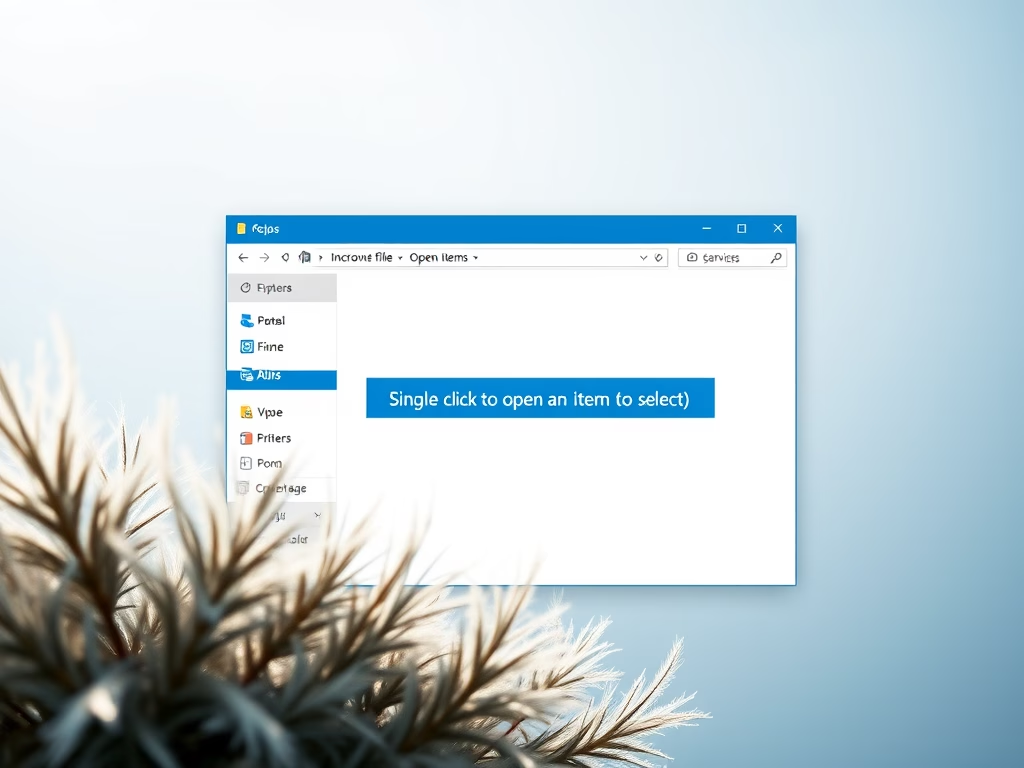
The post instructs on enabling single-click item opening in Windows 11, which by default requires a double-click. The steps involve opening File Explorer, selecting Options from the toolbar, and under the General tab, choosing the option for single-click opening. For selecting an icon without opening it, hovering the mouse over it momentarily will do.
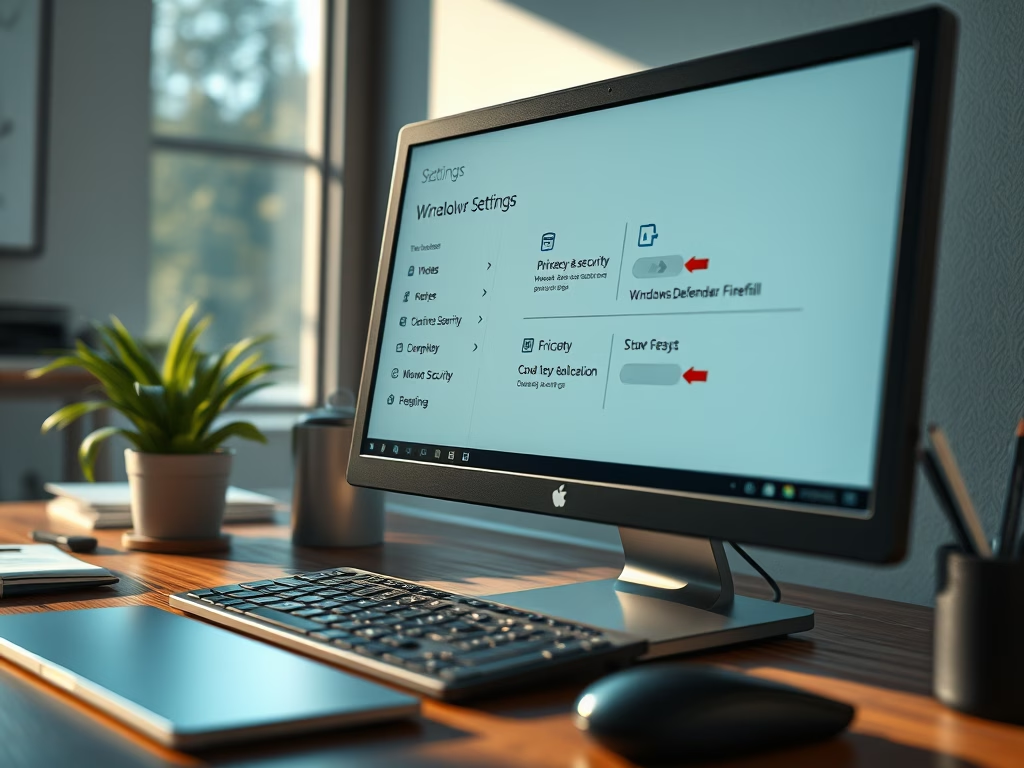
The post instructs students and new users on how to disable Windows Defender Firewall on Windows 11 while highlighting the essential role it plays in device security. It notes that Windows Defender Firewall self-disables if commercial firewall software is installed. It also advises on allowing specific apps through the Firewall as a safer alternative to completely disabling it. Users are urged to keep the Firewall enabled unless it interferes with other security products.
This post outlines the minimum system requirements for running Windows 11, which are similar to Windows 10 with a few additional features. Microsoft has released a PC Health Check app to determine if a PC meets the necessary specifications. These requirements include a compatible 64-bit processor, 4GB or more RAM, a storage device of 64GB or larger, and a DirectX 12 compatible graphics card, among others. If a device does not meet these standards, upgrading the system or obtaining a new one is advised.
This content provides a step-by-step guide to disable the touch screen feature on a Windows 11 device. It explains how users can navigate the system settings, device manager and the human interface devices category to disable the touchscreen function. To reactivate, users can follow the same process. Restarting the computer finalizes the process.
The post provides a guide on how to download, install, and use Google Chrome on Windows 11, as well as setting it as the default browser. Although Microsoft Edge comes pre-installed on Windows 11, users preferring Google Chrome on other devices can easily transition their browser preferences and stored data over to Windows 11.
The post provides instructions on setting up parental controls on Windows 11. This includes limiting screen time, restricting website access, and enabling security measures. The process requires both parent and child to have Microsoft accounts, with the child's account tied to the parent's and the parent acting as an administrator. Parents have the ability to monitor and control their child's online activity from a centralized dashboard in Windows Settings. The post provides links for account creation and setup.
The content outlines the process of creating a Microsoft account for use across various devices and services, including Windows 11, Skype, and OneDrive. It gives step-by-step instructions from choosing a username and password to confirming the account through a one-time code. The post also mentions parental involvement for accounts of those under 13.
The content instructs on renaming audio devices in Windows 11 to avoid confusion when multiple are connected. Users can give each device a unique, descriptive name through the System Settings pane. This can save users from inadvertently playing unsuitable content over the wrong device. Instructions for the renaming process, with associated images, are provided step-by-step.
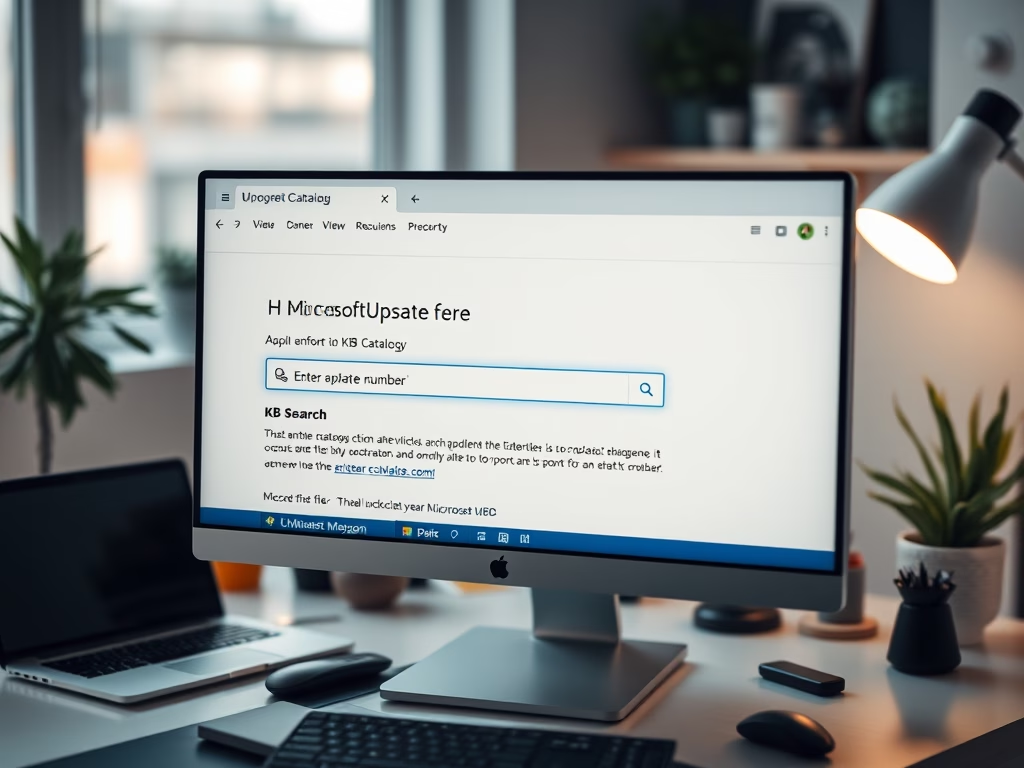
The post provides a guide on how to manually download and install updates for Windows 11 from the Microsoft Catalog website if Windows Updates is not working automatically. Using a specific Knowledge Base (KB) number, users can search for the relevant update package, download, and install it manually, including initiating a system reboot to complete the update process. This method should be used temporarily until automatic Windows Updates are restored.
The post provides a guide on how to display additional account details such as email addresses on the sign-in screen in Windows 11. This feature helps to identify accounts, especially in a system with multiple users. The post also explains how to disable this option if one decides not to show these additional details later.
This instructional guide demonstrates how to create a Windows 11 ISO file for unsupported hardware using Rufus, a utility that formulates bootable USB flash drives. Creating an ISO file allows installation of Windows 11 on hardware that doesn't meet standard requirements. Note that possessing a valid product key is critical, as there are no free versions of Windows 11. This process involves downloading the Windows 11 ISO file and Rufus, then using specific settings to produce an ISO image suited to unsupported PCs.
This post provides a guide for setting up the Apache HTTP server as a reverse proxy. Apache, typically a web server, can function as a reverse proxy for applications/devices lacking web server features. Using Apache reduces backend server load via SSL encryption, caching, etc. Steps include enabling necessary modules and setting configurations. This is particularly helpful for students or new users of Ubuntu Linux, a popular operating system for desktops and servers.
This guide demonstrates setting up a reverse proxy on the Nginx HTTP server, often used as a reverse proxy for HTTP and non-HTTP servers. A reverse proxy directs client requests to appropriate backend servers and can perform tasks such as SSL encryption, caching, load balancing, and compression. The guide offers instructions and configurations for using Nginx as a reverse proxy for various applications and backend servers, focusing on ease of understanding for students and beginners.
The post outlines a guide on how to display the day of the week on the Windows 11 Taskbar, a feature not activated by default. It directs users to the System Settings within the new operating system, detailing the pathway to create a custom date format under 'Language & region' and 'Administrative language settings.'
This content provides a step-by-step guide to resetting or changing MySQL or MariaDB passwords on Ubuntu Linux. The tutorial addresses scenarios such as forgetting the root password in these databases and guides users through various command line instructions for password recovery, depending on the MySQL or MariaDB server's version being used. Additionally, it covers using the auth_socket plugin and explains how to restart the database servers after performing the necessary actions.