Why Does Windows 11 Location Service Icon Stay Active Constantly in the Taskbar

The Windows 11 location icon appears in the taskbar whenever an app, a website, or a system process has recently asked for your device’s position. It is a small location symbol in the system tray , near the clock. Common triggers are Microsoft Maps, the Weather widget, your web browser, and some built-in Windows features.
The icon is a notice, not a fault. You can usually find the app behind it and switch it off in under two minutes. This guide covers per-app settings, the global switch, location history, browser permissions, the Geolocation Service, and a restart of Windows Explorer for a stuck icon.
The Windows 11 location icon stays active in the taskbar when an app, website, or system process repeatedly requests your device’s location. Open Settings , go to Privacy & security Location, scroll down to the app list, and turn Off the toggle next to the app using your position most recently. The icon usually disappears within seconds.
Understanding the 🪟 Windows 11 Location Service Icon
Windows 11 works out where your PC is from several sources: nearby Wi-Fi networks, Bluetooth devices, your IP address, and GPS hardware if your device has it. Most desktops have no GPS chip, so the result is often only city-level. Weather tools and map apps use this to show local information.
When an app, such as a weather app, a map tool, or your browser, wants your location, it asks Windows for it. If location access is allowed, Windows hands over the position and shows the location icon in the system tray while the request is active or recent. This is deliberate. Microsoft wants you to see right away when software on your PC is using your position.
Ideally, an app asks once when you open it, gets your position, and then leaves the service alone until you open it again. In practice, some apps, background tools, and browser extensions keep asking for updates. Windows 11 version 23H2 is one example where this is common. Each request lights the icon again, so it can look as though it never turns off.
How to Check Which Apps Are Using Your Location
Windows keeps a record of which apps accessed your location recently, so you can find the culprit in Settings. These steps work the same on Windows 11 Home and Pro.
Check recent location activity with these steps:
- Click the Start button and select Settings (the gear icon). You can also press Windows key + I. The Settings window opens.

Taskbar - In the left-hand menu, click Privacy & security.
- Under the App permissions section, click Location. The location settings page opens, with the main switch at the top.
- Scroll down to the list of apps installed on your computer.
- Read the small text next to each app. It shows when the app last used your location, such as "Recently accessed" or a specific timestamp.
Look for an app marked as currently active or with very recent access times. If an app shows up every time you check, it is almost certainly what keeps the taskbar icon lit. Note its name. You will need it in the next sections.
Step-by-Step Fixes to Stop the Location Icon From Staying Active
Once you know which programs are responsible, you can stop them in several ways. Try the fixes below in order, from least to most disruptive, and check the taskbar after each one. Stop as soon as the icon behaves.
Method 1Turn Off Location Access for Individual Apps
Blocking location for one app is the most targeted fix. The rest of your PC keeps working normally, and only the app you pick loses access to your position.
- Open Settings from the Start menu.
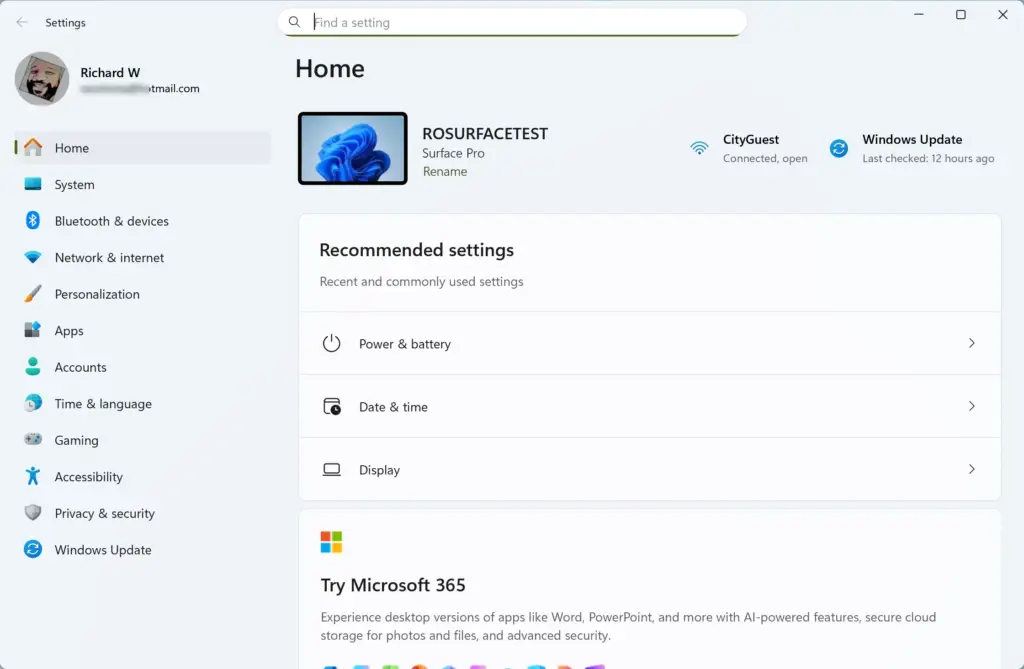
Settings - Go to Privacy & security, then click Location.
- Scroll down to the list of apps.
- Find the app that keeps using your location and set its toggle to Off. The toggle should now read Off.
The app can no longer request your coordinates. The taskbar icon usually disappears within a few seconds. If it stays, close the app completely and check again.
If every app toggle is greyed out, the main Location services switch at the top of the page is off. Turn that on first, then change the individual apps.
To undo this, return to the same list and switch the app back to On.
Method 2Turn Off Location Services Completely
If you do not use weather, maps, or other local features, you can turn location off for the whole PC. No app can then request your position, and the icon will not appear.
- Open the Settings app.
- Go to Privacy & security and select Location.
- At the top of the page, find the main switch labeled Location services and click it to turn it Off. The app list below becomes greyed out.
That includes automatic time zone updates, weather widgets, and Find my device. To undo it, turn Location services back on. No restart is needed either way.
Method 3Clear Your Location History
If the icon stays on even when no app seems to be running, clearing that history is a quick thing to try. It removes stored location data and can clear up an icon that was triggered by old entries.
- Open the Settings app.
- Click Privacy & security, then click Location.
- Scroll down to the section named Location history. Depending on your Windows 11 build, this section may be missing. If so, skip to the next fix.
- Click the Clear button next to "Clear the location history stored on this device." Windows removes the stored data from this PC.
Clearing the history does not turn location off. Apps that are still allowed can ask for your position again, and the icon may come back.
Managing Web Browser Permissions
Websites can also keep the icon active. Sites opened in Chrome or Edge often ask for your location, for example for local news or weather. If you clicked Allow, the site may keep asking for updates for as long as its tab stays open. That is why you should check your browser's own permission list as well as Windows.
To check and manage website permissions in Microsoft Edge:
- Open Microsoft Edge.
- Click the three dots in the top-right corner and select Settings.
- Click Cookies and site permissions in the left-hand menu.
- Scroll down and click Location under the All permissions section.
- Review the list of sites allowed to see your location. For any site you do not recognize or no longer want to share with, click the trash can icon next to it.
Closing tabs you no longer need also helps. In Chrome and other browsers the menu names differ a little, but the permission list is in the site settings under Location.
Advanced Background Process Management: Unique Expert Insights
Sometimes the map pin keeps flickering after you have turned off the obvious apps. A background process or system service may still be making requests. The Geolocation Service, which handles location requests, is the one to check here.
Windows 11 uses background services to manage sensors and network connections. These are system components that run without any visible window. If one gets stuck in a loop, for example while verifying regional settings or time synchronization, the icon can stay lit. You can restart the Geolocation Service to break that loop.
To restart the Geolocation Service:
- Click Start, type Services in the search box, and click the Services desktop app. You need an administrator account to change system services. If prompted, approve the User Account Control window.
- Scroll down the alphabetical list until you find Geolocation Service.
- Right-click Geolocation Service and select Properties. The Properties window opens.
- Find the dropdown labeled Startup type and change it from Automatic to Manual. On some PCs it may already be set to Manual. In that case, leave it as it is.
- Click the Stop button if the service is running. The status should change to Stopped.
- Click Apply, then click OK.
Manual startup keeps the service from launching at boot and getting stuck in request loops. If an app really needs your location later, Windows can start the service on demand. To undo this, open the same Properties window, set Startup type back to Automatic, and click Start.
Dealing with Windows Update and Taskbar Glitches
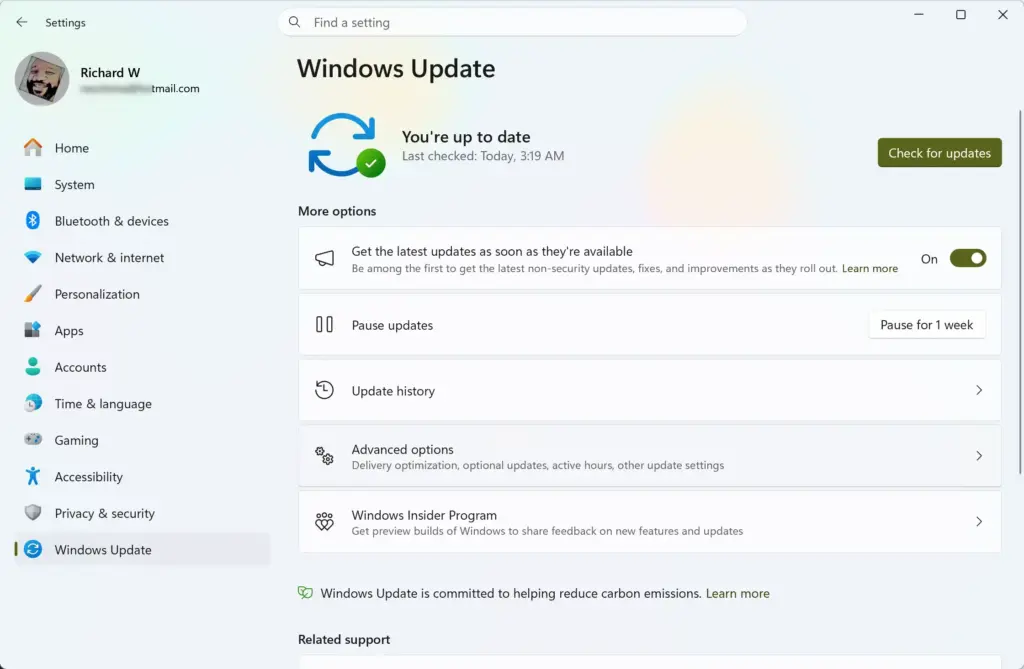
If nothing is requesting your location but the icon is still there, the cause may be a display glitch. The taskbar sometimes fails to refresh and leaves a ghost icon behind. Restarting the Windows Explorer process, which draws the taskbar and desktop, usually fixes this.
To restart Windows Explorer:
- Press Ctrl + Shift + Esc to open Task Manager.
- If Task Manager opens in its compact view, click More details at the bottom.
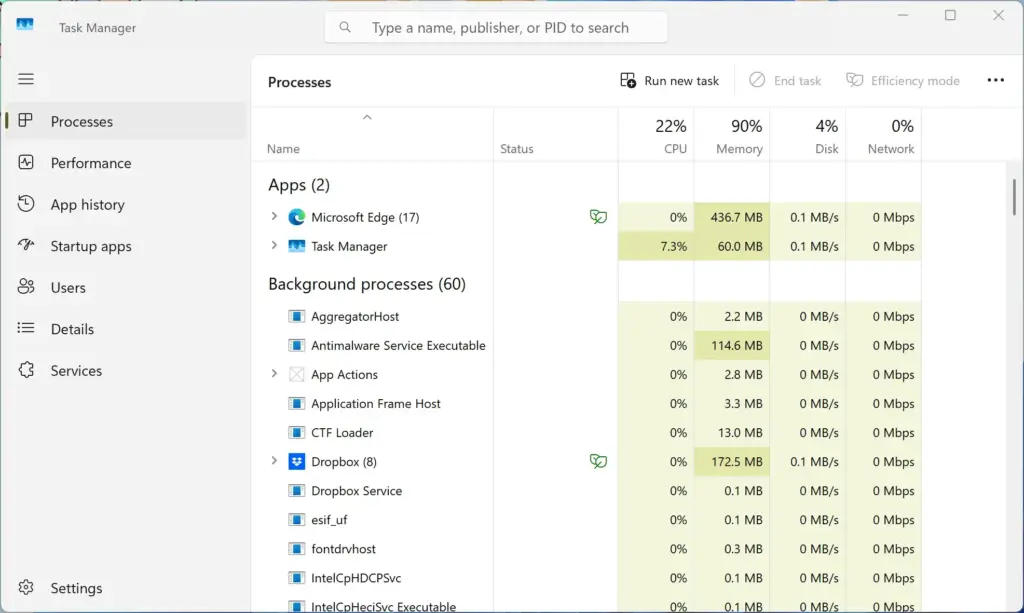
Task Manager - Click the Processes tab in the left-hand menu.
- Scroll down until you find Windows Explorer, which has a folder icon next to it.
- Right-click Windows Explorer and select Restart.
The taskbar and desktop will flash or go blank for a second or two while they reload. This is normal, and your open apps keep running. When the taskbar returns, the stuck location icon should be gone. If it comes back right away, something is still requesting your location, so go back to the app list and the browser permissions.
Summary
The location icon stays active when apps, background services, or browser tabs keep requesting your position. To fix it, check recent activity in the location settings, turn off access for the app responsible, clear your location history, and remove unwanted website permissions. If the icon still will not go away, restart the Geolocation Service or Windows Explorer. If you do not need location features at all, the main Location services switch turns everything off at once.
Did this guide fix your problem?

About the Author
Richard
Tech Writer, IT Professional
Richard is a writer at Geek Rewind who turns complex IT tasks into clear, step-by-step guides. He draws on years of hands-on experience in system administration and enterprise IT operations, focusing on Windows, Linux and WordPress: the problems people actually run into, and the fixes that work. His server and WordPress guides come from systems he runs himself. Richard builds and maintains the platform behind Geek Rewind, from its Ubuntu servers and Nginx configuration to its custom WordPress plugins. Many new tutorials start with readers' questions, and he's always glad to answer them in the comments.
No comments yet — be the first to share your thoughts!