Should You Change Your Active Time Zone Manually or Let Windows Detect It

Automatic time zone detection in Windows 11 and Windows 10 uses your location to work out which time zone you are in. Depending on your hardware, that location can come from nearby Wi-Fi networks, your internet connection, or a GPS sensor. Windows then sets the clock for you. This keeps the clock correct as you travel. A manual setting stops the clock from shifting by mistake, which can happen if you work near a border or on a weak connection.
To turn on automatic detection, open the Date & time settings and switch on Set time zone automatically. If Windows picks the wrong city, switch that option off and choose your time zone from the list yourself. Both methods are covered below, along with the trade-offs.
No, you should let Windows detect your time zone automatically in most cases. Open Settings , click Time & language, select Date & time, and turn on Set time zone automatically. Switch it off only if Windows repeatedly picks the wrong zone due to VPN, weak Wi-Fi , or your location provider routing traffic through another city.
Understanding How Windows Handles Time and Location
Windows combines several sources to find your position. These include nearby Wi-Fi networks, your internet connection, and any location sensor in the device. When automatic updates are on, it checks these sources in the background. If you move to a new place, Windows notices and updates the clock without any action from you. This helps most if you travel often.
Some internet providers route your traffic through a server in another city, and Windows may read that as your real location. Weak Wi-Fi or a VPN can cause the same problem. When that happens, the clock may change to the time zone of that distant location. If you see this more than once, set the time zone by hand, as described further down.
How to Let Windows Detect Your Time Zone Automatically
On a new PC the time zone toggle is usually already on. If your clock is not updating when you move, check both settings. The steps below are for Windows 11. Windows 10 uses almost the same path, but the menu looks a little different.
- Click the Start button at the bottom of your screen and select Settings, the small gear icon. The Settings window opens.
- Click Time & language in the menu on the left side.
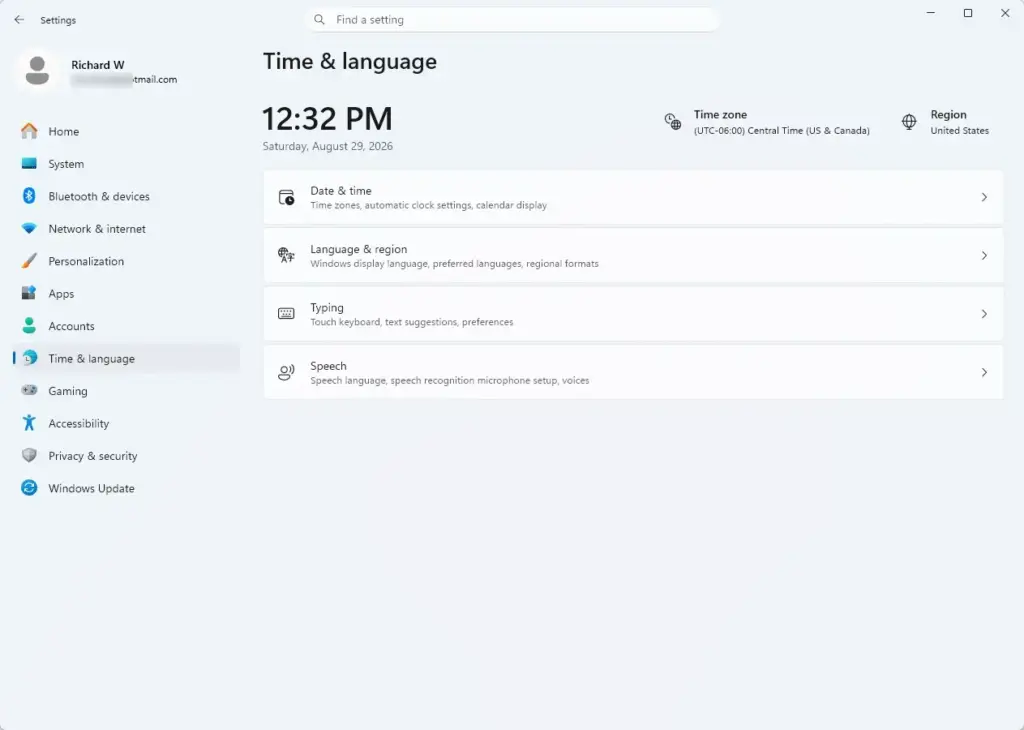
Settings › Time & language - Click Date & time. You should now see the clock settings, including the time zone options.
- Find the switch labeled Set time zone automatically. If it is off, click it to turn it on. The time zone shown below it should update to match your location.
If the switch is greyed out, there are two common causes. First, location services may be off. See the location permissions tip later in this article. Second, your workplace or school may manage the PC. Policies on managed computers, which are more common on Pro, Enterprise and Education editions, can lock this setting. In that case, ask your administrator. Windows 11 Home PCs that you manage yourself should not have this lock.
To undo the change, return to the same screen and switch the toggle off. No restart is needed.
How to Set Your Time Zone Manually in Windows
Setting the time zone manually gives you full control if automatic detection keeps getting it wrong. It also suits a desktop PC that never leaves one room. You turn off automatic updates and then pick your region from the list.
Here is how to set your time zone manually:
- Click the Start button and open Settings.
- Click Time & language.
- Select Date & time.
- Find the switch labeled Set time zone automatically and click it to turn it off. The Time zone drop-down, which was greyed out, becomes available.
- Scroll down a little to find the Time zone section.
- Click the drop-down menu and choose your correct local time zone from the list. Zones are listed by UTC offset, so look for your region or a major city in it.
The clock updates as soon as you pick a zone. Because automatic updates are off, Windows will not change the time zone again unless you change it yourself. If you travel with the PC, remember to change it on arrival. To go back to automatic detection, switch Set time zone automatically on again.
Pros and Cons of Automatic Time Zone Detection
To decide which method suits you, start with the good and bad points of letting Windows detect your time zone automatically.
The Advantages
- Convenience: You never need to change the clock when you travel to a new time zone.
- Daylight Saving Time: Windows usually handles the twice-a-year time shifts for you when this feature is on.
- Set and Forget: Once it is on, the computer handles everything in the background.
The Disadvantages
- Inaccuracies: Weak Wi-Fi signals, a VPN, or unusual internet routing can trick Windows into picking the wrong time zone.
- Battery Usage: Checking your location all the time uses a small amount of extra battery power on laptops.
- Privacy Concerns: Some users prefer to keep location services turned off.
Pros and Cons of Manual Time Zone Selection
Setting your time zone by hand also has clear benefits and drawbacks.
The Advantages
- Total Reliability: Your clock never changes on its own. What you set is what you get.
- Privacy: You can turn off location services without affecting the clock.
- Stability: This is a good fit for a desktop that stays in one room.
The Disadvantages
- Travel Hassle: If you take your laptop on a trip, you must change the time zone by hand when you arrive.
- Extra Steps: Depending on your other settings, you may also have to check your daylight saving time setting when the clocks change.
Unique Expert Tips: Fixing Stubborn Time Zone Glitches
Sometimes the clock still misbehaves even when the settings look right. Here are two tips for problems that standard guides often miss.
1Check Your Windows Location Permissions
If Windows says it cannot find your time zone, or the automatic toggle is greyed out, check your location permissions first. Automatic detection depends on location services. If they are off, the feature may not work.
- Open Settings and click Privacy & security. In Windows 10, this section is called Privacy.
- Select Location.
- Make sure the main Location services switch is on.
- Scroll down and check that apps and system services are allowed to use your location. Windows lists these options on the same page.
- Go back to Time & language and then Date & time, and check whether Set time zone automatically is now available.
If you turned location off for privacy, you can leave it off and set the time zone manually instead.
2The Windows Time Service Problem
If your clock drifts by a few minutes or fails to sync with internet time servers, the Windows Time service may have stopped running. Restarting it often clears the error.
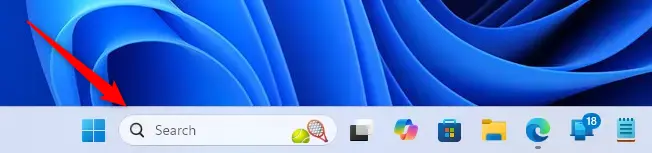
- Click the Start button, type Services in the search bar, and open the Services app.
- Scroll down the list until you find Windows Time.
- Right-click it and choose Restart. If Restart is greyed out, the service is stopped, so choose Start instead.
The service then reconnects to the time servers and corrects the clock. You may need to be signed in as an administrator to restart services.
Managing Daylight Saving Time and Display Settings
Daylight saving time and clock display settings control how your clock behaves through the year. If your region observes daylight saving time, Windows shifts the clock by one hour twice a year. The related options are on the Date & time settings page.
Some places skip the shift, such as most of Arizona and Hawaii. For those regions, the simplest fix is to pick the right time zone from the list, for example the Arizona or Hawaii entry. That zone does not apply daylight saving time. If your zone offers an adjustment switch on the Date & time page, you can also turn it off there. It may be hidden or unavailable when your time zone does not use daylight saving time.
You can also change what the taskbar shows. You can show or hide the time and date, or add extra clocks for other time zones if you work with people in other parts of the world. Keeping these settings tidy means you can see the right time at a glance.

Summary
Whether to set your time zone manually or let Windows detect it depends on how you use your computer. Leave automatic detection on if you travel often and you are comfortable with location services. Set the time zone by hand if you use a stationary desktop, care about privacy, or have seen Windows pick the wrong city. Either way, you can switch methods at any time from the Date & time page.
Have a question about this guide?
Answered by AI from this guide. Good questions may be added to this page — please don't include personal details.
Did this guide fix your problem?

About the Author
Richard
Tech Writer, IT Professional
Richard is a writer at Geek Rewind who turns complex IT tasks into clear, step-by-step guides. He draws on years of hands-on experience in system administration and enterprise IT operations, focusing on Windows, Linux and WordPress: the problems people actually run into, and the fixes that work. His server and WordPress guides come from systems he runs himself. Richard builds and maintains the platform behind Geek Rewind, from its Ubuntu servers and Nginx configuration to its custom WordPress plugins. Many new tutorials start with readers' questions, and he's always glad to answer them in the comments.
No comments yet — be the first to share your thoughts!