How to List User Profiles and Accounts in Windows 11


You can list user profiles and accounts in Windows 11 to understand which profile belongs to which user folder, especially when account names differ from folder names.
A user profile is a collection of settings and files unique to each person who uses a computer. These profiles are crucial for personalizing your Windows experience, storing everything from desktop backgrounds to application data.
Windows typically stores these profiles in the 📁C:\Users directory, creating a folder for each account. This is especially important in Windows 11, as a delete-a-user-account-in-windows-11/" class="sal-link" rel="noopener" target="_blank" data-sal-id="5623">user account rename doesn’t automatically rename its corresponding profile folder, leading to potential confusion.
Step 1View Profile Folders in File Explorer
To see all profile folders currently on your computer, open File Explorer and navigate to:
C:\Users
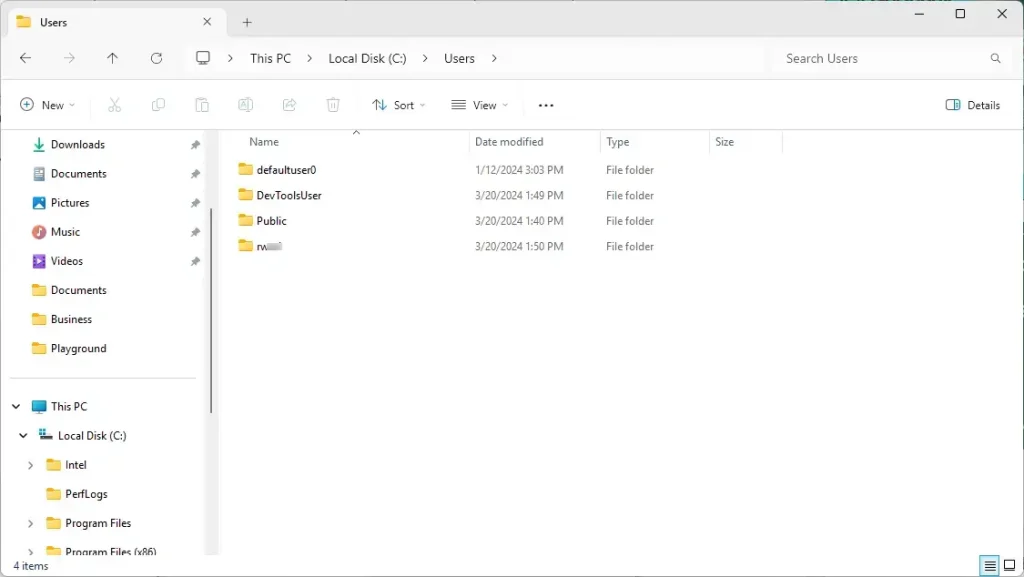
Note that some folders might be hidden. To see them, click the View menu in File Explorer, select Show, and check Hidden items.
Step 2Using the Command Line to List Accounts
For a more technical view, you can use the Command Prompt or PowerShell. Note: You must have admin privileges to run these commands.
Open the Windows Terminal as an administrator. To list all local user accounts, type the following command and press Enter:
net user
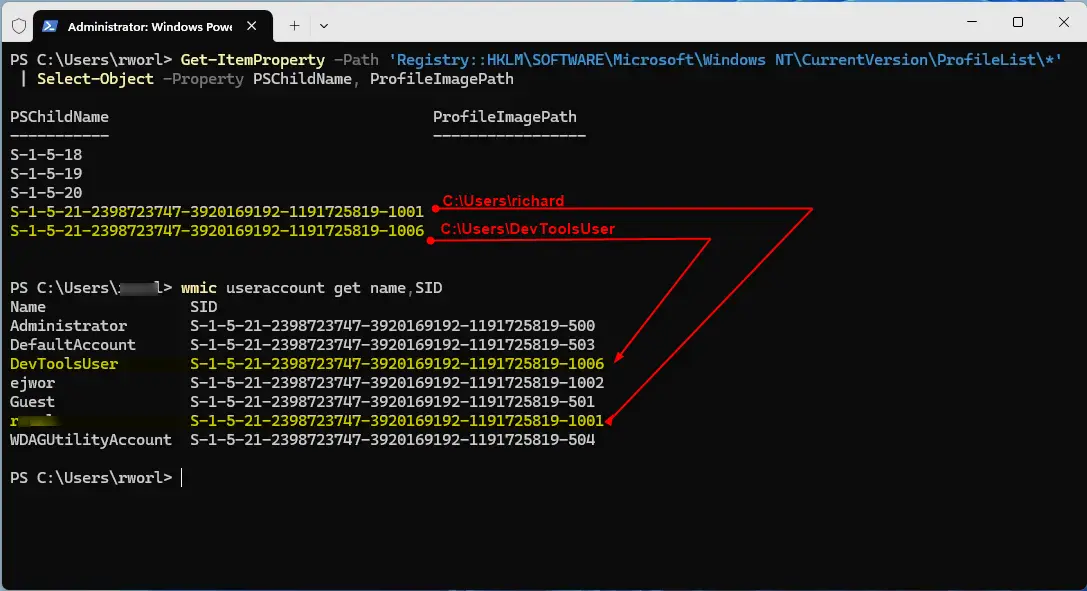
This shows a simple list of account names. To see more detail, including the Security Identifier (SID), use this command:
wmic useraccount get name,SID
Step 3Matching Profiles via Registry Editor
Windows tracks the link between a user and their folder in the registry. Note: You must have admin privileges to access these settings.
1. Press Win + R, type regedit, and press Enter.
2. Navigate to: HKEY_LOCAL_MACHINE\SOFTWARE\Microsoft\Windows NT\CurrentVersion\ProfileList
3. Click through the folders starting with S-1-5 to see the ProfileImagePath value.
Step 4Using Advanced Management Tools
If you are using Windows 11 Pro or Enterprise, you can use the Local Users and Groups tool. Press Win + R, type lusrmgr.msc, and press Enter. This provides a visual interface to manage accounts, disable users, or reset passwords without needing command-line knowledge.
Summary
Managing user profiles is vital for system health. By using the net user command, the Registry Editor, or the lusrmgr.msc tool, you can accurately map user accounts to their folders. This ensures you know exactly where your data is stored and helps maintain a clean, organized Windows 11 environment.
Why are some user profiles hidden in 🪟 Windows 11?
Windows hides certain profiles, such as the Default or Public accounts, to prevent users from accidentally deleting critical system files. These folders are essential for the operating system to function correctly. You can view them by enabling the ‘Hidden items’ option in the File Explorer View menu settings.
What is the difference between a local user and a Microsoft account profile?
A local user account exists only on your specific computer and is not synced with online services. A Microsoft account profile is linked to your email address, allowing you to sync settings, themes, and browser data across multiple devices. Both store data in the 📁C:\Users folder, but their authentication methods differ.
Warning: Never manually rename or delete folders inside C:\Users. Doing so will corrupt the user profile and cause Windows to create a temporary profile, leading to potential data loss. Always use the official Settings app to delete user accounts.
Can I see when a user profile was last accessed?
Yes, you can check the ‘Date modified’ property of the NTUSER.DAT file located inside each user’s profile folder. Right-click the file, select Properties, and look at the timestamps. This file is updated by Windows every time a user logs in, providing a reliable way to track recent account activity.
Was this guide helpful?

About the Author
Richard
Tech Writer, IT Professional
Richard, a writer for Geek Rewind, is a tech enthusiast who loves breaking down complex IT topics into simple, easy-to-understand ideas. With years of hands-on experience in system administration and enterprise IT operations, he’s developed a knack for offering practical tips and solutions. Richard aims to make technology more accessible and actionable. He's deeply committed to the Geek Rewind community, always ready to answer questions and engage in discussions.


[…] account name, the profile folder will not reflect the account’s new name. You may want to list and match the profile folder to the account name to ensure you’re not deleting the wrong […]