Enable Automatic Suspension in Ubuntu Linux Easily


Automatic suspension is a power-saving mode that puts your computer to sleep after a set period of inactivity to save battery and electricity. Ubuntu 22.04 LTS and newer versions let you set different idle timers for when your laptop runs on battery power versus a wall charger.
You can change these time limits in the system settings to match your daily habits and keep your open apps right where you left them.
Go to Settings , then Power. Under Automatic Suspend, choose On Battery Power or Plugged In, turn the switch on, and select a delay time for your system to suspend when idle.
How to suspend Ubuntu Linux
Manual suspension lets you pause work quickly without shutting down. Hardware permitting, triggering this state takes a couple of clicks from the top bar.
Here’s how to suspend Ubuntu Linux manually.
Manually suspending Ubuntu Linux
Manually suspending Ubuntu Linux lets you put your computer to sleep right away to save power when you step away from your desk. You can do this quickly by opening the system menu in the top-right corner of your screen and choosing the suspend option, which pauses all current activity without shutting down your apps.
Click the System menu on the top bar. Expand the Power Off / Log Out command, then click the Suspend command, as shown below.
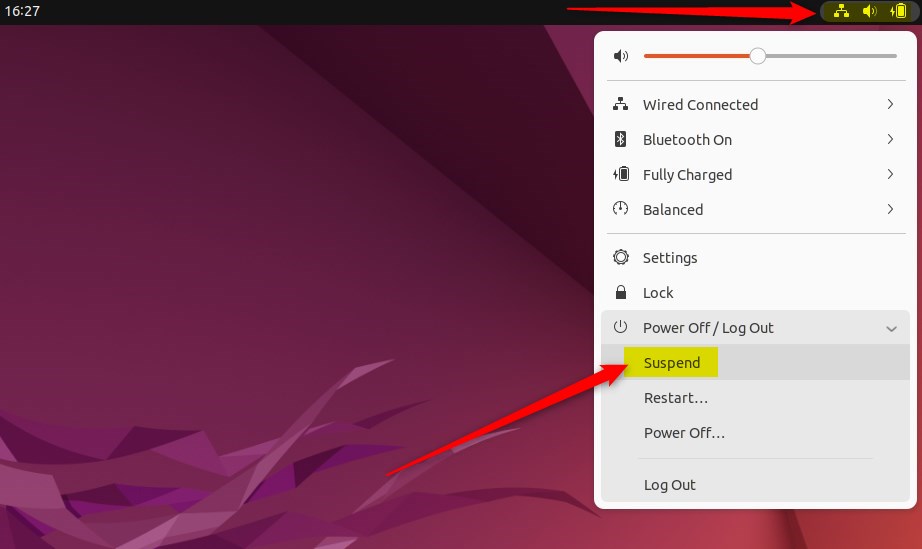
This action suspends the computer immediately.
Enable automatic suspension in Ubuntu Linux
To enable automatic suspension in Ubuntu Linux, you need to open your main system settings and adjust your power preferences so your computer goes to sleep after a set time of inactivity. This feature helps you save battery life and electricity by turning off the screen and putting hardware into a low-power state when you are not using it.
Here's how to do that:
Most system configurations are managed within the main dashboard. This area controls user accounts, system updates, and core hardware preferences.
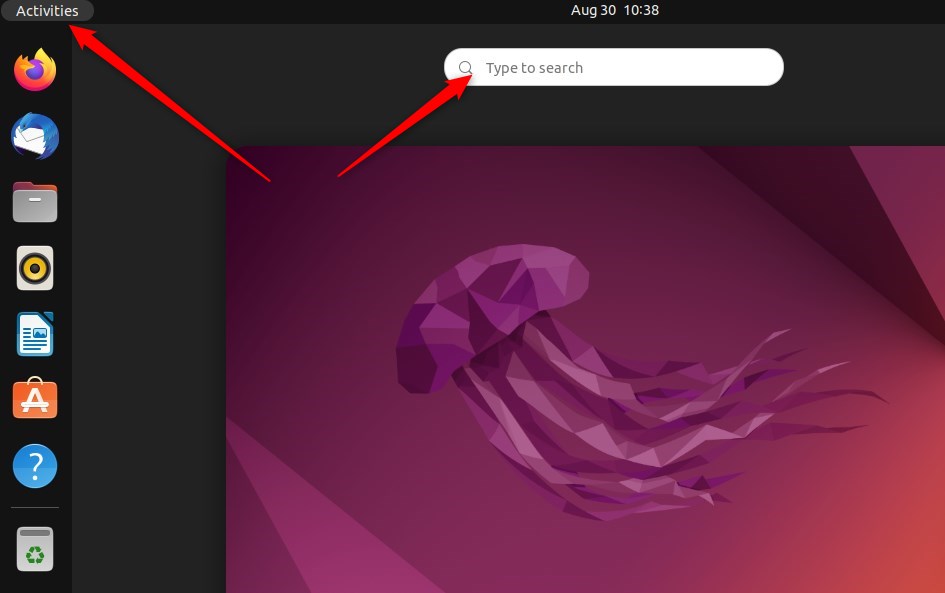
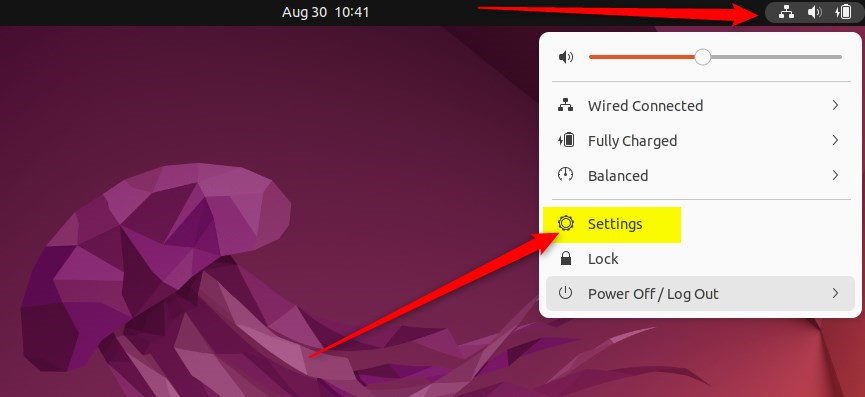
Alternatively, click the System menu in the top-right corner of the desktop.
On the System menu, select Settings, as shown below.
Inside the Settings app, click the Power tile to open the panel.
Head into System Settings - Power and locate the Automatic Suspend tile under Power Saving Options.
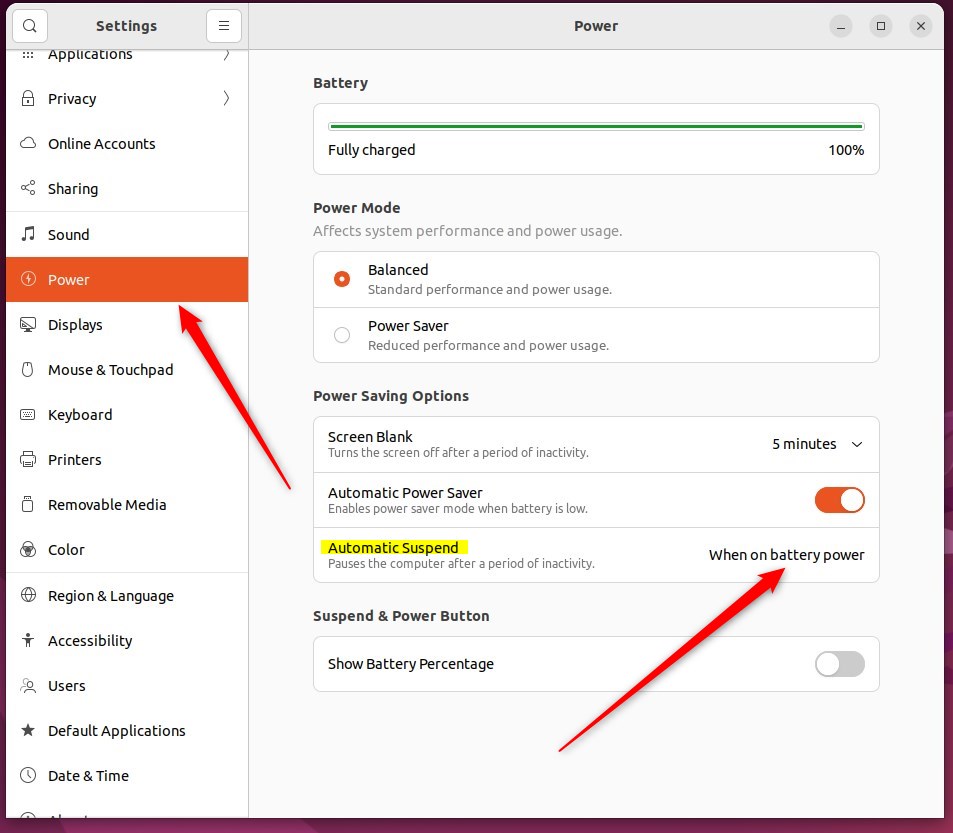
Choose On Battery Power or Plugged In, flip the toggle to on, and select a delay duration. Both options configure independently.
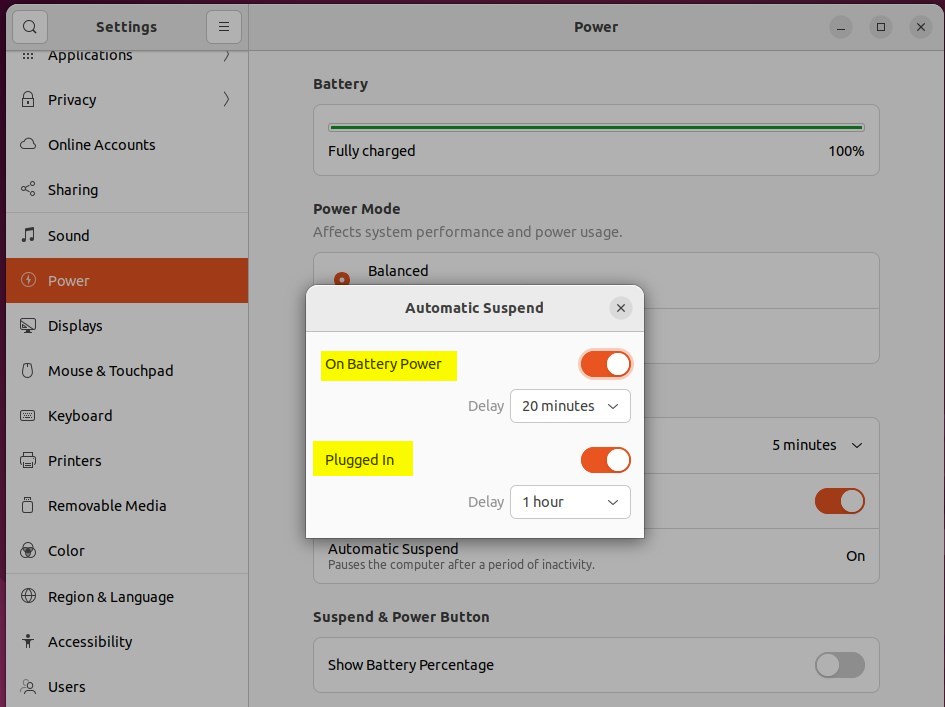
Changes save automatically upon exiting. The Settings app can now be closed.
Enabling automatic suspension saves battery life and preserves your session when you step away.
- Enabling automatic suspension in Ubuntu Linux can be a convenient way to save power and preserve your desktop session when the system is idle.
- Whether you prefer manual or automatic suspension, Ubuntu Linux provides options for your specific preferences and hardware support.
- Configuring the automatic suspension settings through the System Settings panel allows for customization based on power source and delay preferences. This ensures a tailored approach to power management.
Was this guide helpful?

About the Author
Richard
Tech Writer, IT Professional
Richard is a writer at Geek Rewind who turns complex IT tasks into clear, step-by-step guides. He draws on years of hands-on experience in system administration and enterprise IT operations, focusing on Windows, Linux and WordPress: the problems people actually run into, and the fixes that work. His server and WordPress guides come from systems he runs himself. Richard builds and maintains the platform behind Geek Rewind, from its Ubuntu servers and Nginx configuration to its custom WordPress plugins. Many new tutorials start with readers' questions, and he's always glad to answer them in the comments.


[…] Ubuntu Linux goes to suspend mode, it’s not turned off – go to sleep. Then, you can resume by opening the lid, and your […]