How to Disable or Enable Smart Screen Filtering in Windows 11 Security

Windows Defender SmartScreen is the built-in safety filter in Windows 11 that checks apps, files, and websites against Microsoft’s list of known threats before they run on your computer.
The quickest way to turn SmartScreen on or off is through the Windows Security app, under App & browser control Reputation-based protection settings. Unlike a single master switch, you’ll find three separate toggles here—each one controls a different part of your system: files and apps you run, websites you visit in Microsoft Edge, and apps you download from the Microsoft Store.
Turning off SmartScreen for any of these areas makes your PC less protected but may stop false alerts if the filter is blocking something you trust. This guide covers all three toggles plus the Edge-specific setting, what happens when you disable each one, and how to restore them to their default state.
Open Windows Security, click App & browser control, then Reputation-based protection settings. Toggle Check apps and files, SmartScreen for Microsoft Edge, or SmartScreen for Microsoft Store apps on or off. Each toggle takes effect immediately without restart.
What SmartScreen Actually Checks
SmartScreen works by comparing what you’re about to open against a Microsoft-maintained reputation database. If an app, file, or site has no track record — or a bad one — you get a warning before Windows lets it proceed. Depending on your Windows 11 build, you’ll see this labelled either Windows Defender SmartScreen or just SmartScreen; Microsoft has used both names across recent versions, and they refer to the same feature.
The three components you can control separately are:
- Check apps and files — scans unrecognized executables and installers before they run, whether you downloaded them or copied them from a USB drive.
- SmartScreen for Microsoft Edge — warns you before you land on a phishing site or download a flagged file in Edge.
- SmartScreen for Microsoft Store apps — checks content inside Store apps for malicious links or downloads.
You’ll also notice a Potentially unwanted app blocking toggle sitting right next to these on the same settings page. That’s a related but separate feature — it blocks adware and bundled junkware, not the same reputation checks SmartScreen runs. Don’t confuse the two if you’re troubleshooting a specific warning.
Before You Start: Administrator Access Required
Changing any of these toggles requires an administrator account. If you're signed in as a standard user, Windows shows a User Account Control prompt asking for an admin password before the switch will move. If you don't have admin rights on the machine, ask whoever manages it to make the change, or sign in with an administrator account first.
How to Turn SmartScreen On or Off in Windows Security
- Open the Start menu and type Windows Security, then press Enter. The Windows Security app opens, showing a dashboard with sections like Virus & threat protection and Firewall & network protection.
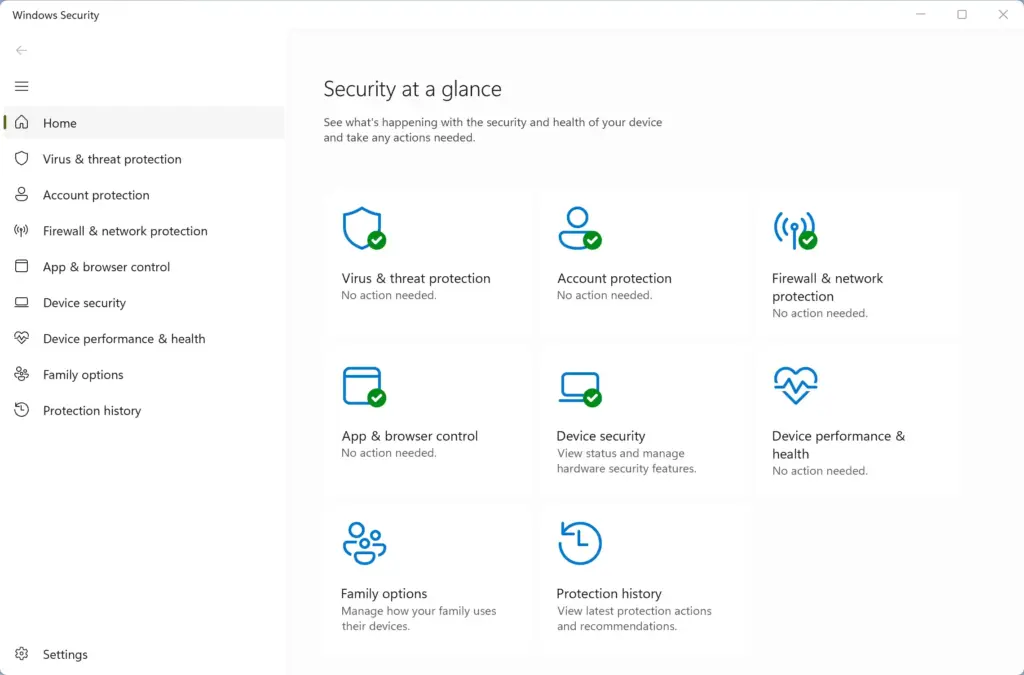
Windows Security - Click App & browser control in the left sidebar. You'll see a summary showing whether reputation-based protection is currently on, along with recent blocked items if any.
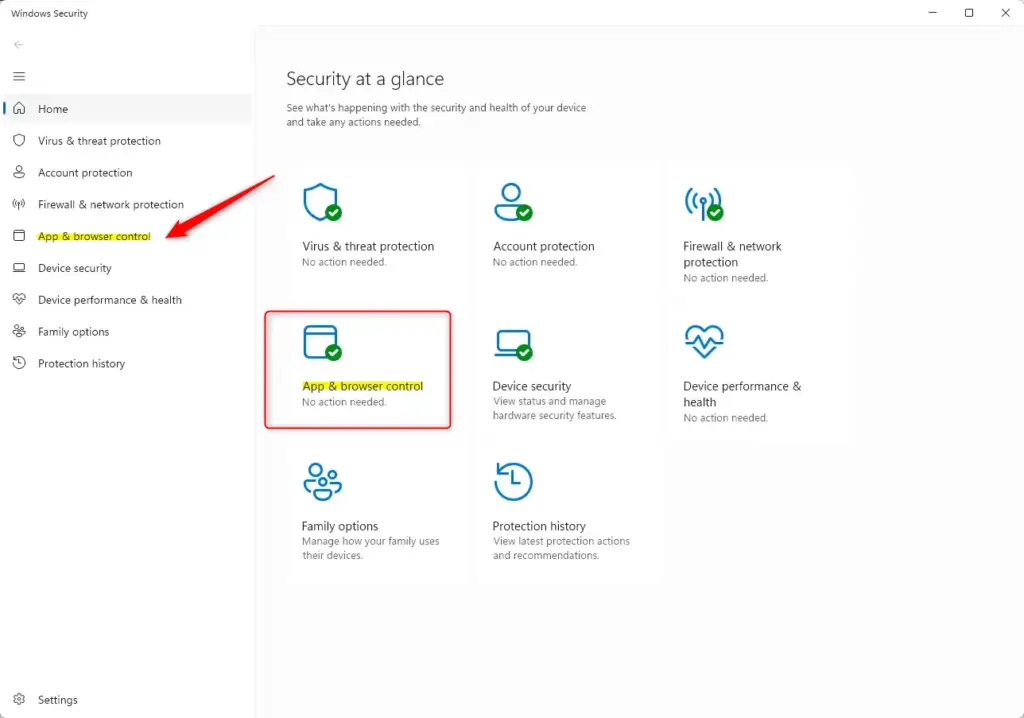
Windows Security App and browser control settings for Smart App Control. - Click Reputation-based protection settings, a link near the top of the page. This opens a new screen with three individual toggles plus the potentially unwanted app blocking option.
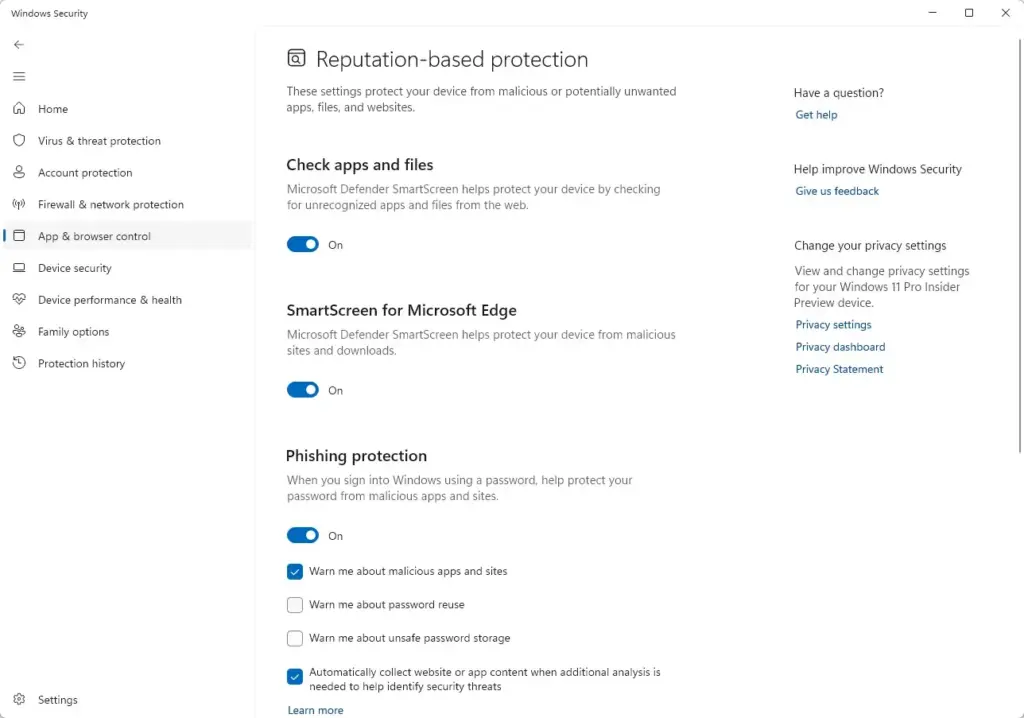
- Switch Check apps and files on or off. This is the toggle that scans anything you download or run outside the browser, so turning it off removes warnings for unrecognized executables system-wide.
- Switch SmartScreen for Microsoft Edge on or off. This controls the phishing and malicious-download warnings you see while browsing in Edge specifically.
- Switch SmartScreen for Microsoft Store apps on or off. This affects content checks inside apps installed from the Store, not the apps' installation itself.
Each toggle applies the moment you flip it — you don't need to restart your PC or sign out for the change to take effect. If a UAC prompt appears when you click a toggle, click Yes to confirm; if you click No or close the prompt, the toggle snaps back to its previous position and nothing changes.
Why a Toggle Might Be Greyed Out
If you can see a toggle but can't click it, one of two things is going on:
- Managed by your organization. On a work or school PC, or any device enrolled in mobile device management, you'll see a note reading something like "Some settings are managed by your organization" under App & browser control. In that case the setting is locked by policy and you'll need your IT department to change it — there's no workaround on the device itself.
- Third-party antivirus software. If you've installed another security suite, it may take over reputation-based protection duties and disable Windows' own SmartScreen controls in the process. Check your antivirus app's own settings for an equivalent toggle, or uninstall it temporarily if you need to confirm SmartScreen itself is the problem.
Neither of these is a bug — Windows is deliberately preventing changes it doesn't control locally.
Turning SmartScreen On or Off Directly in Microsoft Edge
The SmartScreen for Microsoft Edge toggle in Windows Security and the SmartScreen setting inside Edge itself are the same control — you can change it from either place. If you're already in the browser and don't want to open Windows Security separately, change it here instead:
- Open Microsoft Edge and click the three-dot menu in the top-right corner, then choose Settings. The Settings page opens in a new tab.
- Click Privacy, search, and services in the left sidebar. The page scrolls to show sections for tracking prevention, clear browsing data, and security.
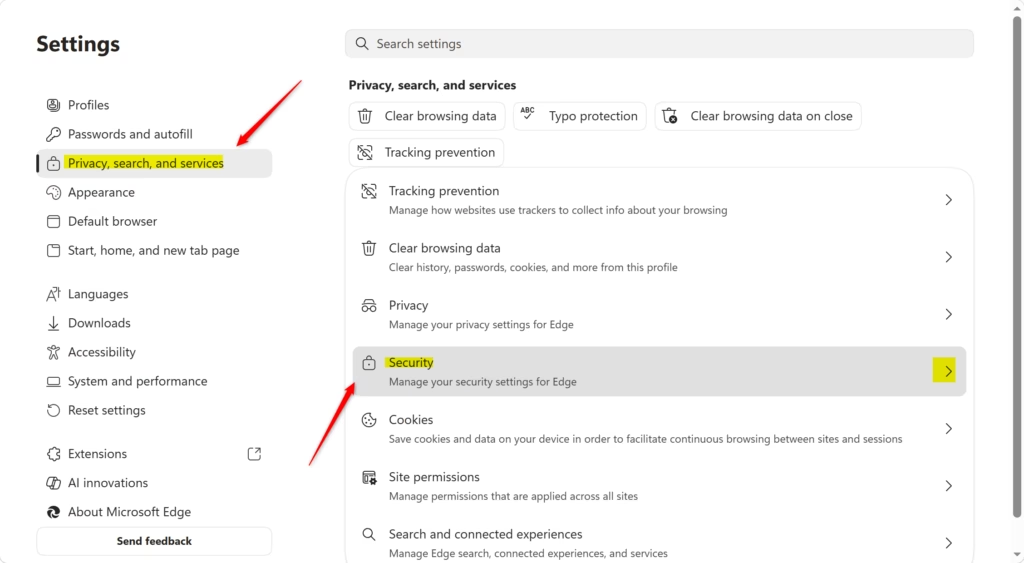
Microsoft Edge Privacy, Search, and Services settings page. - Scroll down to the Security section and find Microsoft Defender SmartScreen.
- Switch the toggle on or off. Edge applies the change immediately — no restart of the browser needed.
If you're already reviewing Edge's privacy settings, it's worth also checking your tracking prevention level while you're there; our guide on enabling or disabling tracking prevention in Microsoft Edge covers the difference between Basic, Balanced, and Strict.
What Changes When You Turn SmartScreen Off
Turning off Check apps and files means Windows will run unrecognized executables without warning you first — including files you downloaded from an untrusted source or copied from removable media. Turning off SmartScreen for Microsoft Edge means the browser stops warning you before you land on a known phishing site or download a flagged file. Turning off SmartScreen for Microsoft Store apps removes the same kind of check inside Store apps that embed web content.
None of this disables Microsoft Defender Antivirus itself — that's a separate, much broader protection layer and keeps running regardless of what you do with these three toggles. SmartScreen is specifically about reputation checks on things you're about to open, not ongoing malware scanning.
The usual reason to turn any of these off is that a specific app you trust — often something niche, self-signed, or from a small developer — keeps getting flagged, and you've already verified it's safe. If that's your situation, it's safer to turn the toggle off, install or run the one app, then turn it straight back on, rather than leaving SmartScreen off long-term.
How to Undo the Change
Reversing any of these settings just means flipping the same toggle back. Open Windows Security App & browser control Reputation-based protection settings, and switch Check apps and files, SmartScreen for Microsoft Edge, or SmartScreen for Microsoft Store apps back on. There's no need to restart, and no history or log of the change is kept anywhere you need to clean up — the toggle position is the only thing that matters.
One thing worth knowing: a Windows 11 feature update can sometimes reset these to their default (on) state, particularly if the update rebuilds the Windows Security app's components. If you find SmartScreen back on after an update you didn't expect, that's the likely reason — just switch it off again if you still need it off for a specific reason.
What to Do Next
If SmartScreen keeps flagging an app you're confident is safe, check whether it's a signed, well-known publisher first — unsigned or obscure installers trigger far more warnings than they deserve. From here, a natural next step is reviewing your other Windows Security defenses, like checking Windows Defender's exclusion list if you keep hitting false positives on files you use daily. If your concern is more about browser safety than the file system, spend a few minutes with Edge's tracking prevention settings too, since it works alongside SmartScreen rather than replacing it.
How do I turn on a smart screen?
Open Windows Security, go to App & browser control, then select Reputation-based protection settings. You'll see three toggles for SmartScreen: one for files and apps, one for websites in Microsoft Edge, and one for Microsoft Store apps. Turn on whichever toggle you need.
Was this guide helpful?

About the Author
Richard
Tech Writer, IT Professional
Richard is a writer at Geek Rewind who turns complex IT tasks into clear, step-by-step guides. He draws on years of hands-on experience in system administration and enterprise IT operations, focusing on Windows, Linux and WordPress: the problems people actually run into, and the fixes that work. His server and WordPress guides come from systems he runs himself. Richard builds and maintains the platform behind Geek Rewind, from its Ubuntu servers and Nginx configuration to its custom WordPress plugins. Many new tutorials start with readers' questions, and he's always glad to answer them in the comments.
No comments yet — be the first to share your thoughts!