The article provides a guide on how to configure the print screen key to open screen Snipping in Windows 11 using the System Settings panel. Windows 11 replaces the previous Snip & Sketch app with a new Snipping Tool, which some users might find inconvenient because it requires pressing many keys. By adjusting system settings, users can use the print screen key for screen snipping, simplifying the screenshot process.
Windows
The article discusses enabling clipboard sharing between the host and the Windows 11 Sandbox, a safety feature that by default prevents such interactions. The procedure includes accessing the Local Group Policy Editor or the Windows Registry to permit or restrict copying and pasting between these elements. These steps effectively let users interact with the isolated sandbox environment more efficiently.
This article provides a guide on enabling or disabling networking in the sandbox environment of Windows 11. By default, networking is off to reduce the attack surface, but for accessing external networks, users must allow it by creating a virtual switch. This can be done through the Local Group Policy Editor or the Windows Registry.
The article guides on enabling or disabling printer sharing from a host machine to the Sandbox in Windows 11. Since the Windows Sandbox is an isolated environment, printing directly from it is impossible without sharing the host's printer. The guide includes steps to enable this sharing feature through either Local Group Policy Editor or Windows Registry.
The article provides a guide on how to enable or disable DLNA media streaming in Windows 11, allowing users to send or receive media on connected devices such as phones, TVs, or game consoles. The steps involve navigating through Control Panel or utilizing Local Group Policy Editor. The tutorial also warns users to only activate streaming on trusted networks and provides instructions on adjusting default settings.
The article provides steps on how to enable or disable the Snipping Tool's feature of opening screenshots in multiple windows in Windows 11. By default, the tool opens screens in the same window but it can be modified. It also mentions the automatic saving of screenshots in PNG format. The changes are applied by accessing the settings within the Snipping Tool app itself.
The article provides a guide on how to check the battery level of a Bluetooth device in Windows 11 using the Settings app. To do this, users need to go to the System Settings via a shortcut or click on Start -> Settings. Then, select 'Bluetooth & Devices' to view device details, including battery levels. Not every Bluetooth device sends battery information, so the level might not always be visible.
The article explains how to mount an Ubuntu Linux file system on Windows 11 using the Windows Subsystem for Linux (WSL). This enables running a GNU/Linux environment directly in Windows, without a virtual machine or dual-boot. The process involves configuring the WSL environment, running PowerShell commands to mount physical Linux drives, and accessing contents through Windows File Explorer.
The content describes multiple methods to enable or disable FiltersKeys, an Accessibility feature in Windows 11 used to control keyboard repeat rate and ignore repeated keys. These methods include using settings on the sign-in screen, keyboard shortcuts, the Windows Settings app, and the Control Panel. FiltersKeys improves usability for users with disabilities.
The article provides instructions on managing background apps in Windows 11. Users can either permit or restrain apps from operating in the background when not actively in use. Windows 11 offers three settings: "Always", "Power optimized" (recommended), and "Never". These options can be adjusted for individual apps in the system settings. The guide also suggests setting at least one app to 'Always' to maintain connectivity and app updates.
The article provides steps to enable or disable the Microsoft Vulnerable Driver Blocklist feature in Windows 11. The feature, activated by default, blocks problematic drivers but could interfere with valid device drivers. It can be managed via the Windows Security App; toggling on/off in the Core isolation details pane under Device Security. Regular monitoring of device performance is advised to prevent erroneous driver blocking.
The article gives a step-by-step guide on how to change the foreground flash count for taskbar apps in Windows 11. The default setting flashes the taskbar apps seven times, but users can adjust this setting including setting it to flash indefinitely. The change is made through the Windows Registry.
The article provides a tutorial on how to enable or disable the "Show flashing on taskbar apps" feature in Windows 11. This feature signifies system updates, hardware issues, and other notifications that require user attention through flashing icons on the taskbar. The process involves navigating to System Settings and adjusting the Taskbar behaviors.
The article discusses how to switch out of S Mode in Windows 11 for devices that come pre-established with this feature by the original manufacturer. S Mode enhances security and performance, allowing only app installation from the Microsoft Store. Users wanting to install apps from other sources or upgrade to Windows 11, can switch out of S Mode for free, but cannot revert back to it. Instructions for switching are provided.
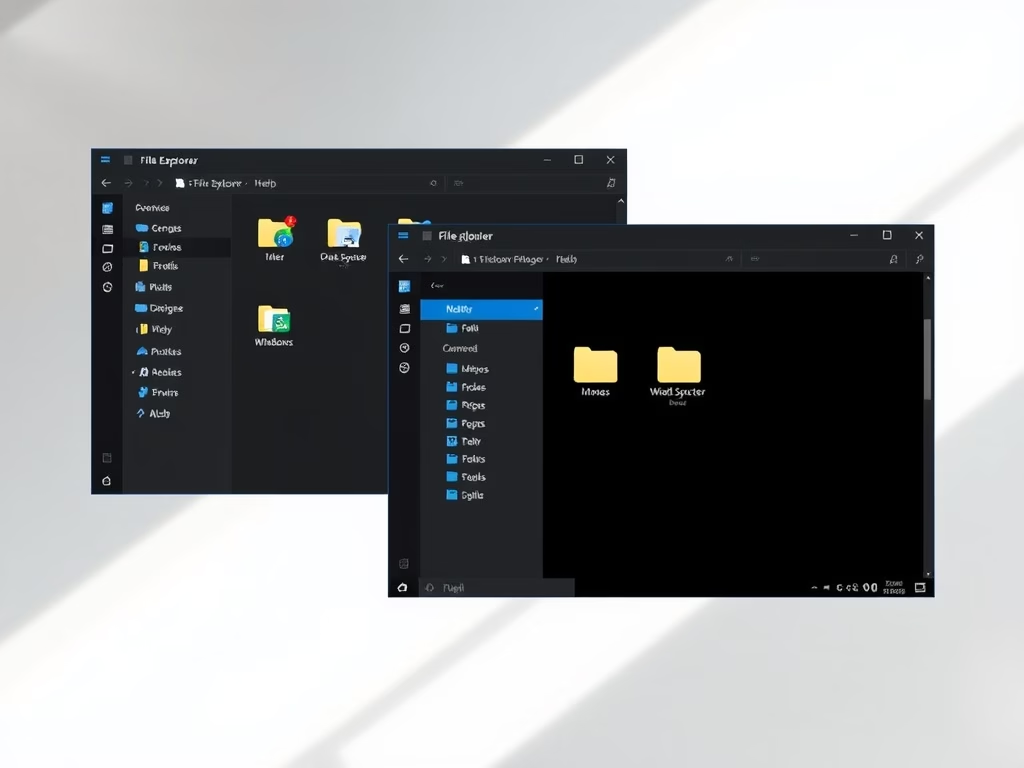
This article provides instructions on how to enable or disable the feature "Show Encryption or Compressed NTFS files in Color" in Windows 11. Enabling this feature in the File Explorer can help users differentiate their encrypted and compressed files from regular ones, adding an extra level of security to their data.