Should You Use Windows 11 Dynamic Lighting for Better Battery Life

Windows 11 Dynamic Lighting controls the colors and patterns on your gaming gear and accessories from the Settings app. It replaces the separate background app that each brand usually wants you to install. It uses the LampArray standard, a protocol that lets software talk to lighting hardware, to connect Windows directly to your devices.
Using the built-in control means fewer lighting apps running in the background, which saves memory and some processor time. It also makes setup faster. But the lights themselves still draw power, so a laptop with every LED glowing will drain faster than one with the lights off.
Yes, Dynamic Lighting usually saves battery compared with the separate lighting apps from hardware makers, because it runs inside Windows 11 rather than as several background programs. But the lights still draw power, so turning Dynamic Lighting off in Settings Personalization Dynamic Lighting, or lowering the brightness slider, gives the biggest battery gain.
How Dynamic Lighting Affects Your Battery Life
Dynamic Lighting affects battery life because your keyboard, mouse and other gear draw extra power to keep their LEDs lit. LEDs need a constant electrical current. On a laptop running on battery, that current comes out of your charge. This is more noticeable with USB and wireless accessories than with the laptop’s own keyboard. Turning the lights off or lowering the brightness is the surest way to get more runtime.
The more useful question is whether Dynamic Lighting uses more or less battery than the old software from hardware makers.
Third-Party Apps Versus Built-In Windows Tools
In most cases it uses less. Dynamic Lighting runs inside the operating system, while manufacturer apps are separate programs. Those older apps often keep heavy background processes running, which keeps the processor busy and costs you battery.
If your hardware fully supports the built-in system, letting Windows handle the lights usually takes fewer resources than running several vendor apps at once. Three accessories from three brands can mean three background apps. Dynamic Lighting replaces all of them with one control.
Even so, lights that are on use more power than lights that are off. The built-in tool is the more efficient way to run them, not a way to run them for free.
How to Access and Manage Dynamic Lighting Settings
You need a version of Windows 11 that includes the feature (it arrived with the 2023 updates to Windows 11 22H2 and is part of 23H2 and later). It is available in both Home and Pro. If you do not see it, run Windows Update and check again.
- Click the Start button and open Settings (the gear icon). The Settings window opens.
- Click Personalization in the left-hand list. The personalization options appear on the right.
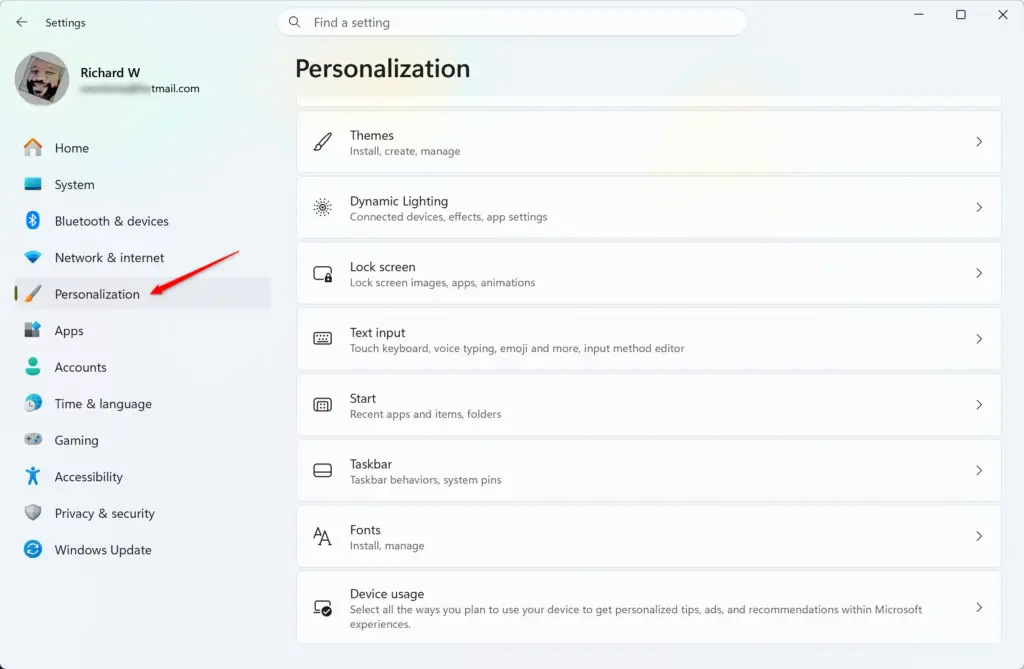
- Click Dynamic Lighting on the right. The Dynamic Lighting page opens.
On this page you will see the master switch, a brightness slider, effect and color choices, and a list of any connected devices that support the standard. Exact layout and wording can differ slightly between Windows 11 builds. The sections below cover the settings that matter most for battery life.
Configure Global Settings
The global settings apply to every connected device at once. This is the fastest way to cut the power the lights use. You can switch everything off or just dim it.
- Use Dynamic Lighting on my devicesSet this switch to Off to disable all built-in light control. This gives the biggest saving from this page. To undo it, turn the switch back On. Note that devices may keep whatever lighting they were last set to, because Windows is no longer managing them.
- BrightnessDrag this slider to the left to make the lights dimmer. Lower brightness means lower power draw.
- EffectsPick a simple static color instead of animations, rainbow waves or flashing patterns. Moving effects make Windows and the device update the colors constantly, which costs more power than a fixed color.
Configure Individual Devices
You can also control one device without touching the rest. This helps when you want to keep your keyboard backlight but switch off the glowing logo on a mouse.
- Open Settings Personalization Dynamic Lighting, as described above.
- Look at the list of connected devices on the page.
- Click the device you want to change. Its own lighting options expand or open.
- Adjust the Brightness, color and effect for that device only. Other devices keep their current settings.
If a device is missing from the list, see the compatibility note near the end of this article.
Hidden Battery Drains: Background Apps and Foreground Control
Games and apps can take over your lights, and that can drain the battery without you noticing. When this is allowed, a running app can trigger fast color changes that use extra power.
Some games have custom lighting effects that flash and change color to match the action on screen. They look good, but they keep the lights active and often bright, and they add processing work. If you play on battery with these effects running, you will see the charge drop faster.
To stop apps from taking over your lights:
- Open Settings Personalization Dynamic Lighting.
- Find the option Compatible apps in the foreground always control lighting.
- Switch it to Off. Apps in front of you can no longer override your lighting choices. To undo it, switch it back On.
Unique Expert Tips: Maximizing Laptop Battery with Lighting Control
Glowing LEDs drain laptop batteries quickly, so a middle setting is often the practical answer. You do not have to turn the keyboard lights off completely. Lower the brightness to around 25 percent and have the lights turn off after about 1 minute of inactivity. A dim backlight is usually enough to see the keys, and the timer means the LEDs are only lit while you are typing.
Not every device offers an inactivity timer in the Windows settings. If you do not see one, check whether your keyboard or its manufacturer software has its own timeout setting.
Tip 1Create a Battery-Saver Lighting Profile
You can set up a battery-saver lighting profile for when you unplug the power cord. The idea is to use dim, dark colors. Dark red and blue use less electrical power than bright white, since white lights all of the LED’s color channels at once. Your keys stay visible while the lights draw less.
Windows does not switch profiles for you when you unplug. You change the brightness and color by hand under Personalization Dynamic Lighting, and change them back when you plug in again.
Tip 2Completely Disable Lighting for Unused Peripherals
Lights on unused peripherals waste power too. External devices like mice draw power through your USB ports or from their own batteries, and glowing logos and scroll wheels add to that. Open the individual device settings and turn the brightness all the way down to zero for any device whose lights you do not need. To get the lights back, raise the brightness again.
Common Issues and Troubleshooting
Most problems with Dynamic Lighting happen when the built-in tool and older manufacturer software both try to control the same device. The result is lights that freeze or behave oddly. You can fix this by turning off the main Dynamic Lighting switch or by removing the conflicting apps.
If your hardware maker’s software (such as the utility for a gaming keyboard or mouse) stops working or fights with Windows for control, try this:
- Open Settings Personalization Dynamic Lighting.
- Set Use Dynamic Lighting on my devices to Off. Windows stops controlling the lights, and your manufacturer software can take full control again.
- Restart the manufacturer app if its lighting still does not respond.
Keep in mind that running those third-party background apps may use more battery than letting Windows handle the hardware natively. If the conflict goes away and you do not need the vendor app, uninstalling it is often the better fix.
Older keyboards, mice and PC cases that do not support the LampArray standard will not appear in the Dynamic Lighting menu at all. If your device is not listed, Windows cannot control its lights. In that case, use the manufacturer’s software or a physical switch or button on the device to turn the lights off.
Summary
Dynamic Lighting still costs battery, because glowing hardware always needs electricity, but the built-in tool is more efficient than older third-party apps. For the best battery life, lower the Brightness slider, choose simple static colors, or turn the lights off completely.
Have a question about this guide?
Answered by AI from this guide. Good questions may be added to this page — please don't include personal details.
Did this guide fix your problem?

About the Author
Richard
Tech Writer, IT Professional
Richard is a writer at Geek Rewind who turns complex IT tasks into clear, step-by-step guides. He draws on years of hands-on experience in system administration and enterprise IT operations, focusing on Windows, Linux and WordPress: the problems people actually run into, and the fixes that work. His server and WordPress guides come from systems he runs himself. Richard builds and maintains the platform behind Geek Rewind, from its Ubuntu servers and Nginx configuration to its custom WordPress plugins. Many new tutorials start with readers' questions, and he's always glad to answer them in the comments.
No comments yet — be the first to share your thoughts!